My life in theatre
The most exciting development I've witnessed in recent years is the way in which global boundaries in the arts are rapidly vanishing.
I REMEMBER the moment I fell in love with theatre. I was a university student in America in 1970, and the Royal Shakespeare Company brought director Peter Brook's production of Shakespeare's A Midsummer Night's Dream to New York. It was a revolutionary production - the play was set within an empty white box and some of the actors were on trapezes. So remarkable was it, that I saw it three times.
There and then I discovered that theatre could be wild and electrifying, that lines written 400 years ago could be spoken with complete clarity and contemporary relevance. It represented the best that theatre can be: a transcendent experience that elevates the theatrical arts beyond the cosy, stuffy, or traditional into something of great beauty and modernity.
Since then, I have been drawn to experimental theatre, which took me from New York, where I grew up, to Europe, the United Kingdom, China, Russia, and now Singapore.
Having lived, breathed, and taught performing arts (acting, directing and playwriting) for decades all over the world, by far the most exciting development I've witnessed in recent years is the way in which global boundaries in the arts are rapidly vanishing.
Vanishing boundaries
It can be convenient to place Western and Eastern approaches in silos for comparison - the traditions of Western training have, since the start of the 20th century, been governed by realism and psychological truth, while the Eastern approach allows for greater abstraction and externality - but the ideal, and what we are increasingly moving towards, is to fuse both approaches into one continuum.

The vanishing of boundaries isn't just between geographies, but between disciplines. Nowadays, pop music and jazz intersect beautifully with classical forms. There are fusions where dance has embraced the spoken word or visual arts and orchestras use acting.
All this collaborative potential and gamut of international possibilities have been prompted here in South-east Asia by the explosive growth of the arts and arts institutions. My own professional practice, stimulated recently by my work in China, has led me to research and seek out new partnerships to fuse Eastern and Western approaches to theatre, music and dance training. My current position as Dean of Faculty of the Performing Arts at LASALLE College of the Arts provides that opportunity.
On top of this fusion in the arts there are continuous new challenges coming from the digital world, changing what we do on stage through projections and 3D animation.
So within an arts training context, all this needs to be part of the training in the 21st century. New challenges produce new forms of art and new forms of cultural enterprise. All of this is also leading to new entertainment industries, new audiences and new opportunities for graduates in the 21st century.
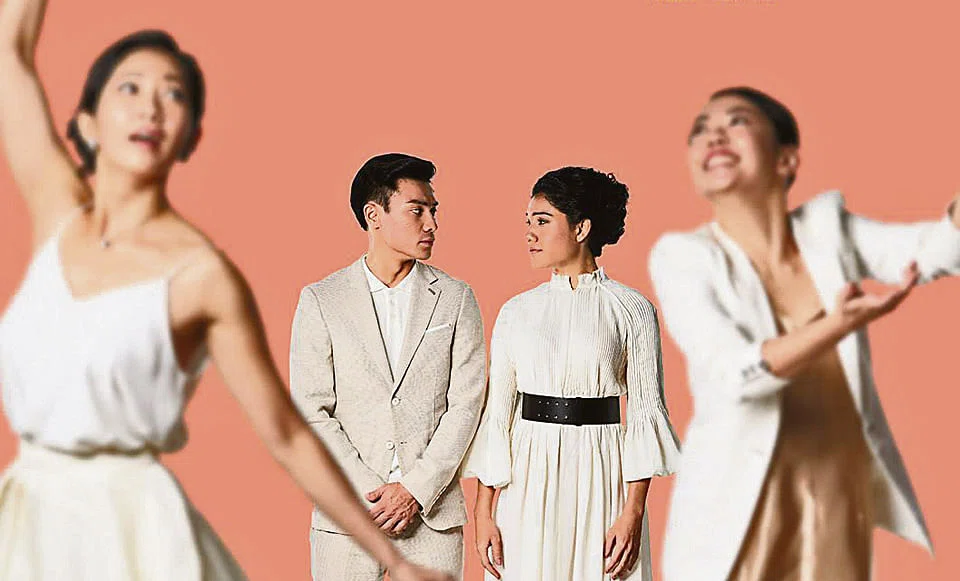
I am using a lot of these developments and thinking in my upcoming production of Shakespeare's pastoral comedy As You Like It, which I am setting in Singapore and Malaysia in 1965, just as Singapore is on the verge of full independence and sets off on the road of political transformation to become a mature nation. When youth can see a new future for themselves that differs from the past. Where love can replace hate. It is a production to celebrate Singapore's bicentennial.
In my previous role as President of Rose Bruford College of Theatre and Performance in London, we transformed the college I ran from an arts college to an arts university through the integrated model of the conservatoire/university. We were guided by the mantra, "train like a conservatoire, think like a university".
The training and rigour of artistic practice remained, but now it sat alongside university academic rigour, process and research. I see tremendous potential in Singapore and I believe that this integrated model can work here as well. LASALLE is one of the few global institutions that combines visual and performing arts under one roof together with newer art forms in film, media and technology, which sets the stage for newer kinds of cross-pollination and collaborations. It was this world of possibilities and of working in this way that drew me here.
Since I arrived in Singapore in July 2018, I have found a performing arts scene that is rich and varied, from international to fringe festival, and where artistic activity thrives on both a professional, school and amateur level.
I have seen terrific new plays since I arrived: 13.13.13 and The Reunification of the Two Koreas, both at TheatreWorks, and one-person shows like Building a Character, all of which were very well produced and with some of the best acting I have seen in a long time from wonderful casts.
The work produced by Singapore-bred companies ought to be celebrated: established companies such as Singapore Repertory Theatre, Wild Rice, The Necessary Stage, Nine Years Theatre, Theatre Ekamatra, Pangdemonium, and young emerging companies like Emergency Stairs and Second Breakfast.
I've also enjoyed the W!ld Rice Singapore Theatre Festival, the Jazz in July concerts at the Esplanade, Singapore Dance Theatre and the M1 CONTACT Contemporary Dance Festival. The jazz and new music scene is incredibly lively and something captivating can be seen almost every night of the week, not just at professional venues like the Esplanade, but in parks, schools and warehouses.
The National Arts Council has been working hard to sustain both artists' and institutions' growth. There is no better time or place for newly trained artists to begin taking steps that could lead to international careers.
Both in the UK and the United States, the theatre is successful as both an art form and as a commercial enterprise. The ambition to make a successful life in the arts is something I want to engender in my students here in Singapore.
I believe there is a whole new generation of performers here who will one day put on a show like Peter Brook's Midsummer Night's Dream - and a whole new generation of young people who will sit in the theatre, transfixed, and remember the moment. Maybe my production of As You Like It will do that for some young student who yearns to be on stage.
Share with us your feedback on BT's products and services