The Googler's edge: Do you need it?
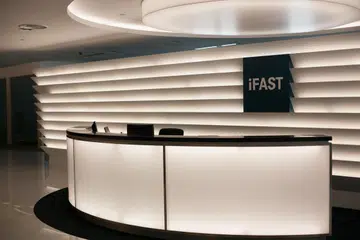
An open-plan office like Google's Singapore outfit may not be a guaranteed lifeline of creativity and innovation for every organisation.

WE recently chatted with an ex-Googler who was establishing an online-to-offline (O2O) digital platform that would lure online customers to make purchases at brick-and-mortar stores.
When we asked him if Googlers were indeed smarter than most people, he deferred to the book Are you smart enough to work at Google? by William Poundstone. The American author described how brainteasers and puzzles were used by Google to sieve out aspiring contenders who were creative, methodical and articulate, even under pressure.
As an example, the O2O founder piqued our interest with a classic physicist Enrico Fermi problem that challenged us to estimate "How many basketballs would fill a school bus"? It instantly became a hit at our soiree.
Working on the assumption that the objective was to fill the school bus with as many basketballs as possible, one member of our party surmised that the school bus could contain more basketballs if they were deflated. Another tackled it mathematically using the volume of the school bus over that of a basketball. Yet another zealous guest pointed out that the equation should be adjusted with the size of the seats, and the empty spaces between the basketballs when they were stacked. And the list of enthusiastic responses continued.
We later learnt that Google had dispensed with these brainteasers, citing them "a complete waste of time". The company found that there was no correlation between how candidates scored in these questions and how they fared at work.
In its place, Google and other companies like Tesla now rely on structured behavioural interviews to assess how a candidate thinks, collaborates and communicates.
For example, Tesla's chief executive officer (CEO) Elon Musk would ask his candidates: "Tell me the story of your life, the decisions you made along the way, and why you made them." This enables him to assess the ability of the candidates in explaining and dealing with challenges that they faced in real-life situations.
No matter how these hiring techniques may evolve, most organisations would subscribe to former Google CEO Eric Schmidt's cardinal rule of hiring smarter people who can advance an organisation's agendas. This is corollary to the late Apple visionary Steve Job's mantra of hiring "smart people so that they can tell us what to do". There is no western bias in this. It is simply good common sense that resonates with the seasoned Asian business leaders we have met.
Operating on the same logic, those of us who do not work for Google can find solace in our organisation's hiring process as it should rightfully select people who are smart enough for the role. This then begs the question of what differentiates us from someone who works at Google? If the hiring principles are aligned, does a Googler have an edge over the rest of us?
We dug deeper, in the hope of unravelling the secret sauce behind Google's success by visiting its Singapore office. As with several awe-stricken blogs raving about the company's sprawling open workspace at Mapletree Business City, our tour of the office ignited a strong desire to be part of the culture that lived and breathed creativity.
As we discovered more well-thought-out facilities and amenities, it dawned upon us that the fun, quirky and unrestrained vibe of the workplace was more than meets the eye. As our tour guide revealed, Google's office was meticulously designed to create opportunities for serendipitous encounters as Matt Ridley famously quipped "when ideas have sex".
Drawing parallels from the accidental discoveries the brothers made around a lost camel in a Persian fable of three princes of Serendip, "serendipity" was a word minted by Horace Walpole in 1754.
Serendipitous encounters
As counter-intuitive as it might sound, it was no accident that the Google workplace was deliberately engineered to create serendipitous encounters and spontaneous collaboration, with the hope that it could spark new ideas, birth innovations, and foster esprit de corps. Apart from obvious communal spaces and technology that enabled flexible hot desking in different locations, every minute detail down to the optimal lunch queue was designed for people to bump into one another and exchange ideas.
As the immediate hype from the tour waned, the Googler's edge is apparent to us. Aside from reaping the traditional benefits (of high morale and productivity) from effective employee communication-by-choice (through meetings, townhalls and structured performance reviews), it is the serendipitous employee communication-by-chance, spurred by the creativity and innovation ethos that the workplace breeds.
In the wake of a fast-moving world that is fraught with volatility, uncertainties, complexities and ambiguities, the constant drive to innovate is the new norm for organisations to stay ahead of the curve. As ideation and innovation do not activate like clockwork, organisations can create an environment that induces serendipitous communication, which in turn taps the latent potential of employees to generate innovative ideas.
But before an organisation acts on the impulse to design an open-plan workplace like Google, it (or certain aspects of it) may not be a guaranteed lifeline of creativity and innovation for every organisation.
For example, during the tour, we chanced upon a Bishibashi machine in the games room. While the initial temptation was to buy one just like it, the significance from plugging employees into a seemingly fun but expensive ice-breaker was unclear.
There is also a mounting body of research that indicates certain aspects of an open architecture do quite the opposite. For starters, there is a lack of privacy with noise distraction which may depress work satisfaction and productivity. All it takes is one "loudspeaker" to reverberate the entire workspace and interrupt the concentration needed to get things done and done right.
And personally, the ideology of boosting morale from staff empowerment and socialist behaviour by having your boss sit in the midst of the pack is faux pas. To be candid, the most unenviable positions would be to sit close to the boss. One could feel pressured to appear engaged and intelligent whenever the boss is around!
Additionally, while hot desking has clear cost advantages as more employees can utilise the same space at different times, it may not be efficient for teams that need to button down together to deliver a project.
Asking questions
A recent Harvard study corroborates the result, showing a 70 per cent decrease in face-to-face interaction and an increase in electronic communication after employees moved to an open architecture. This runs contrary to the core impetus for building serendipitous physical encounters in an open-plan workplace to promote collaboration.
One possible adaptation around this is to assign fixed work desks for functions that demand it. For example, Google provides options for engineers to have dedicated desks while employees who do sales have more mobility to hot desk within the compound. The caveat emptor here is to ask "why" before launching into a frenzy of fussing over how and what to build and demolish for an ostensibly hip open-plan workplace.
In sum, there is a Googler's edge in all of us. While it may be imperative to create an environment that fosters serendipitous encounters, such communication-by-chance should never supersede the need for communication-by-choice.
Share with us your feedback on BT's products and services