
What I learnt from Count Rostov about living under lockdown
The lead character in A Gentleman in Moscow shows how one can thrive despite facing a number of restrictions
 Add BT as a preferred source
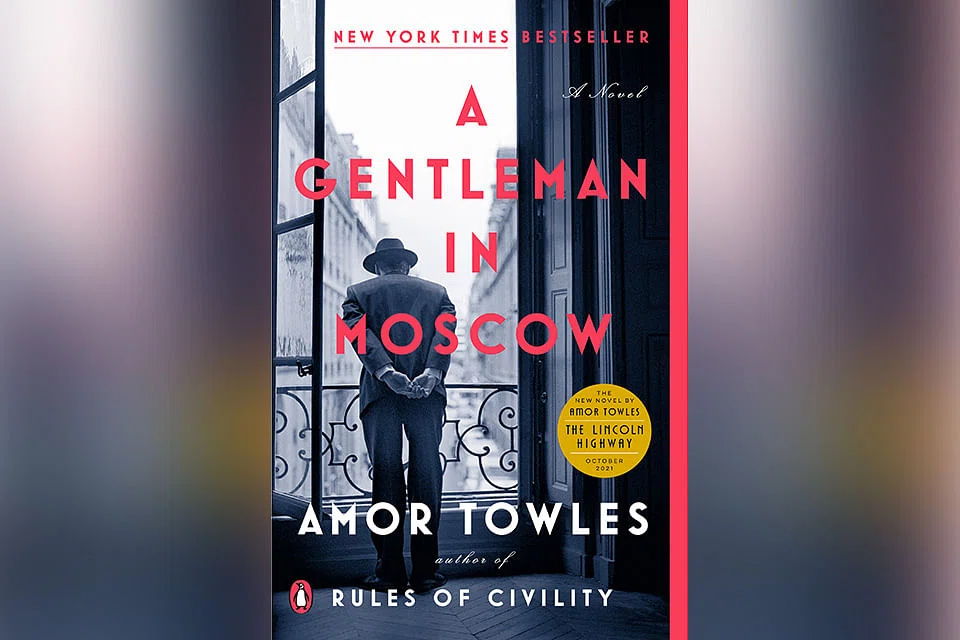
COVID-19 brought a special strain of literature to life. So-called "lockdown literature" covers books about pandemics, books written during the current pandemic, and books in which the lead character thrives in spite of limiting circumstances.
A Gentleman in Moscow falls under the last of these categories. The semi-historical book follows a fictional Count Alexander Ilyich Rostov over his three decades of house arrest at the Hotel Metropol, a real hotel in Moscow.
Author Amor Towles probably did not expect his novel, published in 2016, to become a handbook for life under lockdown, but there is much to glean from this account. It is almost therapeutic to read of the way Count Rostov's days of confinement stretched to weeks, and the weeks to years.
Being forced to spend your days in a hotel is hardly the same as being confined to a 1,000 sq ft flat, of course. Count Rostov has at his disposal within the hotel a barber shop, two restaurants and a bar. There are also plenty of people he can socialise with. In addition to the hotel staff, the Metropol is visited by politicians, celebrities, even an intelligence officer.
But Count Rostov's optimism, grace and charm are attributes applicable in any crisis; as are the following takeaways.
Eat well
Navigate Asia in
a new global order
Get the insights delivered to your inbox.
"Having acknowledged that a man must master his circumstances or otherwise be mastered by them, the Count thought it worth considering how one was most likely to achieve this aim when one had been sentenced to a life of confinement."
Not unlike us, Count Rostov turns to literature for guidance. Rejecting the single-minded focus on revenge, the path taken by Edmond Dantès in The Count of Monte Cristo, he chooses an emphasis on shelter and nourishment a la Robinson Crusoe. Among his first errands is the procurement of a box of his favourite mille-feuille.
On the surface, the count appears to be a food snob. He takes offence when a waiter asks him how he would like his osso bucco - a stewed dish - done. And he is appalled when told he has no choice of the type or vintage of the accompanying wine.
In fact, however, Count Rostov demonstrates that eating well is not about dining on delicacies, but about eating with intent and curiosity.
The count dines nightly at the Boyarsky. Undoubtedly, he has little choice. The only other restaurant in the Metropol is the Piazza, where he has his lunch. But dinner at the Boyarsky is never a chore. Instead, it is one of the highlights of Count Rostov's day.
Possibly he is lucky that the Boyarsky's chef, Emile Zhukovsky, is exceptional. But consider also his approach to each meal.
As he digs into his saltimbocca - an Italian dish classically made with veal, prosciutto and sage - Count Rostov is aware that what is before him has been "fashioned from necessity".
In place of the veal is a chicken breast pounded flat. There is no prosciutto so the chef has made do with shavings of Ukrainian ham. And in place of sage, there is some other herb "as soft and aromatic... but more bitter to the taste".
Count Rostov isn't quite sure, but he has made a game of it and ventures a guess to the head waiter: nettle. Within a minute, Chef Zhukovsky bursts through the kitchen doors and into the restaurant to congratulate the count.
Establish a routine
"As he waited for the coffee to brew, he did thirty squats and thirty stretches and took thirty deep breaths. From the little cupboard in the corner, he took a small pitcher of cream, a pair of English biscuits, and a piece of fruit (today an apple)."
Rather than attempt to escape the monotony of his restricted life, Count Rostov seems to embrace an established rhythm and routine. He has a daily exercise regime, a morning coffee ritual and an almost unvaried breakfast menu - only the fruit changes by the day.
He has a standing appointment at the barber at noon on Tuesdays. And he still keeps an aristocratic accounting of his day, as passed down by his father.
The morning hours are set aside for industry. A man should wake "no later than six", have a "light repast", then apply himself "without interruption" until noon.
This done, he would have accomplished a full day's labour. He could pat himself on the back for making good use of the morning, and sit down to lunch with a clear conscience.
Hours after lunch could then be spent in "wise liberty", with examples of such wisdom being a walk among the willows, reading a "timeless text", having a chat with a friend or reflecting before the fire.
And having spent a day in the service of "industry, liberty, and the Lord", one should be soundly asleep before 12.
Adapt to the situation
"It is not in the business of gentlemen to have occupations."
When Count Rostov is sentenced, he is about to turn 33. At his appearance before the Emergency Committee of the People's Commissariat for Internal Affairs, where he is sentenced, he admits that he has never worked a day in his life. He has spent his days dining, discussing, reading and reflecting.
Fast-forward eight years, however, and the count has become a member of the working class - waiting tables at the Boyarsky.
And he is not just any waiter. He is one of a triumvirate - the other two being Chef Zhukovsky and the Boyarsky's maître d' - that meets at 2.15pm each day to "decide the fate of the restaurant's staff, its customers, its chickens and tomatoes".
In this, Count Rostov presents perhaps the most important lesson for our pandemic. Tapping his love of food and wine, and his experiences as a teenager helping his grandmother plan seating arrangements for fancy dinner parties, he becomes one of the Boyarsky's best waiters.
His abilities are so legendary that his services are specifically requested for a political dinner party - a party that later proves crucial to his successful escape.
As he leaves the Metropol, however, there is a sense of sadness. Count Rostov is leaving behind not the prison cell of Edmond Dantès, nor even the lonely island of Más a Tierra (the supposed inspiration for Robinson Crusoe). His three decades of imprisonment have also been three decades of joy, wonder and comfort.
May this be true of us, too, when we emerge from our own lockdowns.
Decoding Asia newsletter: your guide to navigating Asia in a new global order. Sign up here to get Decoding Asia newsletter. Delivered to your inbox. Free.
Copyright SPH Media. All rights reserved.

