

Zooming in on the larger issue with PMDs
In a community of stressed-out denizens, the e-scooter has turned out to be a touchpoint for anger

Vivien Ang
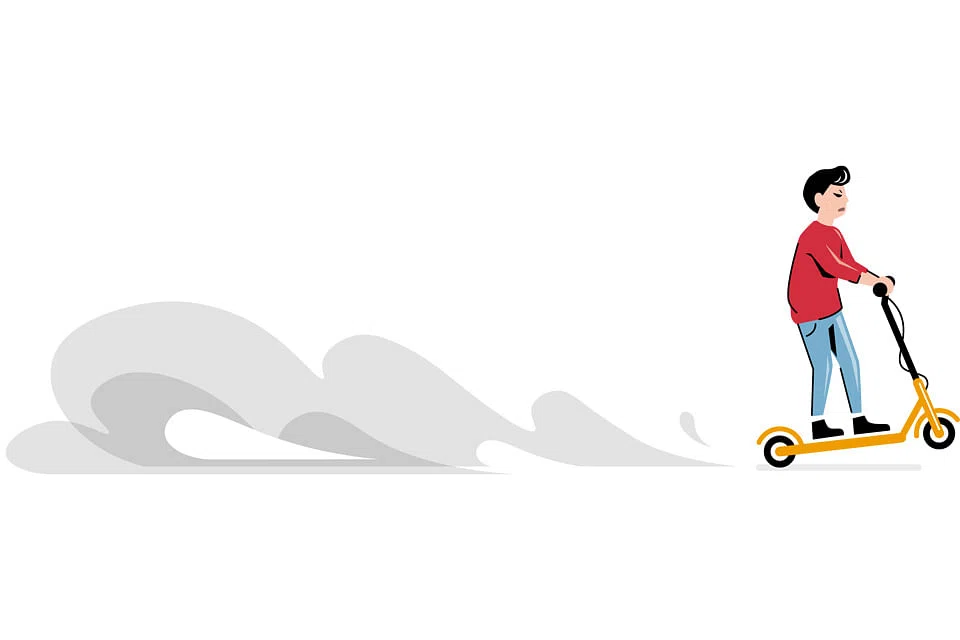
"AIYAH, lady, if you walking so slowly, don't take centre lane, lah!" This sentence was hurled at my mum as a middle-aged man zipped past onhis e-scooter, which is probably now scrap metal in some recycling yard.
The incident, which occurred last month, left my mum bewildered. "Girl ah," she said to me, "I didn't know there was a centre lane in a footpath."
Neither did I.
No, I am not going to join the brouhaha of the recent PMD ban. As Donald Trump put it, there are good people on both sides. In this case, there are good reasons.
The kerfuffle surrounding this polarising object is revealing.
Since its introduction, the PMD has made its presence known in the various media outlets, popping up on news feeds almost on a daily basis.
The e-scooter may be banned, but it is still grabbing headlines. A post circulating on Facebook has a PMD user confronting pedestrians at a bus stop over an alleged staring incident - they were staring, or more likely glaring, at his prized possession.
You know how sometimes, you think you are safe after having crossed the road, only to have a PMD rider blindside you on the pavement? It seems like a lot of us are blindsided by our own rage.
It also seems like there are a lot of angry people nowadays, and I wondered why. After all, most of us living in Singapore don't seem to be lacking much, at least in terms of material posessions.
As I pondered, Aretha Franklin was belting out her hit song in the background: "R-E-S-P-E-C-T, find out what it means to me..."
Then, epiphany struck. As we are caught up in this fast-paced lifestyle, chasing after these wants and those needs, we have lost sight of the basic respect for each other - and hence the anger that comes with the lack of it.
Respect means different things to different people, but I think we can concur that the Oxford dictionary nailed it with its description of "polite behaviour towards or care for someone".
Emily Ortega, head, Psychology Programme at Singapore University of Social Sciences, says: "Perhaps we are living in angrier times, or an age of rage. The emotion of anger exists for a purpose - we feel angry because we feel offended, specifically in response to a violation of our autonomy or our individual rights."
When someone cuts into our lane, or hogs space, we feel slighted, and the natural instinct of the person on the receiving end of such behaviour is to lash out.
Of course, then drama ensues. The PMD is, as it has turned out, but an outlet for us to vent our anger.
The bigger issue facing us in the PMD wars is that we have forgotten that we co-exist with other people in a common space, and both sides deserve the right - and the protection - to go about our lives, and pursue our livelihoods, unhindered.
Instead of recognising that we are part of a bigger community, why does it seem that we are lacking in basic respect towards each other, acting as if we are just a collection of individuals and behaving in anti-social ways?
According to a survey by health service company Cigna, nearly 92 per cent of Singaporeans surveyed were stressed from work, which was higher than the global average of 84 per cent. Of this group, 13 per cent said the stress they faced was unmanageable.
Stefanie Yuen Thio, joint managing partner, TSMP Law Corporation, says: "Singapore's population continues to grow, which is necessary for our economy to flourish. We jostle shoulders with 5.8 million people, packed into 720 sq km of land. Of course the added friction increases stress."
The Mayo Clinic, an American non-profit academic medical centre based in Rochester, Minnesota, mentions in its website that stress affects a person's behaviour, and angry outbursts, irritability, and social withdrawal are some of the symptoms displayed.
These "side effects" of stress are the antithesis of some rules - with respect and communication being among them - that are required forbeing part of a social community. And when we lash out at others - to take out our stress on them - we create a vicious circle, especially if the person on the receiving end hits back, and we start displaying parochial attitudes and anti-social behaviour.
How do we counteract this? There are a gazillion tips online and books written about stress management, so I shall not go into that, but it's useful to find out what stress-relieving outlet best suits you, and stick to it.
Personally, I find talking it out with friends very cathartic, with the caveat being to do it within a reasonable timeframe (no one wants to be Aunt Agony for an extended period of time).
Staying calm also helps to deflect a lot of negativity, and you will probably also be able to empathise with the other person for snapping at you as he/she is probably in a bad mood. And when the other person sees that his/her nasty behaviour towards you is met with equanimity, chances are, they will calm down too.
Ms Yuen Thio says: "I think there's just less physical space for everyone to co-exist. As Singapore gets more crowded with an increasing pace of life, we are going to have to learn as a society to be more considerate and gracious." (Of course, depending on the nature of altercation and injuries, jail time and fines are possible penalties, she adds.)
As personal space grows ever smaller, perhaps it's time we learnt to "be the bigger person" and put aside petty rage.
A friend once said: "If the other party is being obnoxious, it reflects more on that person, so just keep calm and ... uh, walk on."
Copyright SPH Media. All rights reserved.






