3 late artists with inclusive visions
Decades before “diversity” became a buzzword, 3 late artists were already embracing a more empathetic world

Helmi Yusof
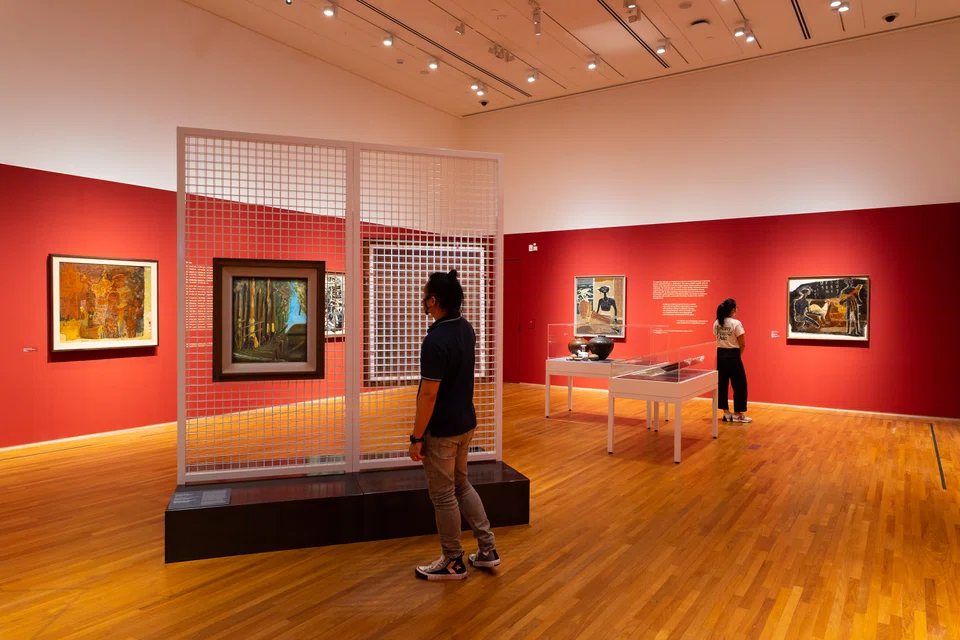
“WHOSE turn is it to speak now?” is the first line of a powerful poem printed on the red walls of National Gallery Singapore’s new exhibition titled Familiar Others. Penned by Filipino poet Gawani Domogo Gaongen, the poem attempts to give voice to her country’s long silenced indigenous communities, particularly their women. (“She who knows the language of her ancestors… the language of the earth… the language of the birds, of wild pigs.”) The poem suggests it’s time to give the marginalised their “turn to speak” about their lives and grievances.
The poem was written in response to a work in the Gallery’s new showcase of 3 late South-east Asian artists, who had looked upon communities other than their own with dignity and respect. Through their writings, paintings and/or photographs, they showed an uncommon interest in depicting and documenting marginalised communities, long before concepts such as “decolonisation”, “orientalism” and “otherness” became popular in critical discourse.
The 3 artists are Singapore’s Yeh Chi Wei (1913 – 1981), who frequently travelled to Sabah and Sarawak and made beautiful paintings that illuminated Borneo’s indigenous peoples and traditions; Indonesia’s Emiria Sunassa (1894 – 1964), who depicted the diverse peoples of the Indonesian archipelago through her art; and Filipino-Catalan photographer Eduardo Masferre (1909 – 1995), who used his camera to capture the indigenous communities of the Cordillera region in the Philippines. The show is curated by the Gallery’s senior curator Phoebe Scott.
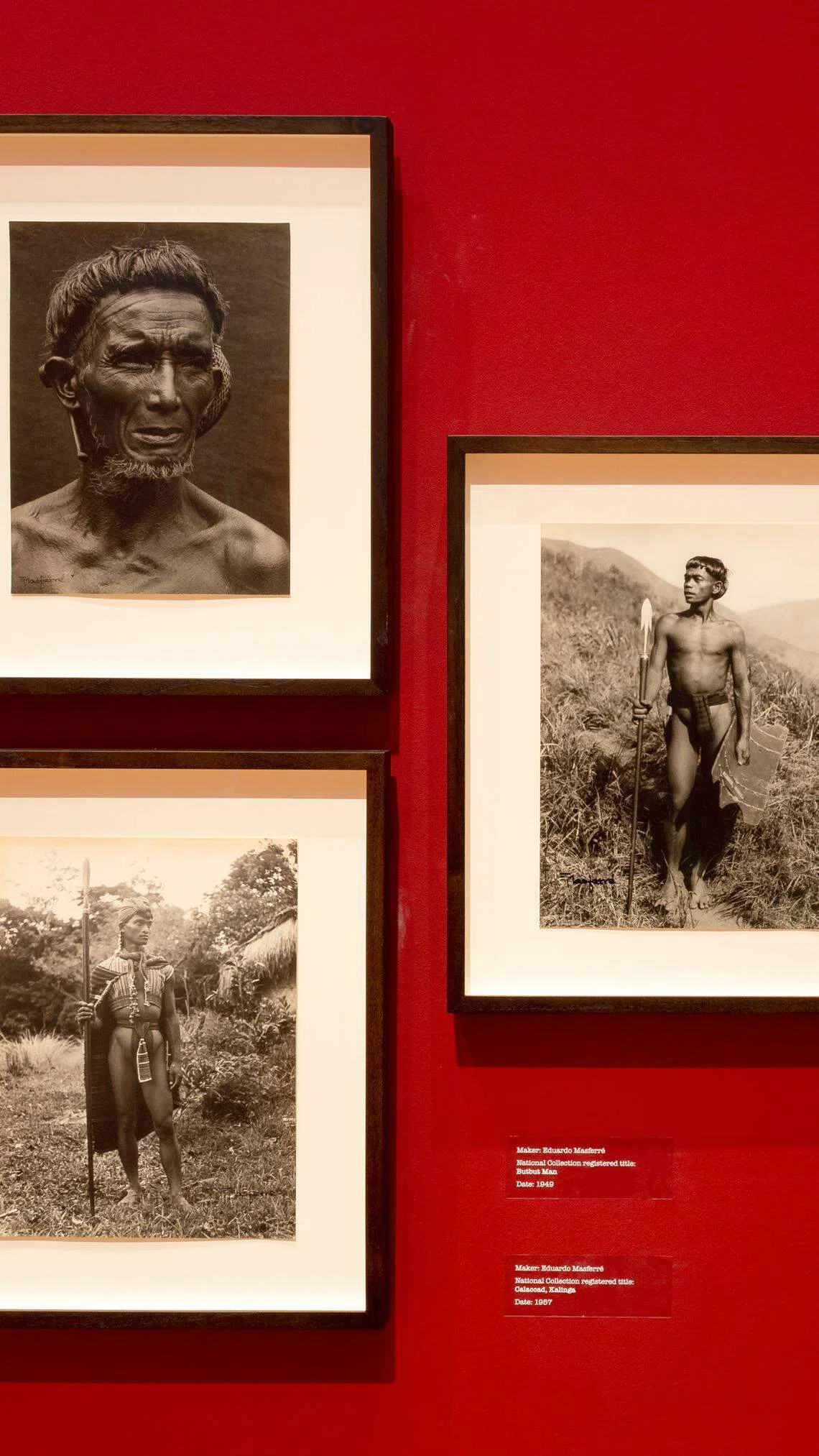
Masferre’s story is perhaps the most compelling of all. He grew up reading articles in National Geographic magazines, which sometimes sensationally depicted the people of mountainous Cordillera region as being potentially dangerous and uncivilised, and therefore incapable of independence. (This kind of perspective helped strengthen the arguments for American colonisation of the Philippines from 1898 to 1946.)
Masferre, who was raised in the Cordillera region, responded by taking up photography so he could document the Kankanaey, Bontoc, Kalinga, Ifugao and Ga’dang peoples of the region with the empathy and respect they deserve. His black-and-white photographs on display, mostly from the 1950s, show these indigenous men and women looking proud, strong and happy in their traditional ways of life.
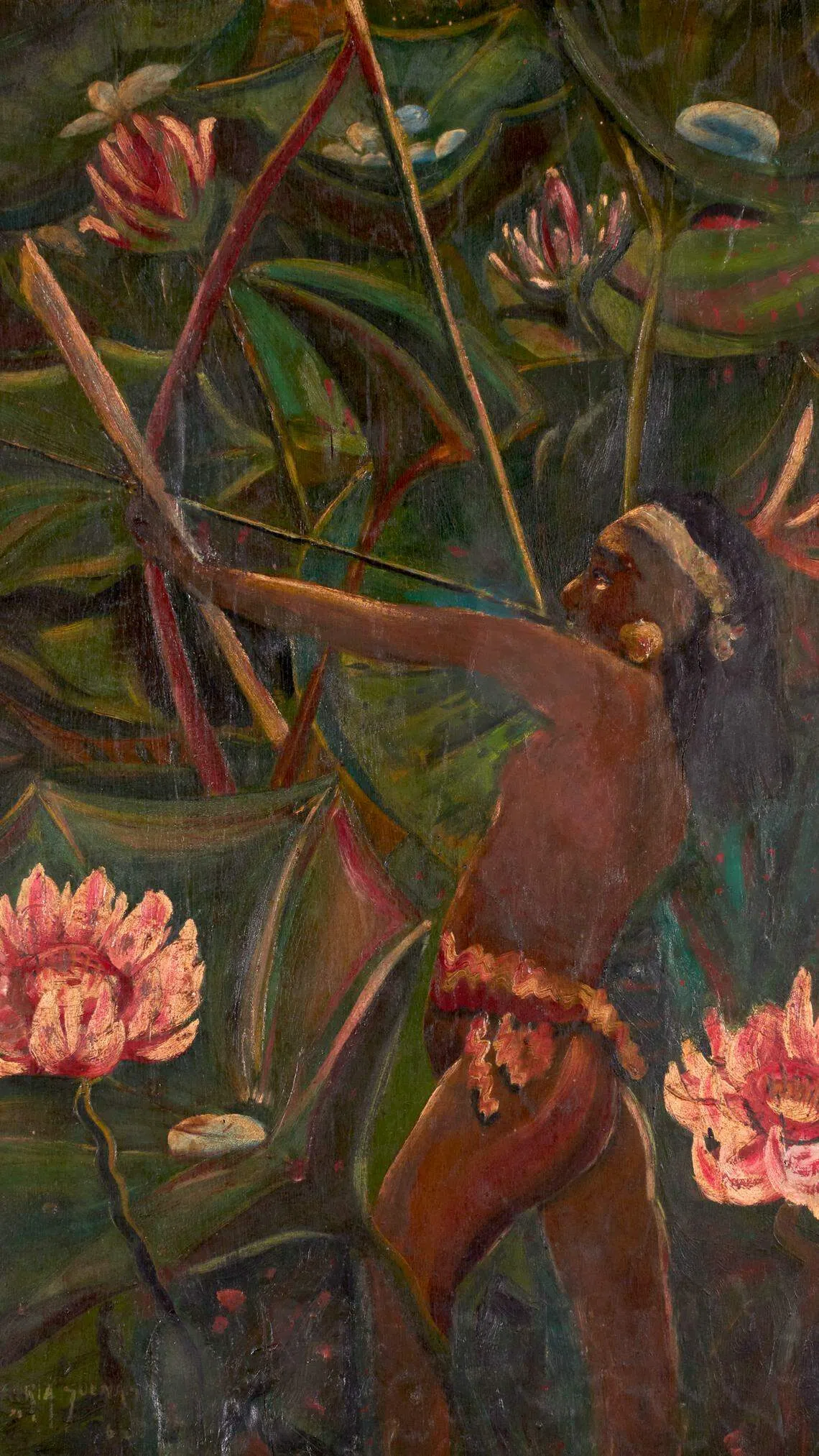
Similarly Emiria’s paintings executed in the 1940s also attempted to give a richer view of minority communities than the one commonly held by most Indonesians. She painted images of Papua, Tidore and/or Dayak individuals, often using the natural environment as the backgrounds.

The Indonesian elites, who were mostly based in Batavia (the old name for Jakarta), knew very little of the communities at the peripheries of the archipelago. Emiria, a pioneering female painter in what was then an almost-purely male art scene, tried to raise the visibility of these people while the country was in the process of forming a national identity during a period known as Indonesian National Awakening.
Finally there is Singapore’s Yeh, a Nanyang artist who portrayed Bornean culture with a keen eye. Born in Fuzhou, China, Yeh moved to Singapore at a young age, then to Sarawak, and then back to China, and finally back to Singapore where he settled for good. Like other Nanyang artists, Yeh wanted to develop a style that combined Chinese, Western and South-east Asian aesthetics. So during the 1960s, he travelled with a collective known as the Ten Men Art Group to many parts of the region.
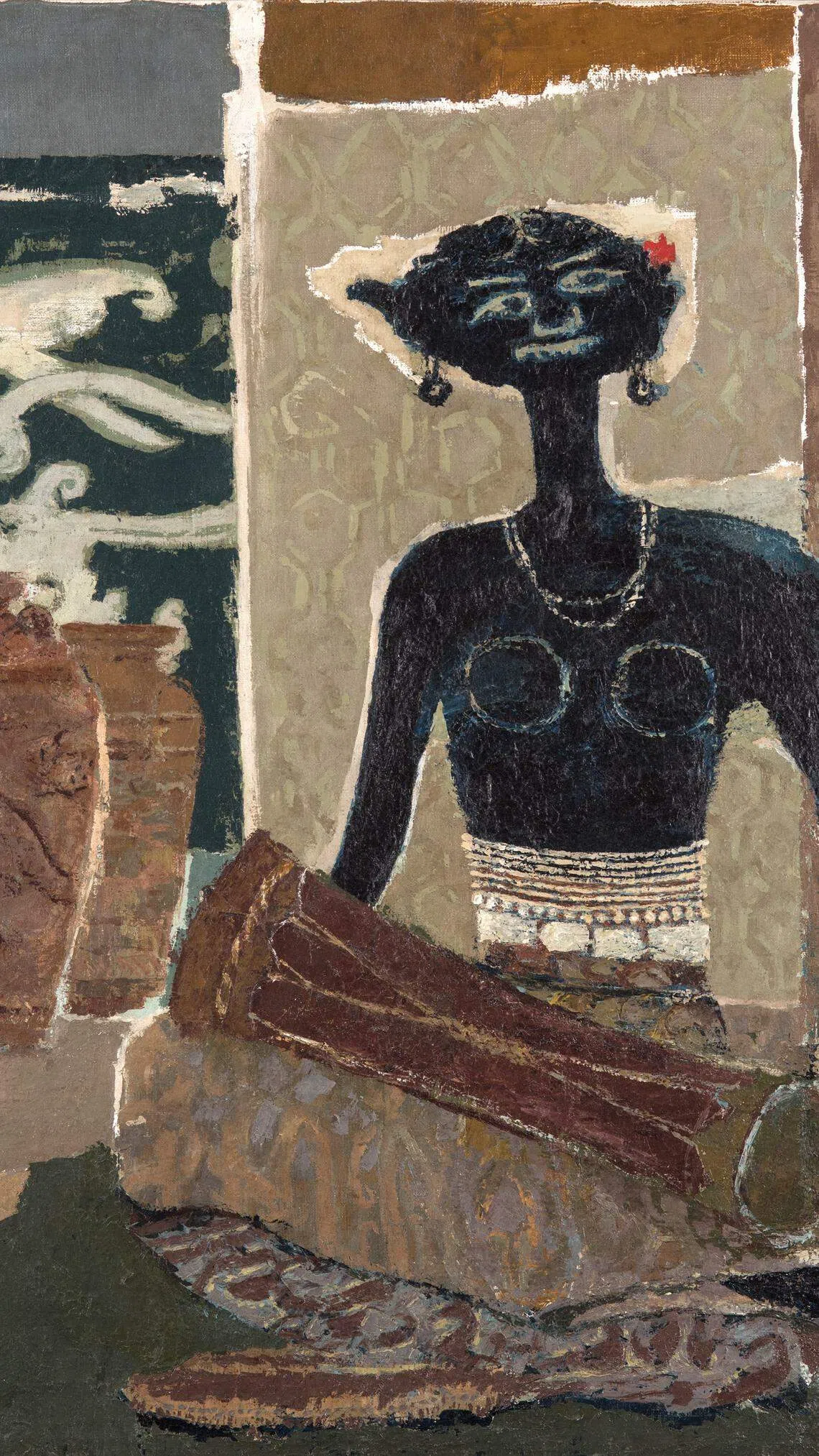
They worked in Ionghouses, befriended the local communities, and studied their habits and hobbies. Yeh purchased handicrafts and antiquities to gain inspiration from the region’s material cultures, and his deep understanding of Bornean cultures led to some beautiful paintings. One of them titled Drummer depicts an Iban woman playing a drum, while surrounded by objects and symbols that carry profound meaning in Iban mythology.

In an era where majoritarian privileges (mostly with regard to race, gender and sexuality) are being scrutinised and challenged in many parts of the world, this show offers a temporary salve through the empathetic and inclusive eyes of long-gone artists.
Familiar Others runs at National Gallery Singapore from now till Feb 19, 2023.
Decoding Asia newsletter: your guide to navigating Asia in a new global order. Sign up here to get Decoding Asia newsletter. Delivered to your inbox. Free.
Copyright SPH Media. All rights reserved.