

A mental health expert finds his balance
IMH's Mok Yee Ming tells of his journey towards striking a much-needed equilibrium in his own life
KEEPING fit was never a priority or even within my radar as a working adult. Back in school, it was easy to stay active. We played games together before school started, and extracurricular activities kept us busy outdoors. As I grew older, I also participated in school sports.
This level of activity became almost non-existent when I finally graduated and started working. The work life meant long working hours, doing shifts while struggling to study at the same time and trying to squeeze time for family and friends. Something had to give. After all, there are only so many hours in the day. And that something was my physical activities. This became even harder once I got married and started a family.
In the beginning, my metabolism could easily help me return to my previous level of fitness within a short period of time. (Especially before having to report for reservist training!)
But as time passed and I got older, it got harder. I was facing higher demands and stress at work. I had difficulty sleeping. I was overweight and facing a number of health conditions. I was miserable.
It all came to a head while on a holiday at Jeju island in Korea. As my family and I were trying to hike up the volcano, our pre-teen kids were bounding up ahead of us while my wife and I struggled to take one step at a time.
After that, we made the commitment to join a gym. It definitely helped us become more toned. But something was still missing. I tried various other activities - pilates, yoga, tai chi and even boot camp. I was apathetic and bored.
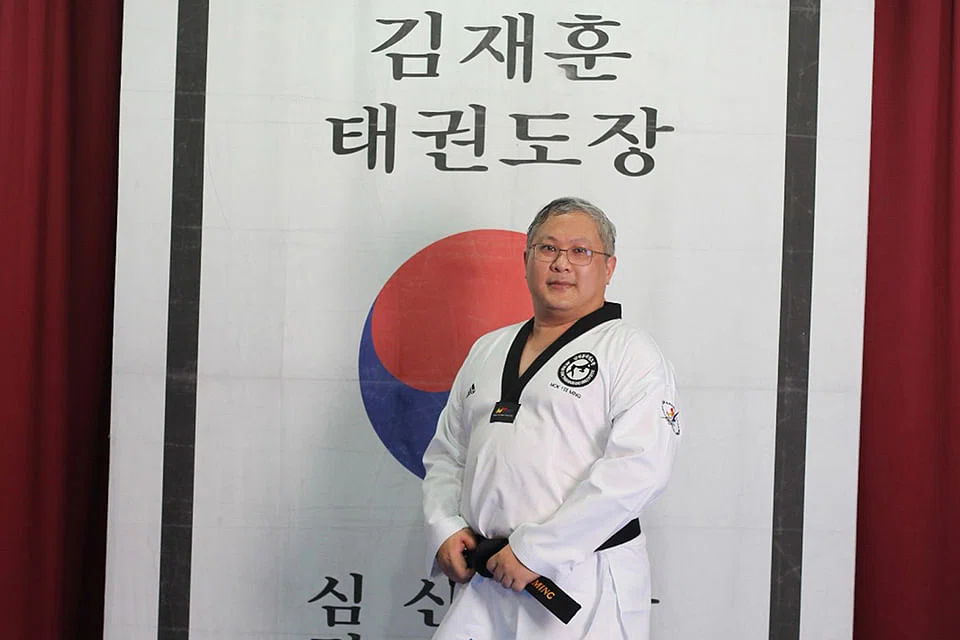
In the end, it was my young son who opened the door. He asked to take up taekwondo as his friends were doing it as well. We decided that it would be a good activity to do as a family.
Today, all of us (wife, three kids and I) have obtained our black belts and are working towards the second grade (dan). Focusing on improving my form, along with the intense physical workouts, has helped me destress from the frustrations of the day. The process has also helped me understand myself better, and led me to pursue activities that spark my interest - which then keep me coming back to them.
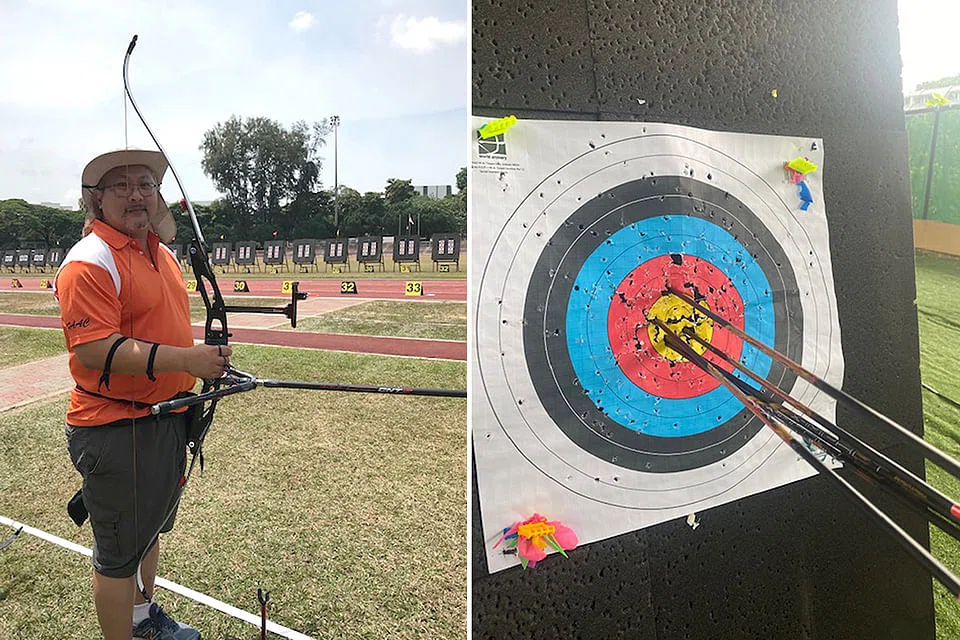
And so, I have taken up archery - a childhood dream.
As with taekwondo, archery has helped me improve my ability to focus and concentrate.
Nowadays, I try to go for taekwondo classes three times a week, archery twice a week and also head to the gym once a week.
It is a heavy commitment. But I have come to realise, at this stage of my life, that this is the balance I need to be able to function with my roles and responsibilities. I sleep better, have more energy and am better able to focus and think. I am able to deal with the stresses associated with my job (and family).
Indeed, this is reflected in scientific literature. Meta-analysis of exercise studies show that regular exercise is beneficial in helping treat depression. Large-scale epidemiological studies have shown that active people who exercised regularly are less depressed and have better mental health. Studies have also shown that more active lifestyles result in better sleep, overall mood improvement and improvements in self-esteem.
A study looking at the relationship between mental and physical health found both direct and indirect links between the two. This means that each is inextricably linked to the other, and good or bad health in one domain affects the other. In the study, physical activity was found to be the largest contributor to the indirect effects.
One would have thought that as a mental health professional, the close links between physical fitness and mental wellness would have been self-evident to me.
However, I needed to walk through this life journey in order to fully appreciate the importance of finding this balance. Now, it has become second nature.
- Dr Mok Yee Ming, 48, is Senior Consultant & Chief, Department of Mood & Anxiety and Assistant Chairman Medical Board (Clinical) at the Institute of Mental Health. He is also a board member of Caregivers Alliance Limited.
Decoding Asia newsletter: your guide to navigating Asia in a new global order. Sign up here to get Decoding Asia newsletter. Delivered to your inbox. Free.
Share with us your feedback on BT's products and services
TRENDING NOW

Grab CEO’s wife Chloe Tong on life with Anthony Tan and finding her purpose
Singapore-based Ryde accused of pump-and-dump fraud in class action lawsuit

Malaysia’s F1 return: A low-cost second chance, possible Singapore boost

Canada is upping oil flows to Asia, but South-east Asia’s refineries aren’t ready to handle them yet

