

A strawberry with a US$10 price tag helps one tsunami-hit town to recover
 Add BT as a preferred source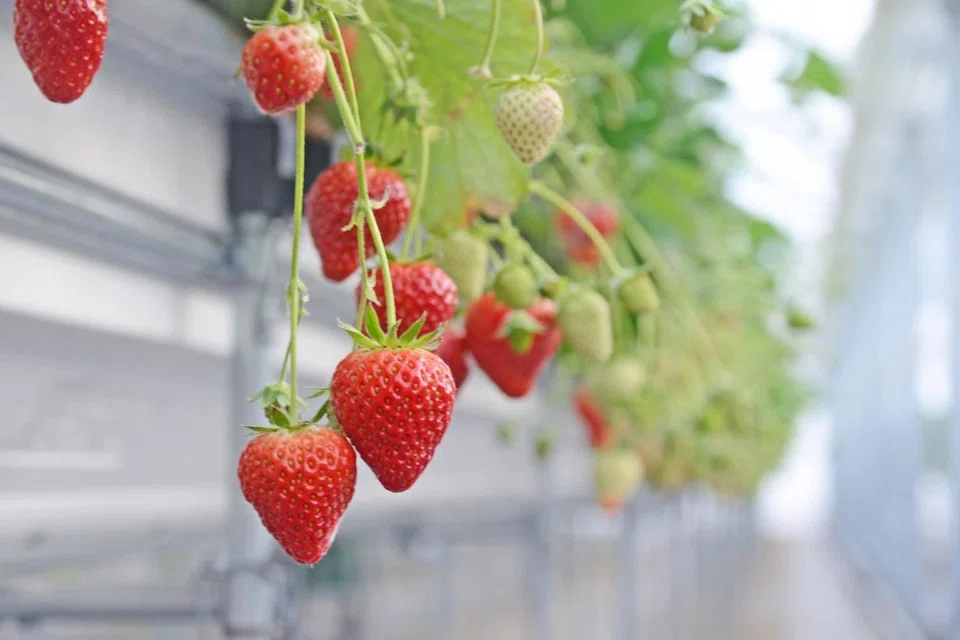
DeeperDive is a beta AI feature. Refer to full articles for the facts.
[TOKYO] Plump, shiny and priced at an eye-popping US$10 each, premium strawberries are helping one Japanese town to recover from the effects of the Tohoku earthquake and tsunami, which destroyed almost all of its agriculture a decade ago.
The coastal town of Yamamoto, a five-hour drive north of Tokyo, is home to about 12,000 residents and counts on strawberries for more than half of its agricultural output. It's part of Miyagi prefecture, one of the country's main regions for producing the fruit.
In March 2011, an earthquake triggered a massive tsunami that wiped out 97 per cent of the town's strawberry-growing greenhouses. Seawater swept over much of the farmland, leaving it too salty for crops to grow.
In the months following the disaster, the town encouraged corporations to help rebuild. Among them was GRA Inc, a startup founded four months after the disaster by the grandson of a local strawberry farmer. The company boosted productivity by consolidating farmland and outfitting greenhouses with technology including crown cooling and LED growth lights. It gained national acclaim - even prompting a 2014 visit from then-prime minister Shinzo Abe - for its Migaki-Ichigo brand of strawberries, which sell for as much as 1,080 yen (S$13.30) each in Tokyo's upscale department stores.
As of 2017, strawberry production in Yamamoto returned to pre-tsunami levels, local government data shows, and the town had estimated production would continue to increase. Production is now higher than in 2011, a spokesperson for the city government confirmed.
"Yamamoto now produces more strawberries than before the disaster," said Keita Takahashi, a native of the town who works at GRA helping farmers. "There's a sense that we're actually achieving a recovery from the disaster."
Navigate Asia in
a new global order
Get the insights delivered to your inbox.
Not every Japanese town has bounced back from the Tohoku disaster so readily. In the neighbouring Fukushima prefecture, where the earthquake triggered a meltdown at the Fukushima Dai-Ichi nuclear power plant, the government is struggling to bring people and jobs back to former ghost towns and some areas remain off limits.
GRA produces 400 tonnes of strawberries across its network annually, and counts the Innovation Network Corp of Japan and NEC Corp's venture arm among its backers. Last June, the startup raised 330 million yen in a Series B round, bringing total funding to 850 million yen since its founding. The company said the money will be used to attract new farmers and boost sales overseas.
High-end fruit has a long history in Japan, where items such as melons, berries and grapes are often given as gifts. Compared to some of the most luxurious examples, GRA's US$10 price tag is relatively modest: At an auction last year, 108 strawberries fetched 1.5 million yen - approximately US$127 per piece.
Strawberries from north-east Japan are known for their balance of sweetness and sourness, and new varieties can prove a selling point for high-end customers. In 2008, farmers in Miyagi prefecture developed a variety called Mouikko, which roughly translates to "just one more".
BLOOMBERG
Decoding Asia newsletter: your guide to navigating Asia in a new global order. Sign up here to get Decoding Asia newsletter. Delivered to your inbox. Free.
Share with us your feedback on BT's products and services
TRENDING NOW

Air India asks Tata, Singapore Airlines for funds after US$2.4 billion loss
‘Boring’ is the new black: The stars are aligning for a Singapore stock market revival

From 1MDB to ‘corporate mafia’: Is Malaysia facing a new governance test?
South-east Asian markets account for 8.8% of global capital inflows from 2021 to 2024: report

