Access Singapore aims to give polytechnic graduate salaries a boost with new scheme
Apprentices will learn soft and technical skills to prepare them for the workforce
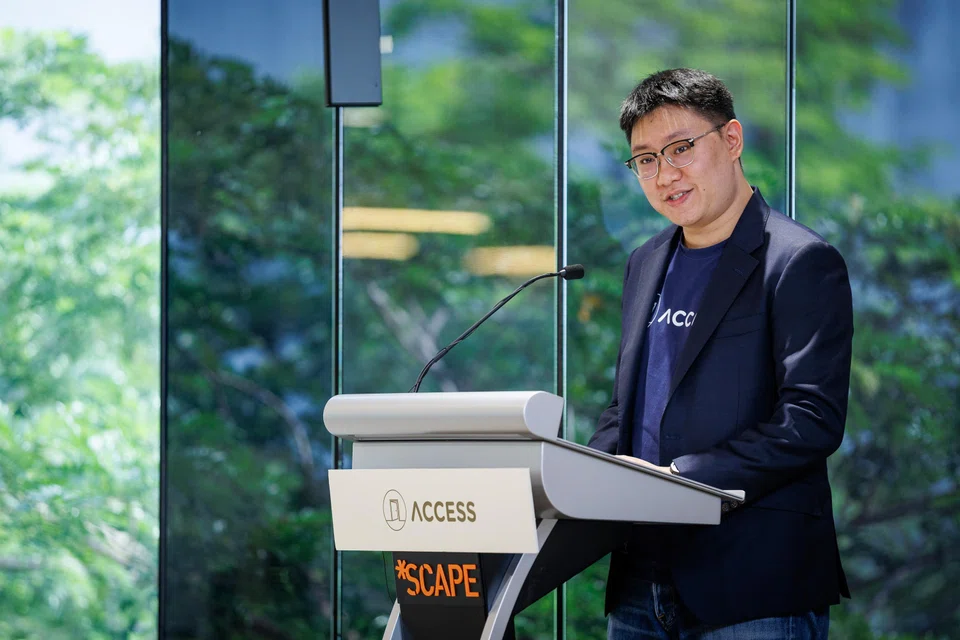
[SINGAPORE] Salaries that are comparable with university graduates and apprenticeship with companies in the auditing, hospitality and energy sectors – that is the promise to polytechnic graduates who become apprentices under charity organisation Access Singapore’s new pilot programme.
Over 18 months, the group will receive support for their beneficiaries ranging from mentorship to building technical and soft skills through on-the-job training.
During this period, the apprentices – including those from disadvantaged backgrounds – will receive monthly stipends. They will also get a professional certificate from the Singapore University of Social Sciences (SUSS).
Professional services firm EY Singapore has joined as a partner organisation, and is looking to host up to 10 apprentices in its assurance and audit practice.
Liew Nam Soon, EY Singapore and Asean managing partner, said: “We’re looking for individuals who are able to work in teams and have a natural curiosity towards learning. Polytechnic graduates tend to work in teams and are very solutions-based, practical and adaptable.”
EY will assign career coaches and employees as mentors to apprentices. Emphasising holistic development, EY will teach apprentices soft skills alongside technical skills to prepare them better for the workplace.
Liew explained: “Knowing how to look at financial statements is a technical skill. But understanding how to interact with clients, negotiating when there are disagreements – these are the kinds of skills that are important when delivering our client services.”
Youth organisation *Scape, another programme partner, will host two apprentices in planning and governance and engagement roles.
Ivy Lim, executive director of *Scape, said: “I believe that polytechnic students bring a strong practice-oriented mindset, with agility and a readiness to engage with real-world challenges – qualities that are vital in today’s fast-changing economy.”

She added that polytechnic graduates are used to collaborating across disciplines, applying skills to practical settings and “learning through doing”, making them “valuable contributors” to the company.
Lim noted: “The learnings we glean from this partnership will inform how we continue to design future programmes, partnerships and spaces at *Scape in a meaningful and intentional manner.”
Other partner organisations include Pontiac Land Group with food and beverage and guest relations roles, and BP Singapore with supply, trading and shipping roles.
Apprentices will complete SUSS’ professional certificate, which focuses on future-ready skills such as stakeholder management, project management and artificial intelligence (AI) skills. LinkedIn will also support apprentices with one-on-one coaching sessions and workshops.
An alternative career pathway
The new programme, launched on Wednesday (Feb 11), will place up to 20 apprentices with partner organisations. Recent polytechnic graduates with less than two years of full-time work experience are eligible.
Clarence Ching, founder and executive director of Access Singapore, said: “We wanted to launch this because there needs to be a strong study-to-work transition… When you look at the market today, many polytechnic students go to universities – not because they want to, but because they feel... corporates cannot pay them well.”
Access hopes to provide an alternative career pathway for polytechnic graduates. Apprenticeships will begin in July; by the end of the programme, participants may be converted into full-time hires.
In comparison, internships and similar programmes are “too short term”, Ching said, with lower allowances and less benefits.
“No one has come in to say they want to do a long-term programme, and at scale. We want to start with a small pilot,” he added. “It’s about providing wraparound support (from mentorship, SUSS and LinkedIn).”
In terms of pay, the stipend range of S$2,700 to S$3,800 that apprentices receive is comparable the average starting salary of S$3,500 for fresh graduates from private education institutions.
Ching also emphasised the importance of learning “21st century skills” such as soft skills including managing clients. Access will also support apprentices with a one-month boot camp to build communication skills.
“The conversation should start now, especially in this skills-based economy. With AI as a great disruptor, what’s more important is soft skills,” he noted.
The launch of the apprenticeship is also in response to a recent Access survey of 400 poly graduates, which found that nearly half of respondents expressed uncertainty about their career advancement opportunities.
“Polytechnic students – with their robust curriculum and different modules, as well as internships and attachments – are ready for work. But in our opinion, they are not given the right opportunities to shine and excel,” Ching felt.
He added that apprenticeships can tackle job anxiety and provide a “safety net” for those who choose not to go to autonomous universities.
Access is in talks with companies from other sectors to join as partners, and hopes to make apprenticeships more mainstream across industries.
Decoding Asia newsletter: your guide to navigating Asia in a new global order. Sign up here to get Decoding Asia newsletter. Delivered to your inbox. Free.
Copyright SPH Media. All rights reserved.