

Alexander Zverev evolved to beat Alcaraz and Sinner. Instead, he beat everyone else
The big-serving German seized an opportunity that his peers could not, by staying healthy and constantly showing up
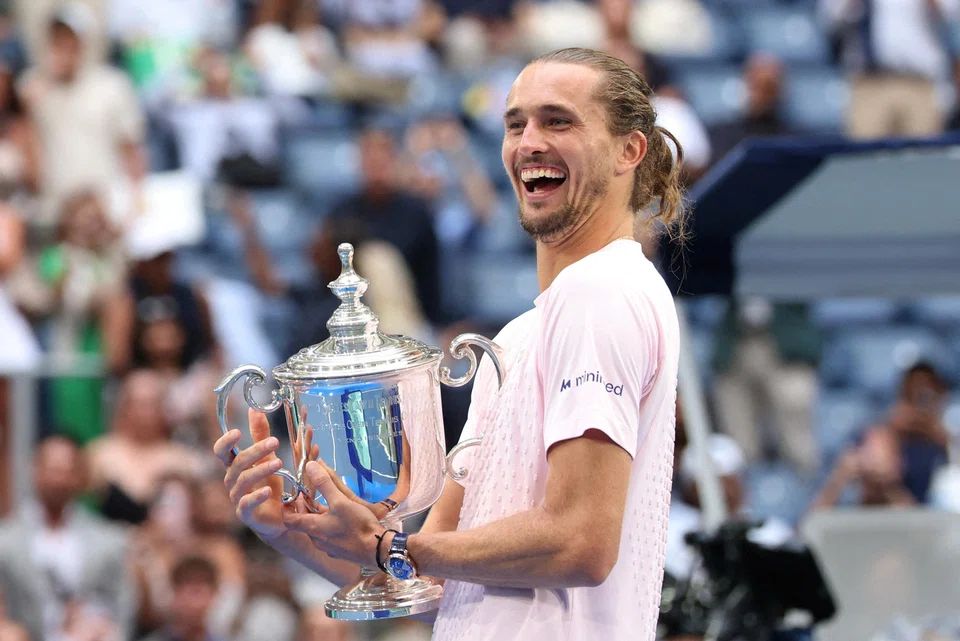
FOR five years, Alexander Zverev and Daniil Medvedev were the standard-bearers for the meat of the sandwich that men’s tennis had become for a generation of players born in the 1990s.
In the early stages of their careers, they had risen toward the top of the sport. In some ways, their combination of searing serves and counterpunching defence was revolutionary.
Zverev and Medvedev dismantled one-dimensional big servers and tested Novak Djokovic, Rafael Nadal and Roger Federer; Medvedev beat Djokovic to win the 2021 US Open and also reached the No 1 ranking.
But mostly, they were shut out of winning Grand Slam titles, leaving them no choice but to wait for the Big Three to move on so they could take over the sport.
But the Big Three refused to budge until their late 30s.
That was long enough for Zverev to experience a rear guard assault from Carlos Alcaraz and Jannik Sinner, who are seven and four years younger than him, respectively.
Zverev, the 29-year-old, big-serving German, was born to Russian parents who raised him to play a style of tennis that could hang in rallies with the greats who had come before him. The result was a series of drubbings by Alcaraz and Sinner in the late stages of Grand Slam tournaments.
That had left Zverev reeling after his loss in the first round of Wimbledon 14 months ago.
“It’s not a feeling on a tennis court, it’s just a life feeling in general,” he said at the time. “It’s difficult to find joy outside the tennis court for me at the moment.”


Feeling lonely
A year later, he said he felt lonely on the court and did not have any answers. His results at major tournaments were going the wrong way. Before long, he would land at Nadal’s training academy, searching for answers that he and his two coaches, his father and brother, did not seem able to deliver.
Alcaraz and Sinner were just too good. They had won all the Majors in 2024 and 2025, and they played each other for the title in three of them last year.
They were young. They were better than Zverev, Medvedev and Stefanos Tsitsipas, the main three characters who had appeared to be heirs to the sport but were now fading. And it didn’t look like Alcaraz and Sinner were going anywhere for a long time. Zverev could not solve them.
As it turned out, he didn’t have to.
After clinching the US Open last weekend, Zverev evaluated his status among the best players in the sport today.
“Right now, at this moment, probably yes,” he said. “Both (Sinner and Alcaraz) healthy and both at the top of their game? Maybe not. If everyone’s healthy, I think Jannik is ahead.”
Winning the biggest tournaments is usually about coming up with some outrageous forehands and backhand and serves in the biggest moments.
Zverev has long done a bit of that, especially with his serve, which is one of the most efficiently lethal in the game, and also with his backhand, which simply never breaks down.
But winning is also about staying healthy and showing up and being able to deal with the elements of the crucible that best-of-five tennis in the Grand Slams can throw at the men’s players. Zverev did that more and better than Alcaraz, Sinner and Djokovic this year.
Now, he has two Grand Slam trophies to show for it. And amazingly, Zverev has been able to collect those two trophies without beating either Alcaraz or Sinner all year.
First, Alcaraz went down with a wrist injury in April. That kept him out of the French Open and Wimbledon. He didn’t play again until this US Open, where he lost to Ben Shelton.
As for Sinner, at the French Open he succumbed to the effects of a heatwave in Paris. A game from escaping the second round in straight sets, he became weak and unable to move and won just one more. Djokovic would lose the following day.
Zverev managed to survive. When he got to the final, Flavio Cobolli, a rising but fragile Italian and the world No 14, was on the other side of the net. Zverev went on to win his first Grand Slam trophy after a five-set battle.
A month later at Wimbledon, Sinner beat him in the final in four sets. Zverev though, playing some of the best and most aggressive tennis of his life, pushed Sinner hard and made him work for it.
A few weeks later, Sinner announced that he was rehabilitating an injured knee and would miss the Cincinnati Open. Two weeks after that, he pulled out of the US Open. Zverev rose to become the top seed.
Alcaraz, now the No 2 seed, was on the other side of the draw. Zverev would not have to face him until the final. But Alcaraz had been on the sidelines for nearly five months, lost in the quarter-finals.
Djokovic had gotten out of the way in the first round, his body failing as he lost in five sets on the first night.
Meanwhile, Zverev was once more working his way through a Grand Slam draw. It was not always pretty. He was two points from elimination in the first round before beating Italy’s Lorenzo Sonego. He needed another five sets in the second round, defeating France’s Quentin Halys.
He survived. Once more, he had put himself in position to pick up the pieces of a draw in which the most decorated players had fallen away before the final weekend.
The sport had entered an era of first-strike tennis and defence out of the corners that included flipping points. Late last season, Zverev promised himself that, win or lose, he was going to play that way, and he has rarely wavered from the plan.
The shift was aimed at trying to compete with Alcaraz and Sinner. It ended up making it more difficult for lesser players to knock him out of big tournaments, as they did last year.
It almost allowed him to topple Sinner at Wimbledon. Against Shelton last Sunday (Sep 13), no matter how far behind the baseline Zverev began during points, he repeatedly worked his way into the court.
In some points, it would take several shots, with Zverev taking one giant step forward after each shot to gain the advantage and push his opponent further back. On so many of his serves, he stood firm right near the baseline and refused to give it up.
Zverev has seized an opportunity that his peers could not. He acclimated to a new era. He got better. He stayed healthy. He kept showing up. This year, that was enough. NYTIMES
Decoding Asia newsletter: your guide to navigating Asia in a new global order. Sign up here to get Decoding Asia newsletter. Delivered to your inbox. Free.
Share with us your feedback on BT's products and services
TRENDING NOW

He built the Vingroup empire. Now South-east Asia’s richest man is handing some key roles to his sons

CPIB hauls Multi-Chem CEO, COO in for questioning; stock hits ‘circuit breaker’
SC Capital Partners sells Rivervale Mall in Sengkang for around S$276 million

From Haidilao to Oriental Kopi: How some of Asia’s favourite F&B players are faring in 2026

