

Among chardonnays, Chablis is not better, just different
 Add BT as a preferred source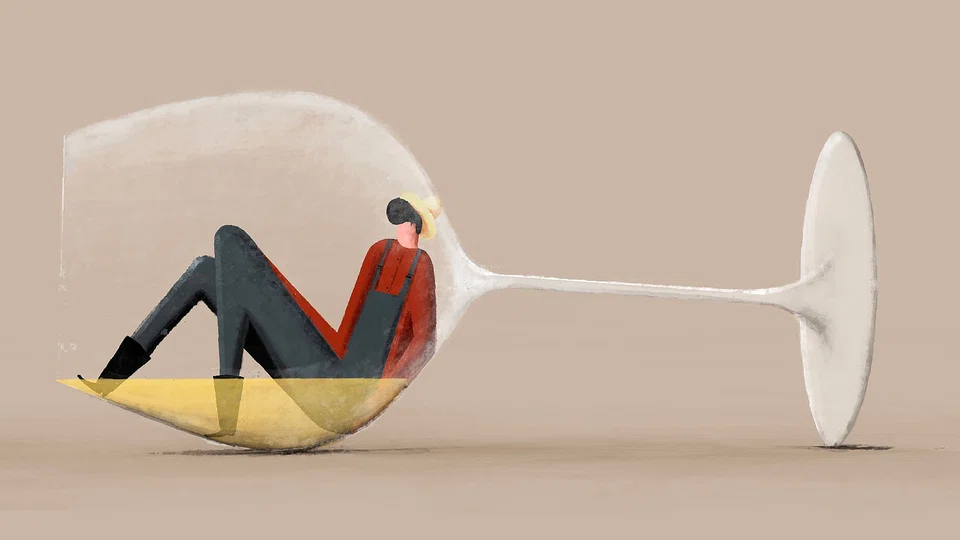
New York
ONCE, years ago, when I was in a restaurant on the Mendocino Coast on a work trip, I overheard an English guy asking the bartender whether she had a white wine with a "butt'ry flavour". I never forgot it because she poured him a California chardonnay that I knew well, one that wasn't remotely buttery. And he loved it.
I took 2 lessons from this incident: First, people are not always able to describe precisely what it is they like or don't like in a wine, and second, what they want is not necessarily restricted to what they think they want.
We have spent the last month drinking and considering Chablis from the 2019 vintage. I suggested three bottles to try. Most of the reaction centred on 2 issues readers associated with chardonnay: oak and butter. Many readers linked the buttery flavour they detested (or in one case loved) to the use of oak barrels. In addition, many implied that this oaky, buttery quality was a common characteristic of chardonnay in general and of California chardonnay in particular.
The butter-and-oak connection to chardonnay is a prime example of how a thought that once had an element of truth evolves into a widely held perception that often is demonstrably wrong.
Here are the three bottles I suggested: Samuel Billaud Chablis 2019, Gilbert Picq & Ses Fils Chablis En Vaudecorse 2019 and Patrick Piuze Chablis Terroir de Fye 2019.
Vintages can affect the character of a wine. This can be particularly telling with a wine like Chablis, which at its best has a particular stony, chalky, seashell minerality that I consider the most distinctive expression of chardonnay. I've seen many chardonnays from elsewhere described as "Chablis-like," but never have I found the characterisation to be true.
This is not to say Chablis is the best chardonnay, only the most singular. The region's terroir - the combination of soils, climate, altitude, inclination to the sun and human input - produces this idiosyncratic wine. But the terroir is fragile, and the biggest variable aside from the human factor is weather, particularly given the continuing effect of climate change.
The years 2017-19 were a case in point. The weather was relatively cool in 2017, with late frosts that diminished yields, but the wines were vibrant and full of Chablis character, which delighted me. The next year was hot and dry, producing ripe, rich wines that were often excellent but seemed less typical of Chablis. They spoke more of the grape, chardonnay, than the place, Chablis.
I'm speaking generally here. We can always find exceptions. As part of Burgundy, Chablis employs a hierarchical system in which every bottle is ranked according to its potential for distinctiveness and greatness. At base are Petite Chablis, followed by Chablis, Chablis Premier Cru and, at the top, Chablis Grand Cru.
It will be interesting to see whether the 2018s, particularly the premier crus and grand crus, develop more Chablis character as they age.
The 2019 vintage was also warm and dry, but not quite as warm as 2018, and the harvest extended longer, as the grapes did not ripen as quickly as in 2018. Tasting the 2019s offered a good opportunity to see whether the wines were more like the '17s or the '18s, though I realise for our purposes a direct comparison between the '18s and '19s would have been even more revealing.
I loved these three 2019s. The Picq seemed to me to be textbook village Chablis, greenish-gold in colour, tense, energetic and saline, with flavours of apples, pears and herbs.
The Piuze was fresh and textured, less incisive than the Picq but more dimensional and exuberant, with flavours that were more floral and citrus than mineral. By contrast, the Billaud seemed quieter, more mellow, lightly mineral, gently saline, thoroughly Chablis-like but without the adolescent energy of the other two.
One of my favourite things about wine is how 3 bottles such as these, all from the same vintage and from roughly the same place, can be simultaneously so alike and yet so different. They reflect the power of the general Chablis terroir, but also the subtle variations between different parcels of land and the differing methods and personalities of their producers.
I want to make 3 points: First, flamboyant, buttery, oaky California chardonnays became popular in the 1980s and '90s, popular enough that producers around the world emulated the style. But over the last 10 or 15 years, the fashion has ebbed. This style continues to have its fans, but California chardonnay is far more stylistically diverse today. Let's not assume that California chardonnay means big, buttery and oaky, because it's just as easy to find taut, steely examples.
Second, as I've suggested, oak is not the villain, though sometimes the way winemakers use oak barrels (or oak adjuncts such as chips, staves or dust) to flavour wines can be nefarious. These days, I find many more wines are enhanced by judicious use of oak barrels rather than harmed by overdoing it.
Interestingly, while oak is overwhelmingly the most popular wood for barrels today, until 50 years ago, many winemaking regions simply used the wood that was prevalent in their areas, such as redwood in California or acacia and chestnut in parts of Europe. Around the fringes, I see a few winemakers today returning to these traditional woods, though in California most redwoods are now protected and won't be showing up in new vats for wine.
Finally, the influence of oak has little to do with the perception of a buttery flavour. That quality, properly known as diacetyl, is a by-product of malolactic fermentation, in which bacteria transform sharp malic acid into softer lactic acid, which is found in dairy products such as butter, milk and cheese.
When malolactic is properly managed, the buttery sensation is not noticeable. In fact, it used to be considered a fault until American critics in the 1980s and subsequently the public began to embrace it.
Here's the bottom line, and you can extend this from chardonnay to just about any kind of wine: Don't blame the grape or the container; they are almost never at fault. Most problems in wine can be traced to the producer, whether in the vineyard or in the winemaking.
I have learnt this the hard way. Truth be told, I'm still learning it. NYTIMES
Decoding Asia newsletter: your guide to navigating Asia in a new global order. Sign up here to get Decoding Asia newsletter. Delivered to your inbox. Free.
Share with us your feedback on BT's products and services
TRENDING NOW
Profit with purpose: Kim Choo Kueh Chang’s pivot from public listing to protecting heritage
Singapore Kitchen CEO, senior manager charged with alleged fraud, falsifying accounts; both to stay in jobs for now

Yeo’s, Tiger Beer and now Gardenia – flight of food manufacturing from Singapore might be just as planned

Should you sacrifice some CPF Life income in favour of ILPs? Tread carefully

