

An acclaimed playwright on masks and the return to the stage
In real life, a neat resolution and return to the old status quo is often not possible.
 Add BT as a preferred source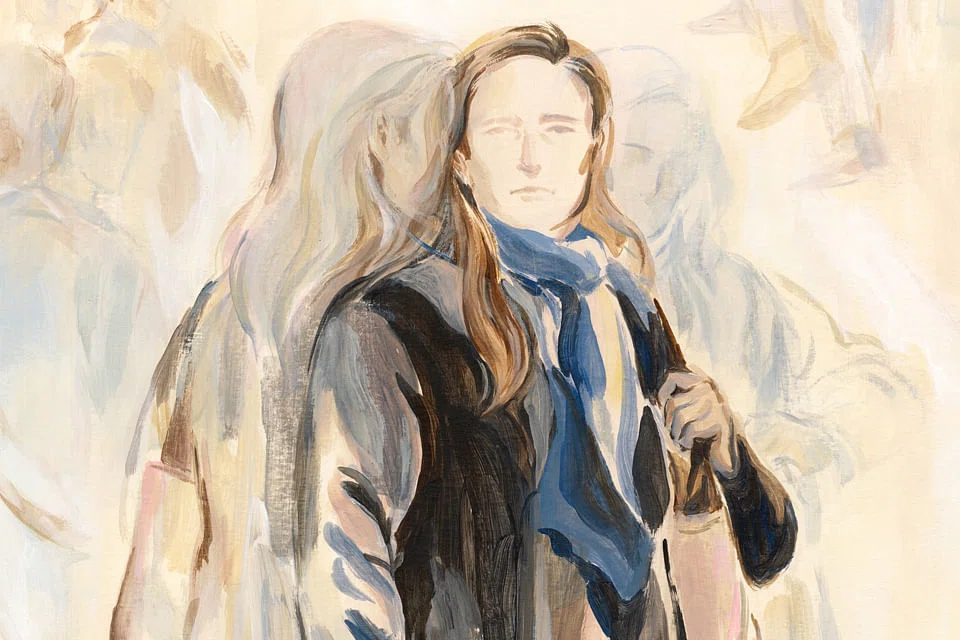
New York
IN the theatre, we smile. We smile because the show must go on. We smile, to quote Nat King Cole, even when our hearts are breaking. Unless we are performers in a tragedy, we put on some glitter and we sail out into the night, towards the theatre district. Even writers, the least performative of the lot, smile.
About a decade ago, I was nominated for a Tony Award for my play In the Next Room, or the Vibrator Play. I was thrilled with the news, but you wouldn't have known it from looking at my face. A month earlier, after giving birth to twins, I had been diagnosed with Bell's palsy, a paralysis of the seventh cranial nerve. I quite literally could not smile.
When I went to a photo shoot to celebrate the Tony nominees, a phalanx of photographers shouted at me: "Smile!" When I tried and failed, one photographer looked up from his camera at me and said: "What's wrong with you? Can't you smile for your Tony Award?" "No," I said, "my face is paralysed." Chagrined, he quietly took my photo and the next dazzler in line on the red carpet stepped forward.
For most people with Bell's palsy, relief comes relatively quickly, the vast majority recovering their smiles in three months. But for the unlucky minority that I was in, there was a slow and uncertain path to moving facial muscles again, and for years, an unfamiliar person stared back at me in the mirror.
I was, to overuse a metaphor, masked, even to myself. I felt lucky to be a playwright rather than an actor, whose canvas is his or her face. But, at least before the pandemic, I was around actors constantly, and longed to mirror their expressions in a rehearsal room. I did not want to be only an opaque judging playwright at auditions; I wanted to inhabit the actors' joy, or sadness, and partake of the strange communion between performers and their first audience. I never expected that one day, during a pandemic, we would all come to the theatre masked.
After my diagnosis, the doctor told me I would most likely be better in only a couple of months. The realisation that one is dealing with a chronic condition rather than a temporary one is painful. I know how dislocating, and disappointing that can be. Denial is one method of grappling with an in-between state, and I used it well for many years. But looking in the mirror, unmasked, is another method, which I finally tried, in the form of writing about my experience.
I resisted writing about Bell's palsy for many years because it seemed to belong to the land of the private, the disappointing, rather than the narrative structure I was used to - which has a catharsis in the third act. But I decided that the disappointing, and the chronic, was worth investigating, partly because it is so often invisible in a culture that prefers neat arcs.
The chronic illness narrative is one that many of us would rather not wrap our minds around. Our cultural preference is, I think, for an illness narrative that offers a complete return to health in the last chapter - an apotheosis - the chronic condition banished to the shadows.
But there are so many illnesses that offer an incomplete recovery, and give us instead a messy in-between state of being to contend with, whether we're talking about paralysis, pandemics, or even social upheavals. A neat resolution, a neat return to the old person, the old status quo, is often not possible. In certain cases, a return to what came before is not even desirable.
As we come back to the theatre with our masks on, I find myself thinking about covered-up smiles. When I went to Pass Over, my first Broadway show after 18 months of longing, the performers were unmasked in every sense of the word. They revealed themselves with all the bravery demanded by the beautiful and honest language of Antoinette Nwandu's extraordinary play. In a sharp reversal of Greek antiquity, the audience was masked and the performers were not.
Greek masks in ancient theatre were both practical and ritualistic; they allowed performers to change roles and genders, and also to let an immortal howl out of a face that became more than mortal with artifice. From African masks in theatre and dance, to Tibetan masks in ceremonial traditions, to commedia dell'arte masks in 15th-century Italy, masks were thought to unleash an almost supernatural power in the actor.
But masked theatre in the West is now rare, and the particular genius of most New York actors is they can make us believe that they are revealing themselves fully while they are in fact masked by a role. So, two weeks ago, we in the audience sat in actual masks, in reverent silence, seeing the actors' naked faces once again, feeling the incredible warmth of communal theatre.
I know I am not the only one in the theatre community who feels oddly dislocated now; the quarantine itself was awful but had a glacial clarity about it; at least one knew what to do - one stayed put.
Now that theatre, dance and music (our secular New York City worship rituals) are back, there is celebration, and, I find, a sense of floating oddly - in a landscape that should feel like home.
If I thought there would be a knife-edged clarity to the return to the theatre, as though I could walk in the door of my childhood home and pick up right where I left off, the warm mug still on the table where I left it - I was mistaken. The liquid in the mug needs to be warmed. The mirrors need to be dusted. Can we still recognise our faces in those same mirrors we have been accustomed to using, to confirm our identities in the eyes of the people we trust and work with?
I suspect that, behind our masks right now, some of us don't even feel ready to smile yet. How to return to life after a long illness as an individual, or as a theatre community, or as a body politic, especially when there is not a clear return to health? And how to acknowledge the losses, the transformations, the seismic gaps?
When I ran into colleagues at the theatre recently, most of whom I had not seen in 18 months, all of us masked, partially revealed, the simple question: "How are you?" hovered with new weight. I did not know who, in the last year and a half, had had a marriage break up; or a teenager going through a mental health crisis; or lost a parent, an aunt, a cousin, a spouse; who was suffering from long Covid; who might not be able to afford paying the rent. So to ask "How are you?" no longer felt like small talk.
We relied on our eyes above our masks to make connections. And then the theatre darkened, the curtain went up, and we revelled in the unmasked actors giving us their full-throated artistry. If actors have always been avatars for what we cannot express, they seemed even more so now. NYTIMES
- Sarah Ruhl is a playwright, essayist and poet living in Brooklyn. Her new book is Smile: The Story of a Face, published by Simon & Schuster.
Decoding Asia newsletter: your guide to navigating Asia in a new global order. Sign up here to get Decoding Asia newsletter. Delivered to your inbox. Free.
Share with us your feedback on BT's products and services
TRENDING NOW

Tiger Brokers, Moomoo, Longbridge Singapore units ‘financially independent’ amid China crackdown: MAS

Yeo’s, Tiger Beer and now Gardenia – flight of food manufacturing from Singapore might be just as planned

Johor property old hand KSL readies family handover amid market boom

As India and China surge ahead with nuclear energy, all eyes on Asean’s next move

