

Antiquities dealer admits mass-producing fakes he sold for years
Prosecutors say he appears to be among the biggest purveyors of fake artifacts in the US, based on his 'substantial financial gains' and the longevity of his business
 Add BT as a preferred source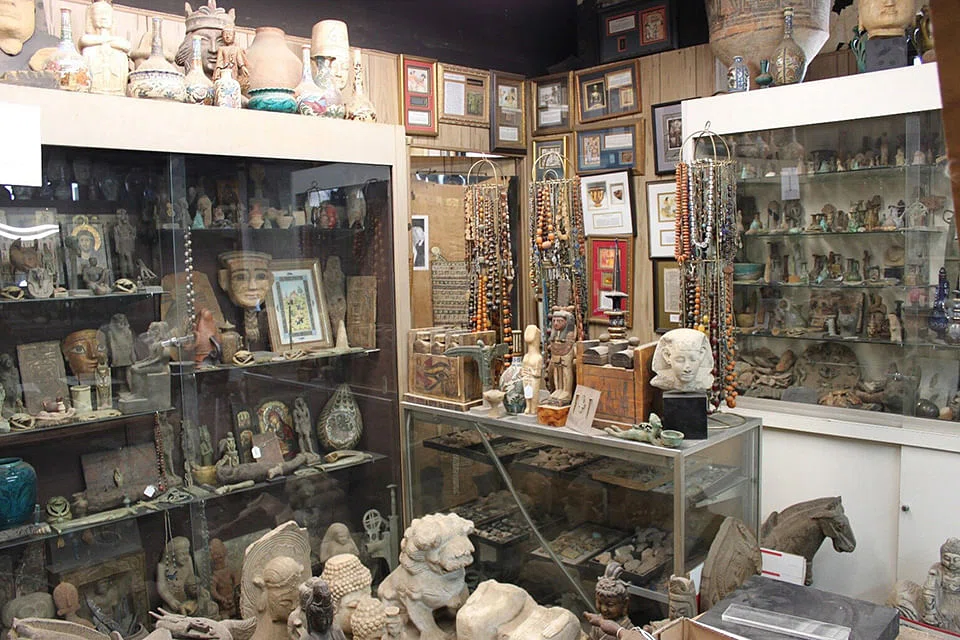
FOR decades, customers interested in all manner of rarities - ancient coins, sarcophagus masks, prehistoric fossils - went to Mehrdad Sadigh's gallery near the Empire State Building in Manhattan. The items came with certificates of authenticity, and the gallery's website was filled with accolades from customers who appreciated the gracious touch he brought to his business.
"Everything I have acquired from you over the years has more than exceeded my expectations," one testimonial read.
But Sadigh acknowledged on Tuesday (Oct 12) during a hearing that much about his antiquities business was an elaborate scam.
"Over the course of 3 decades I have sold thousands of fraudulent antiquities to countless unsuspecting collectors," he said, according to the statement he read in state Supreme Court in Manhattan, adding, "I can only say that I was driven by financial greed."
Many of the objects he was selling were not centuries-old artifacts unearthed overseas and imported to New York, investigators had said, but were, rather, phony specimens, mass-produced in a warren of offices just behind his showroom.
Sadigh pleaded guilty to 7 felony counts that included charges of forgery and grand larceny. In a sentencing memorandum filed with the court, the district attorney's office asked that Sadigh, who has no previous record of arrests, be sentenced to 5 years' probation and banned from ever again being involved in the sale of antiquities, "both genuine and fake".
Navigate Asia in
a new global order
Get the insights delivered to your inbox.
In describing his scheme in court, Sadigh said that to hide his deceptions he had hired a company to flag, remove and bury Google search results and online reviews that suggested that some of what he had sold might be inauthentic.
He also admitted to getting others to post glowing, but false, reviews of his gallery, inventing dozens of appreciative customers.
After Sadigh was arrested in August, prosecutors said he appeared to be among the biggest purveyors of fake artifacts in the country, based on his "substantial financial gains" and the longevity of his business.
Established in 1978 as a small mail-order company, a website for Sadigh's gallery said, the gallery moved in 1982 to an upper floor of a building at Fifth Avenue and East 31st Street. From that location, Sadigh offered for sale items that he said were ancient Anatolian, Babylonian, Byzantine, Greco-Roman, Mesopotamian and Sumerian.
Prosecutors said that undercover federal investigators bought a gold pendant depicting the death mask of Tutankhamen and a marble portrait head of an ancient Roman woman - paying US$4,000 for each - from his gallery.
Those sales became the basis for a visit to the gallery by members of the district attorney's office and Department of Homeland Security investigations. Officials said they found hundreds of fake artifacts on display and thousands more in back rooms in differing stages of preparation.
Matthew Bogdanos, the chief of the district attorney's Antiquities Trafficking Unit, said in August that Sadigh had been using a sort of assembly-line process, involving varnish, spray paints and a belt sander, that seemed designed to alter contemporary mass-produced items so they would appear aged.
In court on Tuesday, Sadigh acknowledged that the objects he sold "had an antique patina through paint, chemical processes, and the addition of dirt to their surfaces" because that made them seem as if they were ancient treasures recently excavated from archaeological sites.
The prosecution of Sadigh was something of a departure by the Antiquities Trafficking Unit, which generally pursues people dealing in artifacts that have been looted from places like Afghanistan and Egypt.
Sadigh came to the attention of investigators, Bogdanos has said, when dealers being pursued for trafficking plundered antiquities complained about "the guy selling all the fakes". NYTIMES
Decoding Asia newsletter: your guide to navigating Asia in a new global order. Sign up here to get Decoding Asia newsletter. Delivered to your inbox. Free.
Share with us your feedback on BT's products and services
TRENDING NOW

On the board but frozen out: The Taib family feud tearing Sarawak construction giant apart

Asean+3 has made strong progress on cross-border payment connectivity, but more work lies ahead

Indonesia targets year-end start for US$30 billion clean power exports to Singapore
Seatrium surge leads Singapore stocks slightly higher on Tuesday; STI up 0.1%

