

Apocalypse becomes the new normal
The big question is whether the proliferation of climate-related disasters will finally be enough to break though the opposition to action.
 Add BT as a preferred source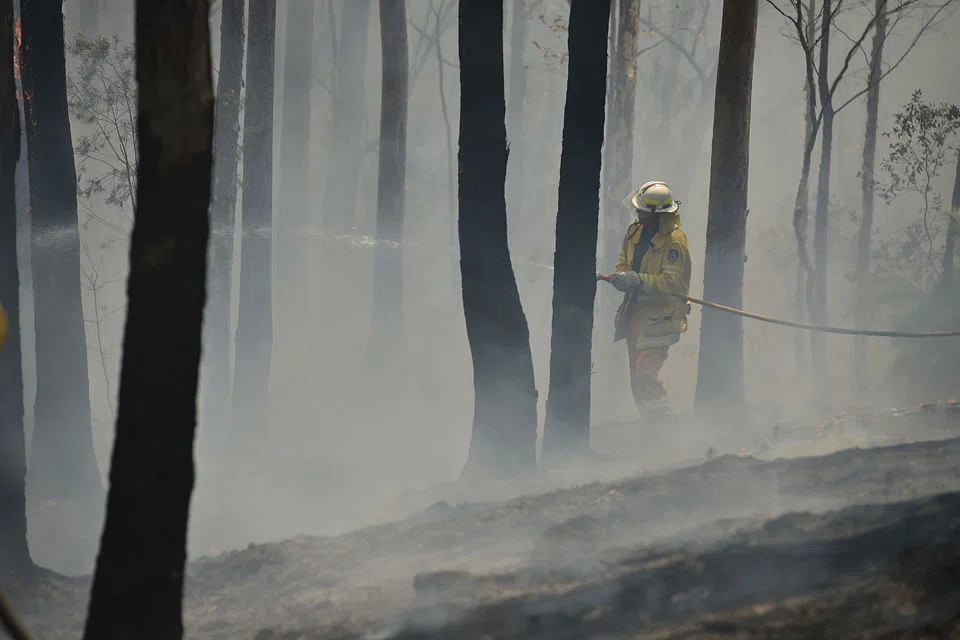
THE past week's images from Australia have been nightmarish: walls of flame, blood-red skies, residents huddled on beaches as they try to escape the inferno. The bush fires have been so intense that they have generated "fire tornadoes" powerful enough to flip over heavy trucks.
The thing is, Australia's summer of fire is only the latest in a string of catastrophic weather events over the past year: unprecedented flooding in the American Midwest, a heat wave in India that sent temperatures to 123 degrees, another heat wave that brought unheard-of temperatures to much of Europe.
And all of these catastrophes were related to climate change.
Notice that I said "related to" rather than "caused by" climate change. This is a distinction that has flummoxed many people over the years. Any individual weather event has multiple causes, which was one reason news reports used to avoid mentioning the possible role of climate change in natural disasters.
Extreme weather events
In recent years, however, climate scientists have tried to cut through this confusion by engaging in "extreme event attribution", which focuses on probabilities: you can't necessarily say that climate change caused a particular heat wave, but you can ask how much difference global warming made to the probability of that heat wave happening.
And the answer, typically, is a lot: climate change makes the kinds of extreme weather events we've been seeing much more likely.
And while there's a lot of randomness in weather outcomes, that randomness actually makes climate change much more damaging in its early stages than most people realise. On our current trajectory, Florida as a whole will eventually be swallowed by the sea, but long before that happens, rising sea levels will make catastrophic storm surges commonplace. Much of India will eventually become uninhabitable, but killing heat waves and droughts will take a deadly toll well before that point is reached.
Put it this way: while it will take generations for the full consequences of climate change to play out, there will be many localised, temporary disasters along the way. Apocalypse will become the new normal - and that's happening right in front of our eyes.
The big question is whether the proliferation of climate-related disasters will finally be enough to break though the opposition to action.
There are some hopeful signs.
One is that the news media has become much more willing to talk about the role of climate change in weather events. Not long ago it was all too common to read articles about heat waves, floods and droughts that seemed to go to great lengths to avoid mentioning climate change. My sense is that reporters and editors have finally gotten over that block.
The public also seems to be paying attention, with concern about climate change growing substantially over the past few years.
Yet in America, the bad news is that growing climate awareness is mainly taking place among Democrats; the Republican base is largely unmoved.
And the anti-environmental extremism of conservative politicians has, if anything, become even more intense as their position has become intellectually untenable. The right used to pretend that there was a serious scientific dispute about the reality of global warming and its sources. Now Republicans, and the Trump administration in particular, have simply become hostile to science in general. Hey, aren't scientists effectively part of the deep state?
Furthermore, this isn't just a US problem. Even as Australia burns, its current government is reaffirming its commitment to coal and threatening to make boycotts of environmentally destructive businesses a crime.
The horrors ahead
The sick irony of the current situation is that anti-environmentalism is getting more extreme precisely at the moment when the prospects for decisive action should be better than ever.
On one side, the dangers of climate change are no longer predictions about the future: We can see the damage now, although it's only a small taste of the horrors that lie ahead.
On the other side, drastic reductions in greenhouse gas emissions now look remarkably easy to achieve, at least from an economic point of view. In particular, there has been so much technological progress in alternative energy that the Trump administration is trying desperately to prop up coal against competition from solar and wind.
So will environmental policy play a role in the 2020 campaign?
Most Democrats seem disinclined to make it a major issue, and I understand why: historically, the threat posed by right-wing environmental policy seemed abstract, distant and hard to run on compared with, say, Republican attempts to dismantle Obamacare.
But the wave of climate-related catastrophes may be changing the political calculus. I'm not a campaign expert, but it seems to me that campaigns might get some traction with ads showing recent fires and floods and pointing out that President Donald Trump and his friends are doing everything they can to create more such disasters.
For the truth is that Mr Trump's environmental policy is the worst thing he's doing to America and the world. And voters should know that. NYTIMES
Share with us your feedback on BT's products and services
TRENDING NOW

MedPark’s assistant CEO runs a hospital where patients, physicians precede profits

E-commerce is killing ‘real’ commerce, says China’s beverage king Zhong Shanshan

Laos-China Railway picks up steam, but S-E Asian country struggles to capture gains
NDR 2026: Singapore to create new Western island to support 'new generation of industries'

