Arabic calligraphy art, with a twist
Islamic calligraphy takes on unusual dimensions in the hands of Indonesian artists

Helmi Yusof
IT DOES not matter if you do not read Arabic, the calligraphy of this ancient language possesses a captivating beauty of its own. The graceful curves, intricate tangles and delicate dots come together to create an aesthetic that can be admired independently.
Throughout history, Islamic culture has fostered a rich artistic tradition centred around calligraphy, and these exquisite images have adorned homes worldwide as decorative pieces.
However, the latest exhibition at the National Gallery Singapore aims to go beyond showcasing the allure of these artistic forms. Entitled The Neglected Dimension, this exhibition brings together four Indonesian artists who have received their training in Bandung, an important art hub in the region.
What makes their interpretations of Islamic calligraphy truly fascinating is the profound influence of Indonesia’s cultural heritage on their practices, combined with the innovative aesthetics of modern and contemporary art.
The exhibition delves into the period from the 1960s onwards when calligraphy and abstraction became intertwined as prominent modes of artistic expression in Indonesian art.
The four featured artists – Ahmad Sadali (1924 -1987), AD Pirous (b 1932), Haryadi Suadi (1938 - 2016), and Arahmaiani (b 1961) – are associated with modernist artistic training in Bandung. Their exposure to modern art came through Dutch teachers during their studies at the Faculty of Art and Design, Institut Teknologi Bandung, or through travels to Western Europe and North America.

Within the context of Indonesia and South-east Asia, the formal experimentation in calligraphic abstraction represents a concrete rediscovery of what prominent Indonesian art critic Sanento Yuliman termed in Bahasa “dimensi yang tersisihkan” or “the neglected dimension.”
Calligraphy and abstraction offered artists a means to reinterpret Islamic material traditions and expressions of spirituality that had previously been marginalised in the region’s modern art history.
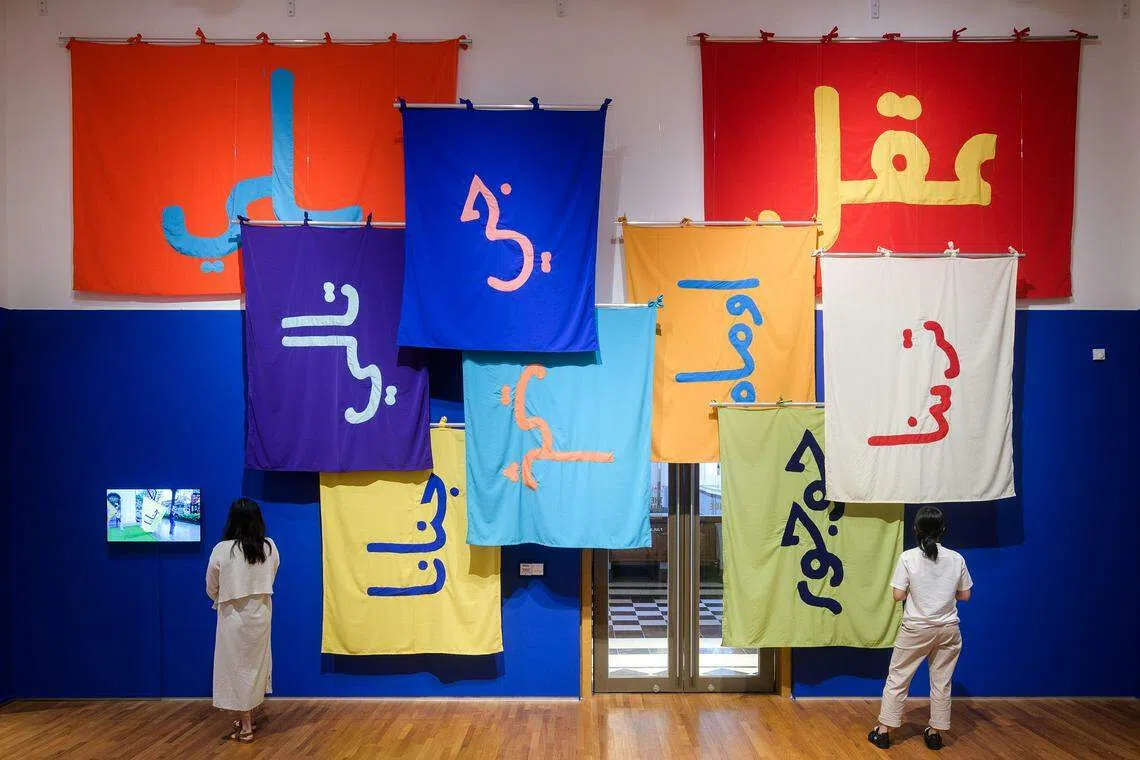
Among the notable artworks in the exhibition are sewn flags created by Arahmaiani, one of Indonesia’s best known female artists. Arahmaiani embarked on a journey across South-east Asia to countries with Muslim populations, searching for different adaptations of Arabic script used in local languages.
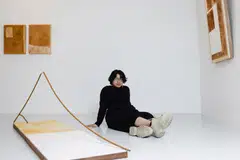
She then crafted various flags bearing words associated with love, justice, and belonging in Thai, Tagalog, Balinese, Javanese, and other versions of the Arabic script – to create an inspiring celebration of diversity amid unity.
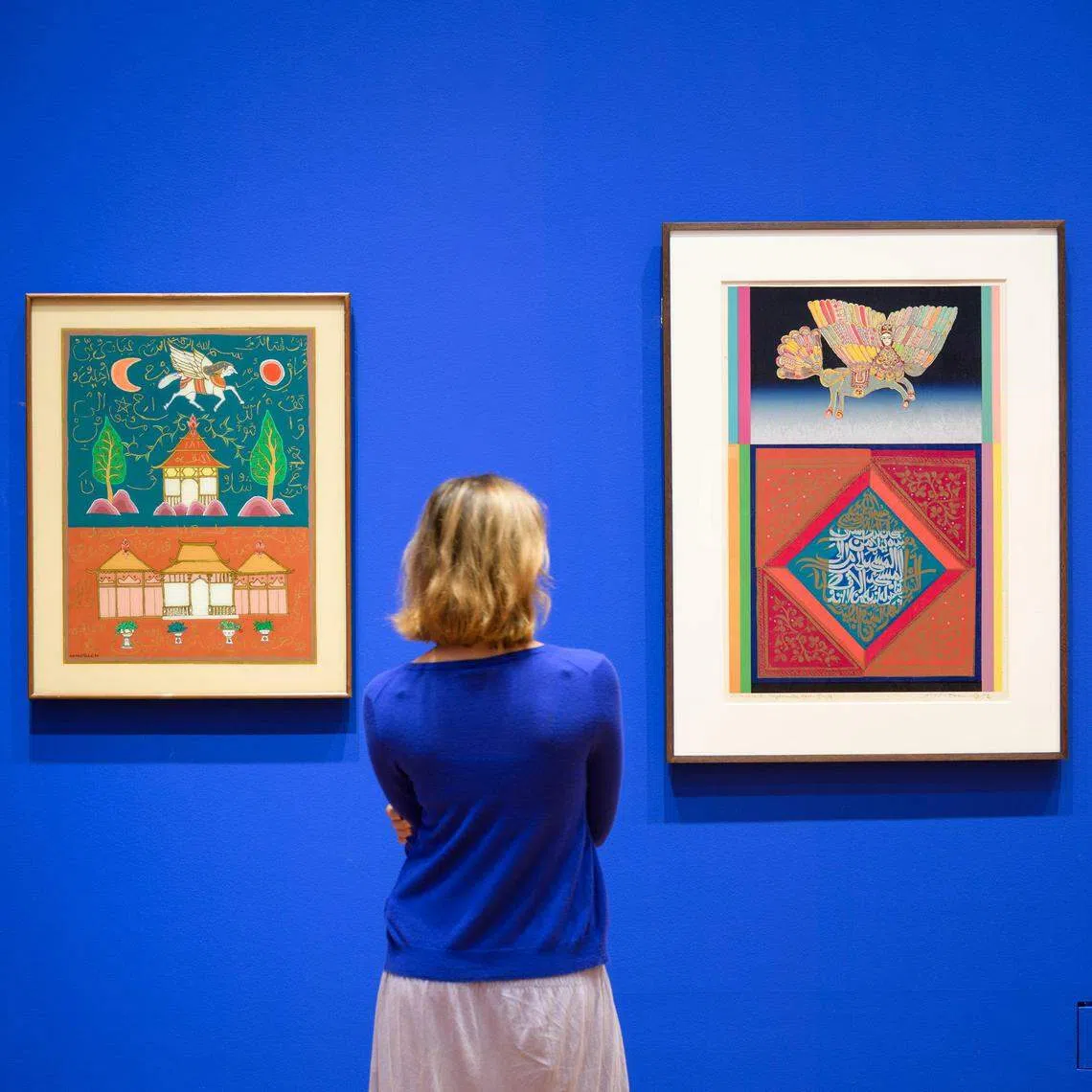
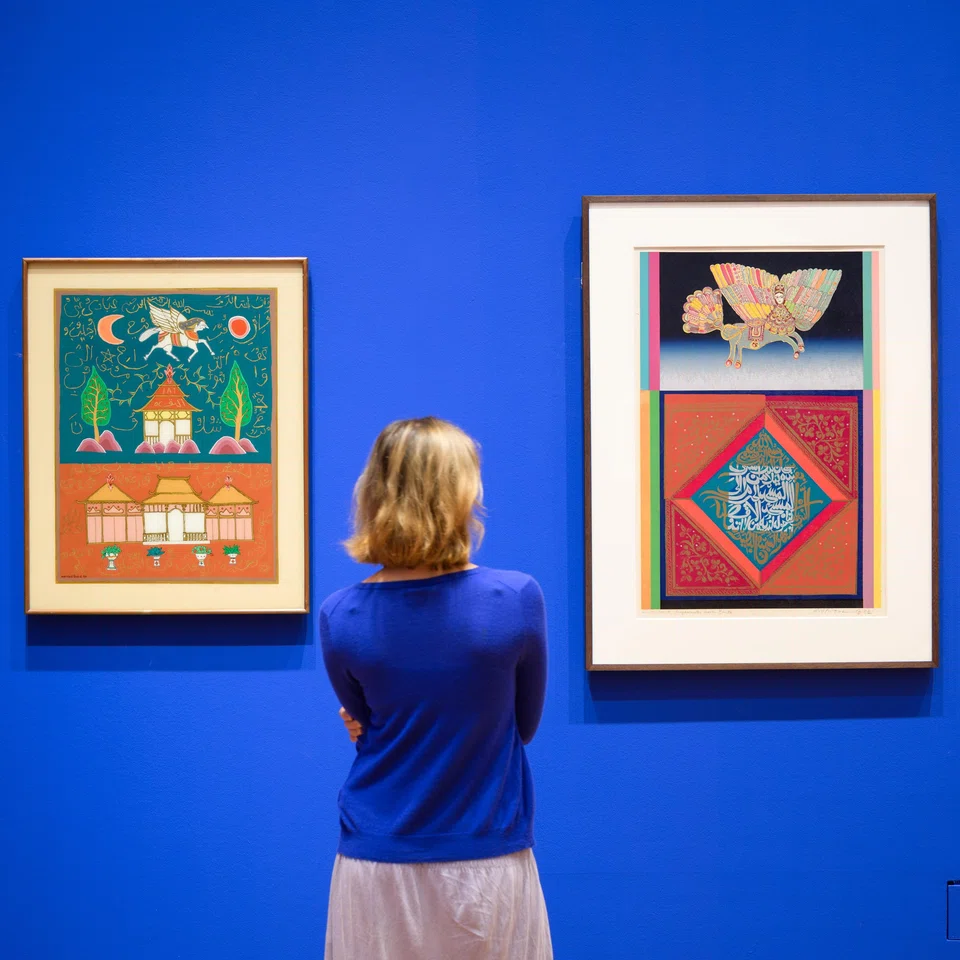
Meanwhile, Haryadi created fantastical paintings that blend Arab, Javanese, Cirebonese, Chinese, and Western iconography, telling both clear and cryptic narratives about the world.
In one notable work titled The Buraq, he portrays the hybrid winged mythical creature believed to have transported Prophet Muhammad on his most significant physical and spiritual journey from Mecca to Jerusalem and the heavens.
However, in Haryadi’s interpretation, the buraq bears the head of a Javanese wayang kulit puppet and soars above Cirebonese houses. The night sky is adorned with Arabic calligraphic inscriptions as a nod to the story’s original Middle Eastern setting.
Pirous, also drawing inspiration from the same Koranic tale, depicts the winged creature above a beautiful arrangement of calligraphic writings.
Both Pirous and Ahmad are considered giants in the history of modern art in Indonesia, predating Arahmaiani and Haryadi. These pioneering artists experimented with various forms of Islamic spirituality and abstraction, often incorporating the language of modern art to express their religious beliefs. Bandung served as an important site for experimenting with Arabic calligraphy and Western abstraction.
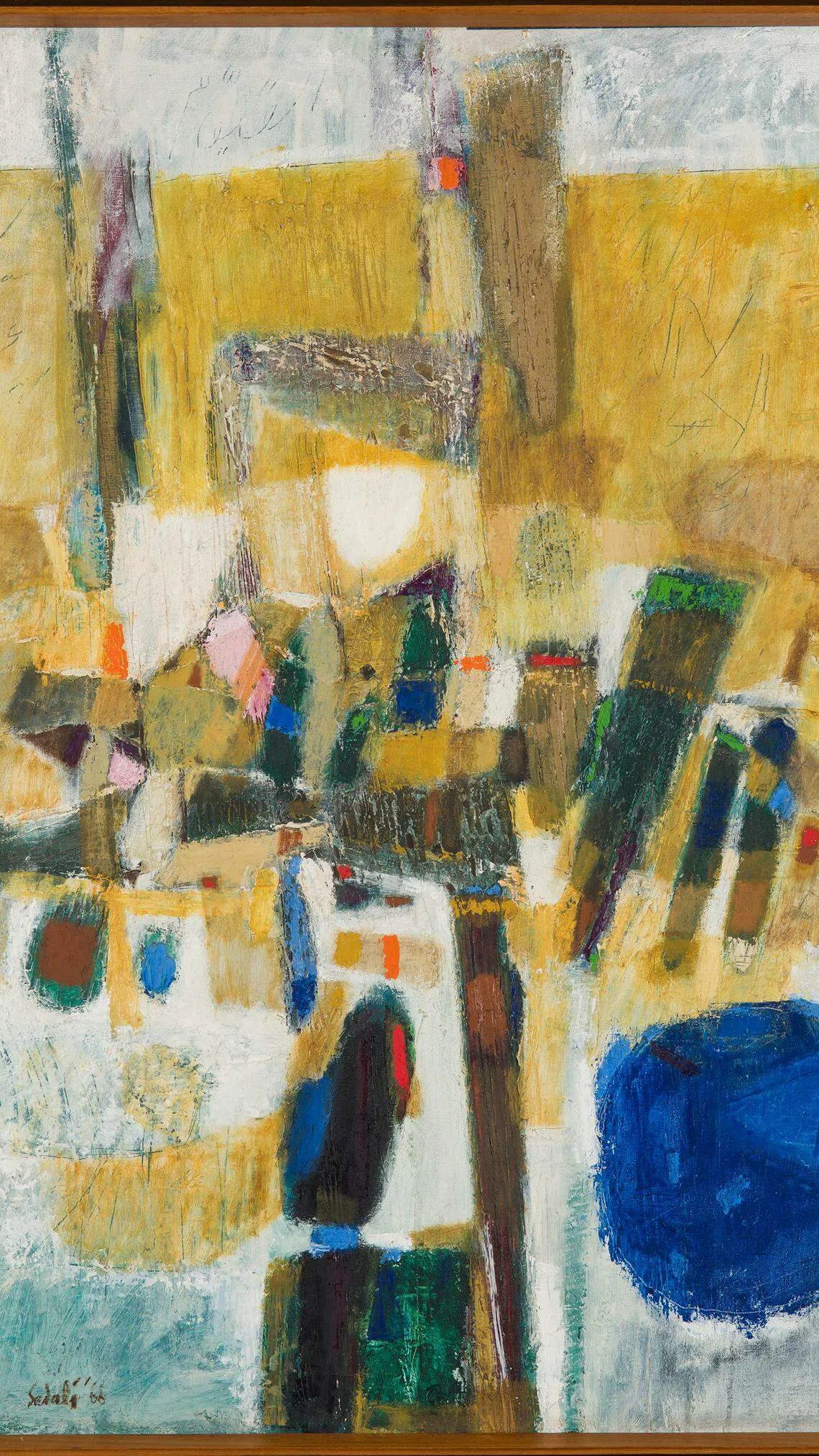
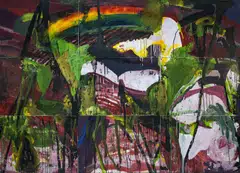
In Sadali’s notable work simply titled Painting, the recognisable shapes and forms of modern abstract art take on an added dimension with Arabic calligraphic writing lightly occupying the upper corners of the painting. While these words may be largely illegible, they nevertheless underscore the significance of religion in the creative practices of Indonesian artists.
The Neglected Dimension runs at the National Gallery Singapore from Jul 7, 2023 to Feb 25, 2024.
Decoding Asia newsletter: your guide to navigating Asia in a new global order. Sign up here to get Decoding Asia newsletter. Delivered to your inbox. Free.
Copyright SPH Media. All rights reserved.