The art of crafting time with Hermes watchmaking creative head Philippe Delhotal
The veteran designer on the maison’s watchmaking philosophy, the development of the new Cut watch, and the art of balancing tradition with innovation in luxury timepieces


[TINOS] The sun-drenched Greek island of Tinos, situated in the Aegean Sea, is renowned for its marble quarries and artisanal traditions. It is here that Philippe Delhotal, creative director of Hermes Horloger, recently met an international group of watch journalists to reflect on the art of watchmaking and share more about the maison’s latest creation, the Hermes Cut watch.
The setting is fitting; just as the island’s sculptors have for centuries coaxed beauty from raw stone, Delhotal and his team at Hermes handle the task of shaping time into luxurious objects of desire. This has been a hallmark of the French luxury design house, which expanded its offerings to include watches from the late 1920s.

Since then, it has been taking horology seriously, establishing its watchmaking subsidiary La Montre Hermes in Switzerland in 1978; and in more recent times, buying dial maker Nateber and case maker Joseph Erard in 2012 and 2013 respectively, to up its game in the horology segment.
Through the decades, Hermes has since carved out a unique niche in the watchmaking world, blending its heritage of leather craftsmanship with Swiss horological expertise. The brand’s approach to watchmaking has always been distinctive, often incorporating playful elements and unconventional designs that set it apart from more traditional watch manufacturers.
Balancing craftsmanship and innovation
Delhotal – who previously held stints in Piaget, Jaeger-LeCoultre and Patek Philippe before joining Hermes in 2008 – has been instrumental in shaping the brand’s modern watchmaking identity. His approach to design is deeply rooted in Hermes’ heritage of craftsmanship and innovation.
Asked about his design process, he shares: “We go back here to what we call the simple shape and the simplicity of shapes and lines – when we think for example, about a pebble, it’s a very simple shape that is shaped by nature, directly with water and sand and time.”
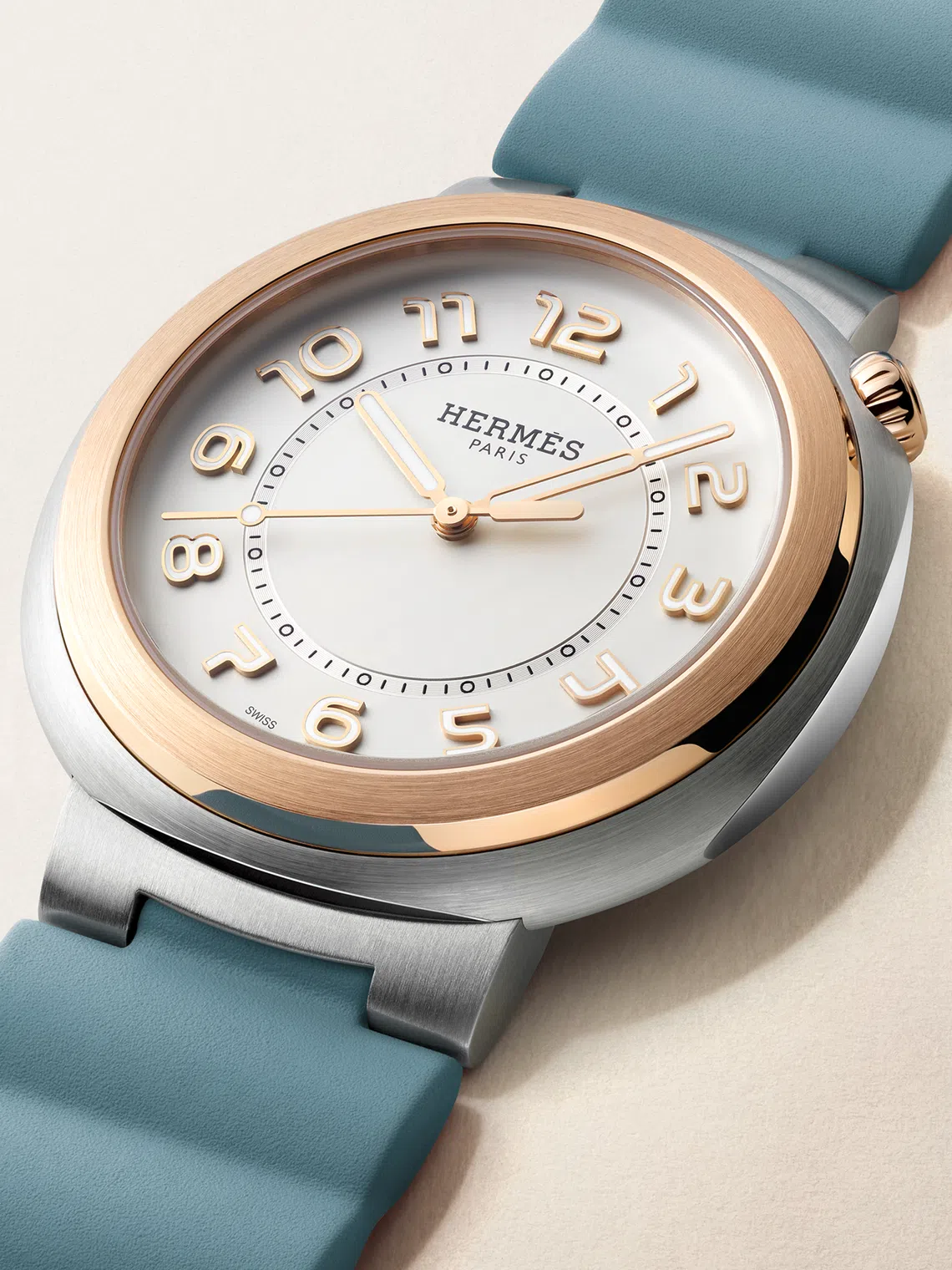
This philosophy is evident in the maison’s latest horological offering, the Hermes Cut, unveiled earlier this year at Watches and Wonders Geneva. The watch, with its distinctive silhouette, represents a bold step for the maison into the realm of women’s sports watches; some might even say the Cut takes its cue from the H08, a men’s sports watch launched in 2021.
With its cushion-shaped case and blend of circular and square elements, the H08 set the stage for Hermès’ exploration of geometric forms in watchmaking. A departure from the brand’s more traditional designs, it offered a contemporary and sporty aesthetic that appealed to a new generation of watch enthusiasts.

Making the cut
The success of the H08 arguably paved the way for the development of the Hermes Cut, which shares the same sporty spirit but has its own unique identity. It features a round case with an octagonal bezel, creating a play of geometric shapes that is both bold and elegant.

The crown at between the 1 and 2 o’clock markers also makes it recognisable from a distance, and although it’s a watch for women, the 36 mm case size makes it unisex (more on that later) as smaller watches for men make a comeback. The new timepiece is available in several variations, including models with diamond-set bezels and a two-tone version, further enhancing its appeal while catering to different tastes and occasions.
The development of the Hermes Cut presented unique challenges for Delhotal and his team. “It’s even more challenging to design for women because (women like to have different) styles,” he explains. The process involved balancing simplicity with intricate details, achieving the right combination of colours, materials, and finishes.
The result is a watch that appears simple from afar but reveals a wealth of details upon closer inspection. Delhotal elaborates on this design philosophy: “When you look at this watch from far you can say okay, it’s a round watch but the closer you get to it and the more you can discover the small details, the design starts to unveil itself.”
This approach to design – creating pieces that reveal themselves gradually to the wearer – is a hallmark of Hermes’ watchmaking philosophy. It’s an approach that requires time, patience, and a deep understanding of both the technical and aesthetic aspects of watchmaking.
When asked how long it takes to bring a new watch from concept to reality, Delhotal is candid. “If we take the full process from A to Z – the initial idea to the final product – it takes an average of three years,” he explains. “This is really an average and it can take more time, of course, but three years is the minimum to get the right design for the right product.”
This lengthy development process allows for extensive refinement and iteration. For the Hermes Cut, the team explored numerous options for dials, finishes, and proportions before settling on the final design.“We had 20 different options for dials before finding the right one,” Delhotal reveals.
“Every single detail, every single proportion, if it’s not well-thought, it can damage the full design. So it’s very important to think of everything from the beginning. You cannot think about shape without thinking about typography, dial, strap, and so on. So it has to be like full conception right from the beginning.”
Interestingly, while the Hermes Cut was initially conceived as a woman’s watch, its appeal has transcended traditional gender boundaries. While the Asian male wrist tends to be slim enough to carry off certain women’s models, Delhotal shares that he has seen European men pulling it off too. This unexpected crossover appeal harks back to Hermès’ roots and reflects a growing trend in the watch industry towards more unisex designs.
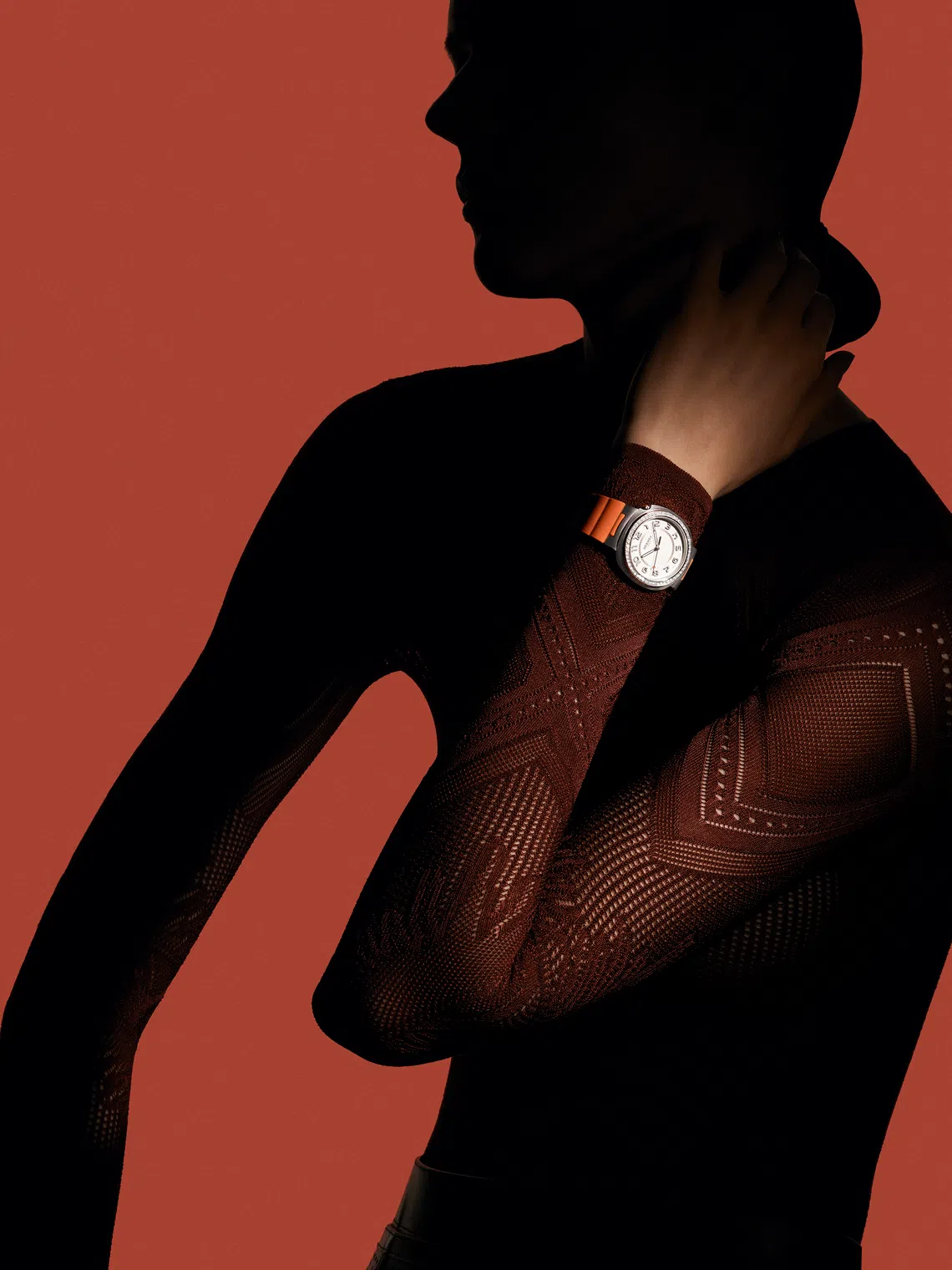
This fluidity in design philosophy mirrors the changing landscape of luxury consumption. Delhotal observes that women and men approach watch buying differently. “I personally think that women are more driven by emotions when purchasing or picking a watch but for men, it is usually more about reliability and the technical aspects.”
The future of watchmaking
Under Delhotal’s creative direction, Hermes has pushed boundaries while respecting its heritage; and both the Hermes Cut and the H08 are just the latest chapters in this ongoing story. The two well-received models are a reflection of his deep understanding of the art and science of watchmaking, and of tradition and innovation dancing in delicate balance.

As the conversation turns to the future of watchmaking and the challenges of creating timepieces that resonate with younger generations, Delhotal says he believes in empowering young people to find their own path. “You have to accompany them to guide them toward what they really want to do themselves; to encourage them and to accompany them to the direction they will choose for themselves,” he says.
This philosophy extends to his approach to mentoring young designers who work with him. When asked about advice for aspiring watch designers, Delhotal emphasises the importance of instinct and perseverance. “Trust your instincts to really follow your feelings; be curious about everything and everyone and never give up,” he says.

Asked about about his personal relationship with time, Delhotal’s response is thoughtful and poignant. “Time is really precious; it is one of the most treasurable things in the world. One piece of advice I like to give to my children and grandchildren is to enjoy time, to take the time to do things, to really make the most of it and to cherish the time that you spend doing the things you love.”
Decoding Asia newsletter: your guide to navigating Asia in a new global order. Sign up here to get Decoding Asia newsletter. Delivered to your inbox. Free.
Copyright SPH Media. All rights reserved.