

The art of sound
Italian artist Maurizio Martinucci marries science and art in his aural experiments.
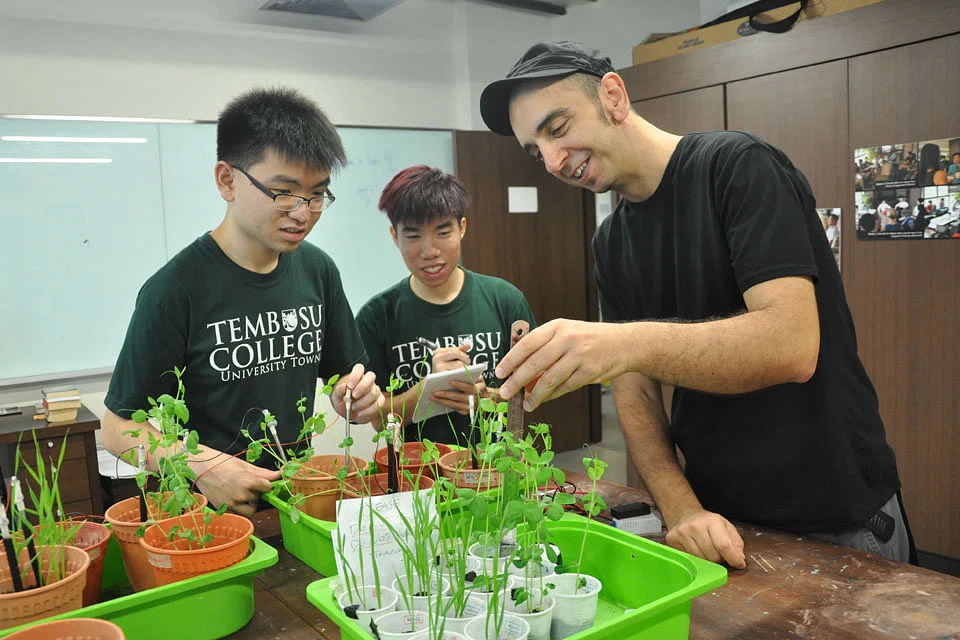
WHILE sound artists have been around for a while, Italian artist Maurizio Martinucci's art practice isn't just about creating sound, but also showing what it looks and feels like.
Just before he came here for an arts residency at the National University of Singapore, the artist - who goes by the moniker TeZ - created a "performative environment" where the public get to wear specially designed garments. The wearables were outfitted with various sensing devices that enabled them to interact with the performance space. For about 20 minutes, the visitors felt sound and vibration, thus giving them an other-bodily experience as their vision and feeling became increasingly blurred.
In another one of his projects, TeZ captured how soundwaves affected water and he used laser lights to illuminate that in a dome - giving visitors an immersive environment as they looked up to amorphous, colourful soundwaves.
TeZ isn't the typical artist or scientist, but believes that the two are the same thing. "To me, art is science, and science is art," he shares. This marriage of art and science might not be new in the West, but could see greater acceptance in Singapore with residencies like this one supported by NUS and ArtScience Museum.
For a short three months here, TeZ gets to network with professors and students across several fields for his project. A graduate of computer music, TeZ is now looking at the possibility of using underwater robots or drones to collect scientific data underwater and then orchestrate their findings in sound and light. He's also trying to find a way to pump sound waves through bioluminescent plankton to create movement, similar to a laser beam.
"I do dive and having seen plankton, I think it's a fascinating sight. And I love the water and I hope to create something only for divers one day," he says.

Meanwhile, his residency at NUS has also led him to experiment with "electro-culture" - where he's used low-level soundwaves to stimulate plants to see how much they'll grow.
NUS and the ArtScience Museum are partners in the Art/Science Residency programme which first began in 2013. The residency was just re-launched in February this year, says Dr Margaret Tan, who administers the programme at Tembusu College at NUS. Honor Harger, ArtScience Museum's executive director with the residency programme says they are "promoting the creative processes and research that art and science require - and providing a stage for artists whose work embodies that spirit."
Share with us your feedback on BT's products and services
TRENDING NOW
Motoring tycoon Peter Kwee is back in court: Here are his previous legal battles
Peter Kwee’s Ridley Park bungalow on the market with S$100 million asking price

Demand, tech capabilities position Apac and AI as Skyscanner’s next growth frontiers: CEO Bryan Batista

South-east Asia has lost Nvidia’s best salesman

