Ai Weiwei in Singapore: Drones meet van Gogh in anti-war exhibition
His new solo show explores the human cost behind modern conflict

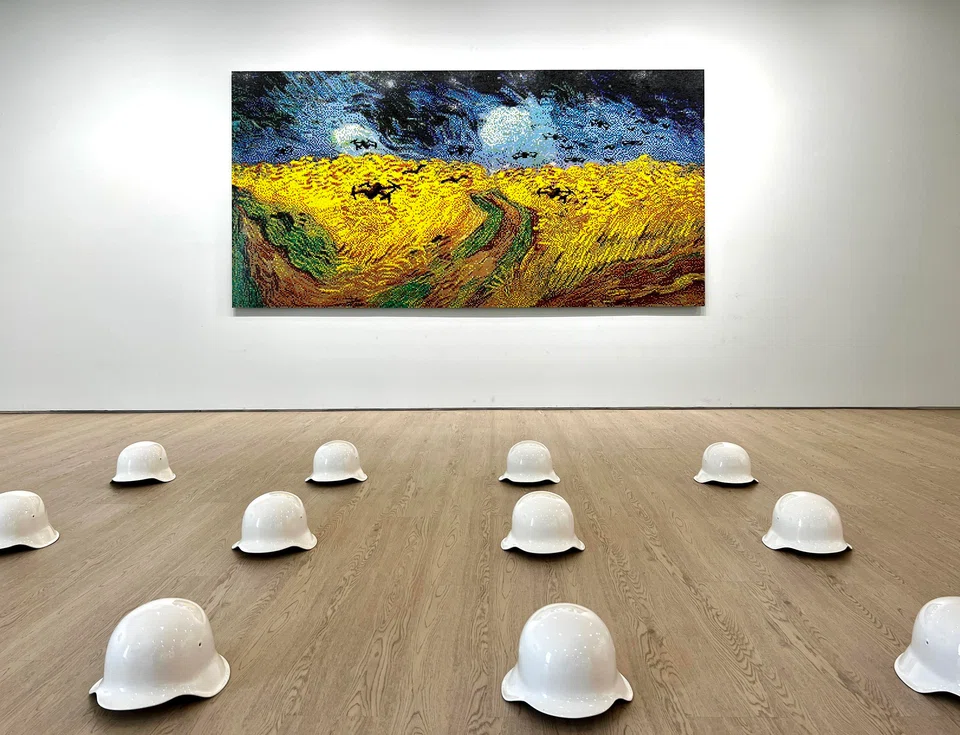
[SINGAPORE] At Tang Contemporary Art gallery, famous Chinese artist Ai Weiwei presents some of his best recent works as images made from Lego-like bricks.
From a distance, they look like famous paintings by artists such as Vincent van Gogh and Leonardo da Vinci. But up close, one can see thousands of tiny bricks appearing like digital pixels – echoing how we see the world now, through screens, in bytes and at a distance.
But look even closer, and the images turn darker.
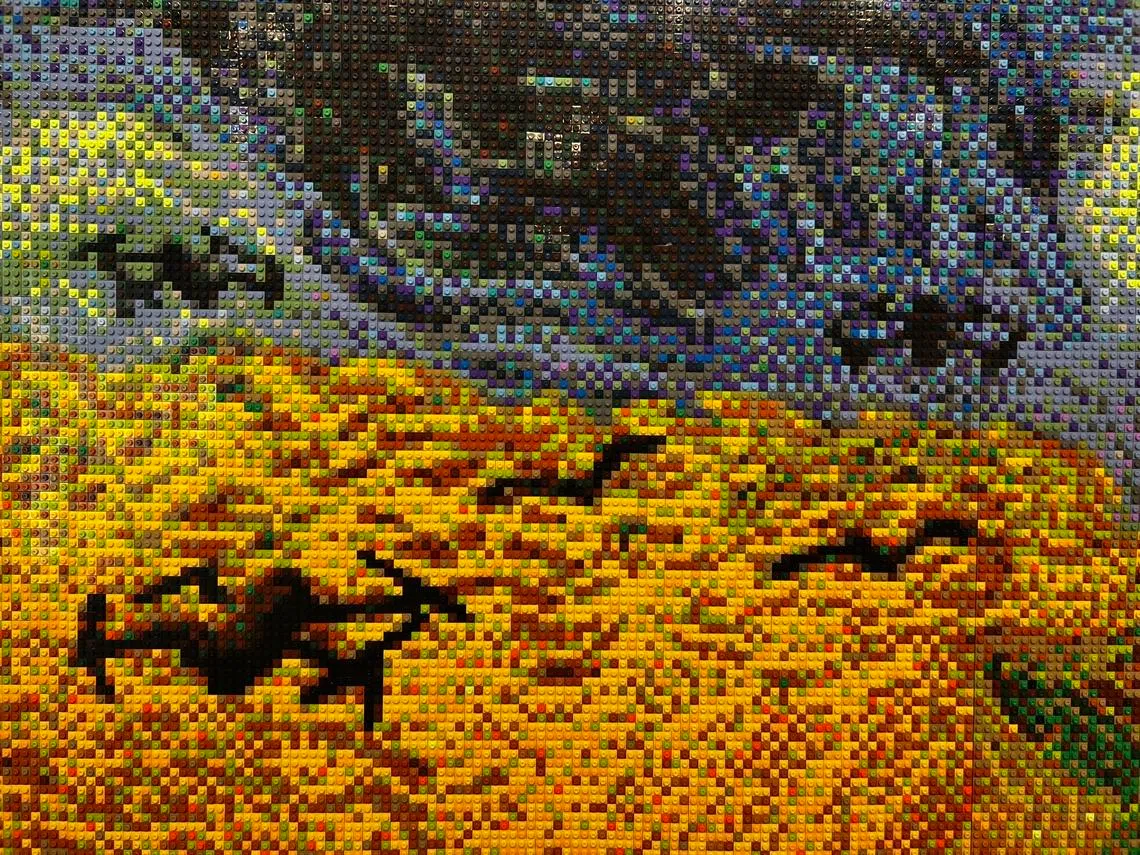
In one work, Ai reimagines van Gogh’s Wheatfield with Crows, the 1890 painting of black birds flying over a golden field. Van Gogh painted it shortly before he shot himself, and the crows have often been read as signs of an approaching end.
In Ai’s Lego-like version, however, the crows are replaced by drones. It shifts its meaning from personal sadness to modern warfare, where violence is increasingly carried out by machines operated from afar.
In the Russia-Ukraine war, both sides have deployed drones extensively for scouting enemy positions and carrying out direct strikes. In the US and Israeli war on Iran, drones have been used by all parties to target infrastructure and personnel.
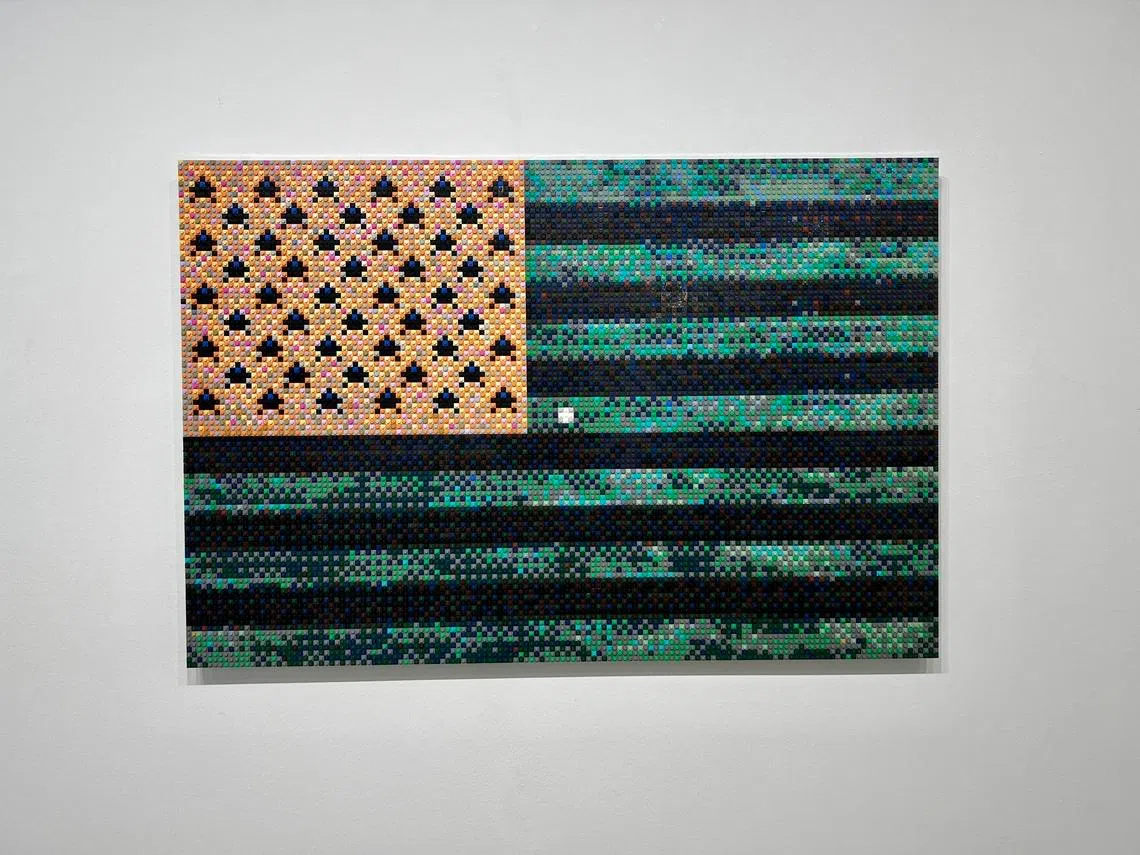
More damningly, drones appear also in Ai’s reimagining of the US flag in the same Lego-like medium. Instead of the usual 50 stars, he replaces them with drones, turning a symbol of nationhood into one of surveillance and militarism.
The colours are changed too – from red, white and blue to military greens, blacks and browns that evoke camouflage and war.
Created in 2024, both works are arranged around 16 white helmets made from fragile porcelain, referencing the widely mocked moment in 2022 when Germany offered to send 5,000 helmets, instead of weapons, to Ukraine as it faced Russia’s invasion. Helmets are meant to protect, yet here they are delicate and breakable – performative objects that offer no real protection.


Bloodied baby in Lego bricks
At 68, Ai is no stranger to political art. Born in Beijing to a persecuted poet father, he grew up knowing that art and power are inseparable. He has long been critical not only of the Chinese government, but also of Western powers and global institutions that, in his view, enable violence while presenting themselves as arbiters of order.
Tang Contemporary Art opened this showcase in late March, a few weeks after the US and Israel attacked Iran in February. The exhibition had been planned months in advance and was not timed to coincide with the conflict.
Even so, the parallels are difficult to ignore, as images of drone strikes, damaged infrastructure and bloodied civilians continue to circulate across the media.
But this is where Ai’s choice of medium feels most appropriate. His Lego-like bricks mimic the logic of the digital image: modular, repeatable and easy to digest. When Iranians wanted to troll the US and Israel, they too turned to Lego landscapes and figurines to mock US President Donald Trump and Israeli Prime Minister Benjamin Netanyahu.
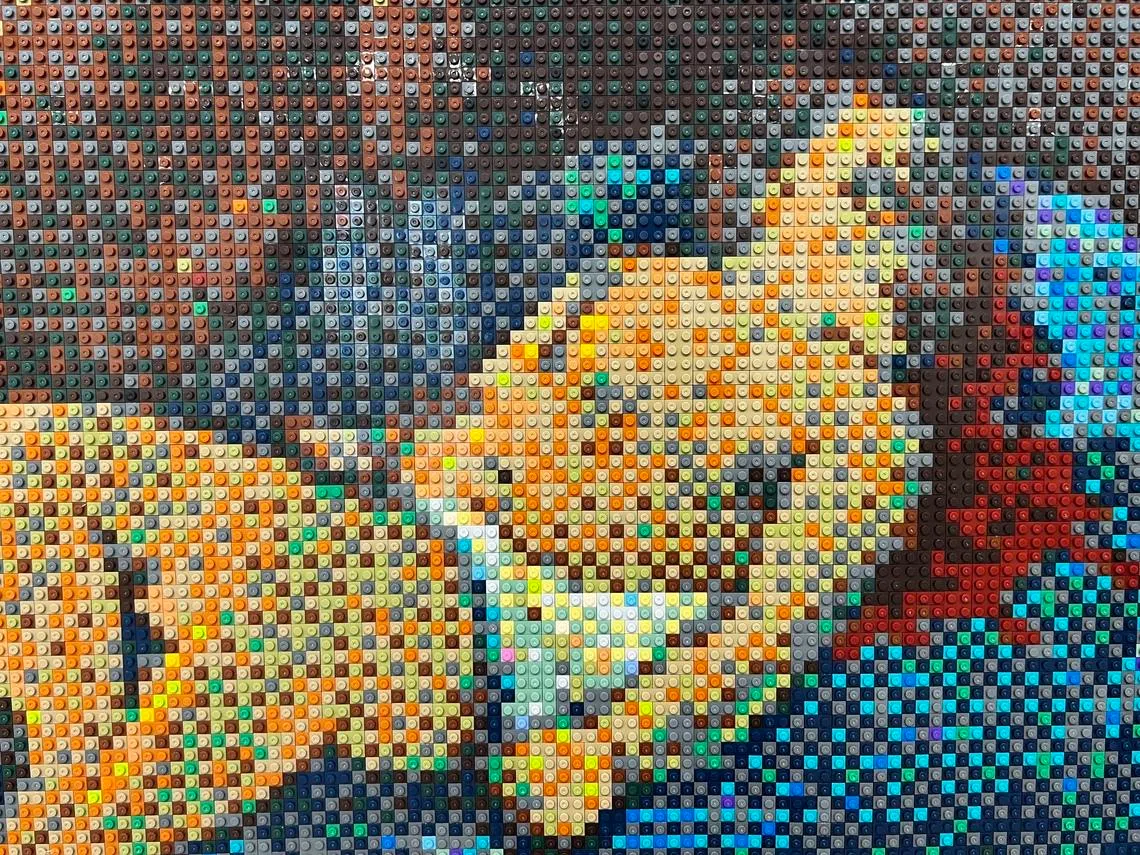
When everything is reduced to pixels, do we feel more – or less?
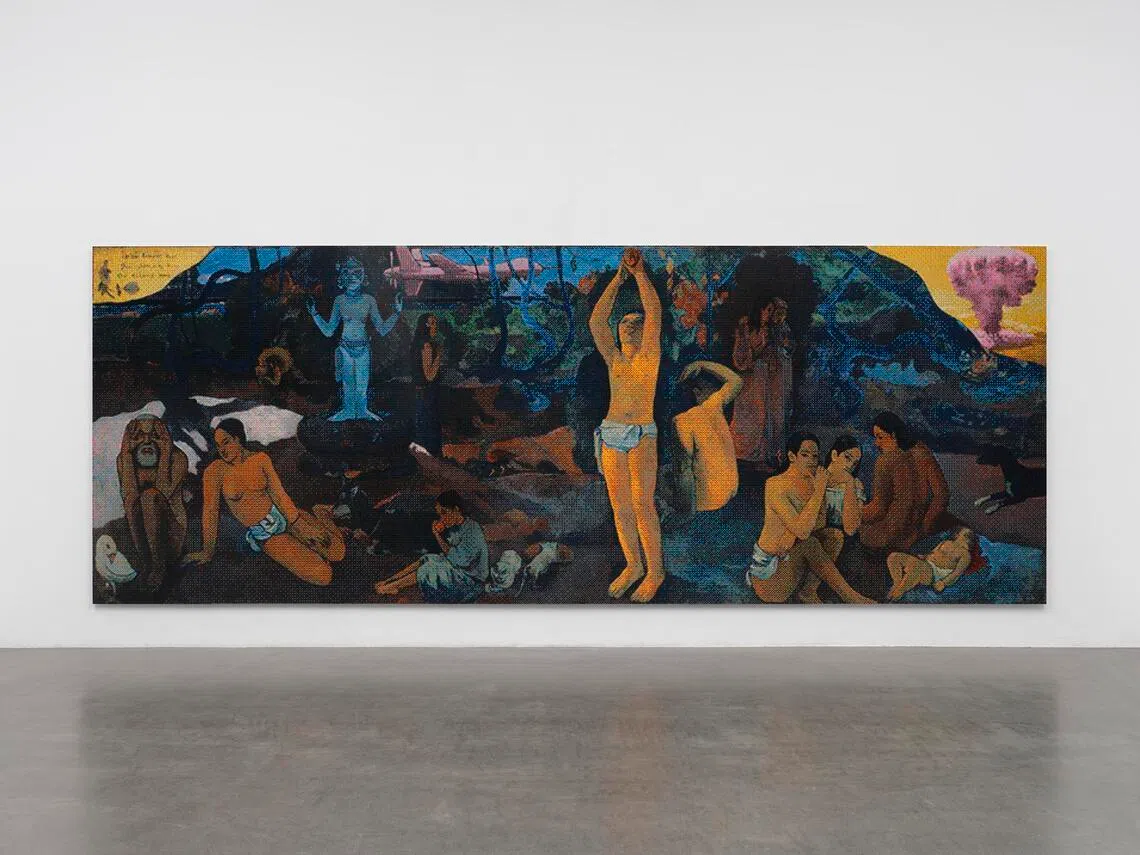
That question deepens in Ai’s reworking of Paul Gauguin’s Where Do We Come From? What Are We? Where Are We Going?, the massive 3.75 m painting that traces the arc of human life. Ai faithfully reconstructs the image, but inserts disturbing new elements: a fighter plane, a Hiroshima mushroom cloud and a bloodied baby.
The baby is the most unsettling presence. What are we, if we continue to produce a world in which children – from Gaza to Sudan – remain among the most vulnerable?
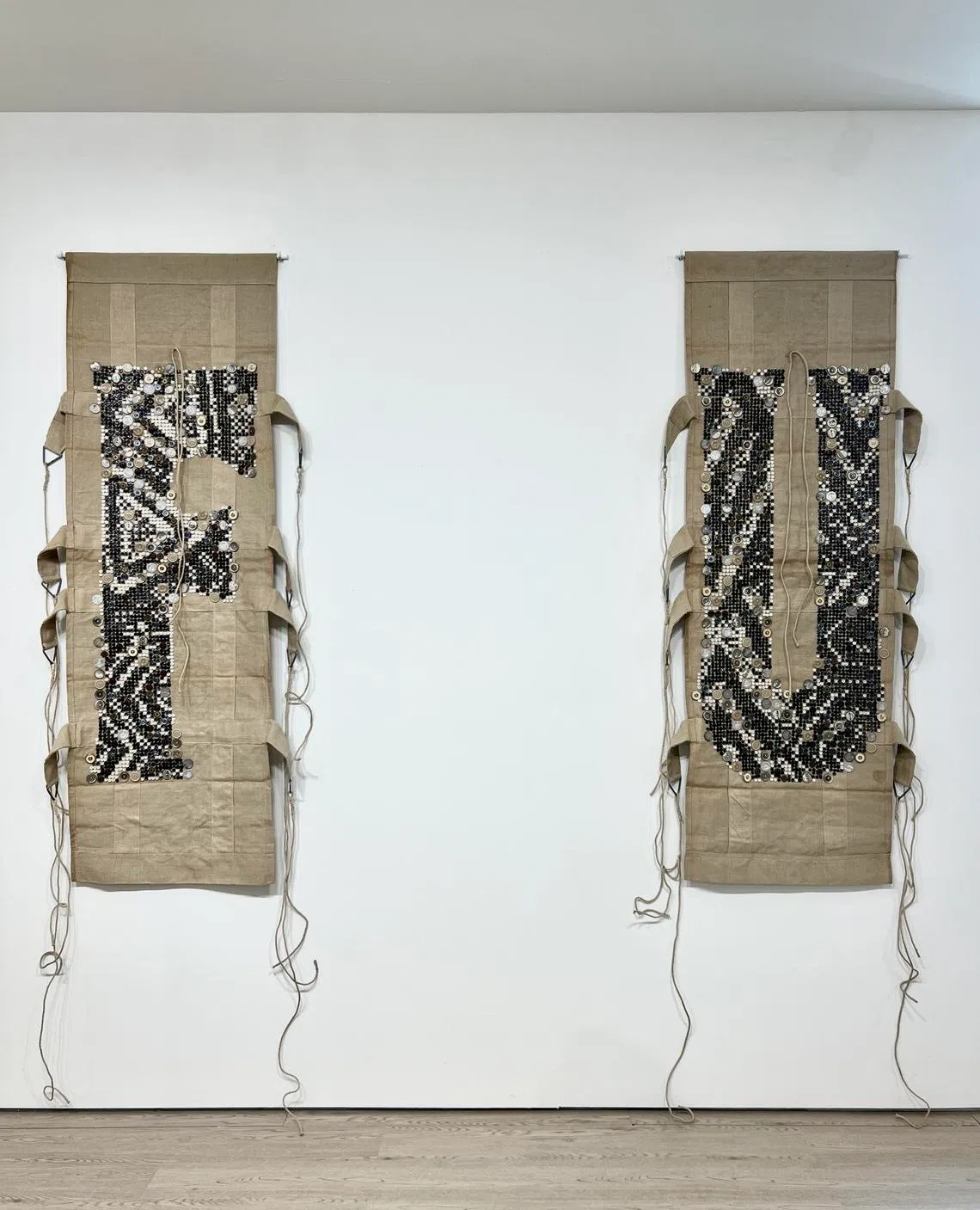
Ai is rarely subtle. In another 2024 work which has the “F” word for its title, hundreds of buttons are sewn onto four World War II military stretchers, spelling out the four-letter expletive. The gesture is blunt, but not empty.
Buttons hold personal meaning for Ai, who grew up during a time of scarcity in China, when the loss of even small objects such as a button mattered.
Paired with stretchers symbolising death and injury, they bring together the intimate and the catastrophic – a reminder that war, for civilians, is almost always measured in loss.
Zodiac animals reframed
Not all the works deal directly with war. But even among these, a current of anger and defiance runs through them.
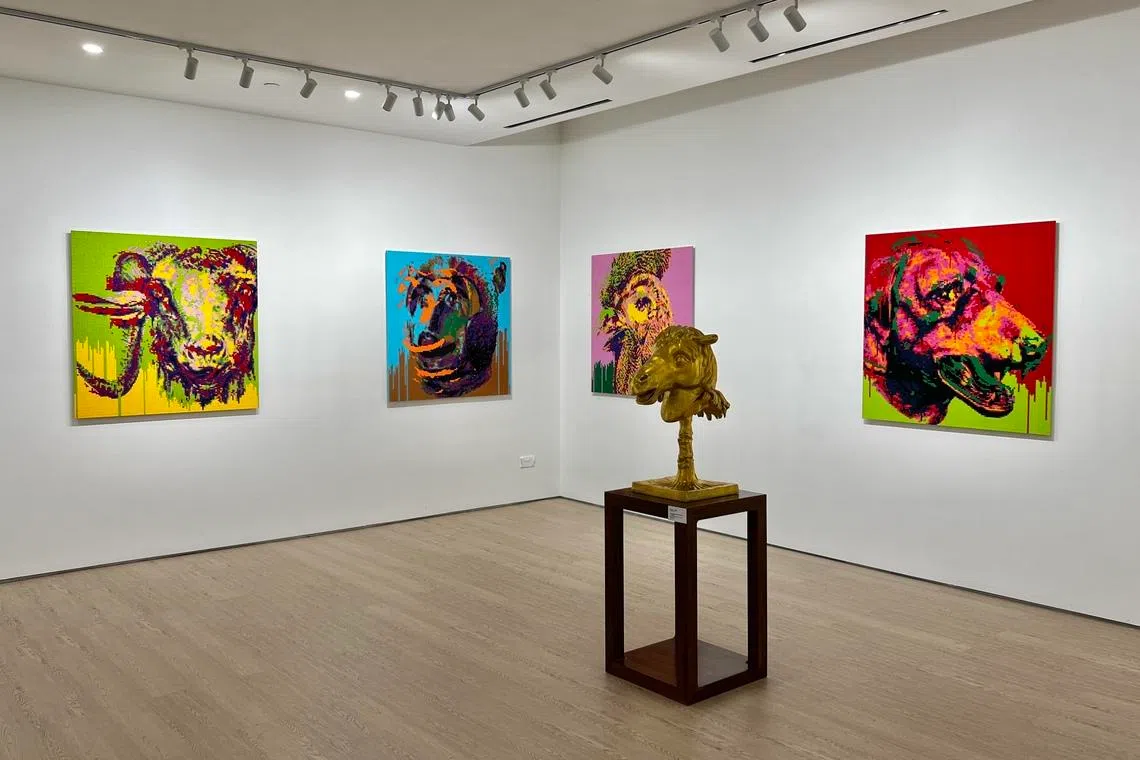
In his 2018 Zodiac series, Ai reimagines the 12 Chinese zodiac animals in Lego-like bricks. But instead of looking cute and playful – as they often do in toys, movies and decorations – they appear fierce or desperate, with bared teeth and watchful expressions. Ai returns these beloved symbols to something more primal, creatures shaped by the law of the jungle.
That may be the exhibition’s most sobering insight. Ai is not only showing that the world is violent. He is showing how easily violence hides within the familiar: in artworks, flags, propaganda, commercial marketing and various beautiful objects. He takes images we think we know and alters them just enough to reveal what they contain.
Seen in 2026, the exhibition is not simply a protest against wars. It is also a protest against numbness. Ai draws us in with images that feel recognisable, only to confront us with what lies beneath.
The show runs at Tang Contemporary Art at Delfi Orchard from now till May 2.
Decoding Asia newsletter: your guide to navigating Asia in a new global order. Sign up here to get Decoding Asia newsletter. Delivered to your inbox. Free.
Copyright SPH Media. All rights reserved.