Costly renewals: Transforming an old landed house into your dream home is getting harder
Rising land and construction costs have made landed property ownership much more elusive
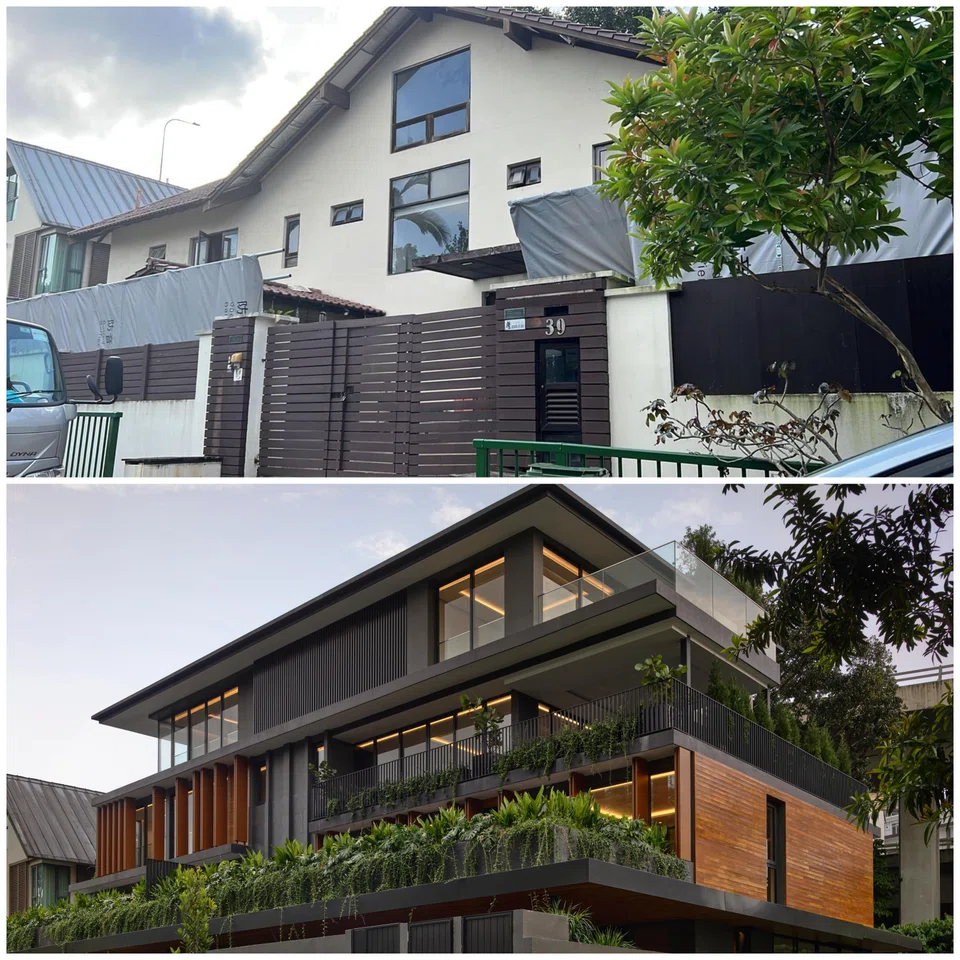
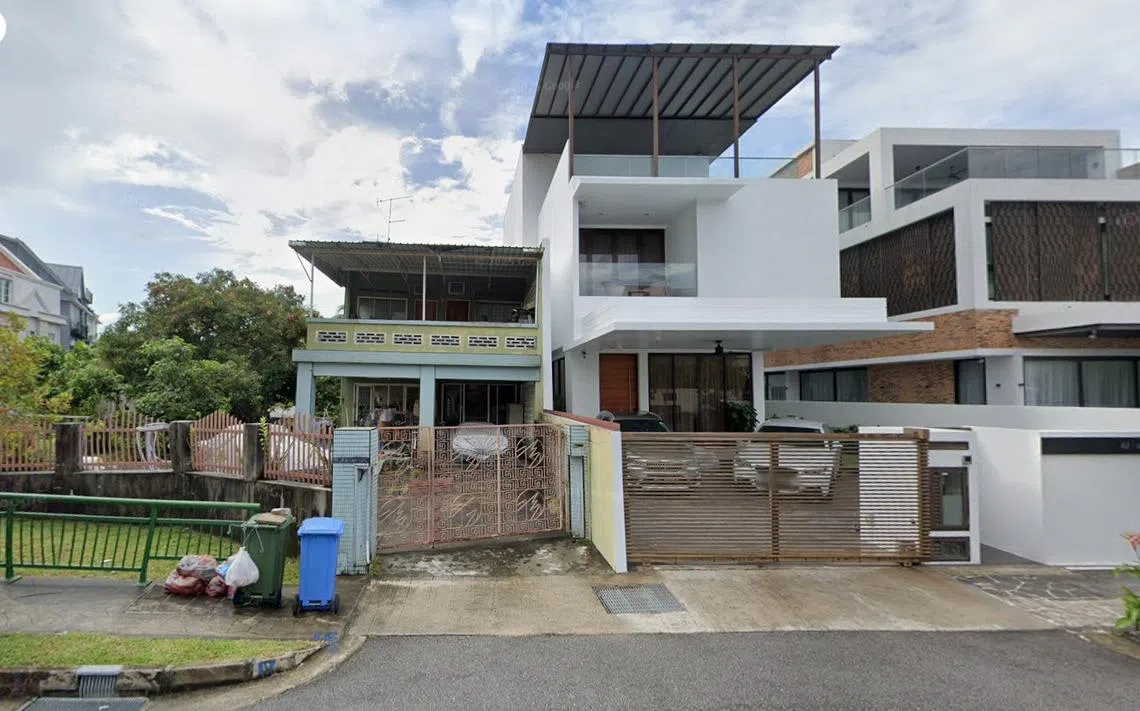
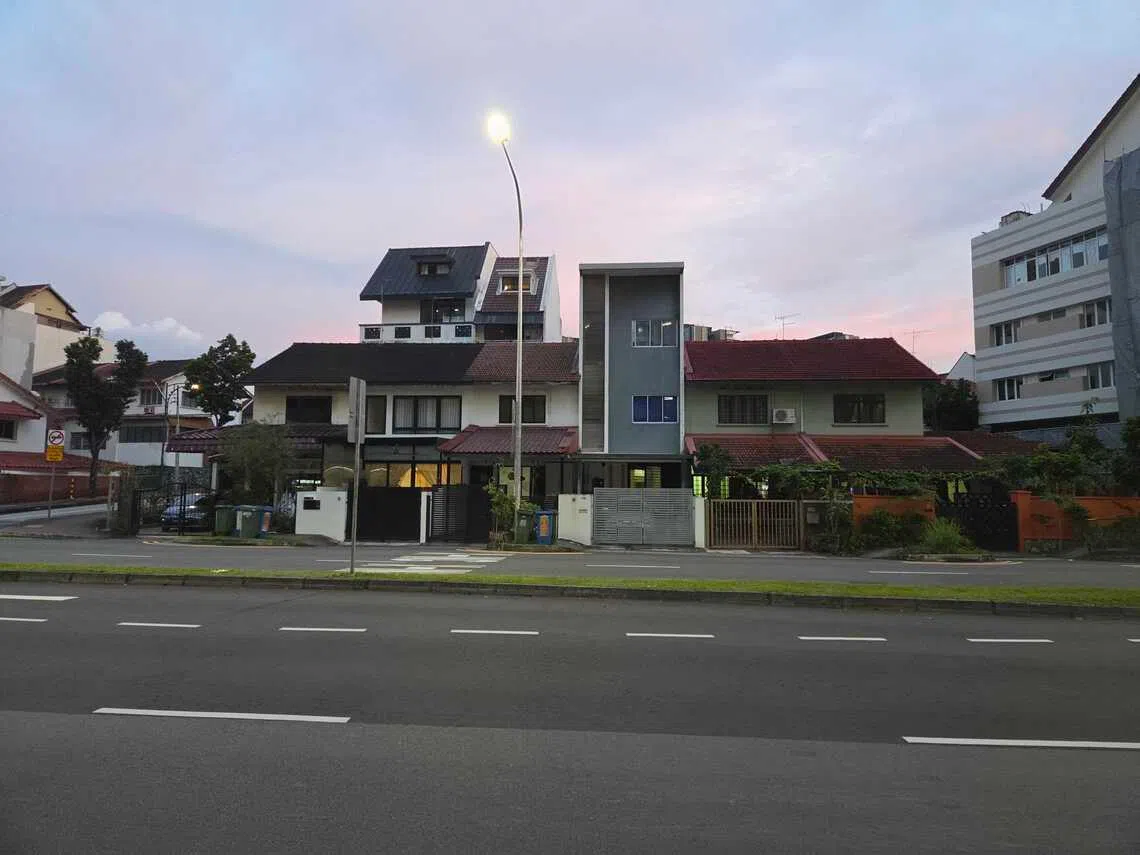
[SINGAPORE] In a landed estate in the east sits a pair of mismatched semi-detached houses. One is a modern, two-and-a-half-storey structure, while the other has clearly seen better days. It is a sight that is familiar in similar residential areas, where old houses that are rebuilt by new owners stand alongside their unrenovated counterparts.
It is also a striking example of what urban renewal looks like in Singapore’s landed property districts. Unlike HDB estates which are upgraded when the government steps in, private estates rely on the piecemeal sale and rebuild of old houses for a neighbourhood refresh.
Landed homes, which are estimated to form only around 5 per cent of all dwellings in Singapore, represent the pinnacle of private residential living. Beyond serving as legacy family homes, they are also a long-term wealth preservation tool, especially given Singapore’s land scarcity.
With hardly any supply coming out of government land sales, most people get their hands on such property via the resale market. In many cases, these assets become available via estate sales after their owners die or when elderly owners cash out to enjoy their retirement in a smaller property, says Geryl Lim, deputy branch associate director with property firm OrangeTee.
“Some of these old houses are tenanted, but because their conditions are not ideal, the rental returns are usually not very attractive, especially with escalating property taxes. So owners would rather sell than have to manage a lot of maintenance issues.”
He also knows of others who sell and give the proceeds to their children before they die, to avoid potential fights over their estate.
In this wealth transfer, old landed homes are sold to owner-occupiers or boutique developers who rebuild the property for sale. As a result, neighbourhoods are re-invigorated, with younger families moving in.
Sticker shock
The resulting streetscape from the rebuilding may or may not be to one’s liking. But one thing’s for sure, buying such properties has become increasingly difficult for landed home aspirants, thanks to hikes in both land and construction costs, especially over the last few years.
In the past decade, the median price of landed (excluding strata landed) properties have risen by 60 per cent to reach S$4.9 million, notes Christine Sun, Realion (OrangeTee & ETC) Group chief researcher and strategist. Over the last five years alone, prices hiked by 48 per cent.
SEE ALSO

As entry-level landed prices hit the S$5 million mark in 2026, Benedict Choa, chief executive officer and founder of specialised design and build entity, Kapa Design Co, notices more old landed houses being put up for sale. “Many pioneer generation owners are choosing to divest and downsize, while younger families are looking for old plots specifically to rebuild into their forever homes. We’ve also seen a new trend where owners are sub-dividing their land and passing it down to their children.”
Depending on the district, buyers today can expect to pay roughly S$1,600 to S$2,800 per square foot (psf) for freehold land, he says.
Adds Sing Tien Foo, provost’s chair professor at the Department of Real Estate, National University of Singapore Business School: “Landed housing values will increase through redevelopment or upgrading through renovation, where the capital expenditure is translated into higher prices.”
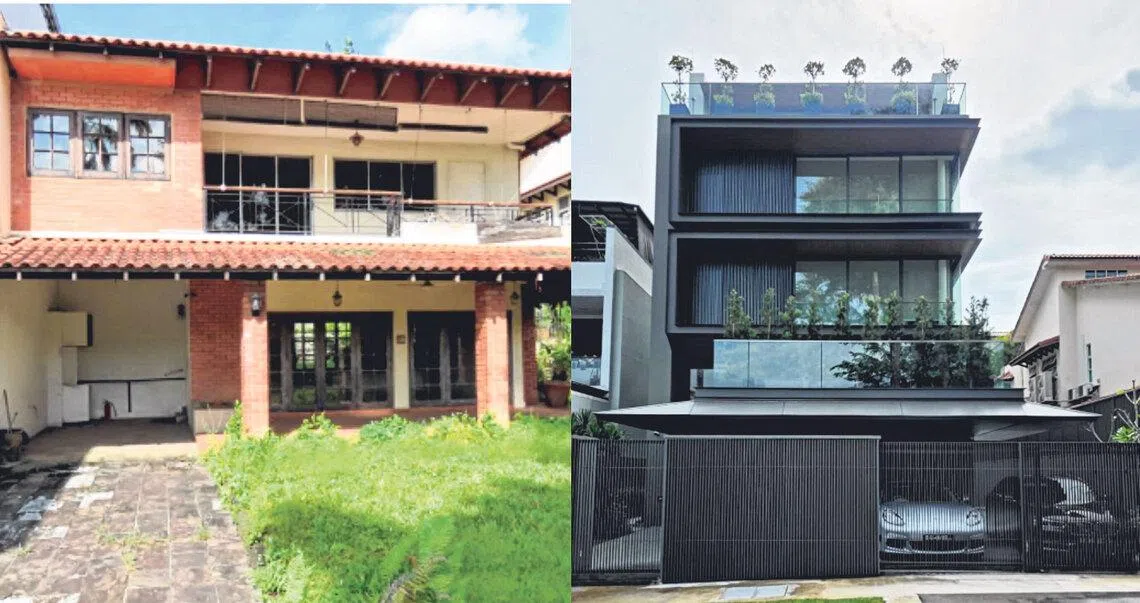
And that capital expenditure is getting ever more eye-watering.
Choa says rebuilding costs have risen by approximately 20 to 30 per cent over the last three years, due to labour scarcity and material inflation.
“In 2026, for a high-specification design and build project that includes architectural fees, authority submissions and premium finishes, buyers should expect costs starting from S$480 to S$600 psf of built-up area,” he estimates.
He notes that realistic rebuilding budgets (including construction and professional fees) range from S$1.8 million to S$2.2 million for terraced homes, S$2.5 million to S$3.5 million for semi-detached houses and S$4.5 million and above for bungalows.
The hefty additional buyer’s stamp duty imposed on developers who acquire houses only to do addition and alteration works instead of a rebuild before selling them, is also a disincentive for them to keep the house’s original structure.
To “make economic sense”, Raj Nainani, director of landed home developer, Arsea Group, looks for old, single-storey houses to buy and rebuild. Arsea currently has around S$200 million worth of landed homes for sale.
“We sold a corner terrace at least six months back for around S$7.8 million, but... prices are all going up further. So our smallest homes, which are corner terraces, will cost at least S$8.5 million.”
A pit stop
For such high price tags, homeowners and buyers expect to get some bang for their buck – which also explains why new homes tend to tower over old ones.
“The need to maximise gross floor area (GFA) is number one,” says Nainani. “This also means the buyers’ extended family can live with them.”
Secondly, in an ageing society, the dwellings have to be elderly-friendly, so homeowners can age in place. “All our homes today have lifts, be it a terraced, semi-detached or detached house. That’s the standard now because buyers expect it.”
In addition, clients want natural light in the house without the heat, as well as lifestyle facilities that enhance their quality of life and the asset’s value, such as home gyms and swimming pools, says Kapa’s Choa.
“The neighbourhoods will become more vertical and modern, but also greener because modern building codes require better drainage and greenery replacement. So while the old kampung feel may fade, it’s being replaced by a sophisticated, lush urban forest aesthetic that’s much more sustainable for Singapore’s future climate.”
Those who engage Kapa’s services from sourcing and acquiring a suitable site to handover of a newly built house are typically busy professionals or investors seeking a full “turnkey” experience.
Of late, Nainani’s experience is that a growing number of newly minted Singaporeans have been picking up landed property – whose ownership is strictly regulated by the government.
“When we first started selling homes over a decade ago, we saw Singaporeans from many walks of life coming for viewings. But over the last four to five years, we’ve seen a larger proportion of newly minted citizens who were formerly mainland Chinese and, to some extent, ... from India.”
Given the financial constraints of building their dream homes, OrangeTee’s Lim says he has seen a trend where buyers are making a “pit stop” – by first buying an old landed house and doing sufficient refurbishment before moving in. They will then consider selling it four years down the road, past the holding period that attracts a seller’s stamp duty, before purchasing or building their bigger, ideal abode.
These are Henrys – “high earners but not rich yet” – buyers who are typically professional couples in their 30s doing well in their careers and expecting to do “even better”. Many of them also have the financial support of their parents to help in down payments or renovation costs.
“For an intermediate terraced house with a land size in the 1,700 square foot range, we’re looking at transactions above S$6.2 million,” says Lim, who focusses more on District 15 landed homes. “In fact, most brand new houses right now are closer to the S$7 million-mark. In contrast, the entry price for an old unit is about S$4 million to S$4.2 million. That’s a big difference. Some buyers of the old houses would rather put another S$500,000 to S$800,000 for refurbishment or addition and alteration works, and then prepare for the next move when their property appreciates in value.”
While prices of newly built homes will also rise in tandem in a few years’ time, such buyers “know that if they do not enter the landed market now, they will be lagging even further behind”.
So, if one has the budget and is in the market for an old house to makeover, where should one look?
Choa says estates such as Opera Estate (District 15), Serangoon Gardens (District 19) and parts of District 13 (MacPherson/Sennett) are ripe for renewal. “They have a high density of older, single or two-storey houses that do not yet utilise the full allowable GFA under current guidelines.”
Decoding Asia newsletter: your guide to navigating Asia in a new global order. Sign up here to get Decoding Asia newsletter. Delivered to your inbox. Free.
Copyright SPH Media. All rights reserved.