

A developer’s house
A construction company owner builds his own home to house three generations under one roof
ARCHITECTS are often the ones giving instructions to contractors in their projects, but what happens if the contractor they are dealing with is also their client?
This was the case for HYLA Architects, when the owner of a small property development and construction company decided to build his own house from scratch for the first time.
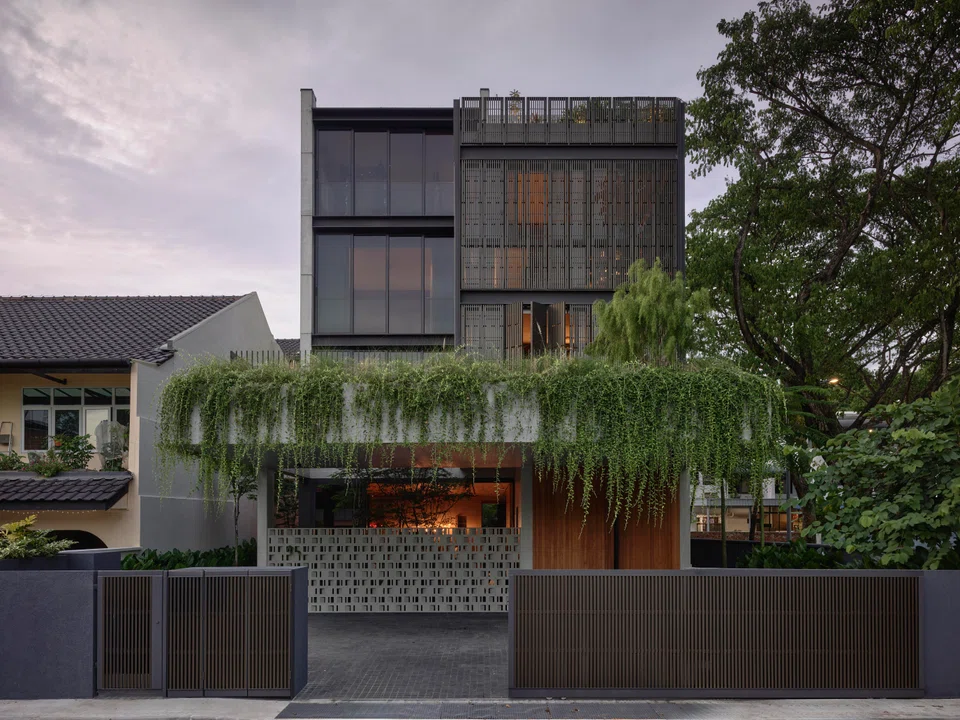
Located in Siglap, the 5,700 square foot semi-detached house was designed for an extended family comprising the owner, his wife and two adult daughters – one married with two children – living under the same roof, explains HYLA’s founder, Han Loke Kwang.
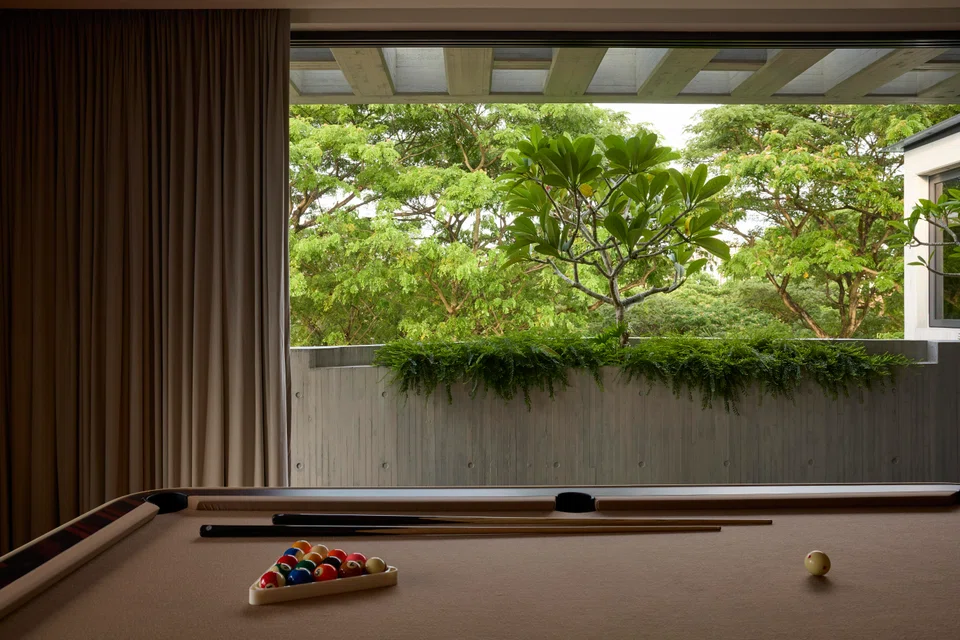
The brief called for three master bedrooms for the adults, two bedrooms for the children, two studies and a large entertainment room in the attic to host the couple’s many social gatherings.
“There was a strong emphasis on privacy, independent circulation and long-term adaptability,” adds Han, noting that the house was catering to several households at the same time. Privacy was paramount, especially since the house sits on a corner plot facing an open-air carpark on one side.
There was one advantage to this: the mature trees in the car park offered views of lush greenery. Han decided that he also wanted to extend the sense of greenery from the outside into the house itself.
To maximise daylight and space for planting, Han detached the house from its neighbour. A courtyard was inserted between the car porch and first-floor living spaces, which provides a sense of privacy from the street. There is also a heightened sense of arrival despite it being a transitional space.
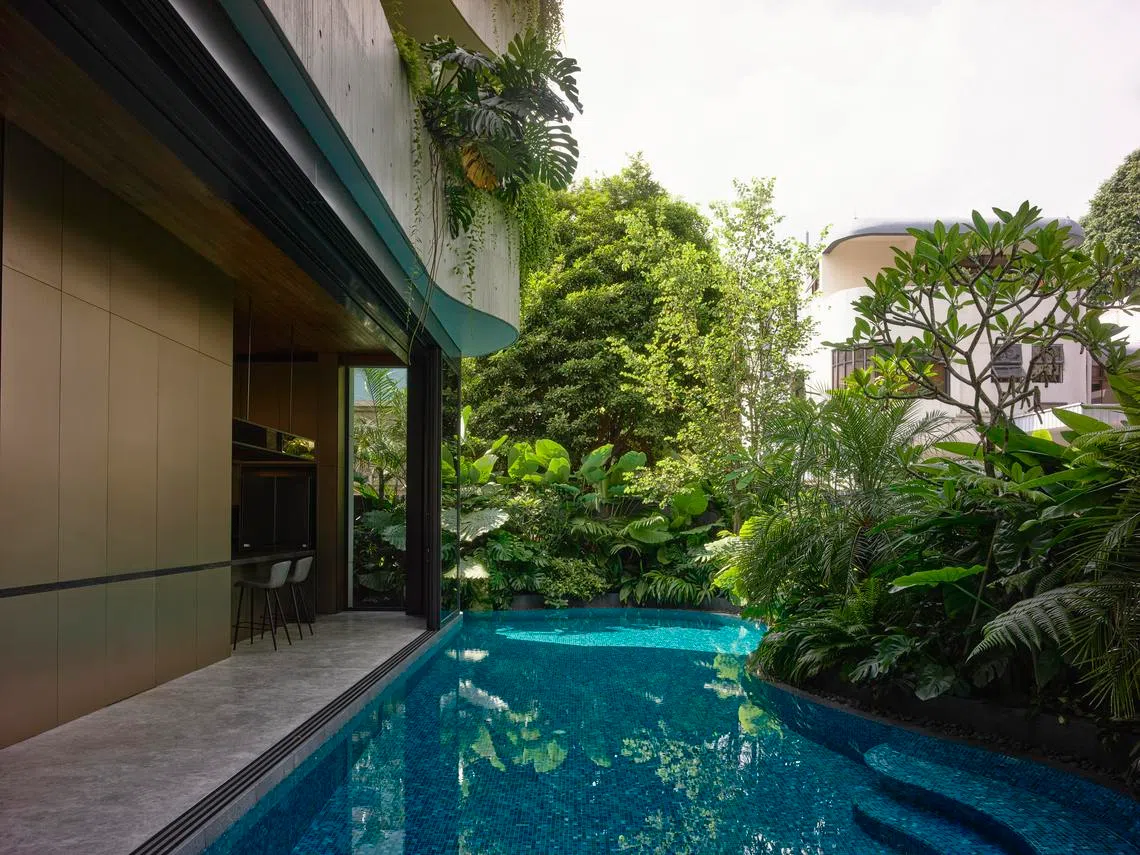
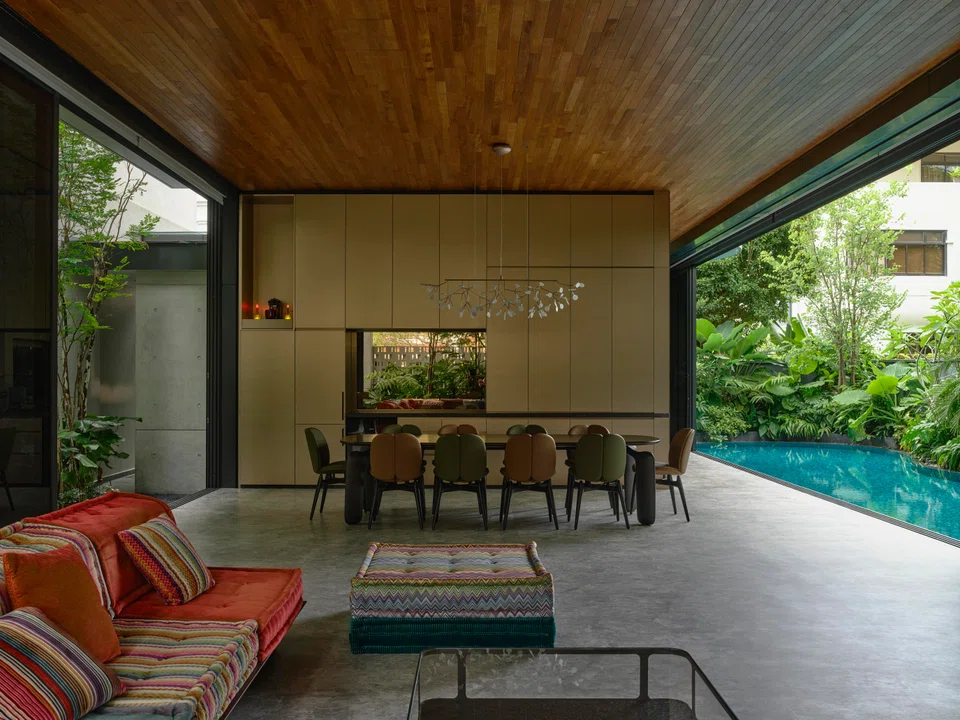
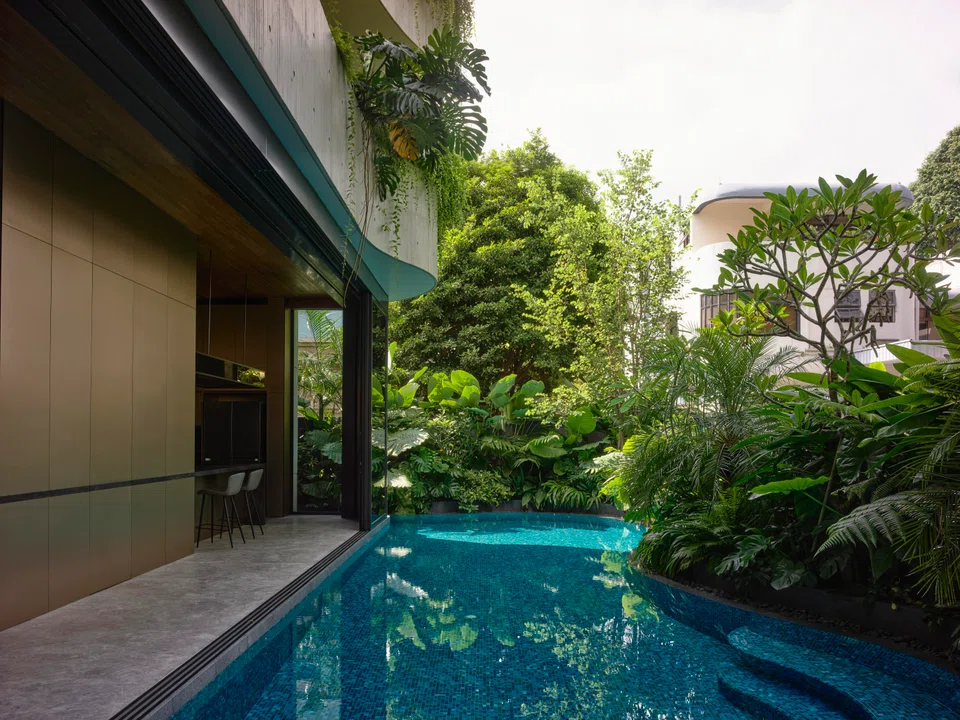
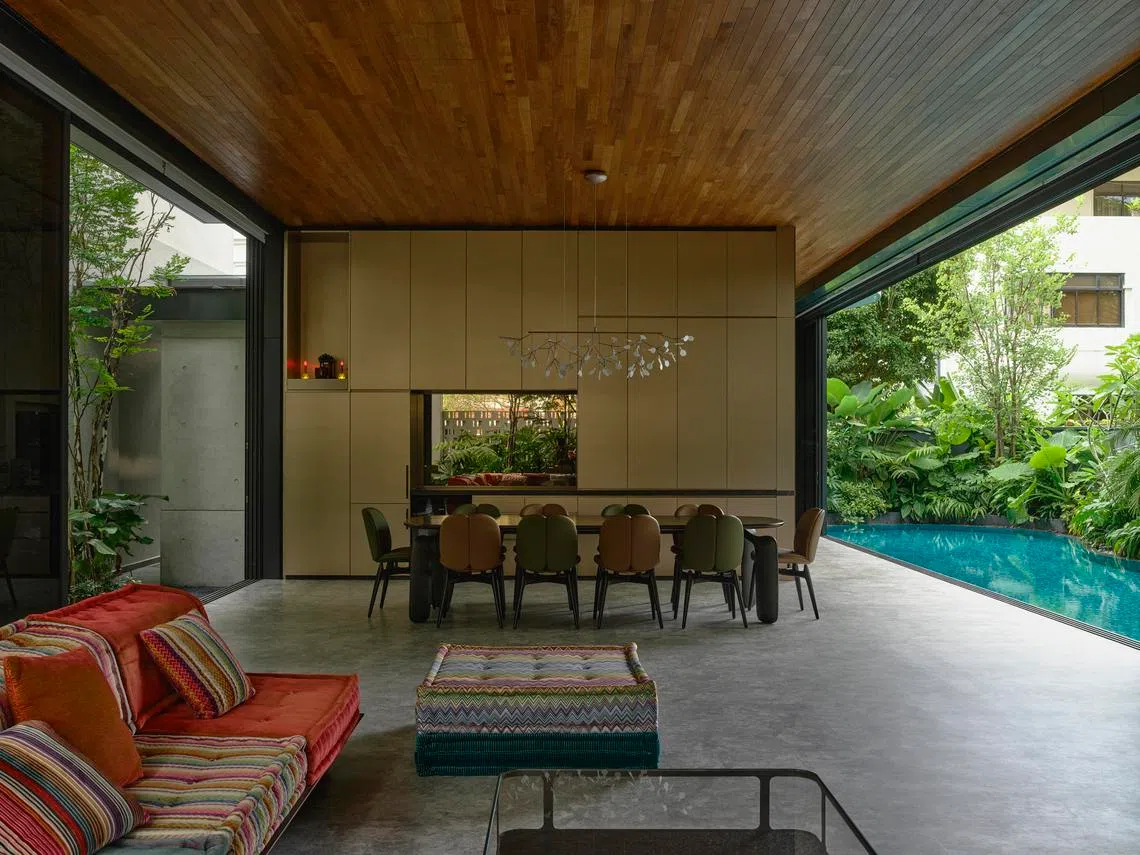
A curved swimming pool was located along the side, abutting the car park. Running alongside the living areas on the first storey makes it “part of the daily experience”, says Han. The glass lift and staircase were also positioned next to the pool so that family members still feel connected to the tranquil presence of water when moving between the levels.
For better privacy, the staircase and lift were positioned at the foyer, so there is direct access to bedroom and entertainment areas. “This minimises the need to pass through shared living areas, supporting multi-generational living and (the couple’s) frequent late-night social gatherings,” Han explains.

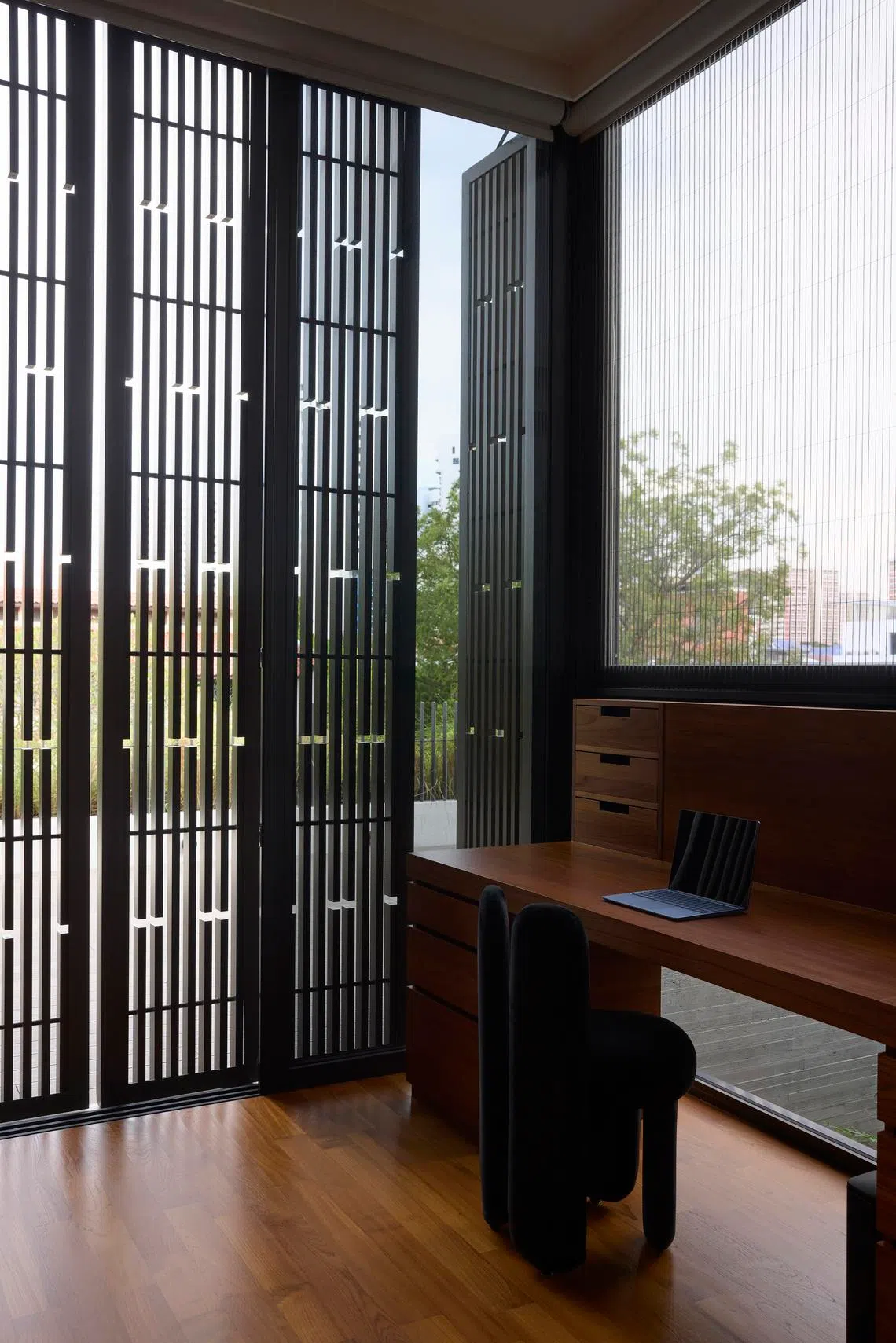
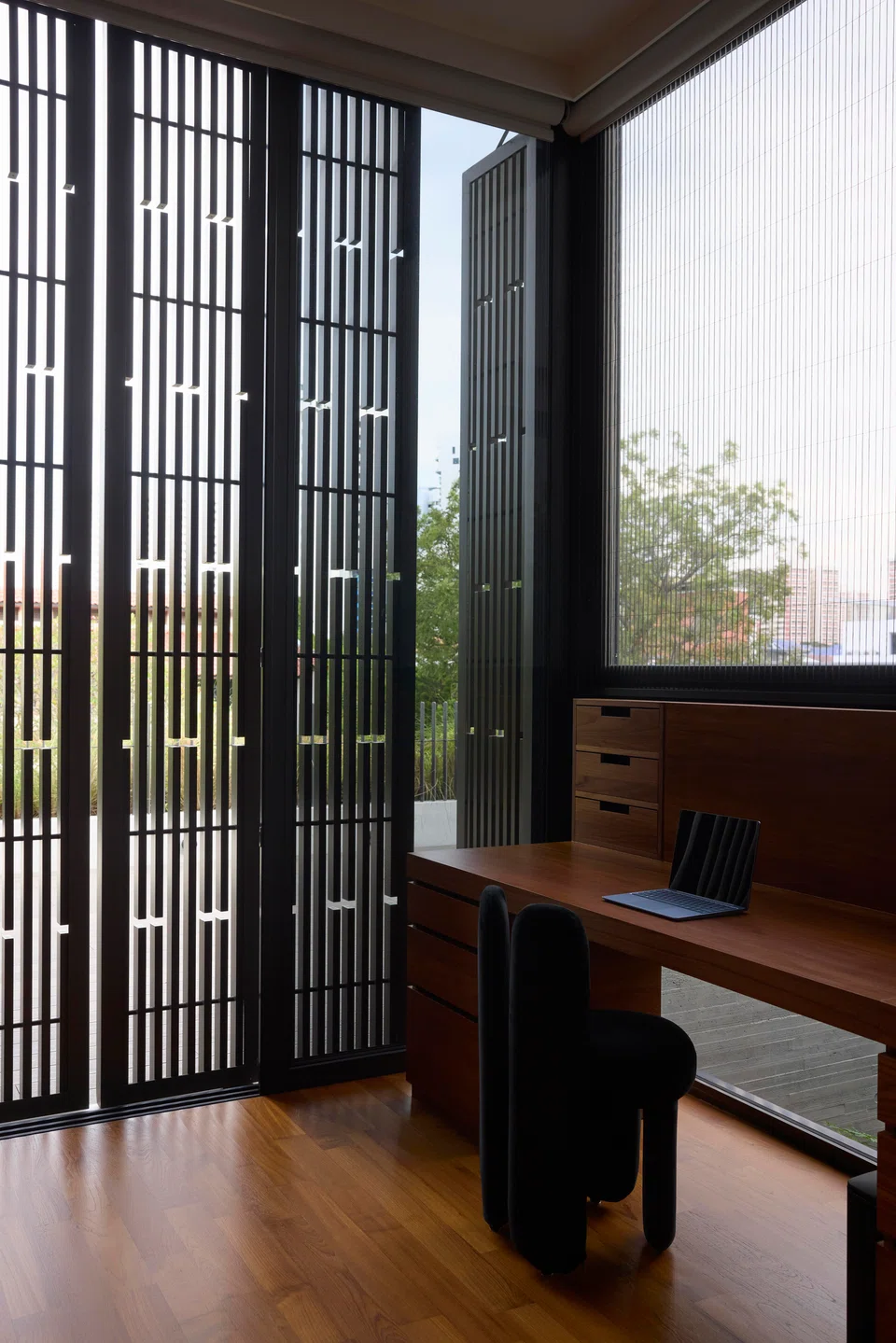
On the second storey, one study faces the front of the house, overlooking a garden atop the car porch roof. On another side, it opens to the double-storey living room below. The study is deliberately located away from the two master bedrooms on this level, so as not to disrupt the rest and privacy of the couple and their daughter.
A spiral staircase leads to the third storey, which is a private family zone for the married daughter. She and her husband occupy one master bedroom, with individual rooms for their two children, plus a study.
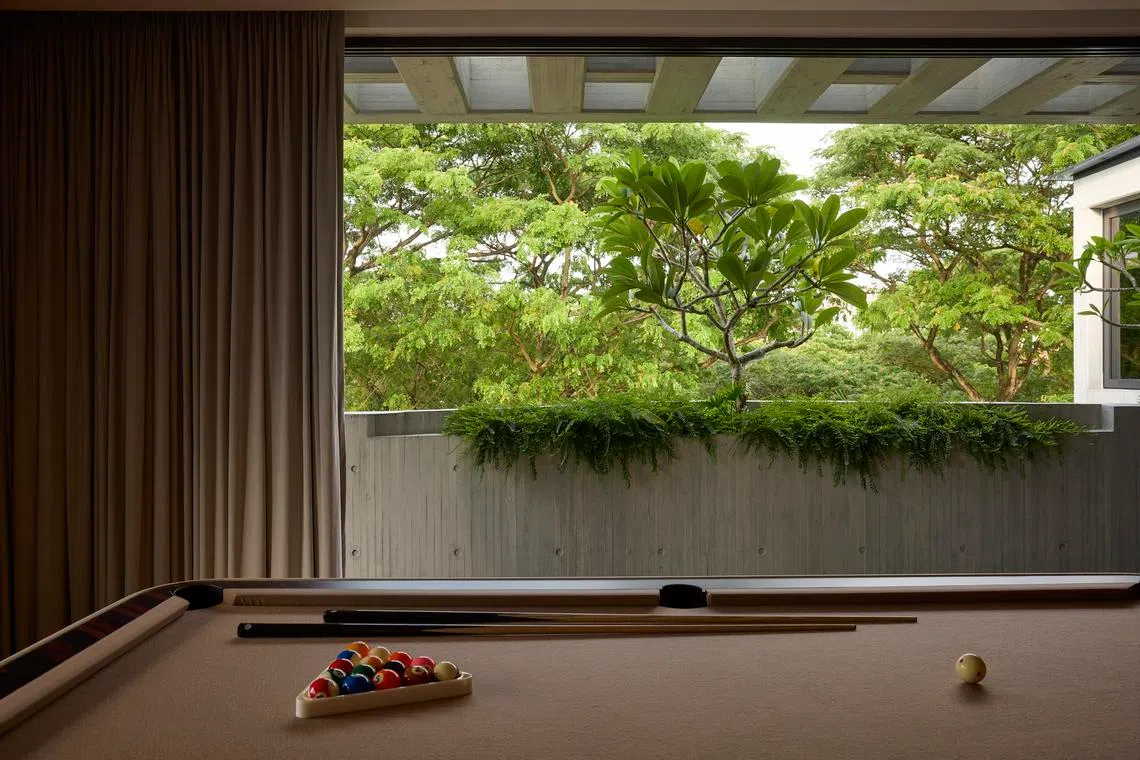
All three generations convene in the attic, which features spacious roof terraces in the front and back, separated by a gym and entertainment room in the middle.
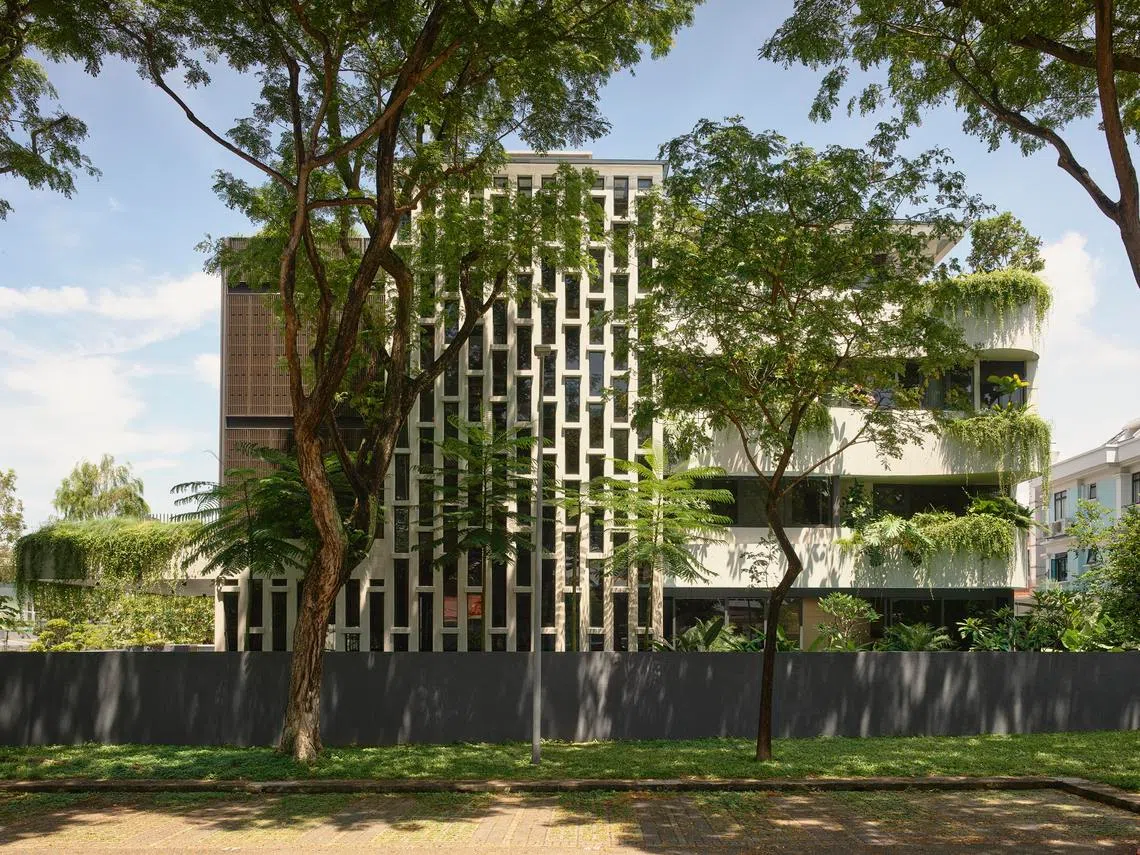
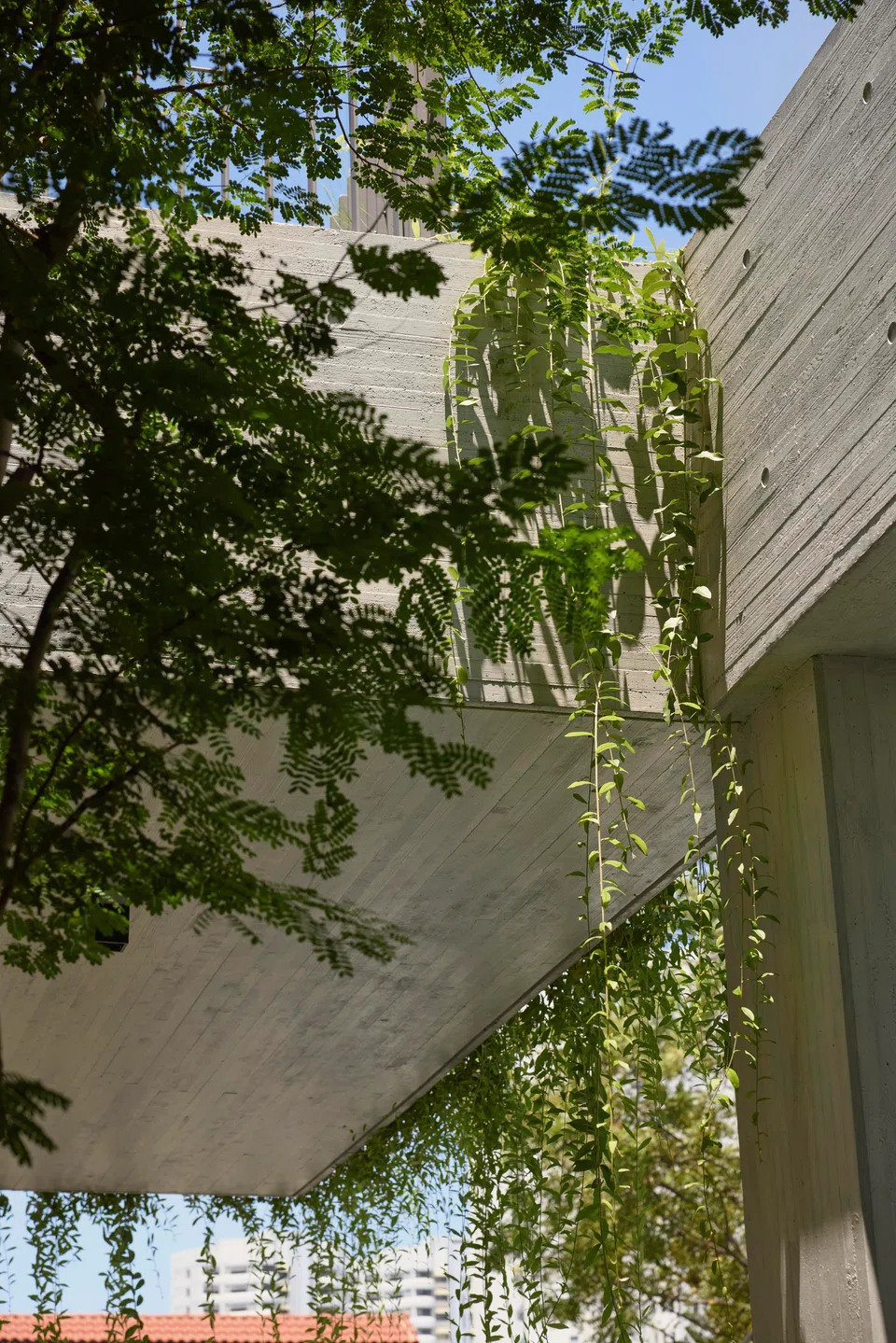
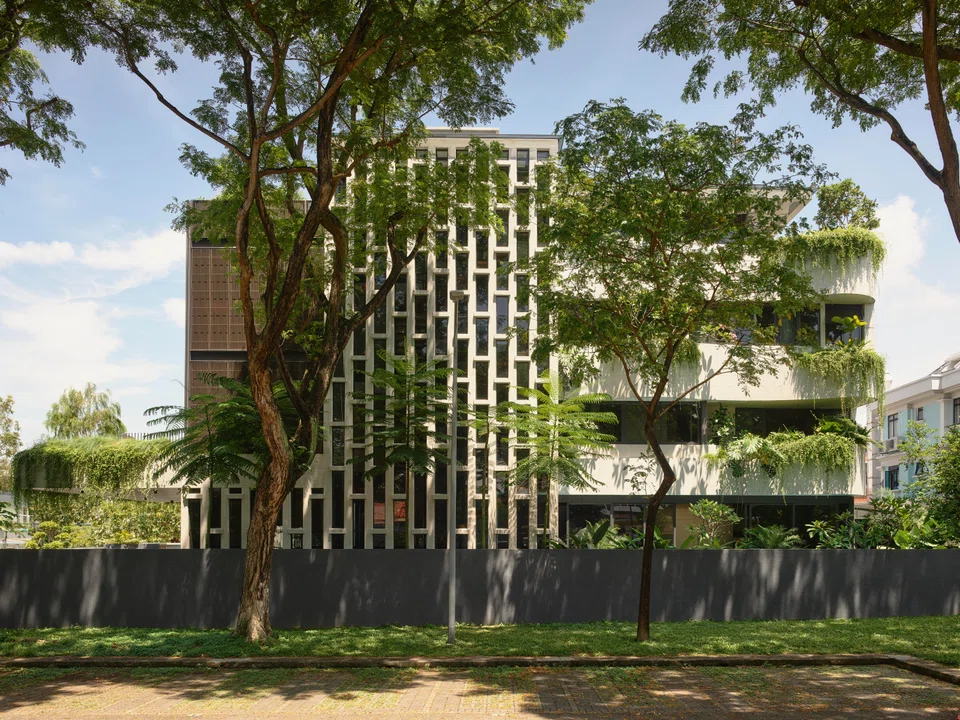
With so many spaces within its built-up area of 7,200 sq ft, the house could easily have become a single, monolithic block. Han avoided this by breaking the architecture into four distinct components: the car porch topped with a green roof; the front study shielded with timber-like aluminium fins for privacy; the stair core wrapped in white concrete screens with glass infill panels; and the rear bedroom block softened with organic edges and greenery-draped balconies.
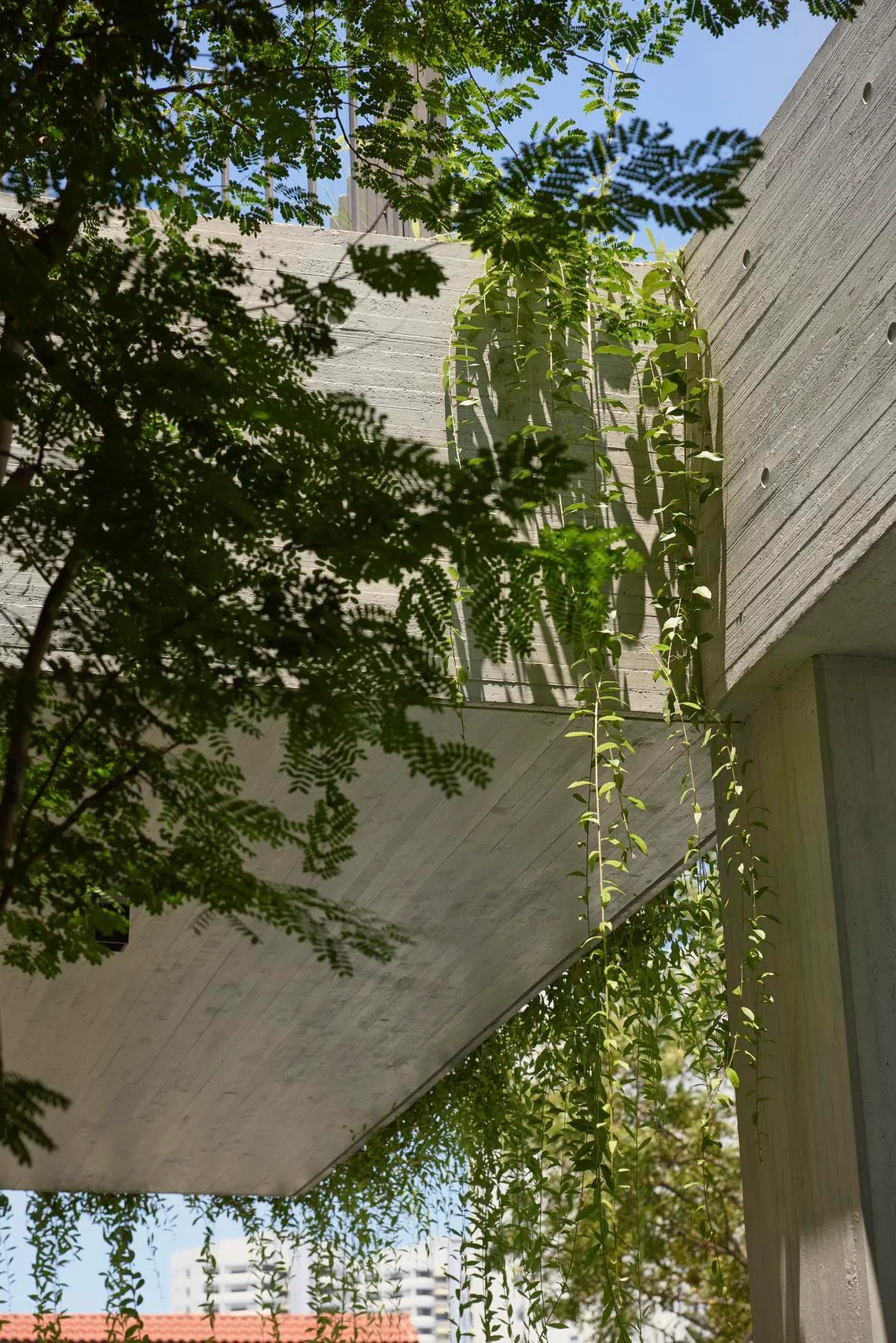
The strong connection to nature continues inward, with every room enjoying a planter, garden or green view. “The landscape integrated into all the levels to soften the massing and enhance privacy,” says the architect. The key strategy was approaching the landscaping as a primary architectural element rather than mere decoration.
“It also provides privacy, shading and microclimatic comfort,” says Han. On arrival, there is a strong sense of place, reinforced by concrete breeze blocks that separate the car porch from the courtyard.
With so many views – both inside and out – it is easy to forget that the house sits just next to an open-air car park which gets crowded during mealtimes as it services a nearby coffee shop. The family enjoys a high level of privacy despite the house’s sense of openness. “They like the strong connection to the outdoors, and say that the spaces work well for both family life and entertaining,” shares Han.
Many factors go into creating a cohesive, successful project, and the project manager – appointed by the client – was crucial in coordinating the project well, says Han. The client’s experience in property development and construction also meant that the clarity, involvement and decision-making was stronger than typical residential projects.
“This project was highly detailed and design driven, and the collaboration between us, the client and other consultants was seamless,” he adds.
Decoding Asia newsletter: your guide to navigating Asia in a new global order. Sign up here to get Decoding Asia newsletter. Delivered to your inbox. Free.
Share with us your feedback on BT's products and services
TRENDING NOW

Britain’s mansion tax shows the difficulty of targeting wealth

Once staunchly pro-China, Malaysian Chinese businesses are now distancing themselves from Beijing

The only common thing in S-E Asia is that we all eat rice: Cisco’s Asean president

Singapore data centre operator DayOne opts for US IPO at likely US$20 billion valuation

