

How to tastefully expand a house’s living space on a ‘modest’ budget
This home is also an architect’s version of adapting an old property for contemporary use
[SINGAPORE] One assumes that those with the means to buy a landed house will also have whatever financial muscle is needed to rebuild said house into their dream home. But given the high cost of both land and construction these days, reality tends to find itself inconveniently constraining desire.
That was where a pair of doctors found themselves, when they purchased an old semi-detached house in the Upper East Coast area as an upgrade from their first home, a BTO flat.
Still, all is not lost. In their search for an architect to transform the house, they found Melvin Keng, principal architect and founder of Kaizen Architecture (kaizen meaning ‘improvement’ in Japanese).
As it happens, he was the winner of the inaugural Singapore Institute of Architects (SIA)-Young Architects Award in 2024 to recognise and honour emerging architectural talent.
This year, he was also named as one of the young, Singapore-registered architects in the Urban Redevelopment Authority’s “20 under 45” list.
With Keng came ideas about how the couple could work within their “modest” budget.
It’s a wrap(around)
For starters, the decision was to stick to the house’s original two-storey form to avoid overstretching finances.
Dr Tan, who confesses she’s the pragmatist and her husband, Dr Lam, the aesthete, says: “We figured we might as well take the money we’d have had to spend to add a half-storey to make the interior nicer and more comfortable instead.
“So this whole design process was like a battle between form and function.”
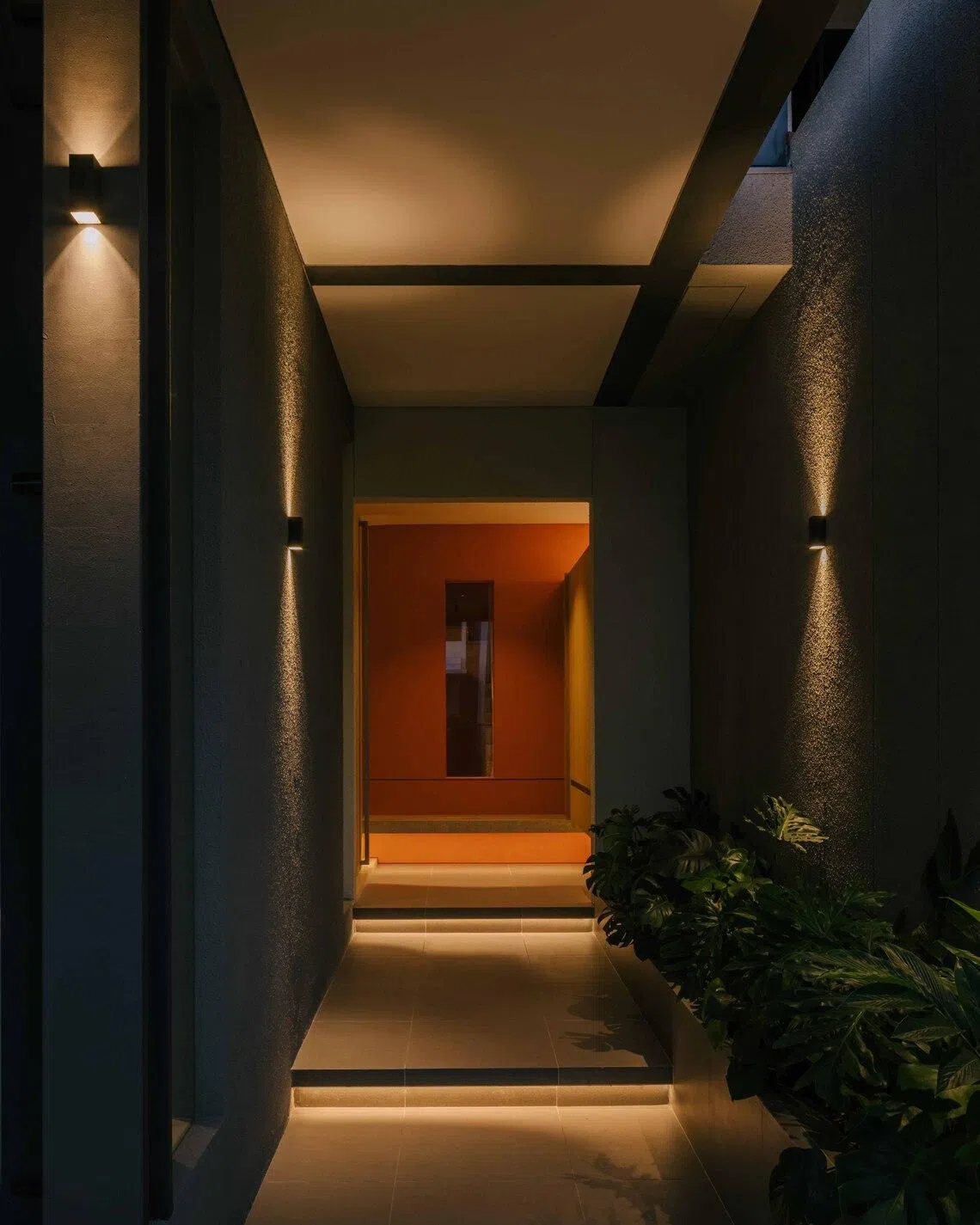
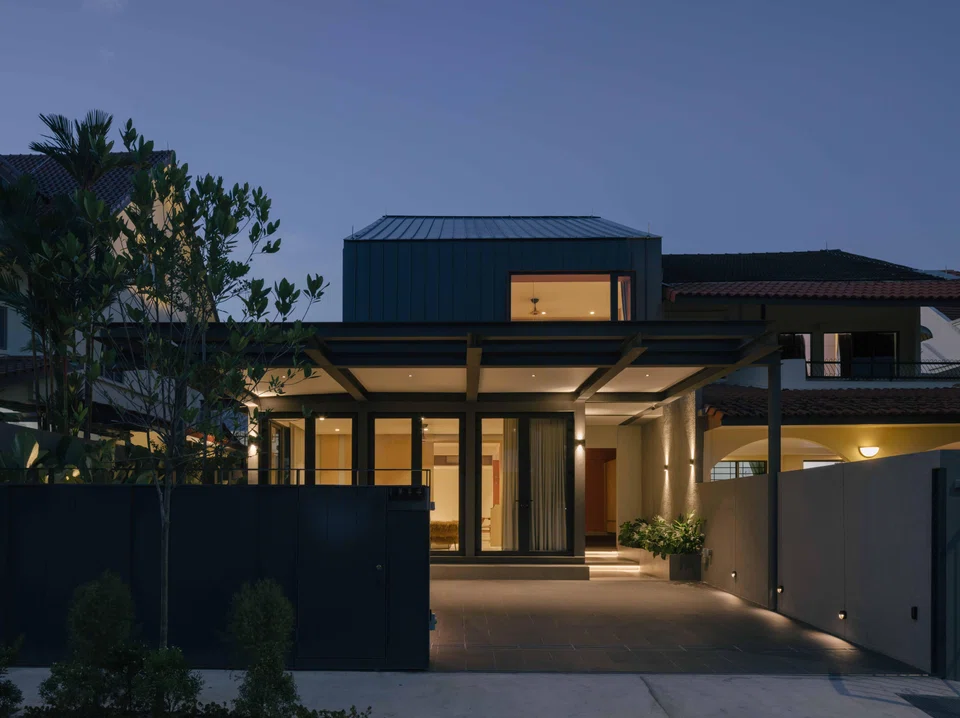
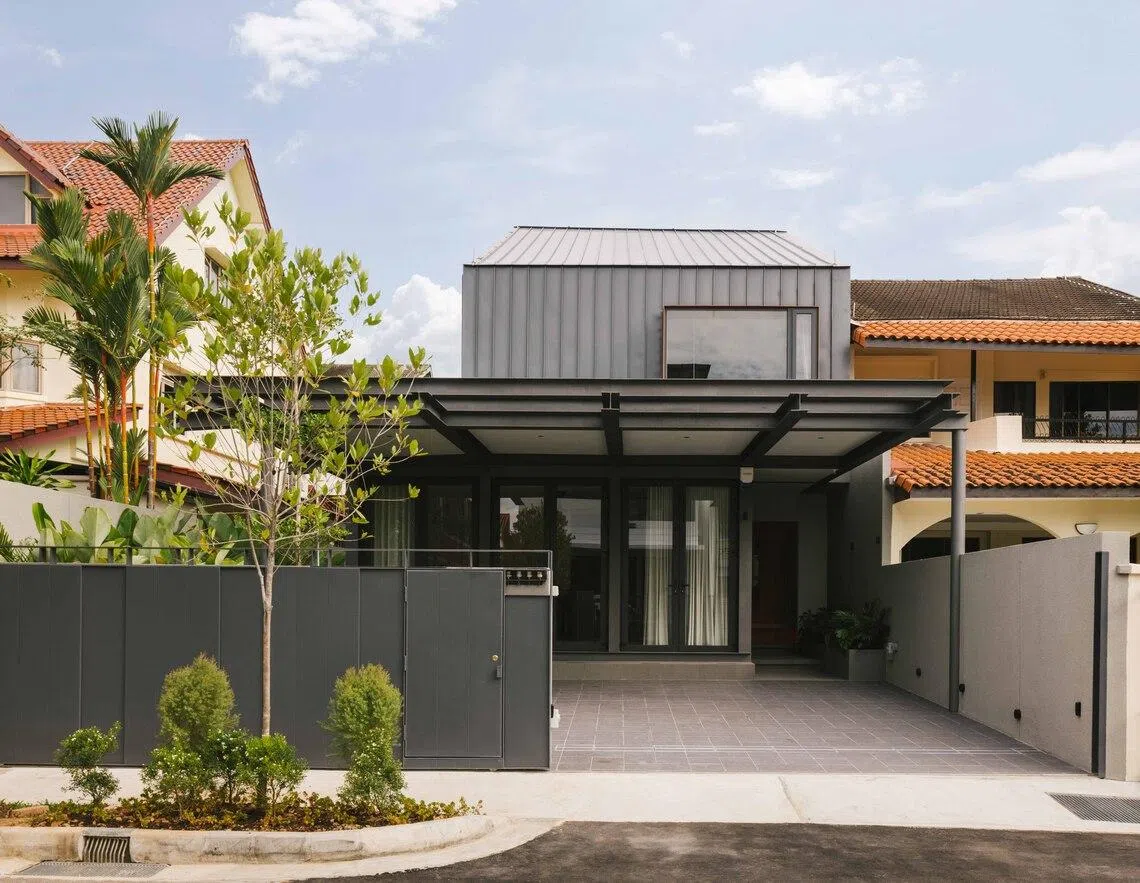
But what the couple definitely agreed on was Keng’s proposal to wrap a new architectural layer around the house, thus extending while embracing its original structure. He dubs the home “Matou House”; matou meaning “wraparound” in Japanese.
The new structure is visually distinct, yet carefully calibrated to coexist with the original building. Keng sees it as his version of adaptive reuse – a more responsible approach he favours over a complete rebuild.
Adaptive reuse is also a process he is familiar with, having clinched two other SIA Design Awards for conserving and repurposing a shophouse project in Malacca.
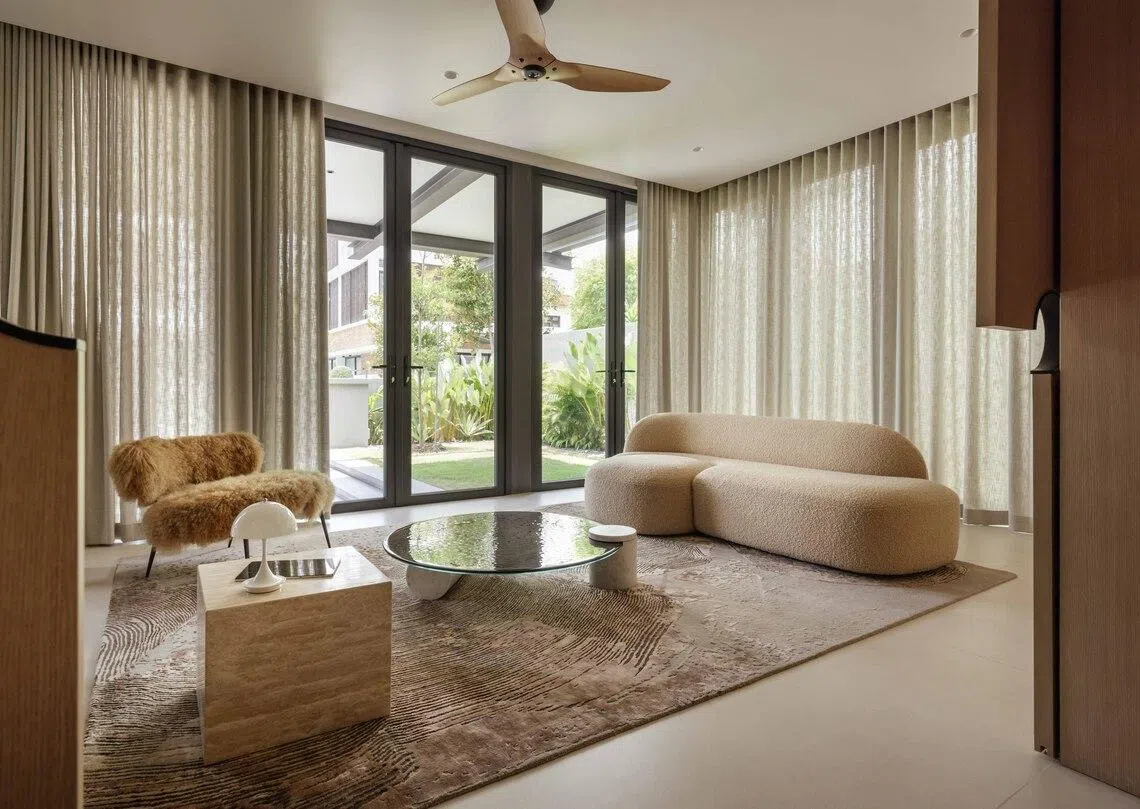
For Matou House, a lightweight steel pavilion on the first storey expands the house outward and allows a complete reorganisation of its internal layout. The steel exoskeleton brings openness and permeability to the home, with a glass-clad living room introduced at the front of the house. It also created more footprint at the side for the kitchen, and at the back for a good-sized granny room.
The home’s core and its “incompleteness”
If the wraparound is akin to new clothes for the house, then the expansive kitchen and dining areas are what form its heart.
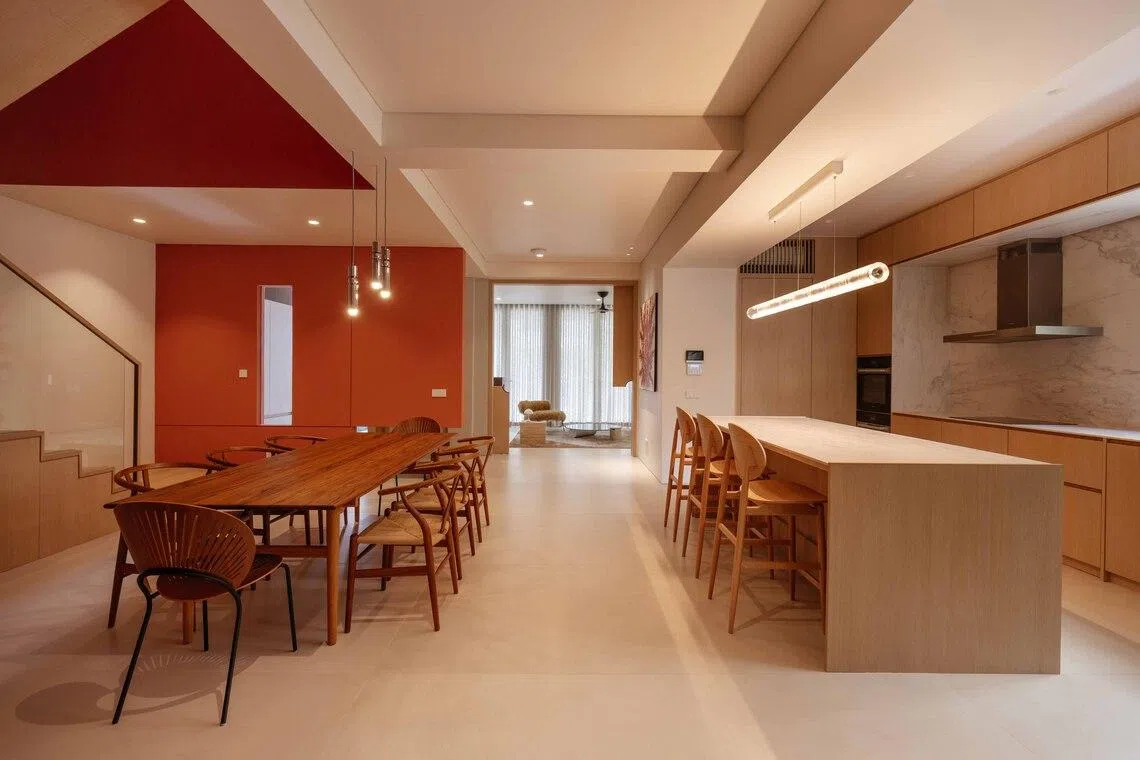
Located side by side, these two spaces allow the couple’s flair for cooking and baking to shine. Here, Keng designed an open kitchen with a large island that acts like a chef’s table when they host dinner parties. On the weekends, the island offers space for the duo’s two young sons to join them in making pasta and the like.
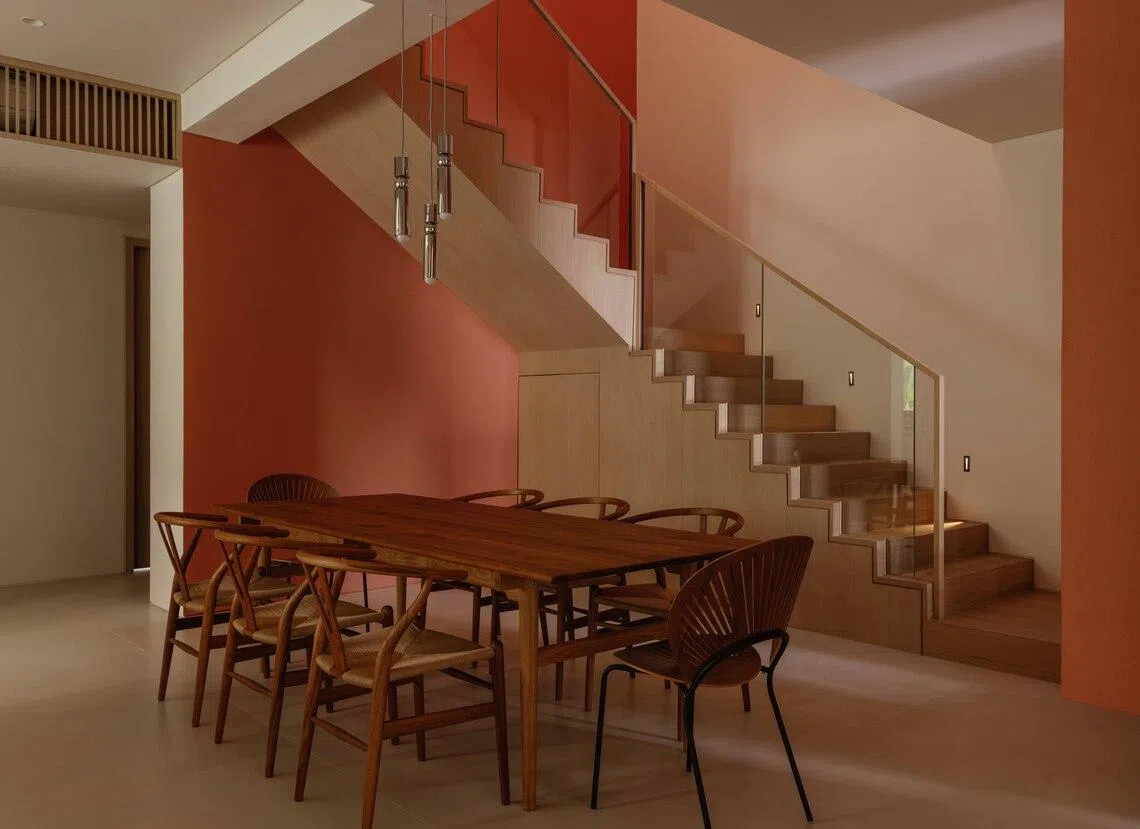
Also at the core of the house is a stairwell and void that Keng describes as the spatial and emotional anchor of the project. Clad in textured, terracotta red, it calls for attention with its eye-catching hue in a home that’s mainly light and neutral in its colour palette.
Then there is its arresting volume – courtesy of the steel wraparound over the top of the house that gives it added height.
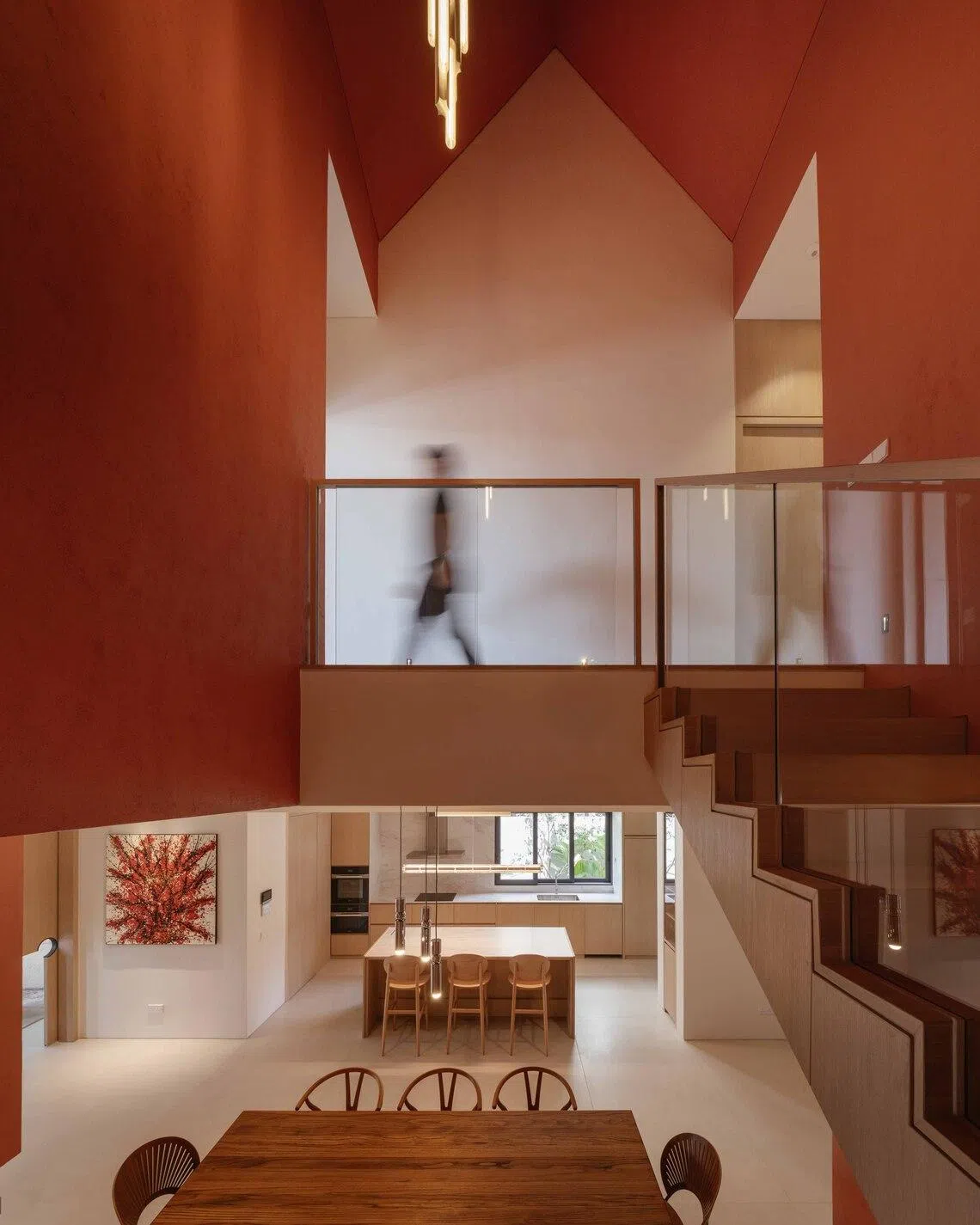
Says Keng of the terracotta red colour one first glimpses in the entryway: “In our work, we like to create a little surprise.
“There were long discussions with the clients over this colour because they were a bit uncomfortable with such a bold statement. In this case, it shocks you a little, and then you’re like: ‘Do I like it? Do I not like it?” It makes an impact.”
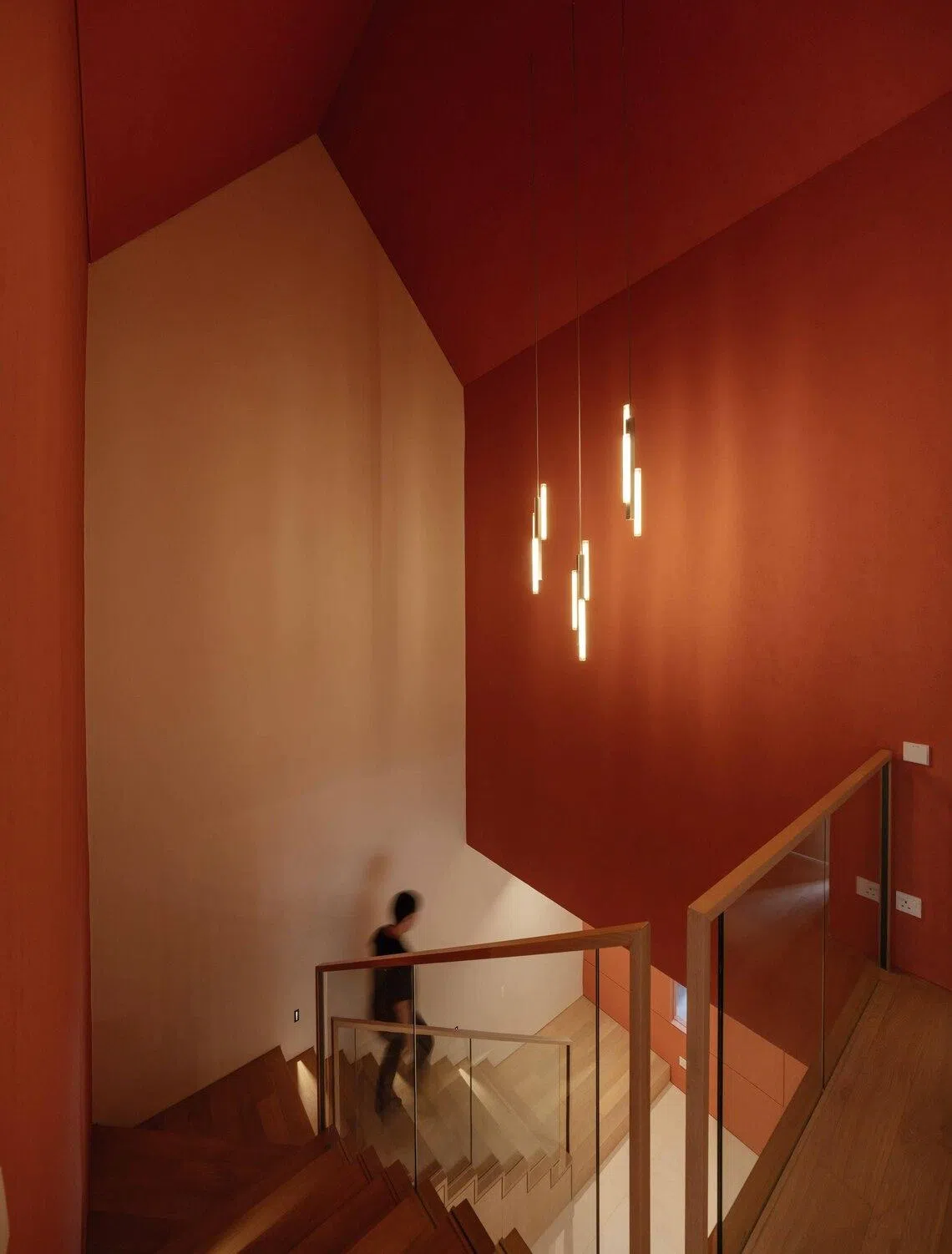
From the second-floor landing, a different perspective of the stairwell comes into view – a chapel-like pointed arch that quietly demands a moment of pause and contemplation.
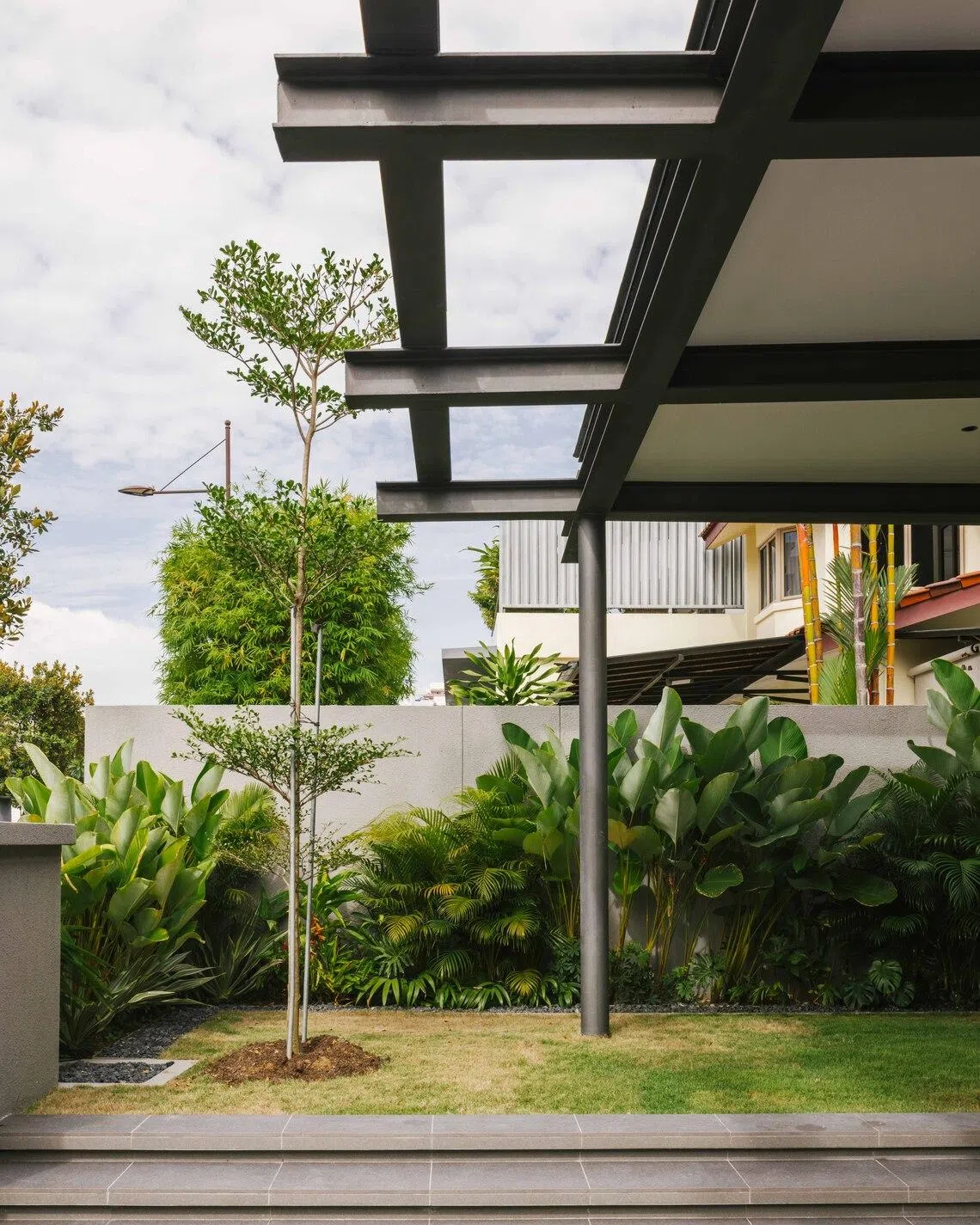
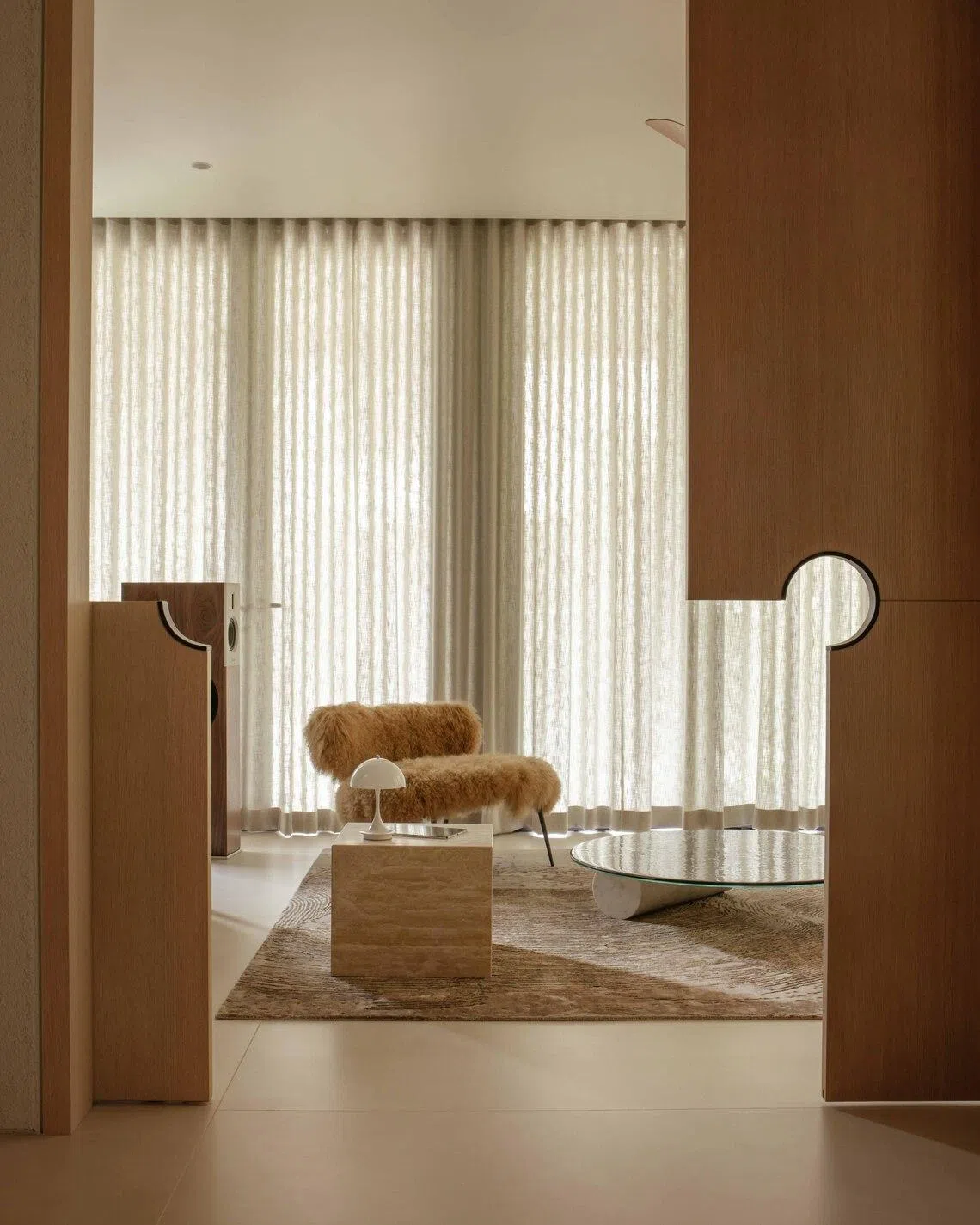
Keng also wanted to explore the idea of incompleteness – elements that resolve only through relationships, such as split forms and layered materials.
“It’s the idea that when you rebuild a home, you never really end.” One example is a visually arresting cut-out on the sliding door that leads to the living room. Another is the car porch canopy that looks like it has an unfinished edge.
Of frames and views
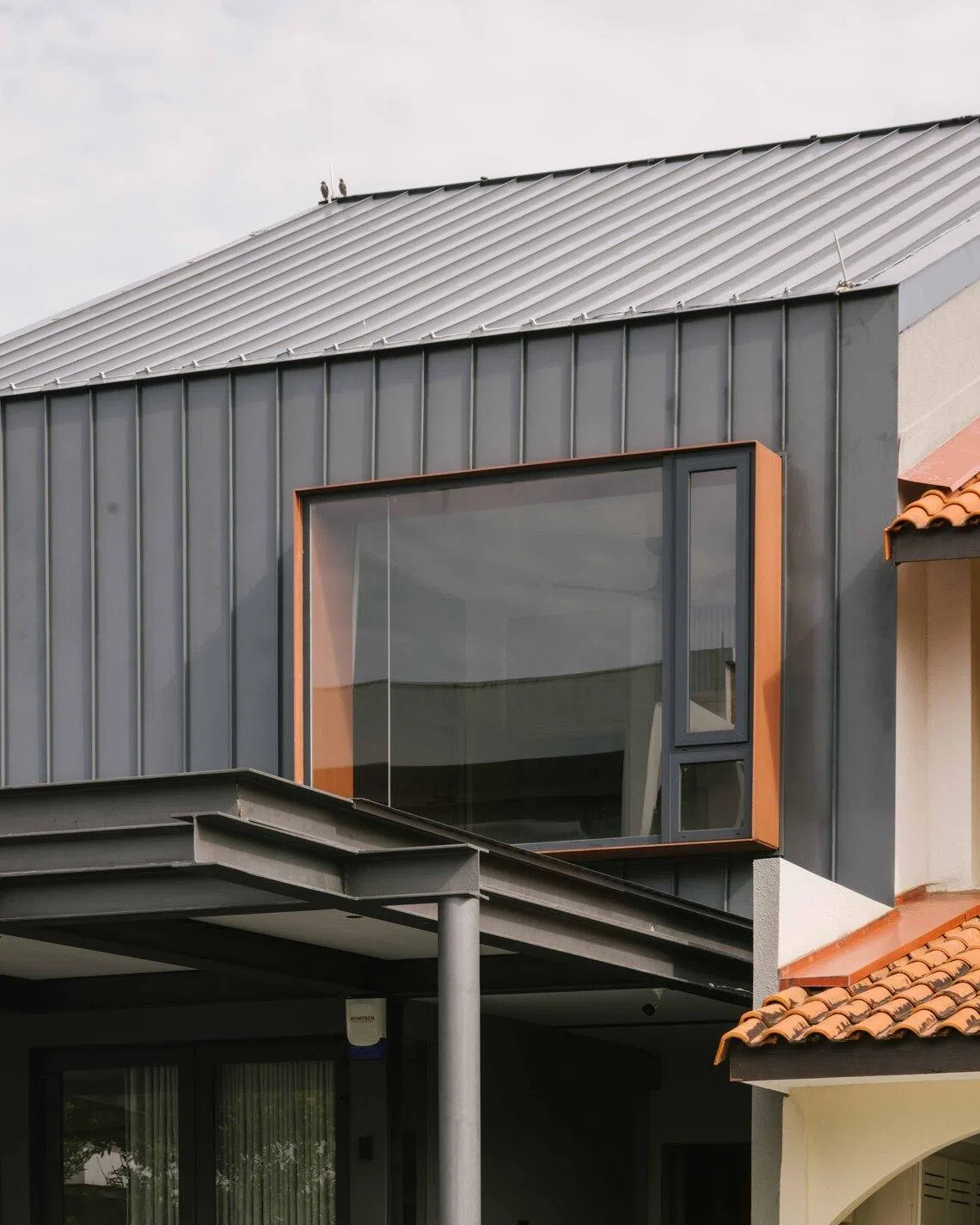
One of the design elements you will notice is how both views and spaces are framed. In the bedrooms, large, frameless glass panels are embedded into the wall. The picturesque views of trees or foliage they offer are interrupted only by narrow windows on one or both sides of the centrepiece glass.
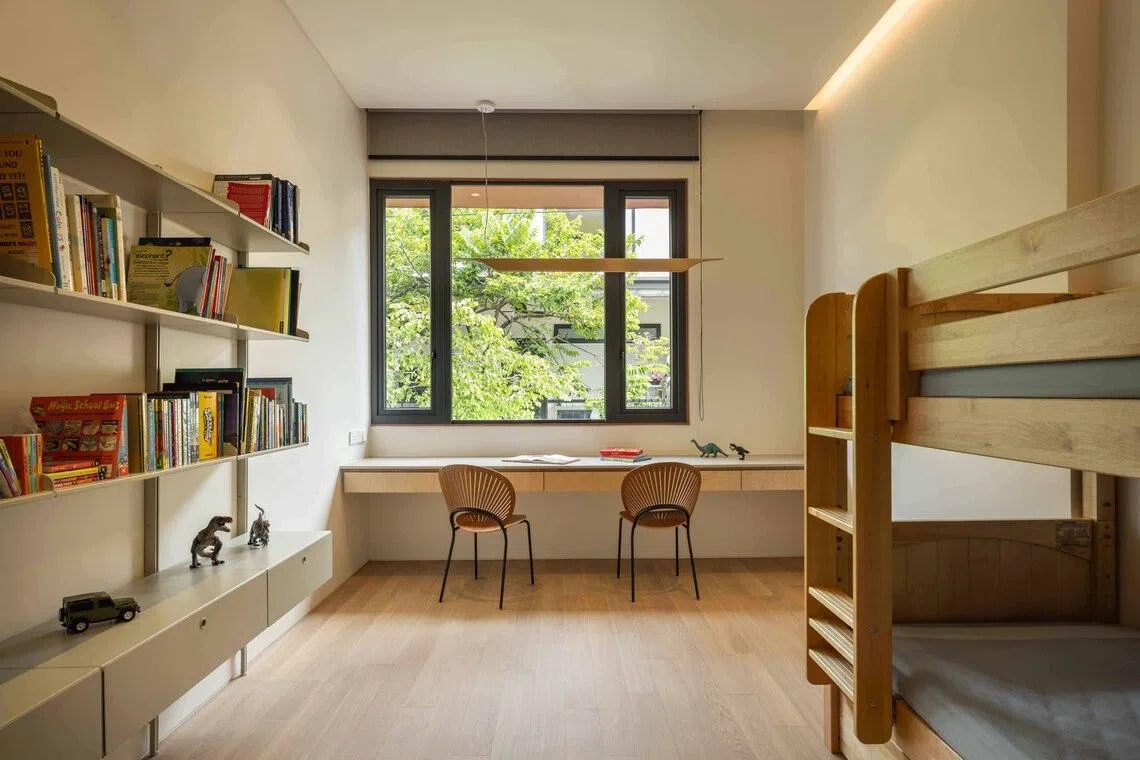
“The problem with multiple windows is that they look cheap, like there’s no thought process at all behind them,” says Keng, pointing out that the smaller apertures are sufficient for ventilation. “Secondly, you don’t want vertical lines blocking your view when you look out.”
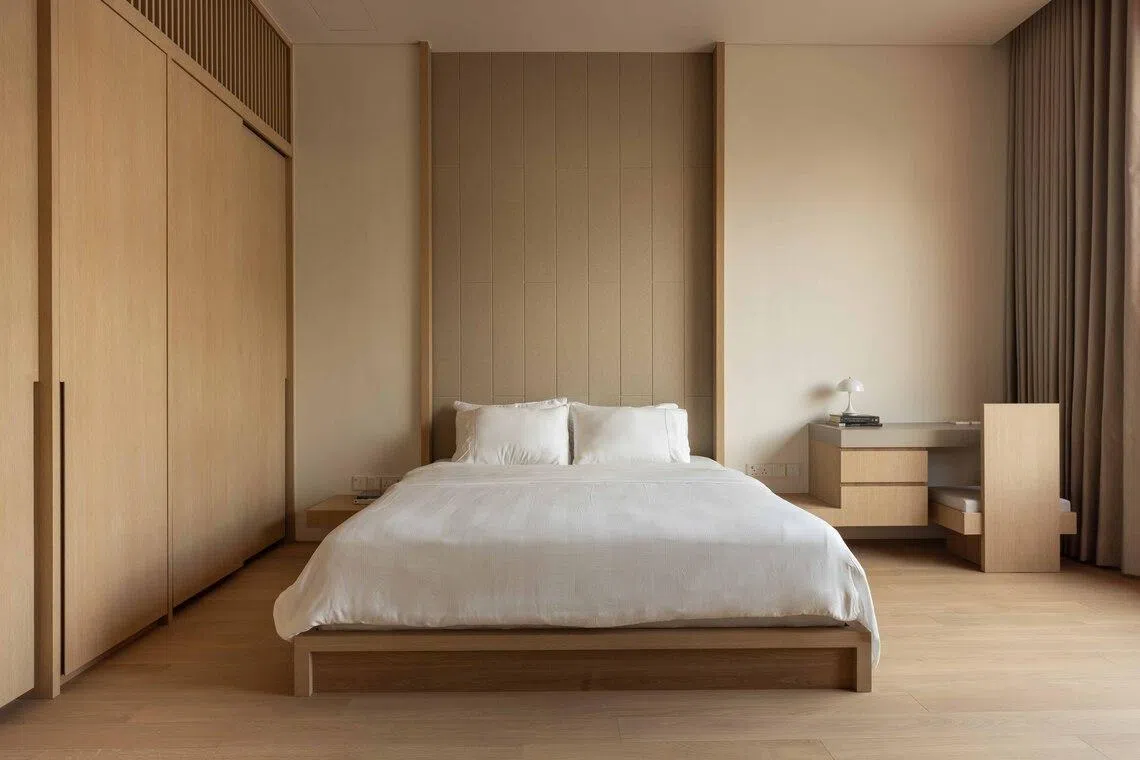
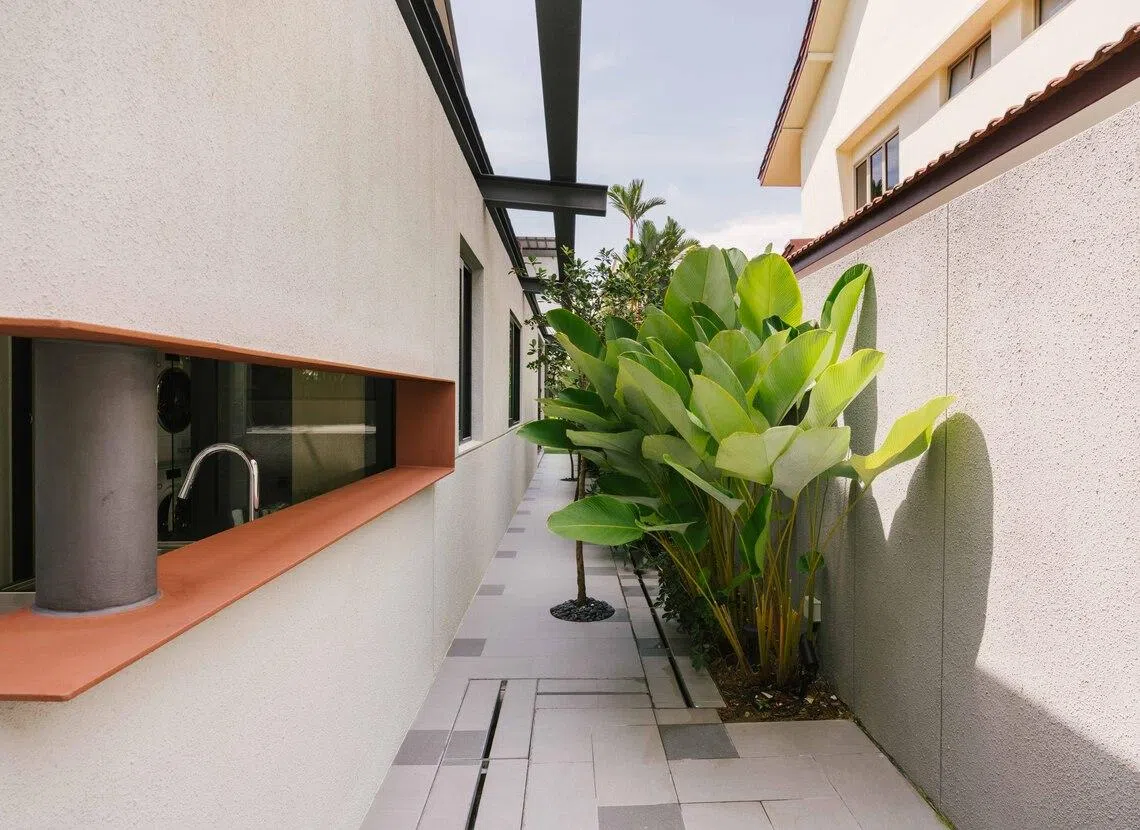
Meanwhile, the long, dry kitchen counter is framed by a sintered stone cladding, while the bedroom and wet kitchen window shrouds are finished in terracotta red.
In the dining area, Keng has also intentionally exposed the beams of the original house instead of covering them over with a false ceiling. “I felt like there is a need to tell people that this house is not new, that some parts of it are old, and I want to show it in a very subtle way that doesn’t destroy the form.”
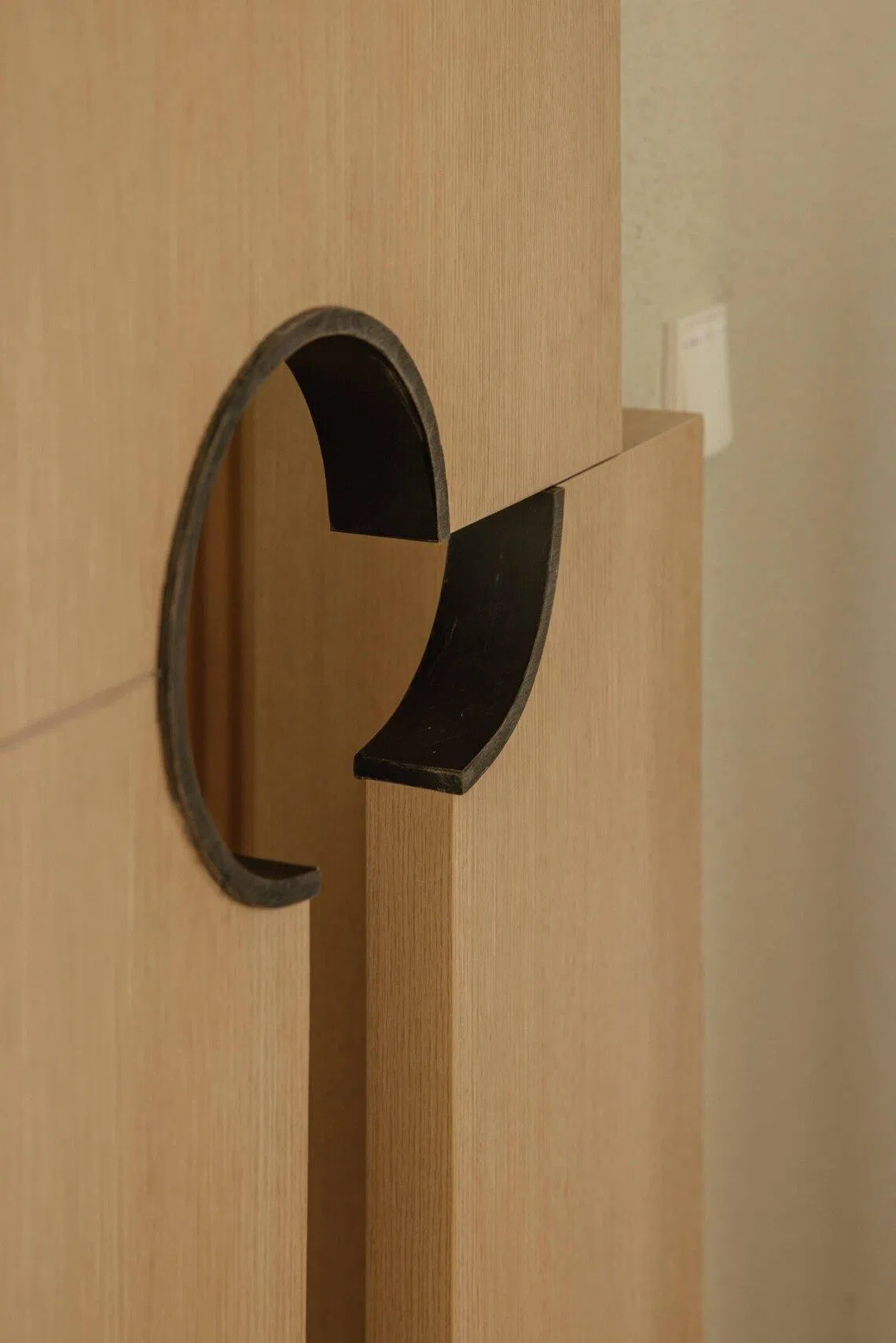
In adapting this house to the needs of a new family, many conversations were held over key elements that matter and details that add character, with some unexpected problems to overcome along the way.
The result is a contemporary home that is thoughtful, quietly expressive and desirable – without the need for drastic measures.
Decoding Asia newsletter: your guide to navigating Asia in a new global order. Sign up here to get Decoding Asia newsletter. Delivered to your inbox. Free.
Copyright SPH Media. All rights reserved.
TRENDING NOW

Philippine power giant First Gen rebuffs foreign offers, plans up to US$2.6 billion in expansion
Cliff Tan has 7 million followers and a 4-month waitlist. Why won’t he expand his business?

Could stablecoins be the future of money?

From finance aspirant to Asean CEO: TUV SUD’s Jonas Strahberger on finding people who believe in you

