

Kengo Kuma opens major architecture exhibition in Singapore
The Japanese architect makes the case for Asian architectural values in a world in crisis

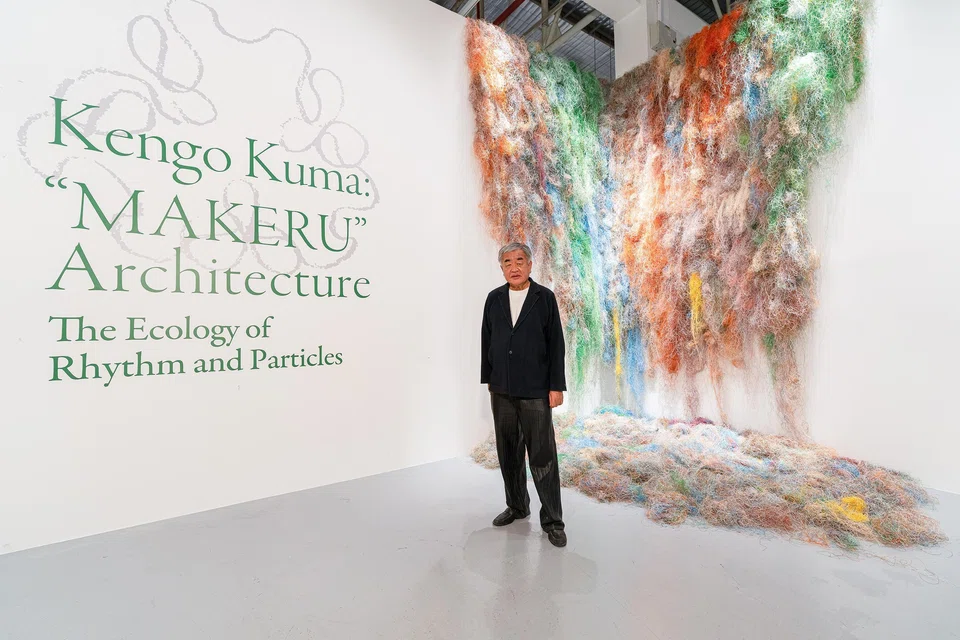
[SINGAPORE] Kengo Kuma has spent much of his career arguing – gently but persistently – that architecture does not need to dominate the world to matter.
In Singapore, a city long associated with speed and ambition, the Japanese architect’s first major solo exhibition makes its case through a quiet vocabulary: “yielding” instead of conquering, “listening” instead of asserting, and building with the world rather than against it.
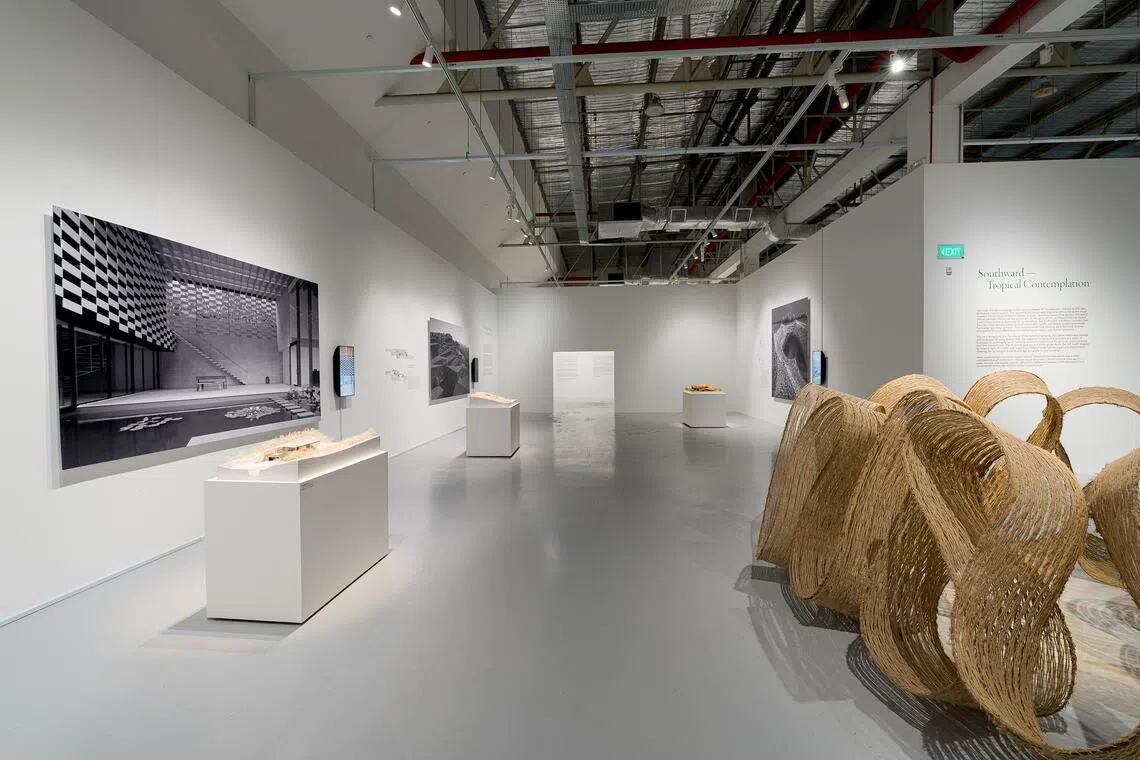
Opened during Singapore Art Week, the exhibition at New Art Museum Singapore presents models, full-scale mock-ups, immersive installations and dense wall texts.
But taken together, it is less a retrospective than a manifesto. It traces the evolution of what Kuma calls “makeru” architecture – a Japanese term meaning both “defeat” and “to yield” – which he frames not as weakness, but as a necessary architectural ethic for the 21st century.
“In the 20th century, Europe and America were leading architecture through the modernist movement,” Kuma says. “But in the 21st century, Asians should lead a new trend, one connected to both the tradition and future of Asia.”
That conviction forms the exhibition’s spine. Kuma’s work, from bamboo structures in rural China to cultural institutions in Paris and Dundee, is framed here not as a personal style but as part of a broader Asian architectural intelligence shaped by climate, craft, memory and ecology.
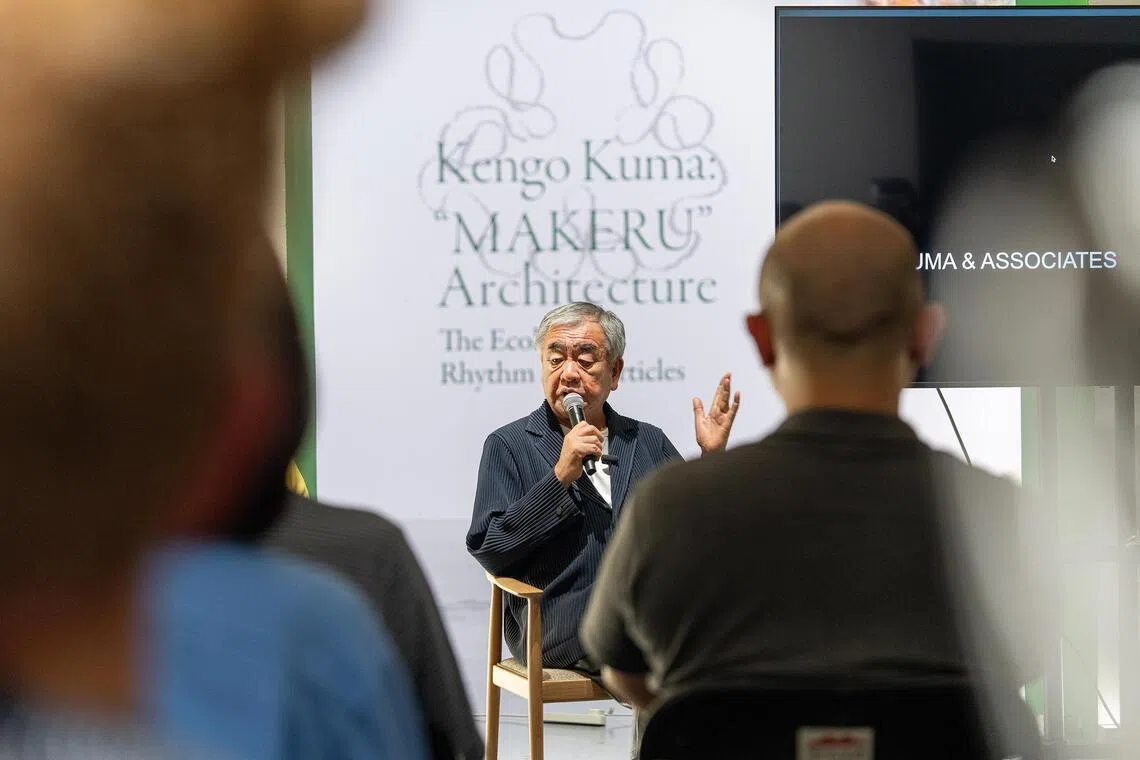
Rather than designing buildings as autonomous objects, the exhibition proposes architecture as a continuation of the landscape – porous, rhythmic and ecological, “yielding” to nature’s forces.
From spectacle to surrender
This sensibility was not always central to Kuma’s practice. He began his career in 1980s Japan, during the height of the bubble economy, when architectural excess was the norm and sustainability was never discussed.
Then the bubble burst. Projects were cancelled. Kuma had to reassess everything. He left the city and travelled through Japan’s countryside, working on small-scale projects with local craftsmen.
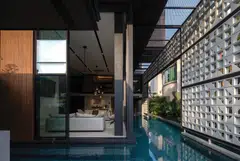
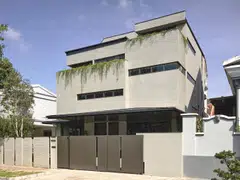
“That decade changed everything,” the 71-year-old recalls. “I understood that the completion of a building simply marks the beginning of its long process of ageing. I learnt to appreciate the way materials age and develop patina.”
That insight runs through the exhibition. Again and again, it returns to the idea that architecture’s true life begins after construction, when materials weather and absorb time. “The most important value for future architecture is harmony,” he says. “Ecology and harmony are basically one thing.”
This way of thinking is deeply rooted in Asian cultural thought. Kuma often invokes the Japanese concept of “mottainai”, the belief that waste is a moral failure. In contrast to Western traditions that equate consumption with progress, he sees restraint and care as civilisational strengths.
Why Asia matters now
Which brings us to Singapore. Kuma sees the city as a genuine gateway between the East and West – and, hence, an ideal testing ground for a new architectural direction. “Singapore is not only a place of economic exchange, (but also) a place of cultural exchange. That is very unique in Asia.”
The exhibition devotes a large section to the Founders’ Memorial, a building in Gardens by the Bay that will commemorate the founders and history of Singapore. Set to open in 2028, it is designed by Kengo Kuma & Associates (Japan) in collaboration with K2LD Architects (Singapore).
For Kuma, the project embodies what he calls “a monumentality connected to the earth”, with slopes rising gently from the ground, paths unfolding through gardens, and architecture becoming something to walk through rather than stand before.
“Some people criticised this. They said it goes against the definition of a monument.”
But his response is characteristically patient. Across Asia, ancient burial mounds, sacred mountains and landforms have long been revered precisely because they are inseparable from the earth. That connection, he argues, creates a monumentality stronger than any free-standing structure.
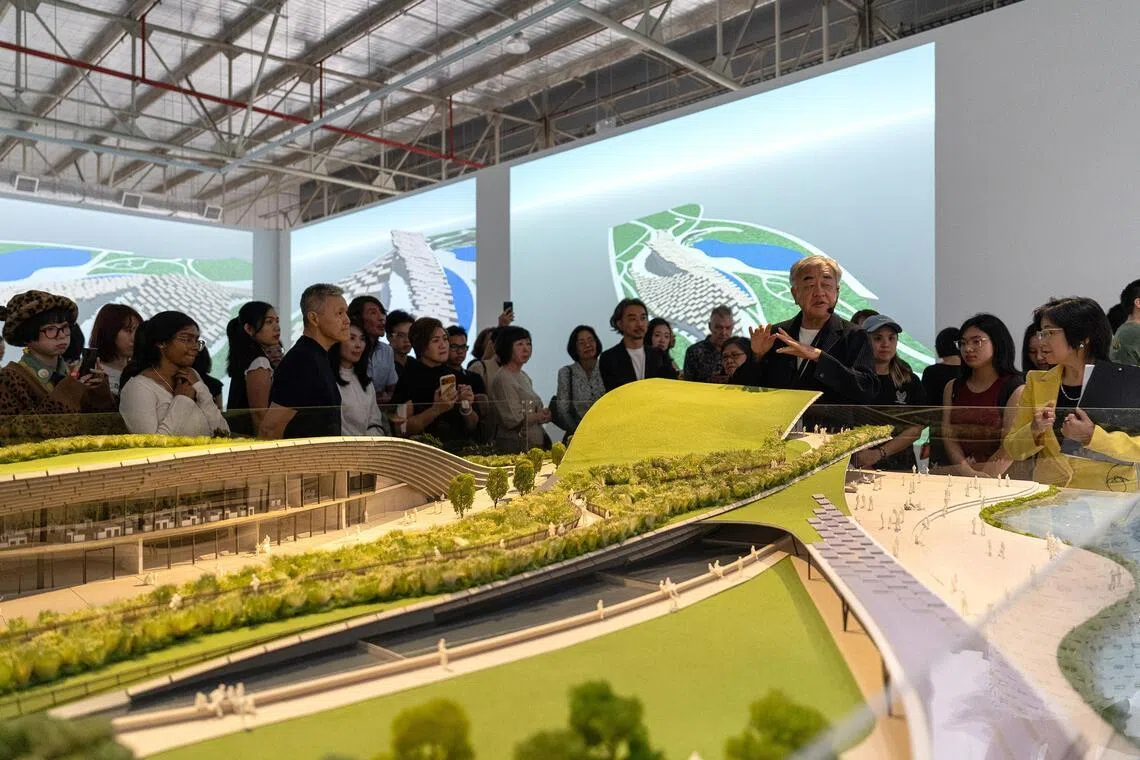
For Kuma, this approach is also the most fitting tribute to Singapore’s founding philosophy of being a garden city – an idea that its first prime minister Lee Kuan Yew conceived in the 1960s, long before environmentalism became a global concern.
When architecture learns to hear
Shaped by renowned curator Yuko Hasegawa, the exhibition translates Kuma’s philosophy into a deliberately sensory experience, foregrounding material, movement and bodily perception.
“Architecture is not separate from our sensation,” she says. “Kuma-sensei is a remarkable listener. He listens to materials – and materials respond.”
This attentiveness finds poetic expression in the exhibition’s exploration of onomatopoeia, the Japanese “sound-words” Kuma often uses as a design tool to describe the sensory qualities of space – zara-zara for roughness, suu-suu for breathing spaces, yura-yura for light that filters.
The architect notes that the exhibition arrives at a time of global instability, shaped by geopolitical conflict, climate crisis and construction systems still rooted in the 20th-century logic of consumption.
“We live in an age of wars, which I think will stretch for a few decades,” he says. “We need a new definition of consumption for the sake of the world.”
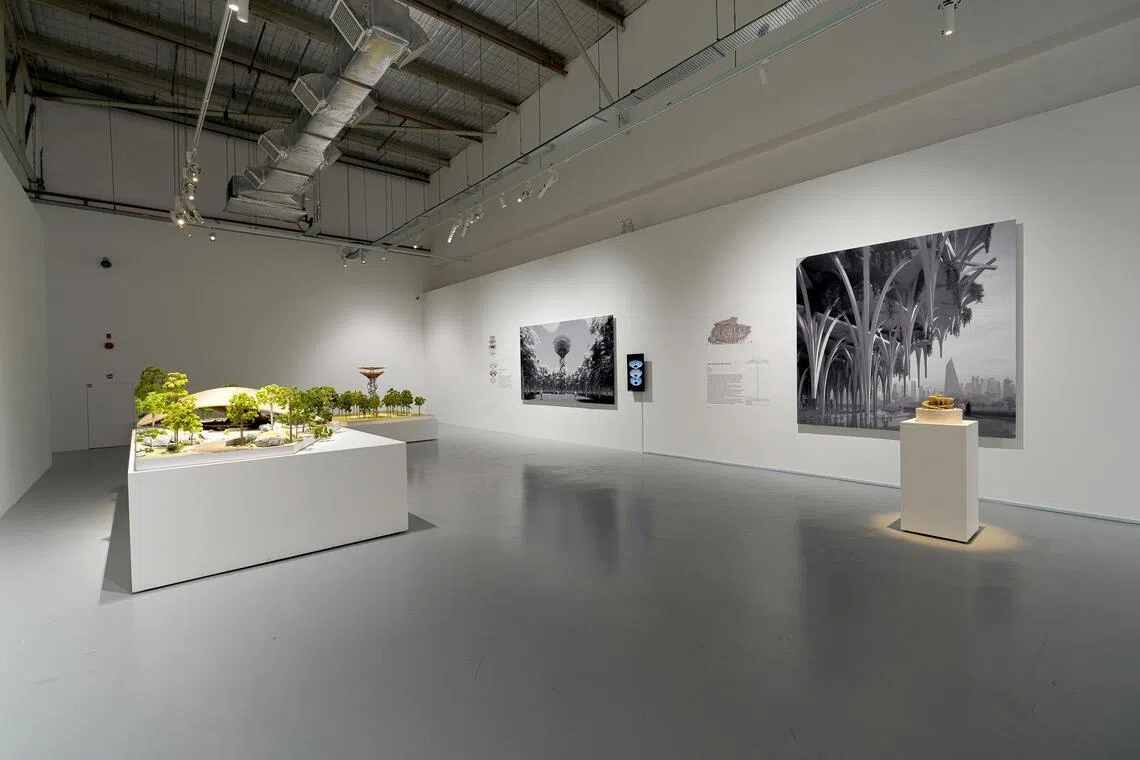
Yet the exhibition is neither pessimistic nor nostalgic. It is quietly radical. It proposes that the future of architecture lies not in louder statements or taller buildings, but in humility – yielding to nature, listening to materials, and allowing buildings to age.
“I believe Asia and its traditions can save the world,” he says without arrogance. “And I want to be part of that movement.”
Kengo Kuma: Makeru Architecture – The Ecology of Rhythm and Particle (organised by Whitestone Gallery) runs at the New Art Museum Singapore until Jun 14. Tickets via Sistic or on site.
Decoding Asia newsletter: your guide to navigating Asia in a new global order. Sign up here to get Decoding Asia newsletter. Delivered to your inbox. Free.
Copyright SPH Media. All rights reserved.
TRENDING NOW

Once staunchly pro-China, Malaysian Chinese businesses are now distancing themselves from Beijing

Looking beyond looming CEO succession, should UOB potentially pursue a transformative merger?

Could stablecoins be the future of money?

Grab CEO’s wife Chloe Tong on life with Anthony Tan and finding her purpose

