Sifa 2026: classic theatre, radically reimagined
Hamlet, Hedda Gabler and Death of a Salesman return with bold new interpretations

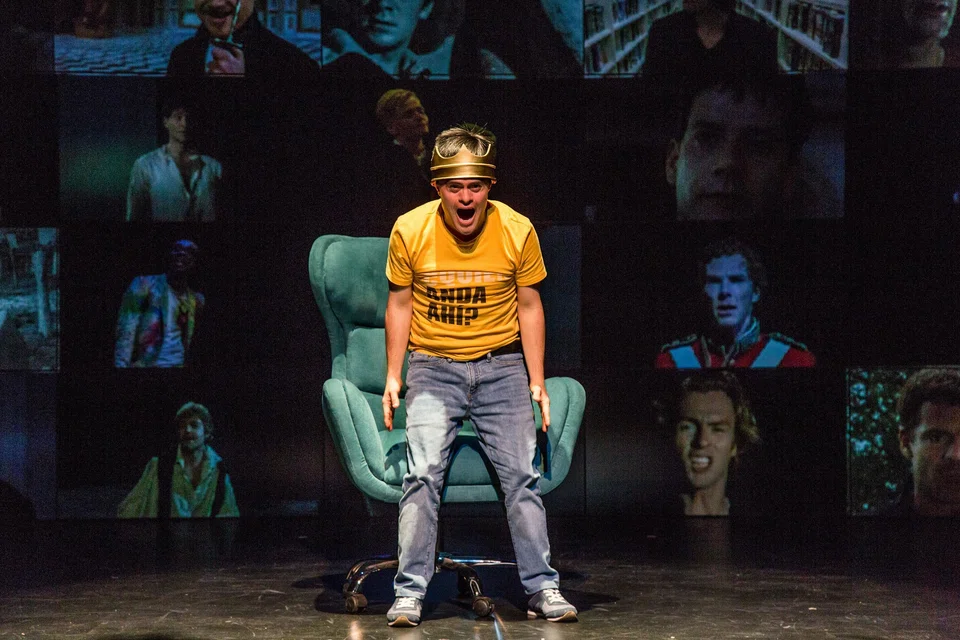
[SINGAPORE] At the Singapore International Festival of Arts 2026 (Sifa 2026), classic plays are not being revived so much as taken apart and rebuilt: Hamlet is played by a cast of actors with Down syndrome, Hedda Gabler is stripped to its psychological core, and Death of a Salesman is re-examined through translation and context.
Across these productions, the impulse is not to restage but to take them apart, to see what they still mean today. We speak to the directors to see how these works hold up under contemporary scrutiny.
Hamlet
Hamlet is widely regarded as the greatest play ever written, its title role mastered by the finest actors – from Laurence Olivier to Benedict Cumberbatch – each bringing their own virtuosity to William Shakespeare’s famous prince.

But what happens when that role is reimagined entirely? What if Hamlet is not performed by a single famous actor – but shared among a cast of performers with Down syndrome?
That is the question at the heart of this radical staging by Peru’s Teatro La Plaza, directed by Chela De Ferrari. Here, Hamlet is no longer a singular figure, but a role that fractures and flows between different bodies and voices.
For De Ferrari, the journey began almost by accident. She had long wanted to stage Hamlet, but kept postponing it because she “couldn’t find the right actor”.

Then, during a routine staff meeting, something happened. A theatre usher with Down syndrome stood up and introduced himself as “Jaime Cruz... an actor”.
In that moment, everything clicked. “I suddenly saw him with the crown of the prince. I imagined him speaking Hamlet’s words, and I felt that the play began to open up in a completely new way.”
The question was no longer how to perform Hamlet correctly, but who is usually allowed to perform it at all. “To place Hamlet in the hands of a group of actors who are not usually given value was a way of making a statement,” she says.

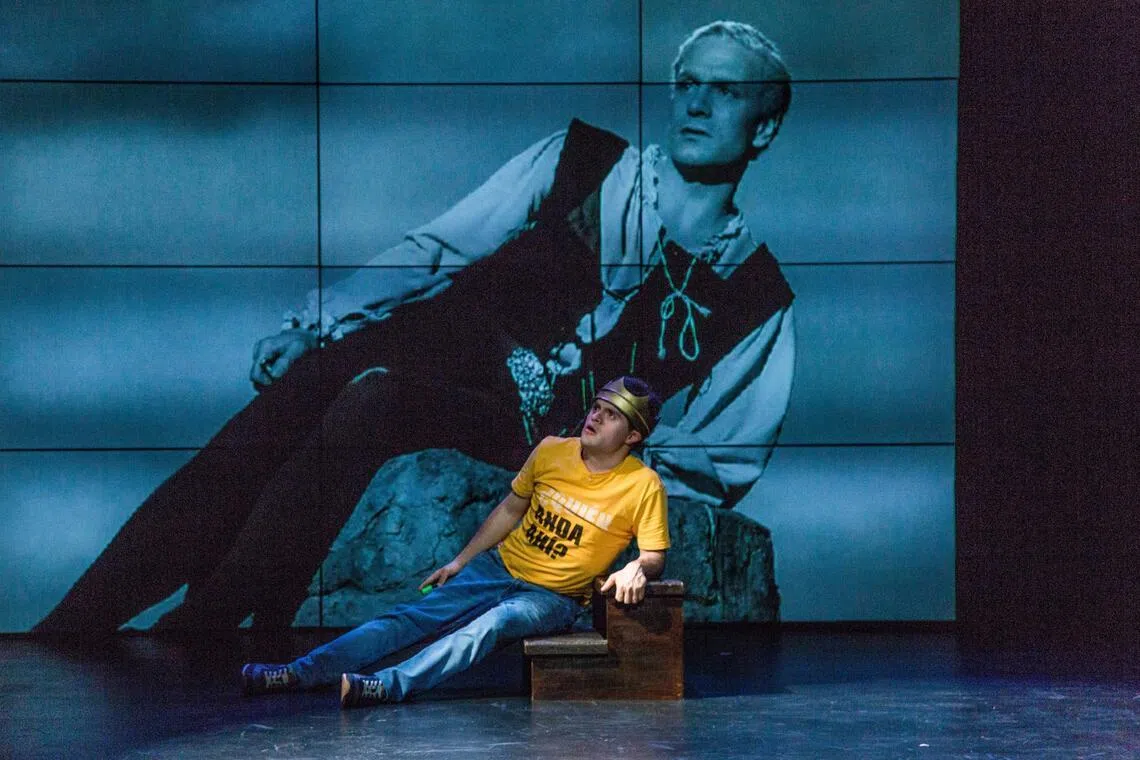
In this production, the cast are not simply interpreters of Shakespeare’s celebrated text. They become its co-authors, interrupting and reshaping what the Bard wrote.
Scenes emerge and dissolve. Lines are spoken plainly or resisted and transformed. Even the play’s most famous line, “To be or not to be”, shifts away from an abstract philosophical dilemma into something more immediate.
“It becomes a question of dignity and visibility,” De Ferrari says, “the right to be.”
The result is a Hamlet that feels open, relevant and unexpectedly modern. Where many productions aim for a definitive interpretation of Hamlet, De Ferrari is after something more fluid and alive.
“I hope this production opens, even slightly, the boundaries of the audience’s perception,” she says.
Hamlet runs from May 21 to 23 at the Drama Centre Theatre
Salesman之死
Few modern plays carry the weight of Death of a Salesman. Since its debut in 1949, Arthur Miller’s play about Willy Loman – an honest but unsuccessful salesman whose life quietly unravels – has come to define modern tragedy. Its themes of dreams and disillusionment echo through countless films and TV shows, from American Beauty to Breaking Bad.
Few people, however, know of a real-life incident in 1983, when Chinese theatrician Ying Ruocheng (who had translated the Miller’s play into Mandarin) invited Miller to Beijing to direct it with a Chinese cast – even though Miller did not speak Mandarin.
China was just reopening after the Cultural Revolution, and many of the ideas in the play – mortgages, the middle class, the American Dream – were unfamiliar to the actors. Using a translator, Miller had to explain the world of the story to the Chinese cast.
And yet, against the odds, the production became a huge success, and even toured to Singapore in 1986.
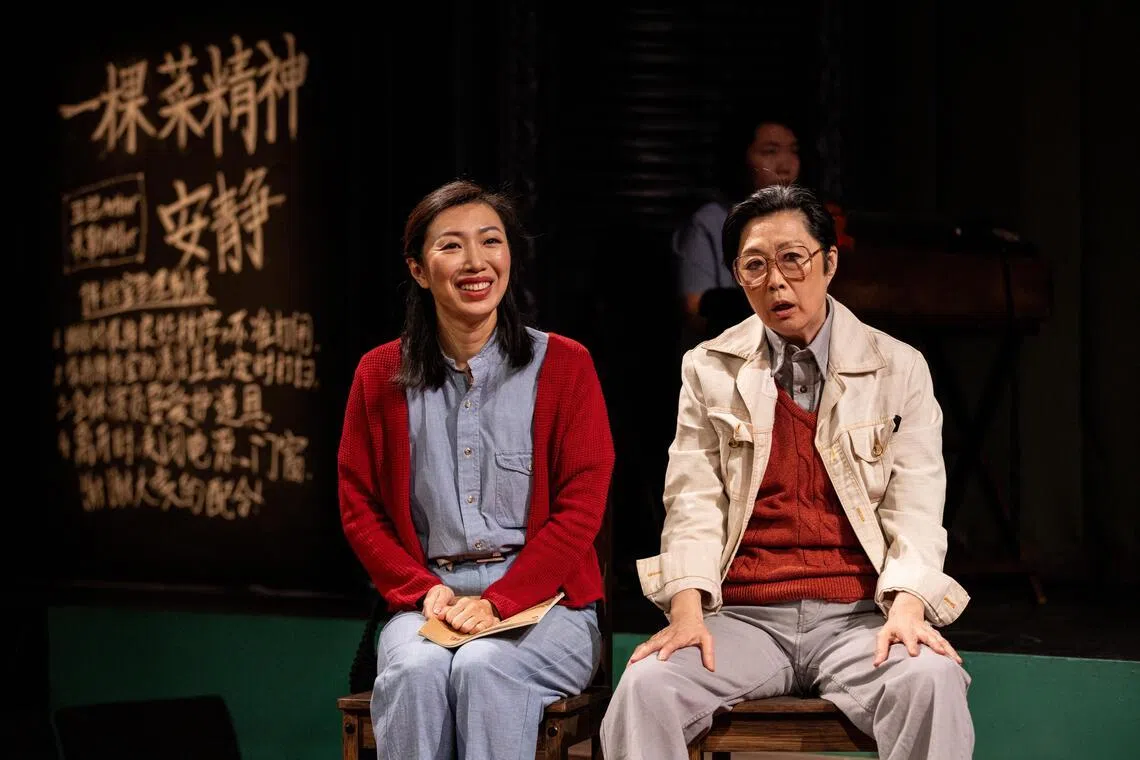
That unlikely encounter now forms the basis of Salesman之死, a new play written by Jeremy Tiang and directed by Danny Yeo.
Tiang, however, centres his story not around Miller but the interpreter in the rehearsal room, Shen Huihui. Her job is to translate between English and Mandarin, explaining concepts that did not quite exist in the same way on both sides.
For instance, how do you explain an American salesman’s capitalistic ambitions and delusions to Chinese actors who had grown up with socialism?
Tiang, who is also a translator, traces his interest in the historical episode to his own background.
“My translation work is deeply informed by my upbringing in Singapore, a country of many languages,” he notes in his playwright statement. The play, in that sense, feels at home for him, where moving between languages and cultures is part of daily life.
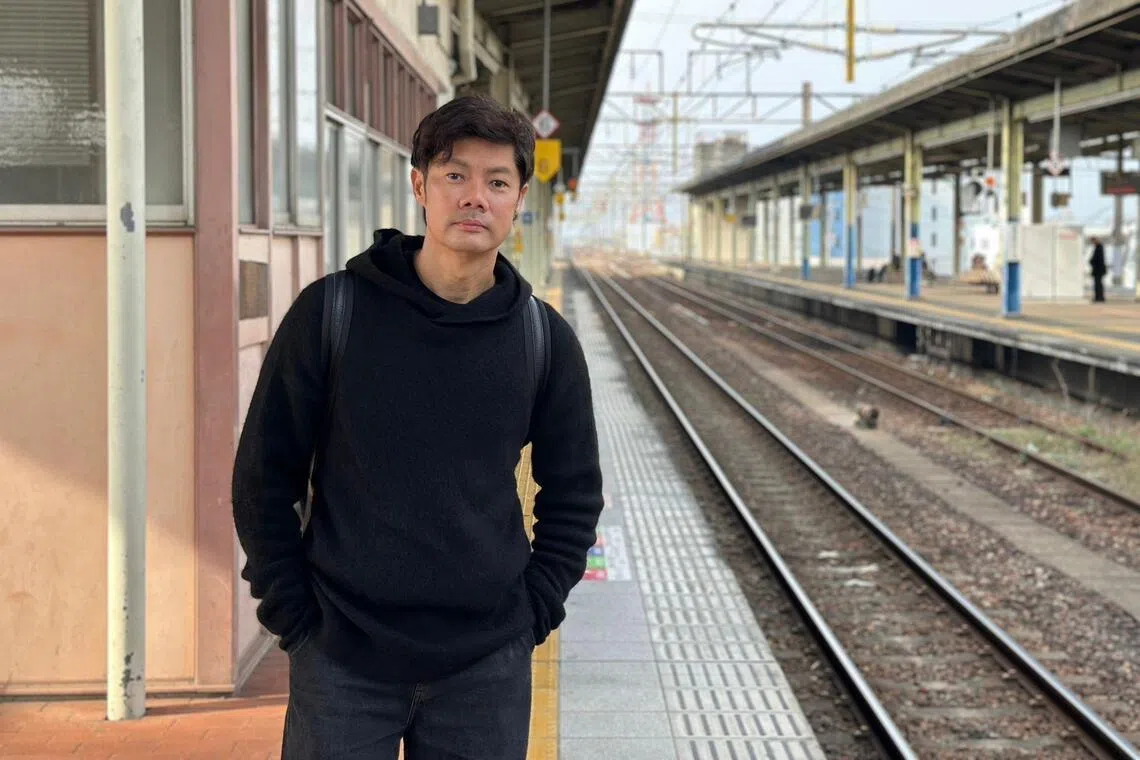
For Yeo, that connection is personal, too. “My entire career has been about being between two languages, two cultures and two performing worlds,” says the bilingual director-author-host.
When he discovered that the Miller’s production in Chinese had performed in Singapore in 1986, it gave the project an added resonance.
Yeo describes it as a “play within a play, within a play”, where audiences see not just the finished performance, but the process behind it. Actors move between roles. Scenes overlap. Past and present sit side by side. “There is overlapping of roles, of lines, of past and present times,” he explains.
But all that is not meant to be overwhelming. “This show is actually humorous and entertaining – not to mention poignant,” he says.
Death of a Salesman has always been about the misalignment between dreams and reality. But Salesman之死 has expanded that idea across cultures, showing how even when everyone is trying to understand one another, something can still be lost along the way.
And, as today’s global conflicts prove, the challenge of understanding one another – across language, culture and ideology – remains as complex as ever.
Salesman之死 runs from May 15 to 16 at the Victoria Theatre
Hedda Gabler
Lee Hye-young is an actress with unusual staying power, building a four-decade career across film, television and theatre in South Korea. She has amassed over two dozen awards and nominations for performances that prize precision and restraint over spectacle and excess.
That discipline comes into its own in Hedda Gabler, mounted by the National Theater Company of Korea.

Hedda, the title character, is no stranger to theatre lovers. She is, for many actresses, what Hamlet is to actors – a figure both relatable and mysterious, whose motives remain just out of reach.
First staged in 1891 by Norwegian playwright Henrik Ibsen, Hedda Gabler follows a newly married woman who returns from her honeymoon to a domestic life that feels routine and suffocating. When figures from her past reappear – including an attractive former lover – she embarks on a path of manipulation and destruction.
When director Park Jeong-hee first encountered the play years ago, she was drawn to its “intensity and unfamiliarity”. She explains: “I do not see Hedda as a character who can be defined in a single way. She exists in the tension between being constrained and attempting to exert control...
“While she is shaped by external conditions, she also actively intervenes, exerts influence, and seeks to assert her own presence. For this reason, rather than defining her as either a victim or an agent, I chose to focus on the contradictions themselves.”
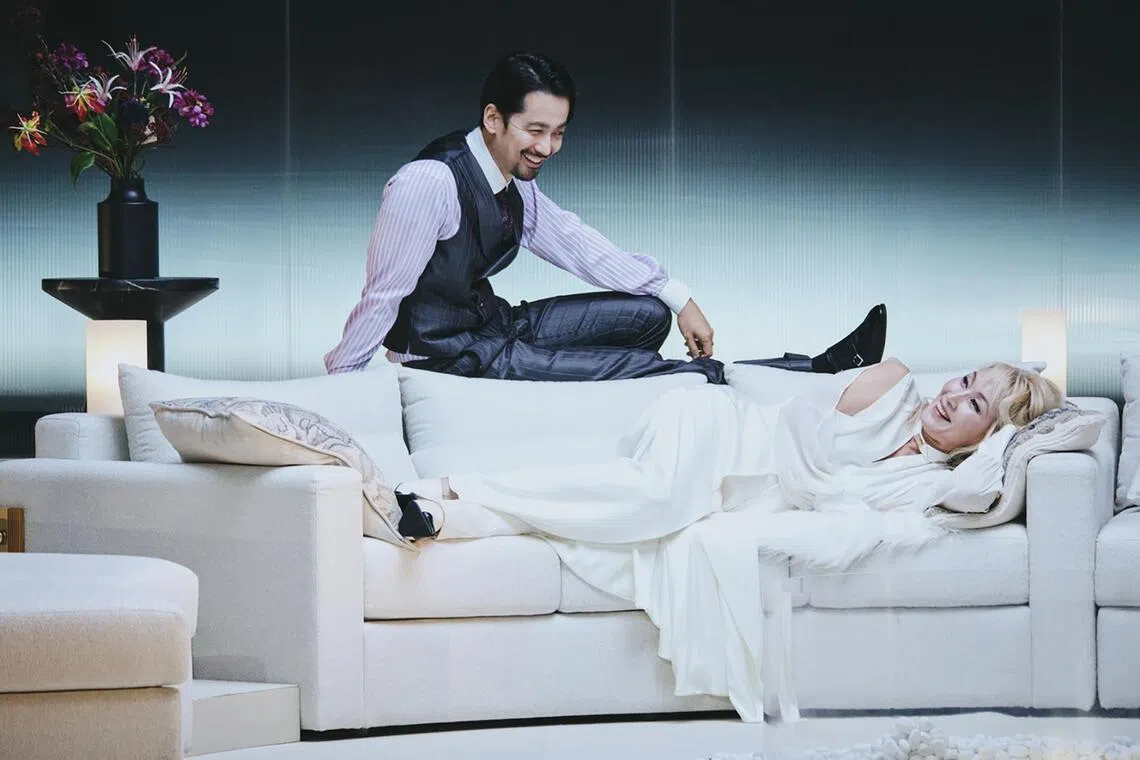
To make that tension visible, the staging is stripped to its essentials. “I wanted to remove elements that create unnecessary distance between the audience and the character.”
What remains is space – and within it, Lee’s extraordinary performance.
Park describes Lee’s turn as grounded in the body, “a very immediate and physical presence, shaped through subtle shifts in breath, rhythm and energy... She presents Hedda not as a completed form, but as a character that is constantly unfolding and transforming in the moment of performance”.
In fact, Lee is reprising a much-lauded performance for which she has already won not one but two prestigious Best Actress awards in 2012 – the Dong-A Theatre Awards and Korea Theatre Award.
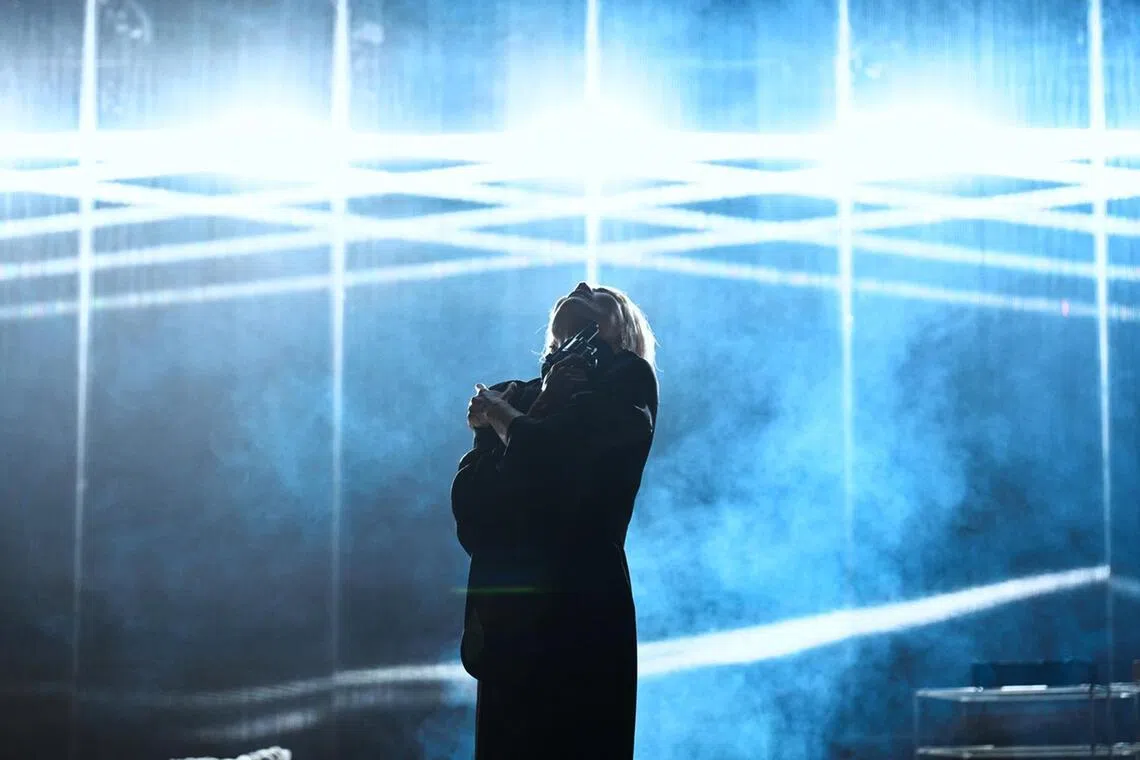
Park is reviving the production not only for Lee’s performance, but also for the play’s enduring relevance in confronting questions of freedom, control and the pressures placed on women.
“I believe the questions it raises are not limited to a specific time or place. In societies, such as Singapore, where greater freedom and choice are assumed, that sense of uncertainty and contradiction, that conflict between inner impulses and social conditions, can, in fact, become even more pronounced.”
Hedda Gabler runs from May 28 to 29 at the Drama Centre Theatre
Decoding Asia newsletter: your guide to navigating Asia in a new global order. Sign up here to get Decoding Asia newsletter. Delivered to your inbox. Free.
Copyright SPH Media. All rights reserved.