Sifa 2026: A festival finds its balance
Chong Tze Chien’s first outing as festival director offers art for everyone – seriously

[SINGAPORE] Every few years, Singapore’s biggest arts festival looks in the mirror and decides to become someone else.
When it was rebranded as the Singapore International Festival of Arts (Sifa) in 2014, founding festival director Ong Keng Sen made it sharp, chic and cerebral – a counterpoint to the many international productions already passing through the Esplanade and Marina Bay Sands.
When Gaurav Kripalani took over in 2018, he moved it closer to the mainstream, with shows that were broader, glossier and more accessible. Then came Natalie Hennedige in 2022, who pulled it back towards the avant garde, bringing the experimental, genre-bending instincts she has been honing for years.
Now comes Chong Tze Chien, who appears to have thrown away the pendulum altogether. In his first edition as festival director, Sifa seems less interested in choosing a side than in holding several audiences at once.
The festival is no longer toggling between the avant-garde and the accessible. It is trying to be two things at once – a festival for the crowd, and a festival for the committed arts-goer.
For the crowd, there is the Festival Village, a sprawling outdoor hub stretching from the Empress Lawn towards the Esplanade, a clear attempt to revive the convivial energy that once defined the arts festival’s fringe years.
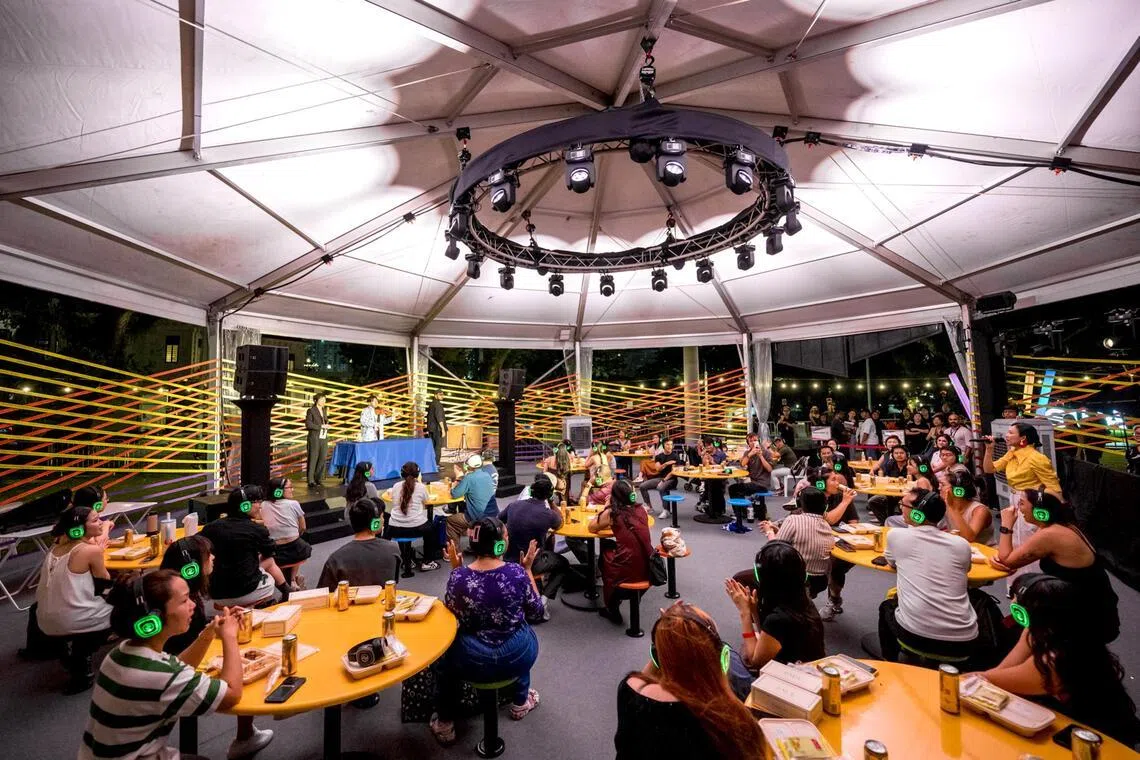
Here, audiences can wander freely between aerial spectacle, hands-on installations and late-night gatherings.
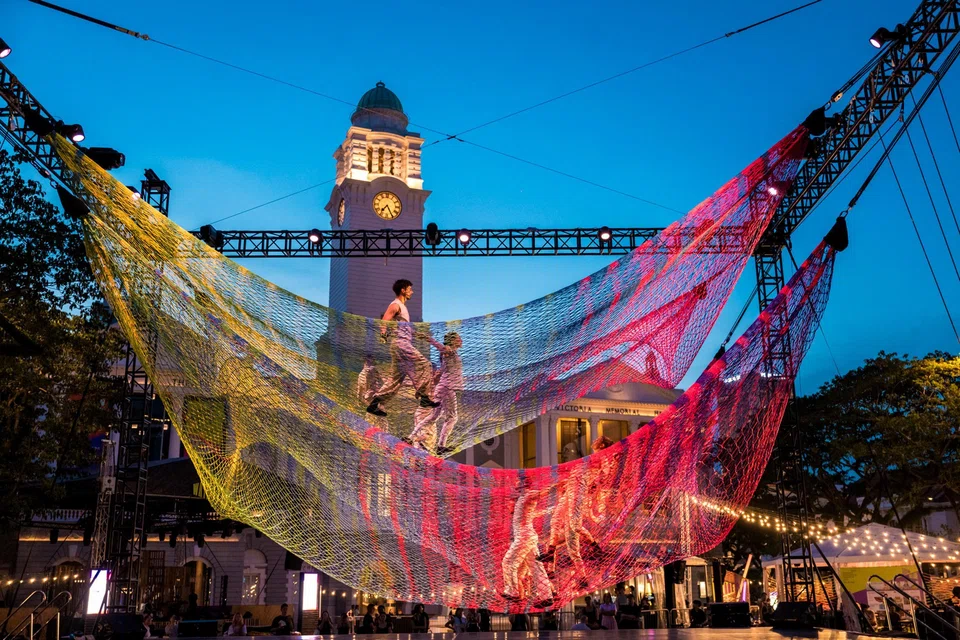
The visual crowd-pullers include Noli Timere, a large netted structure in which performers spin and tumble through its web, and Patch Theatre’s The Lighthouse, which turns light, sound and reflection into a hands-on adventure for children.
Chong has also programmed two works around Singapore’s love of food. The first is Makan Culture, written by Jo Tan and directed by Krish Natarajan, which turns the national obsession into fun, thoughtful interactive dinner theatre.
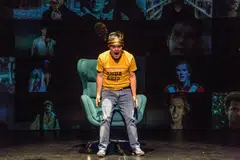

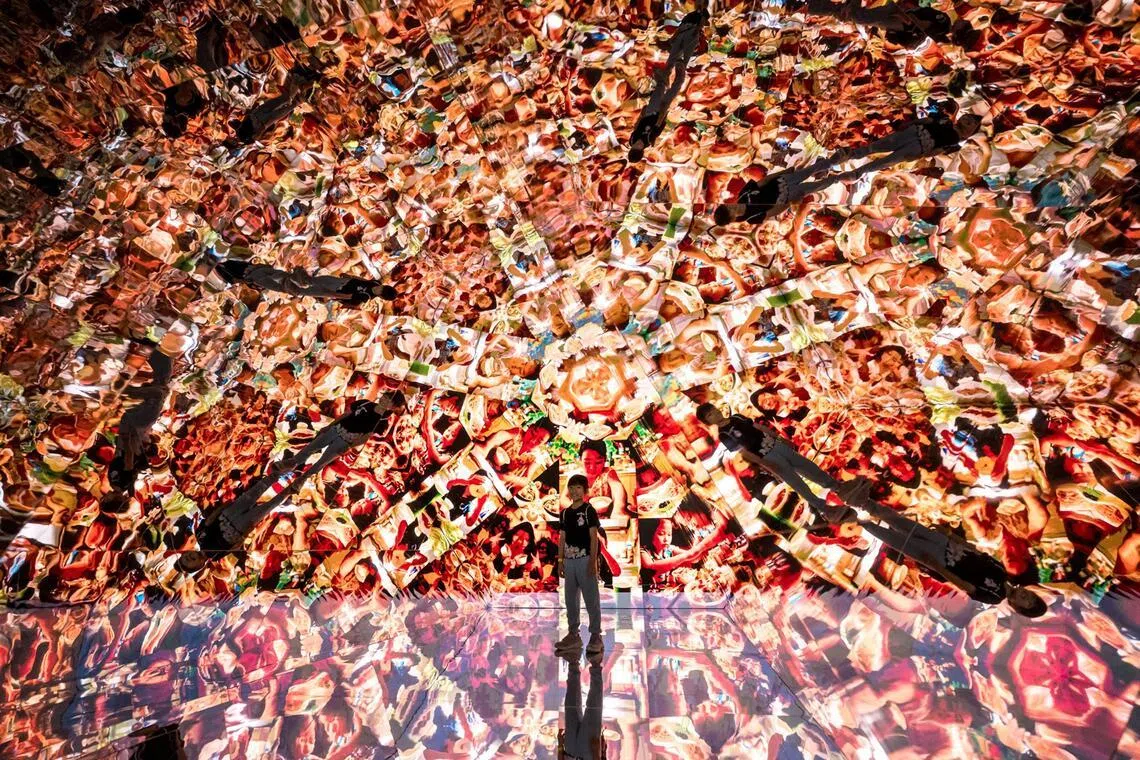
The second is Yang Derong’s participatory installation inside the Victoria Theatre Atrium, a human-sized kaleidoscope of local food imagery, seemingly designed for Instagram lovers.
But if accessibility is central to the outdoor Village offerings, it is the indoor programme that gives it its artistic weight.
First comes Lacrima, Caroline Guiela Nguyen’s sweeping, three-hour, no-intermission French-English-Tamil epic about the making of a couture wedding dress for a British princess.
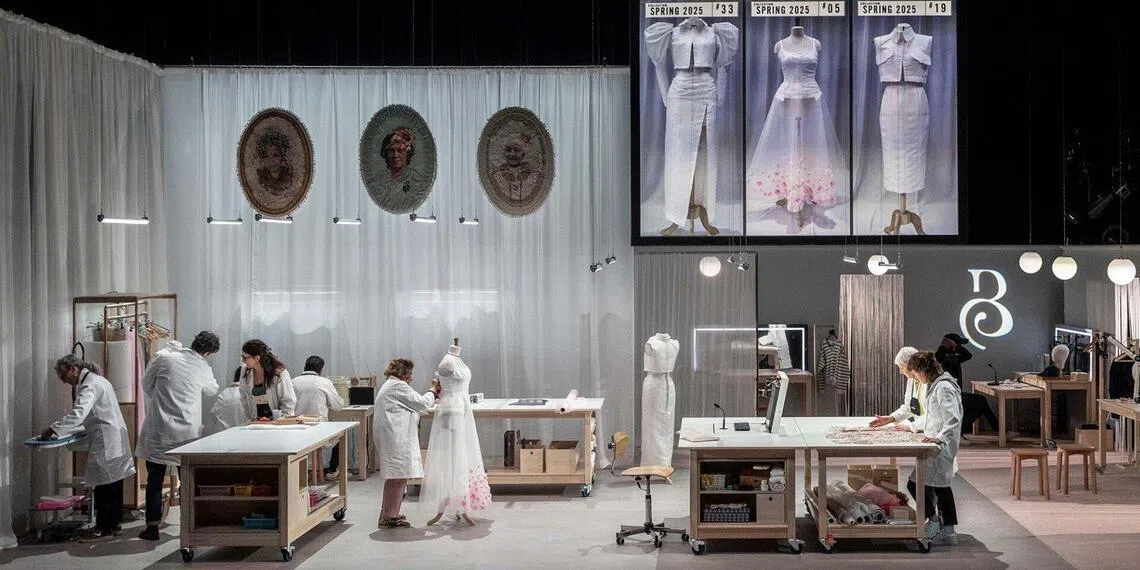
What begins as a backstage look at luxury fashion slowly opens into something darker and more expansive – a map of invisible labour stretching from a Paris atelier to an Indian embroidery workshop.
It is a work of extraordinary scale and patience, showing both the rigours of craft and the systems of exploitation that sit behind our obsession with clothes and fashion.
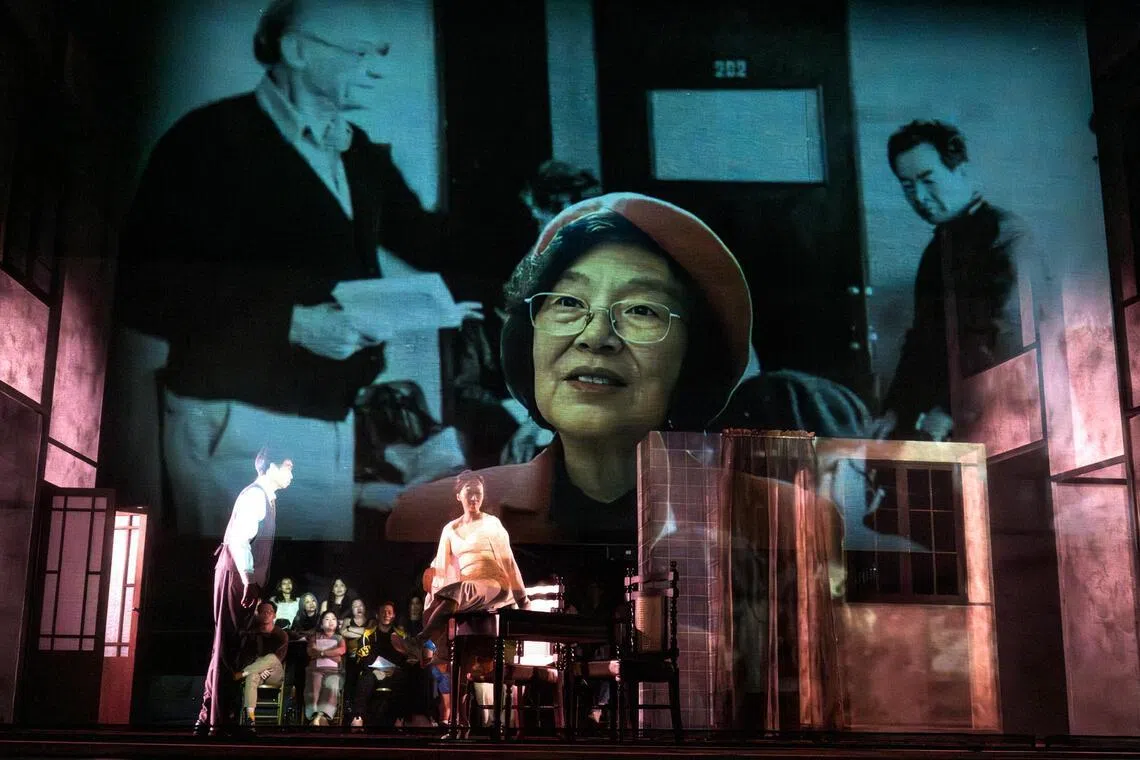
Salesman之死, a Singapore production written by Jeremy Tiang and directed by Danny Yeo, is smaller in scale but just as rich in implication. Revisiting Arthur Miller’s 1983 staging of Death Of A Salesman in Beijing, the bilingual play turns the rehearsal room into a site of cultural negotiation.
Tiang’s script is impressively layered, while Yeo’s direction draws broad and nimble humour from some of Singapore’s strongest Mandarin-speaking actors.
Then there is the dance work Tempo, which gives the opening week a different charge altogether.
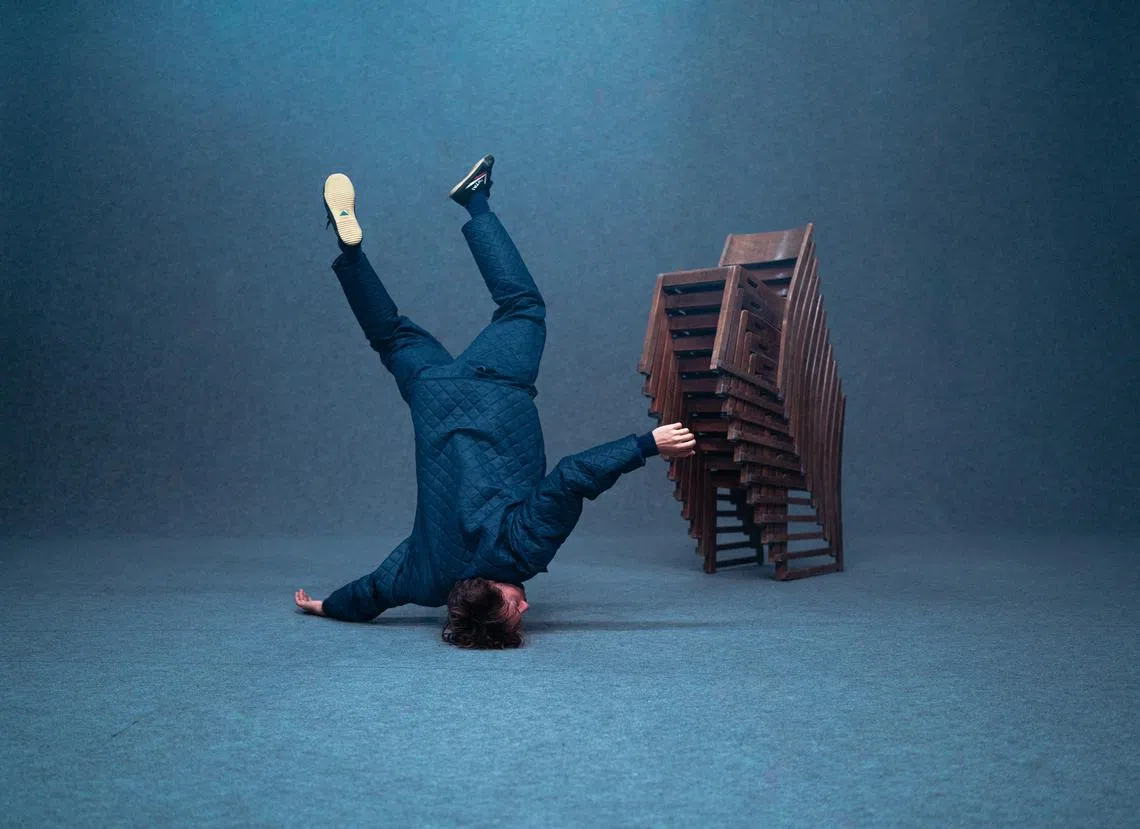
Where Lacrima is expansive and tragic, and Salesman之死 is humorous and historically layered, Tempo brings the body back into focus – exploring through gravity-defying choreography and a voiceover about the elasticity of time, how fragile our hold on the present really is.
Chairs slip, bodies tilt, falls are delayed – a reminder that time is not only measured by clocks but by breath, heartbeat and the body’s constant negotiation with gravity.
Taken together, Sifa’s first week is promising: a festival that no longer treats accessibility and ambition as opposing impulses, but as two parts of the same ecology. Not everything lands, and parts of the Festival Village feel generic.
But the larger direction makes sense: a festival with a free public face and a serious artistic core, built for an era impacted by rising costs, diminishing attention spans, the disruptions of artificial intelligence, and a growing fatigue with screens.
Sifa continues for two more weeks till May 30. Visit sifa.sg for programmes.
Decoding Asia newsletter: your guide to navigating Asia in a new global order. Sign up here to get Decoding Asia newsletter. Delivered to your inbox. Free.
Copyright SPH Media. All rights reserved.