

Singapore Art Week 2026 review: 8 things we love – and 2 complaints
From the highs to the hiccups, here’s a round-up of the city’s biggest art festival
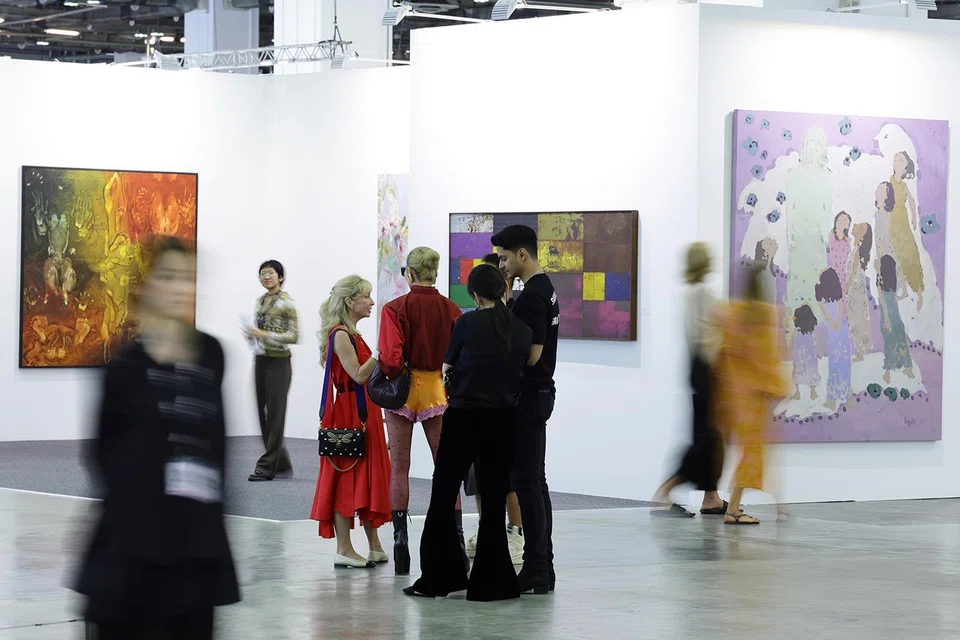
[SINGAPORE] Singapore Art Week 2026 (SAW) feels bigger, more ambitious and more internationally connected than ever – with several exhibitions running through to Feb 1 and beyond. Not everything landed, but plenty impressed.
Here are eight things we love – and two that drew the loudest complaints.
Solo shows shine
Singapore artists are delivering some of the strongest solos in years. Hilmi Johandi reworks images from old Singapore postcards into luminous, dreamlike paintings at Ota Fine Arts. Melissa Tan returns to painting after years of working primarily in sculpture – and is winning new fans at Haridas Contemporary.
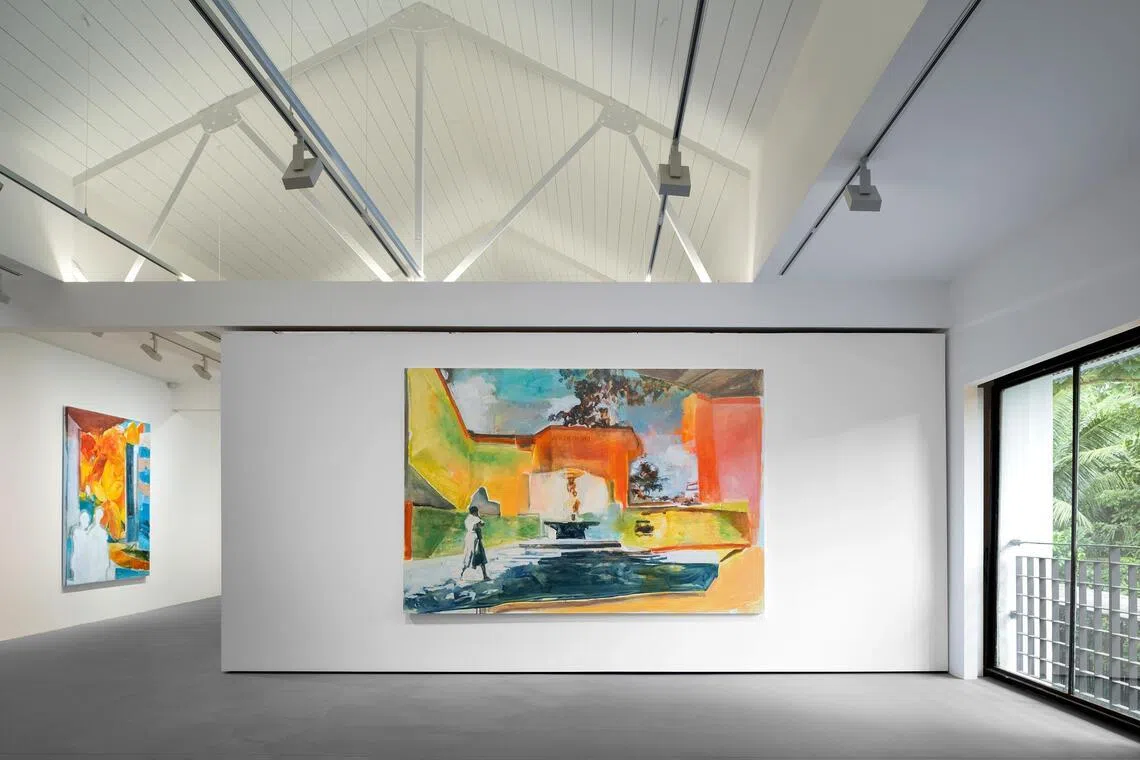
Dawn Ng forgoes the conventional gallery space, presenting her paintings instead on the theatre stage of Singapore Repertory Theatre in Robertson Walk – blurring the lines between exhibition and scenography.
Among non-Singaporean artists, the biggest standout is Indonesia’s Citra Sasmita, who weaves mythology, feminism and Balinese visual traditions into evocative, politically charged works at Yeo Workshop.
#JAW
No one has been busier during SAW than John Tung. The independent curator – often seen in a cowboy hat – curated not two, not three, but eight shows, including major ones such as SEA Focus, OH! Open House and Art:Dis’ various presentations.
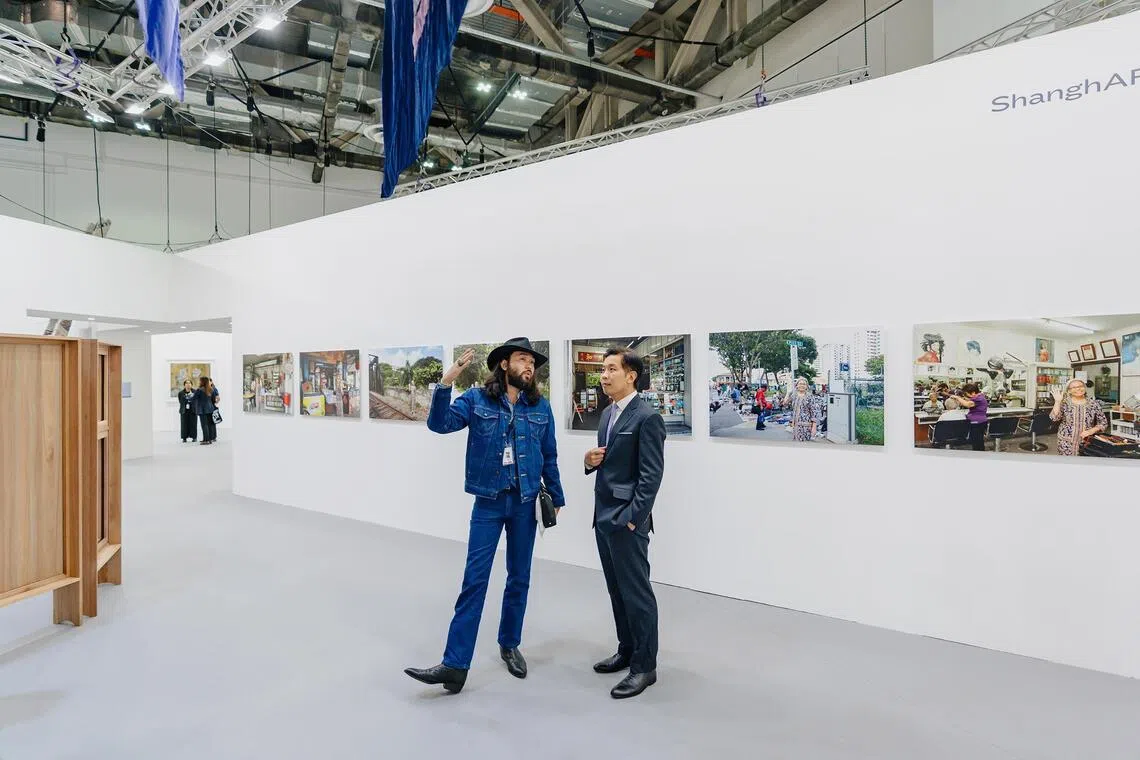
When asked why he’s so in demand, his collaborators say he’s intellectual, dynamic, easy-going and willing to work with numerous project constraints – and, added one source, “not b*tchy”.
He’s so popular, in fact, some people started #JAW for “John’s Art Week” on Instagram. Take off that cowboy hat and take a bow, John.
Rise of TPD
It’s fair to say that Tanjong Pagar Distripark (TPD) has become a new centre of gravity for Singapore’s visual art scene. Where once it housed the Singapore Art Museum (SAM) and a handful of galleries, the precinct has expanded enormously in recent years, with spaces such as Haridas Contemporary, Supper House, Prestige Gallery, Project Art Hunter, Padimai Art & Tech Studio, MOCA@Singapore and others joining the ranks.
It continues to come into its own – even surpassing Gillman Barracks in the density of openings and events during SAW.
Best Art SG since debut
Singapore’s track record with art fairs is mixed at best, making success far from guaranteed. Against that backdrop, Art SG – with UBS as its founding and lead partner – deserves credit for staying the course.
Art SG this year staged its best edition since its 2023 debut. While that inaugural fair drew a large slate of blue-chip galleries amid the post-pandemic rebound, Art SG has since pivoted toward a broader mix of smaller but substantial exhibitors – trading brand power for curatorial depth and regional relevance.
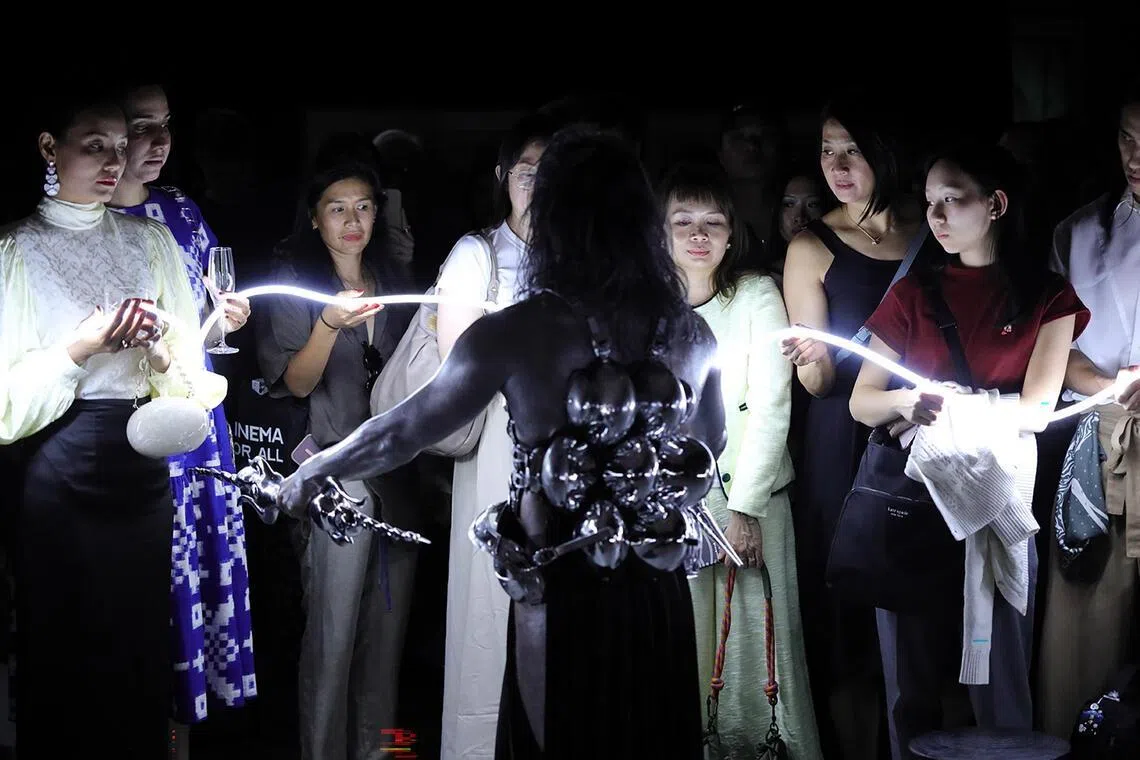
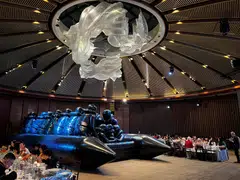
Its programming has greatly expanded, with standout events including a collaboration with Shanghai’s Rockbund Art Museum to transform The Warehouse Hotel into Wan Hai Hotel – an immersive, multi-site platform for installations and performances.
Partner UBS weighed in too, flying in Indonesian art star Melati Suryodarmo for a show-stopping performance and introducing the Futures Prize for young artists.
Foundations flex their muscle
Foundations continue to lend significant heft. The Pierre Lorinet Collection brought Ghanaian superstar Ibrahim Mahama to Gillman Barracks for his first on-going solo exhibition.
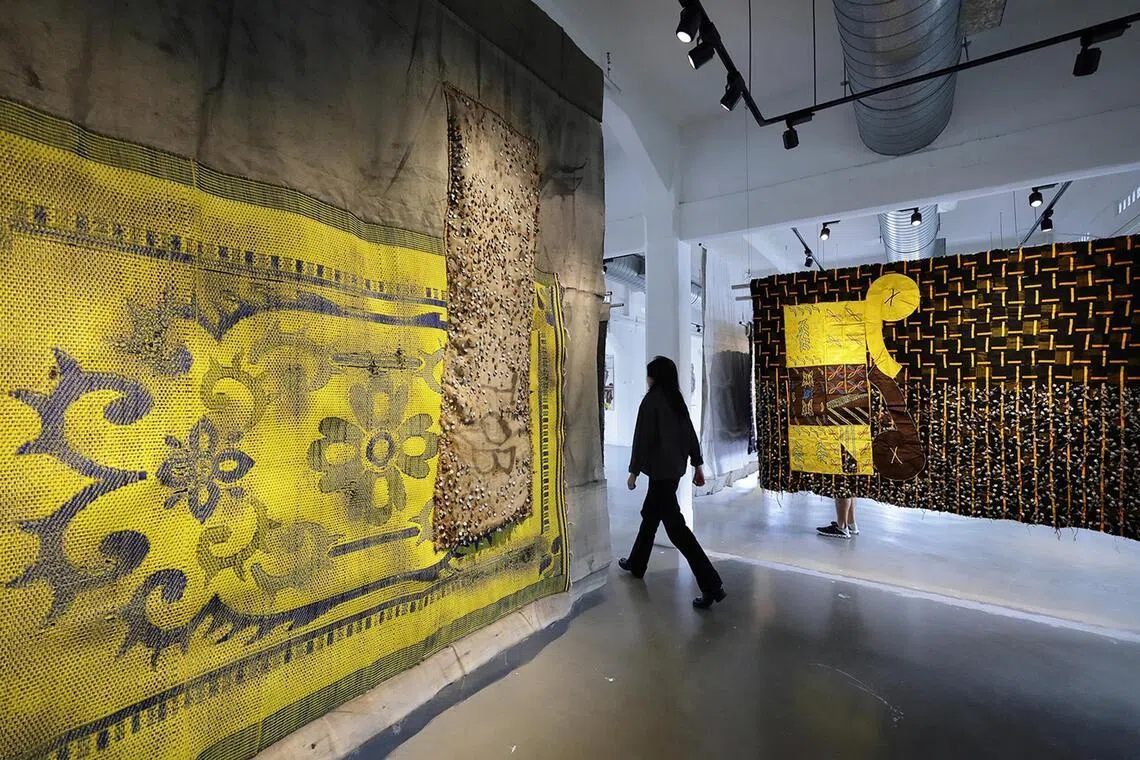
The Tanoto Art Foundation has mounted one of SAW’s strongest shows: Rituals of Perception at New Bahru spotlights more than 20 artists whose works reaffirm the power of touch in a digital age.
Kim Association, founded by Hong Kong patrons Yenn and Alan Lo, presents a compact but incisive solo by Li Shuang.
Local collectors are holding their own, with John Chia and Cheryl Loh exhibiting fine pieces from their collection at The Private Museum, and Yeap Lam Yang running Project Art Hunter at TPD for the next two years.
Tech takes centre stage
Technological art is having its biggest moment yet: TPD currently hosts Chapalang, a playful South-east Asian art-and-tech showcase; The Strange Archive reimagines local archives as contested memory; The 6th VH Award features new media art by Asian artists; and Padimai Art & Tech Studio mounts a virtual-reality experience by Olafur Eliasson.
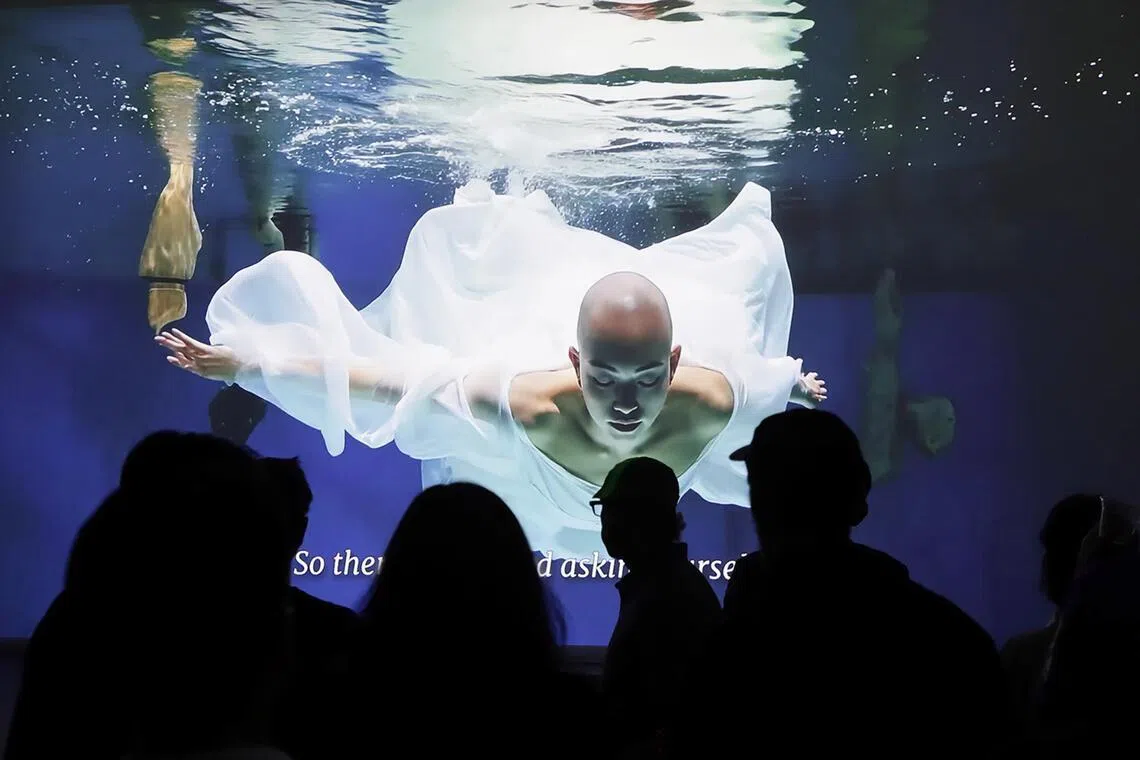
Elsewhere, Debbie Ding presents a strong tech-art showcase by women artists at Starch (an independent artist-run space), Lawrence Lek holds court at ArtScience Museum, while the recently-concluded Digital Art Week Asia staged striking digital works inside an air-raid shelter in Tiong Bahru.
Panels worth flying for
There were more art-world heavyweights than you could count in SAW’s recently-ended forums. As conference line-ups go, this year’s offerings were exceptionally strong.
SAW Forum 2026 featured a rare concentration of global tastemakers, including critic Claire Bishop, former Venice Biennale artistic director Adriano Pedrosa, and Bukhara Biennial’s artistic director Diana Campbell.
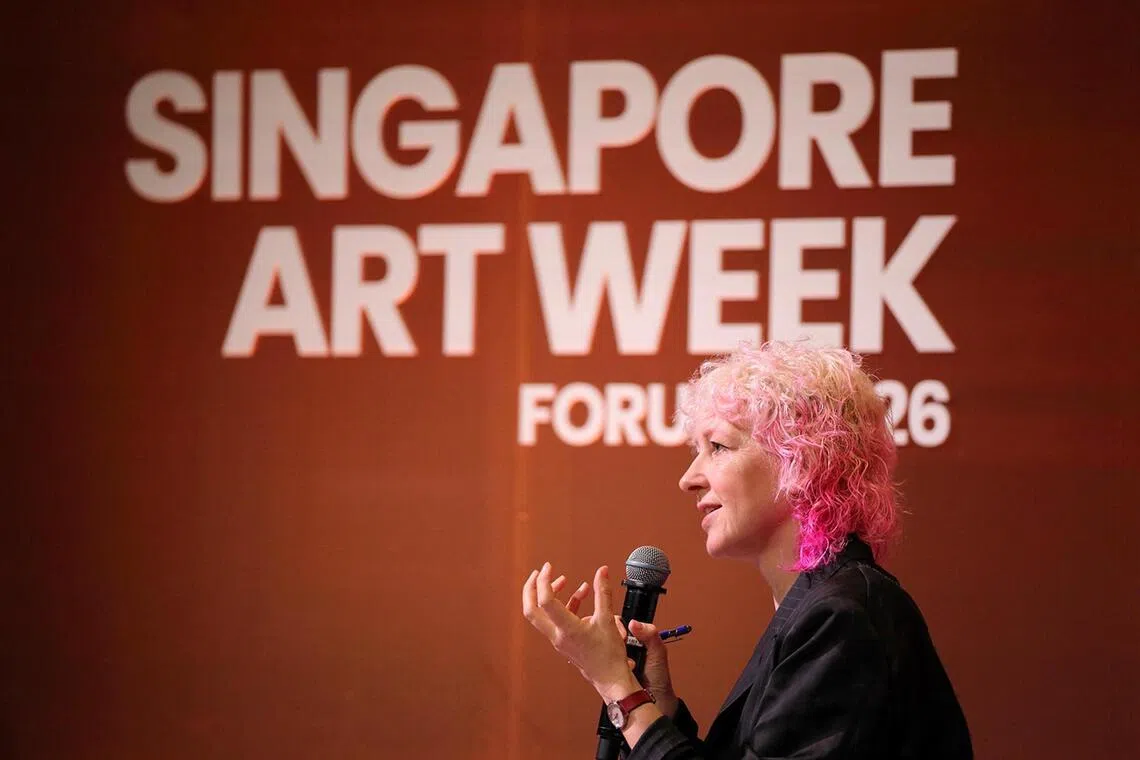
Over at STPI’s Symposium, an equally star-studded roster brought together Sook-Kyung Lee, Salima Hashmi, Rirkrit Tiravanija, Michael Craig-Martin and Wu Mo, among others. Elsewhere, lively Art x Tech panels at TPD and sharp artist talks at SEA Focus kept the intellectual energy high.
As one foreign visitor quipped: “I didn’t come for the parties – I came for the panels.”
Soft power success
The internationalisation of SAW also reflects the vision of policymakers and institutional leaders. Singapore currently benefits from arts leaders who understand both creative practice and cultural ecosystems.
At the National Gallery Singapore, CEO Eugene Tan has steered the museum toward stronger regional and international positioning. At the National Arts Council, CEO Low Eng Teong – himself a former artist – alongside Tay Tong, director of sector development (visual arts), has cultivated trust through sustained, respectful engagement with artists and arts organisations.
Their reputations help Singapore attract international partners. In a country that still regulates and censors artists, such culturally literate leadership cannot be taken for granted.
Complaint 1: Biennale’s blind spots
Of course, not everything landed. With the arrival of international art figures came a fresh wave of complaints about the Singapore Biennale – that it’s too spread out, that the works are hard to locate, that quality is uneven.
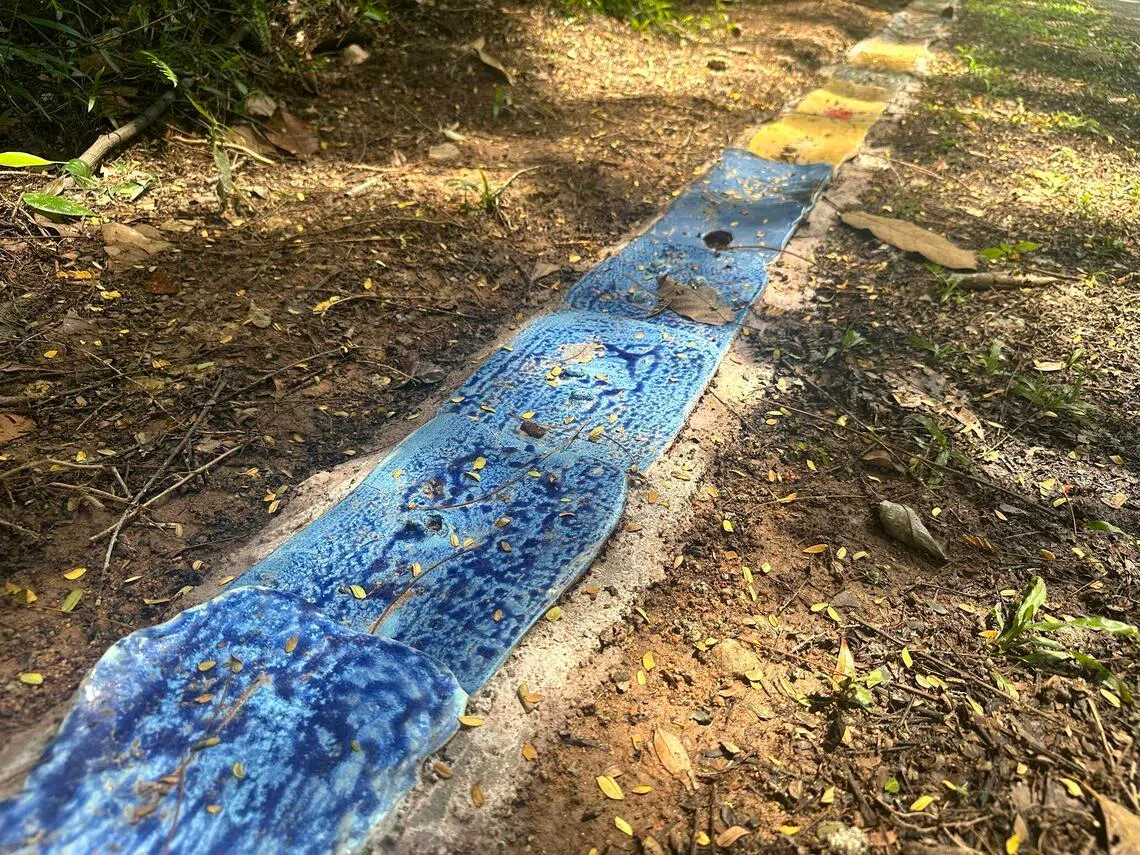
Seasoned curators say there are just too few so-called “honeypots” or “gold coins” – the crowd-pleasing blockbusters, visual spectacles and emotional pay-offs often embedded in a biennale to justify the average person’s effort of visiting it.
Although organiser SAM rolled out new online maps following earlier complaints, Singapore Biennale still can’t seem to catch a break.
Complaint 2: SEA Focus loses focus
Another lightning rod for criticism was the smaller fair SEA Focus. Basic wayfinding faltered here too: Wall texts were awkwardly placed around corners, making it difficult for visitors to identify artists and titles. As a result, even a major installation by Tang Da Wu went largely ignored.
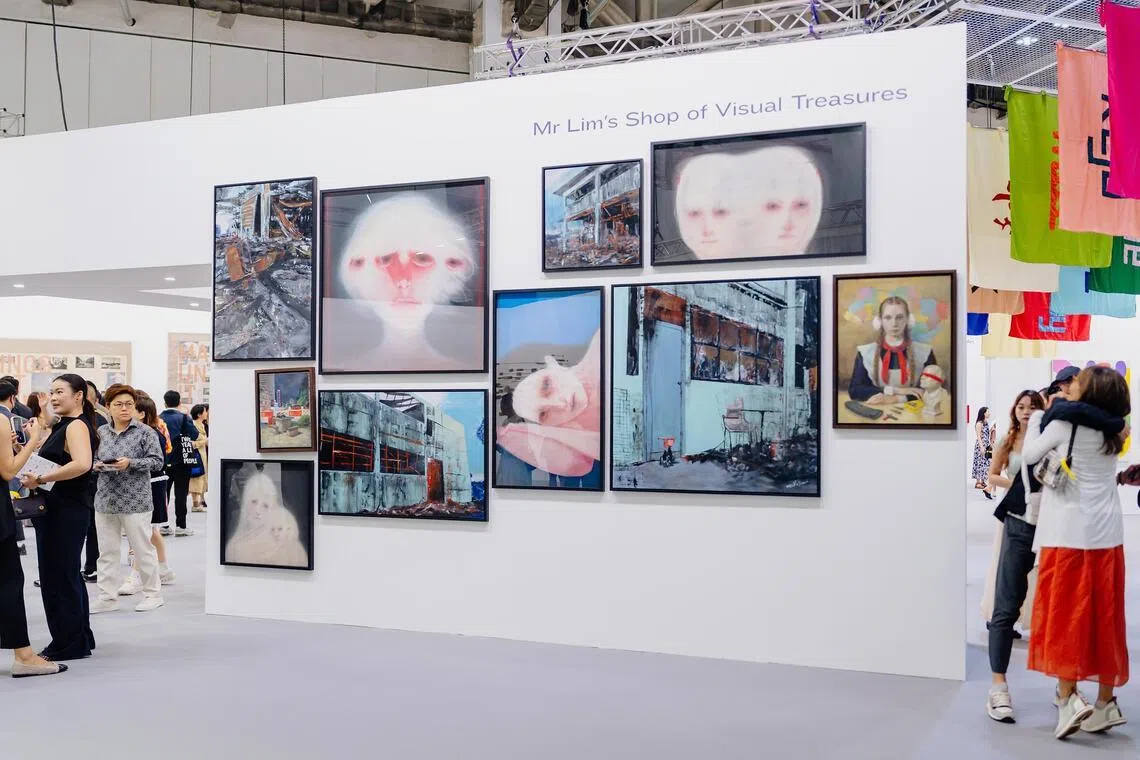
The fair’s relocation from TPD into Art SG also diluted engagement. Participating gallerists say that visitors, distracted by the larger fair, only skimmed SEA Focus before drifting back to the main halls.
Several gallerists now want SEA Focus to return to TPD, where it previously enjoyed a more focused, attentive audience.
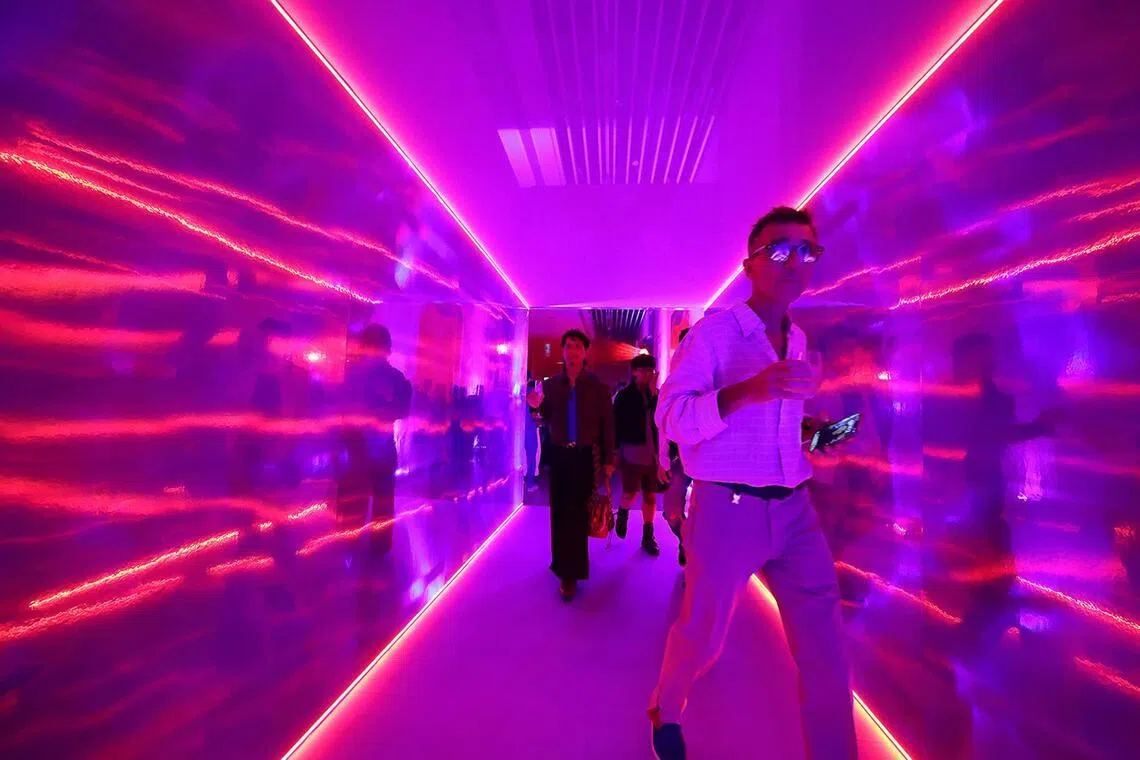
But, all taken together, Singapore Art Week 2026 still feels like a level-up – bigger, bolder and more globally relevant than ever. In a crowded art calendar, Singapore isn’t just playing host anymore – it’s angling for influence.
Most exhibitions carry through to Feb 1 and beyond. Visit artweek.sg for details.
Decoding Asia newsletter: your guide to navigating Asia in a new global order. Sign up here to get Decoding Asia newsletter. Delivered to your inbox. Free.
Copyright SPH Media. All rights reserved.
TRENDING NOW
GCash parent Mynt rises in market debut after South-east Asia’s top 2026 IPO
In the age of AI, what is a university education for?
Singapore to use ‘every legal and regulatory lever’ against companies linked to haze: Shanmugam
‘IPOs are not the only vehicle’: KKR heads for record exits even as firms stay private for longer

