

Is the Singapore Dream fading? Anthony Chen’s We Are All Strangers thinks so
Since Money No Enough, local films have kept returning to themes of money and survival

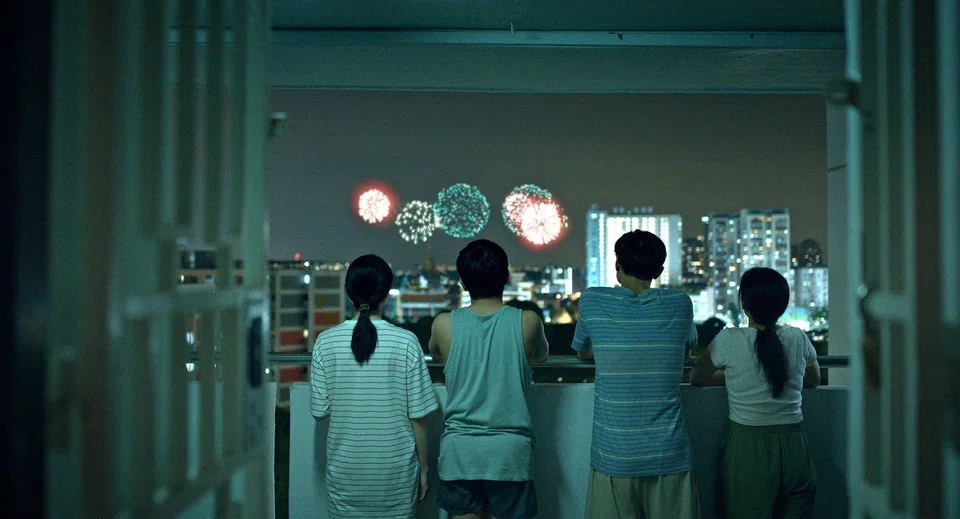
[SINGAPORE] Local film-makers have been worrying about the Singapore Dream for almost as long as there has been a modern Singapore film industry.
When the film industry stirred back to life in the late 1990s after decades of being in a coma, the film that kick-started its commercial revival was Money No Enough (1998), the Jack Neo blockbuster, the title of which distilled a national anxiety into three words.
Here were ordinary Singaporeans hustling for the high life and discovering, repeatedly, that the high life remains firmly out of reach for most.
In the decades that followed, local film-makers kept returning to essentially the same question.
Colin Goh and Woo Yen Yen’s Singapore Dreaming (2006) explored the middle-class hunger for the condominium, car and other badges of arrival.
Wee Li Lin’s Gone Shopping (2007) found loneliness beneath the pleasures of conspicuous consumption.
Anthony Chen’s Ilo Ilo (2013), Ken Kwek’s Unlucky Plaza (2014) and Yeo Siew Hua’s A Land Imagined (2018) looked even further down the economic ladder towards the migrant worker.
Nearly three decades after Money No Enough, Chen returns to the question of the Singapore Dream with his latest film, We Are All Strangers.
The difference is that the dream itself has changed.



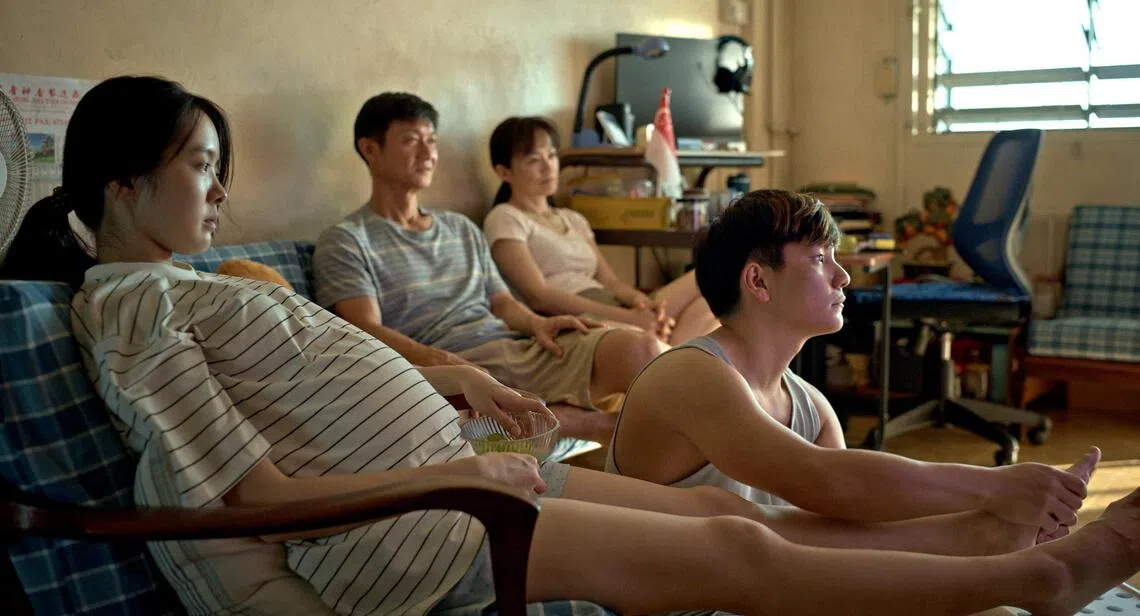
A changed Singapore
In Money No Enough, the characters were scrambling to get ahead in a country that still believed upward mobility was very possible.
In We Are All Strangers, however, the younger characters are growing up in a vastly richer Singapore, the global cinematic image of which is unrealistically defined by the extravagant wealth in Crazy Rich Asians (2018).
In today’s Singapore, the high life is more conspicuous than ever, but still inaccessible to many.
At the centre of the film is Junyang (Koh Jia Ler), a young man living with his widowed father Boon Kiat (Andi Lim), a hawker who works long hours in a kopitiam.
Junyang wants no part of his father’s life. Like many young Singaporeans, he wants to move faster and further to make money, buy private property and build a life more comfortable than the one his father has known.
And so, he hustles. He becomes a property agent, renames himself Steve and learns to sell luxurious apartments to people several rungs above him on the economic ladder.
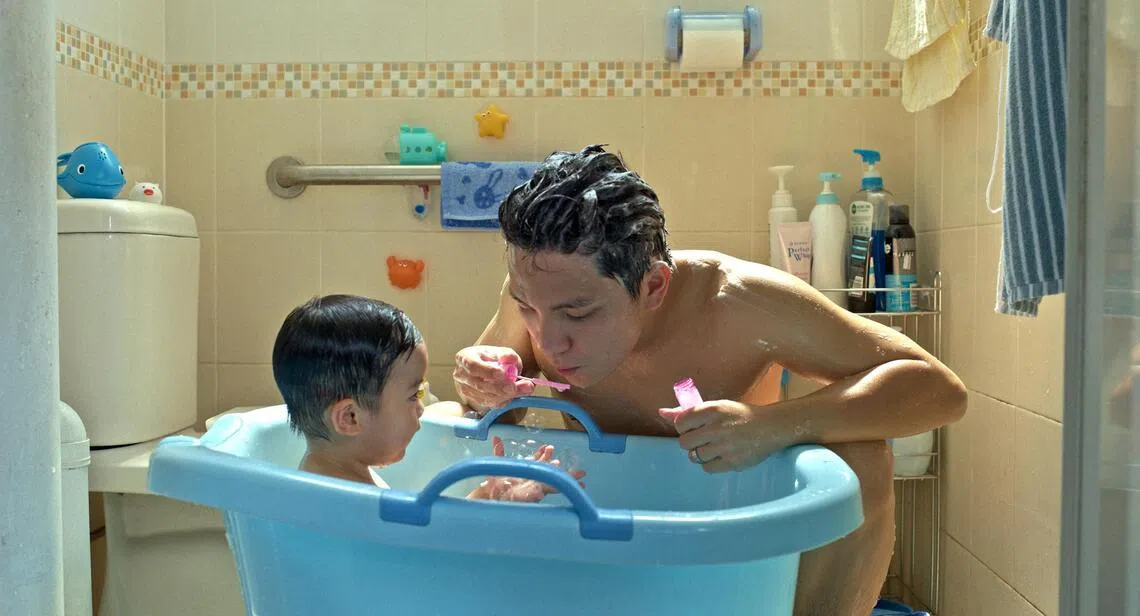
Later on, other schemes and opportunities beckon. Each offers another possible shortcut into the life he believes he should be living.
What makes We Are All Strangers interesting is that writer-director Chen does not ridicule that desire. Nor does he turn Junyang into a simple cautionary tale about youthful impulse.
He understands that in Singapore, wanting the high life has become a natural-born instinct for many.
A smaller ambition
Instead, Chen creates a foil in Bee Hwa (Yeo Yann Yann), a Malaysian “beer auntie” working in the same kopitiam as Junyang’s father. She is older, an immigrant and, unlike Junyang, has little interest in reinventing herself.
Her aspirations are modest. She wants companionship and a place she can call home. As a Malaysian living in Singapore, even these things are not entirely secure.
Junyang, who was born into Singapore’s success story, cannot stop looking upwards. Bee Hwa, arriving from outside it, is simply looking for somewhere to belong.
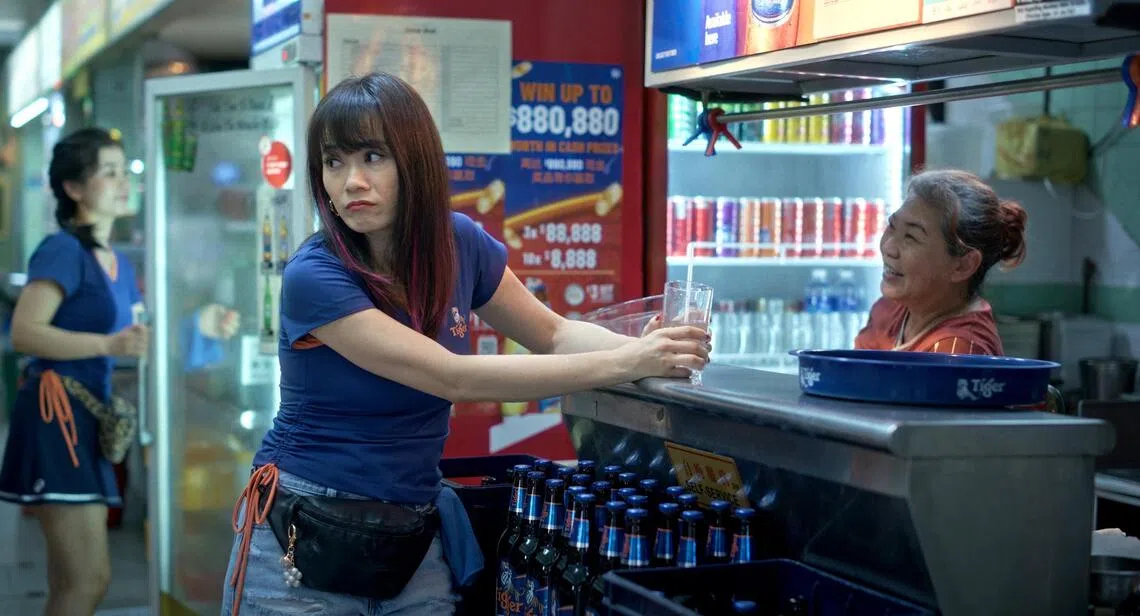
Yeo plays her character with tremendous honesty and an absence of self-pity. It is the kind of beautifully inhabited performance that has become her speciality, and she gradually becomes the emotional ballast of the film.
Around Yeo and Koh, Chen constructs a rare portrait of working-class Singapore that couldn’t be further removed from the polished cityscape sold to tourists and investors.
His Singapore is one of hawker stalls, cramped flats, precarious work and people constantly calculating what they can afford.
At 157 minutes, We Are All Strangers is looser and more melodramatic than Ilo Ilo and Wet Season (2019) – the two earlier films of his Growing Up trilogy – and its accumulation of family crises can occasionally feel overextended.
But its sprawl also gives the film the texture of ordinary life: messy, repetitive and resistant to neat conclusions.
Chen’s point is not that aspiration itself is foolish. Rather, the old promise that hard work will reliably produce upward mobility is beginning to look increasingly fragile.
And what with the news these days – rising retrenchments, million-dollar transactions for Housing & Development Board flats, private home prices still climbing, eye-watering car prices – the film’s anxieties are not misplaced.
We Are All Strangers opens in Singapore cinemas on Aug 20
Decoding Asia newsletter: your guide to navigating Asia in a new global order. Sign up here to get Decoding Asia newsletter. Delivered to your inbox. Free.
Copyright SPH Media. All rights reserved.
TRENDING NOW

Once staunchly pro-China, Malaysian Chinese businesses are now distancing themselves from Beijing

Looking beyond looming CEO succession, should UOB potentially pursue a transformative merger?

Could stablecoins be the future of money?

Grab CEO’s wife Chloe Tong on life with Anthony Tan and finding her purpose

