When a private home becomes larger than itself
How a family shophouse in Geylang opened itself to Singapore’s photography community

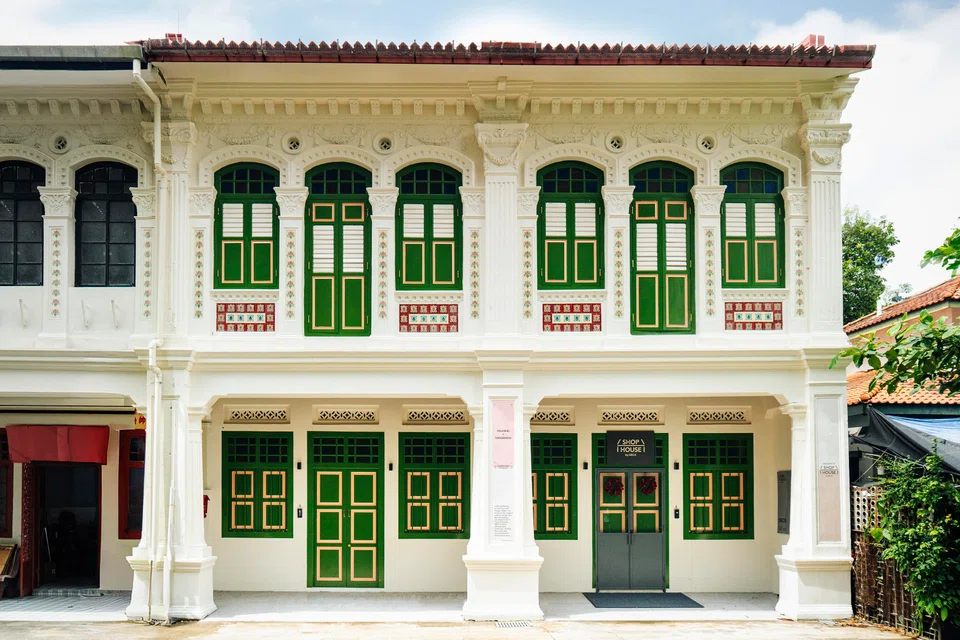
[SINGAPORE] Dr John Chia and Dr Cheryl Loh built the house for themselves.
Not as a gathering place for artists and photographers. Not as a design exercise in adaptive reuse. And certainly not as a cultural statement.
“When we bought these two adjoining shophouses, No 4 and 6 on Geylang Lorong 24, we were hoping to someday pass them down to our two children,” says Dr Loh, a psychiatrist. “Two homes side by side. Separate but connected. Close enough that they might choose to cook and eat together.”
Both doctors are keen art collectors and long-time friends of Gwen Lee and Jay Lau, co-founders of Deck – an independent platform for photography that supports local and regional artists through residencies and exhibitions.
But in recent years, it has had to operate without a permanent home of its own because its earlier spaces were interim in nature, and plans for a purpose-built home are still in progress.
So Dr Chia and Dr Loh – midway through building a house they didn’t need immediately – decided to help. “At some point we realised we didn’t actually have to move into the house right away,” says Dr Chia, an oncologist. “The kids weren’t going to live there yet, and we were comfortable where we were.”
Rather than relocate to Geylang, the couple chose to remain in their Clemenceau home and allow Deck to use the shophouse for three years for its artist residency programme – until Deck completes its permanent space on Prinsep Street.
“We’re just private individuals trying our best to support our friends in the arts,” Dr Chia says. “We’re not thinking about words like philanthropy or charity. We just want to help.”
As it happens, the house could hardly have been better suited.

A house that opens slowly
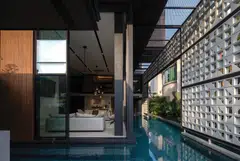
Designed by Randy Chan of Zarch Collaboratives, the shophouse was conceived as a family home, but one with an unusual generosity of movement and light.
Chan is an architect who moves comfortably between disciplines – as at ease navigating conservation guidelines as he is designing theatre spaces for Wild Rice and exhibition environments for art galleries.
That sensitivity is evident throughout the house.
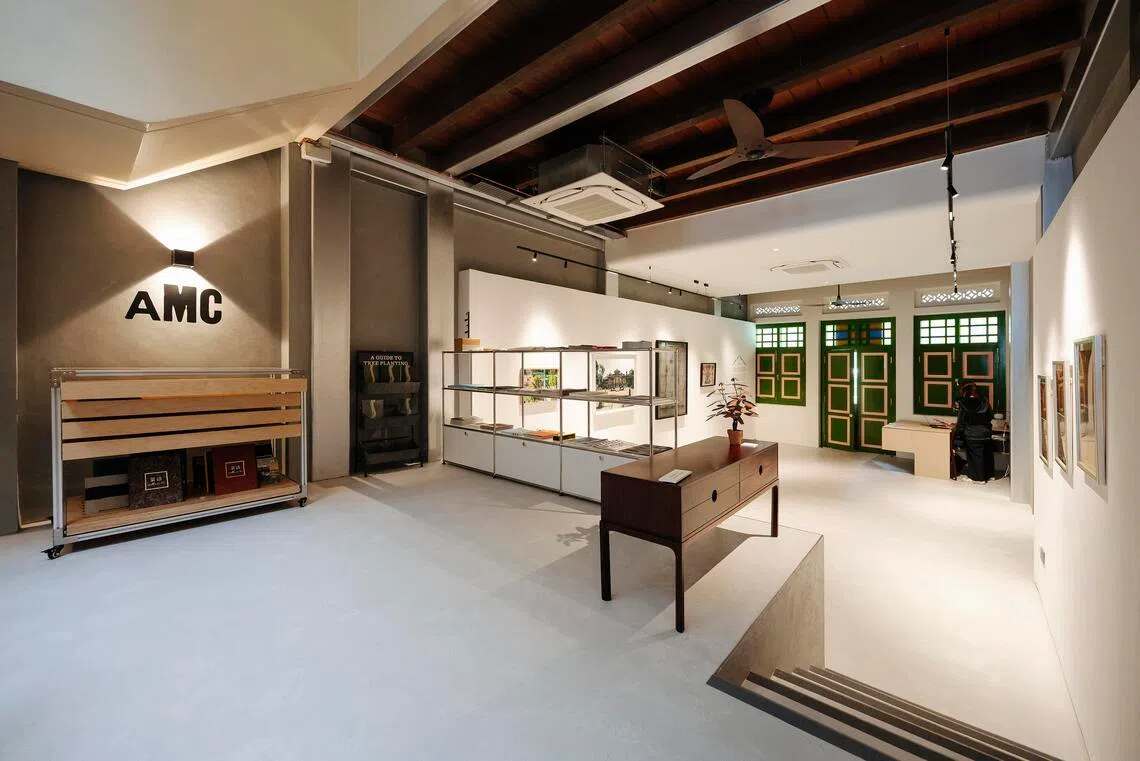
From the outset, he resisted the idea of organising the building into rigid rooms with fixed purposes.
“Apart from functional requirements (such as spaces to display art),” Chan explains, “the owners emphasised that all rooms were to be naturally well-lit, with indirect light coming into every part of the house, without heat.
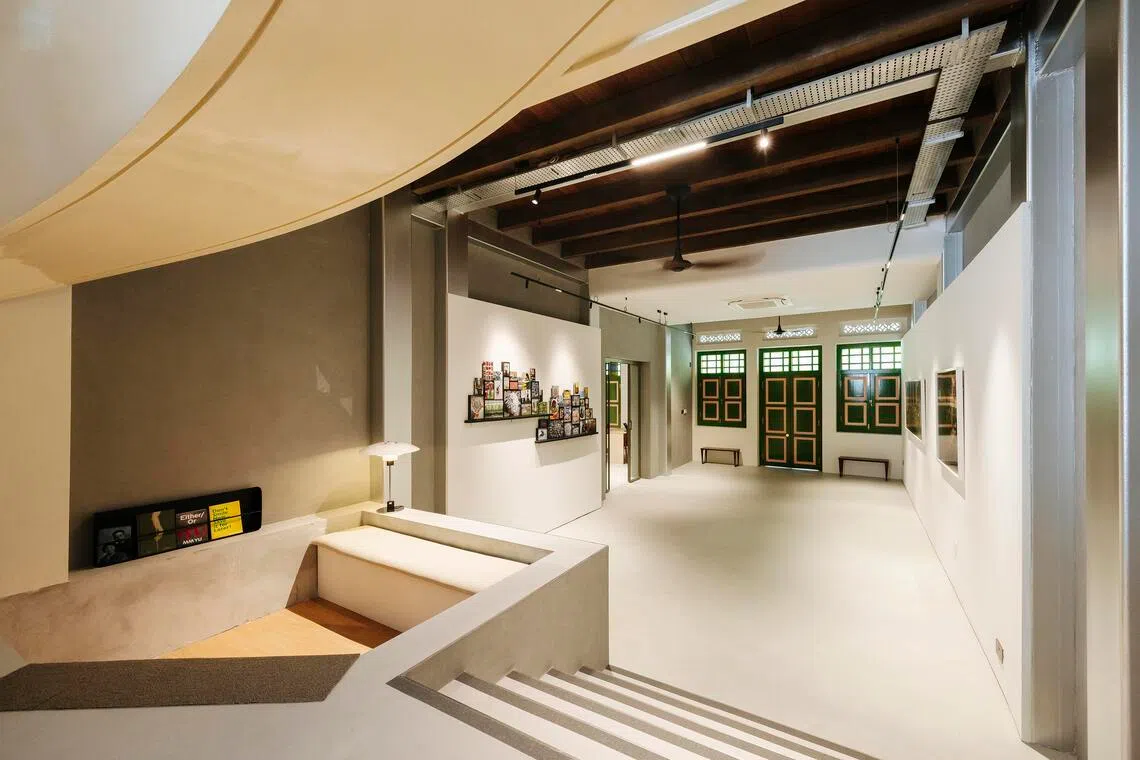
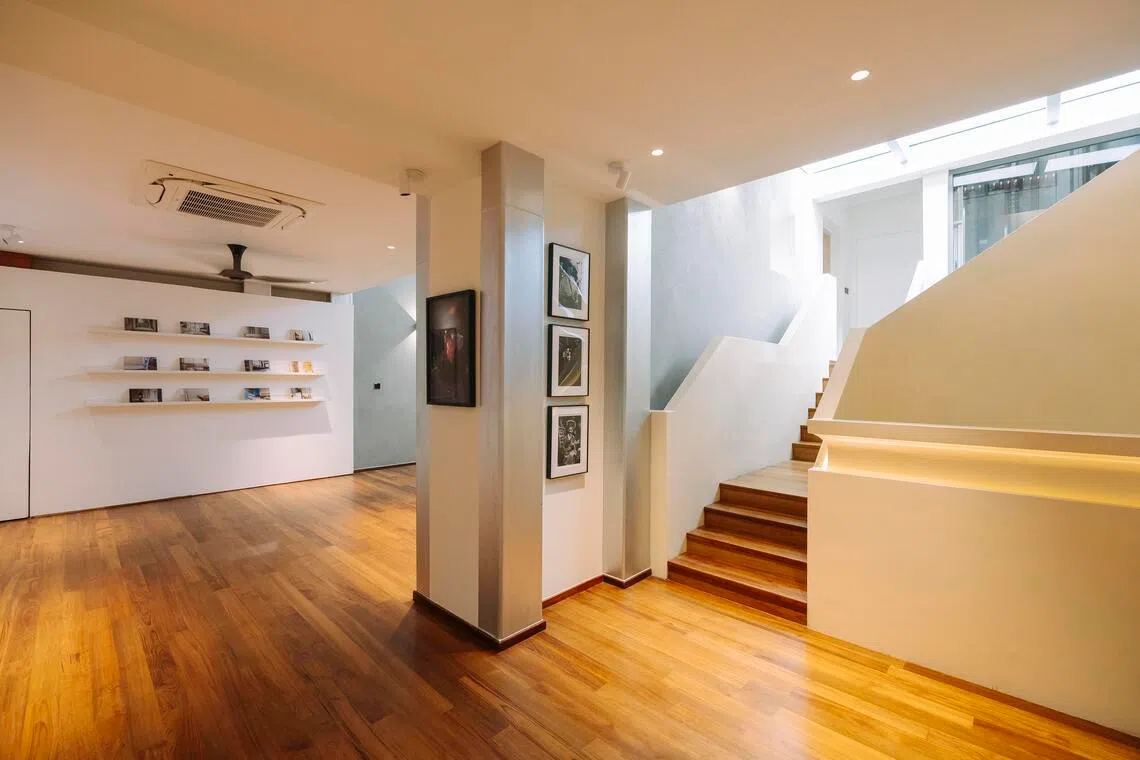
The result is a house that opens itself up slowly. Floors rise and fall in half-levels. Spaces bleed gently into one another. Movement is rarely direct. Instead of corridors and clear axes, the house offers quiet turns and moments of pause.
From almost anywhere, you are aware of other people nearby – someone climbing a staircase, someone lingering on a landing, someone passing through a doorway just out of sight. The house feels animated, but never busy.
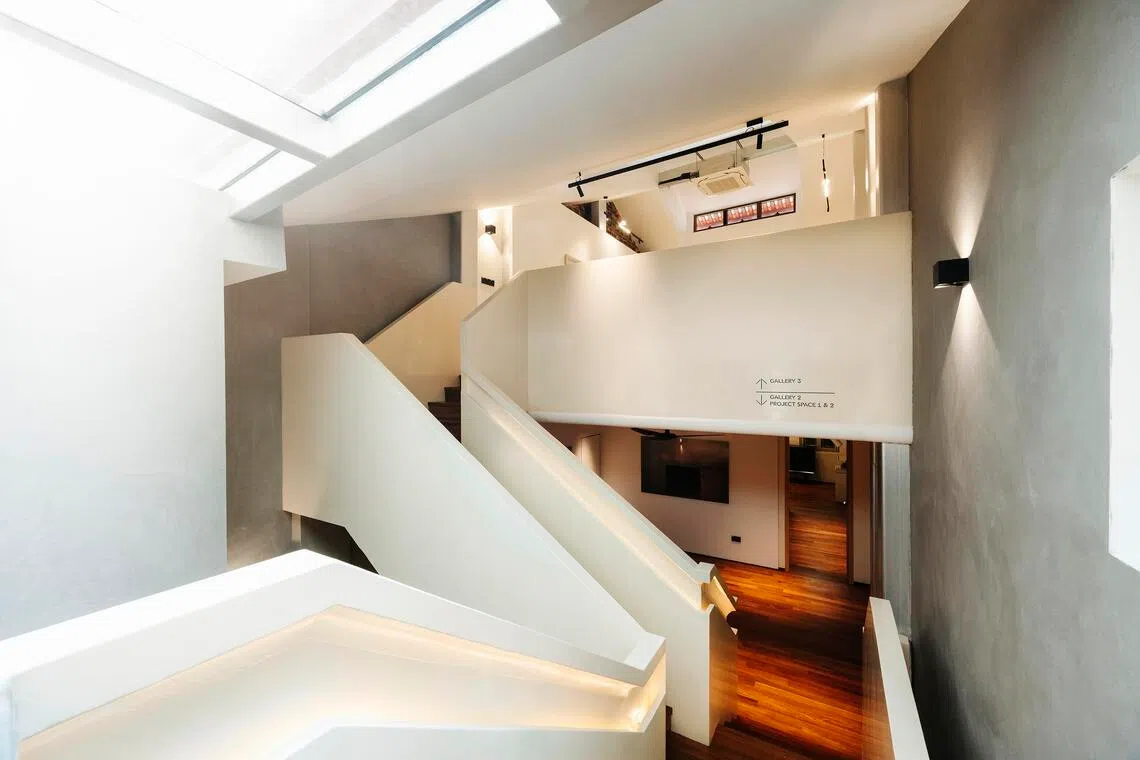
Its most distinctive feature is the network of staircases that stitches the two shophouses together. Wide and unhurried, with deep, generous landings, they feel less like passages and more like places where one might stop and start a conversation with someone else.
“Halfway through the build, I remember thinking, ‘Oh no, this is going to be a mistake,’” Dr Chia recalls. “Everything was concrete. It felt very cold.”
But the concern proved short-lived. As the structure came together and light began to move through the space, the architecture revealed its intent. “The idea was always to facilitate movement through the house and to allow people to experience it in layers,” explains Chan.
That same thinking governs how the two shophouses are joined. By varying the size and placement of openings across the dividing wall, Chan allows the interiors to flow into one another. Separation is preserved where it matters. Connection is offered where it’s needed.
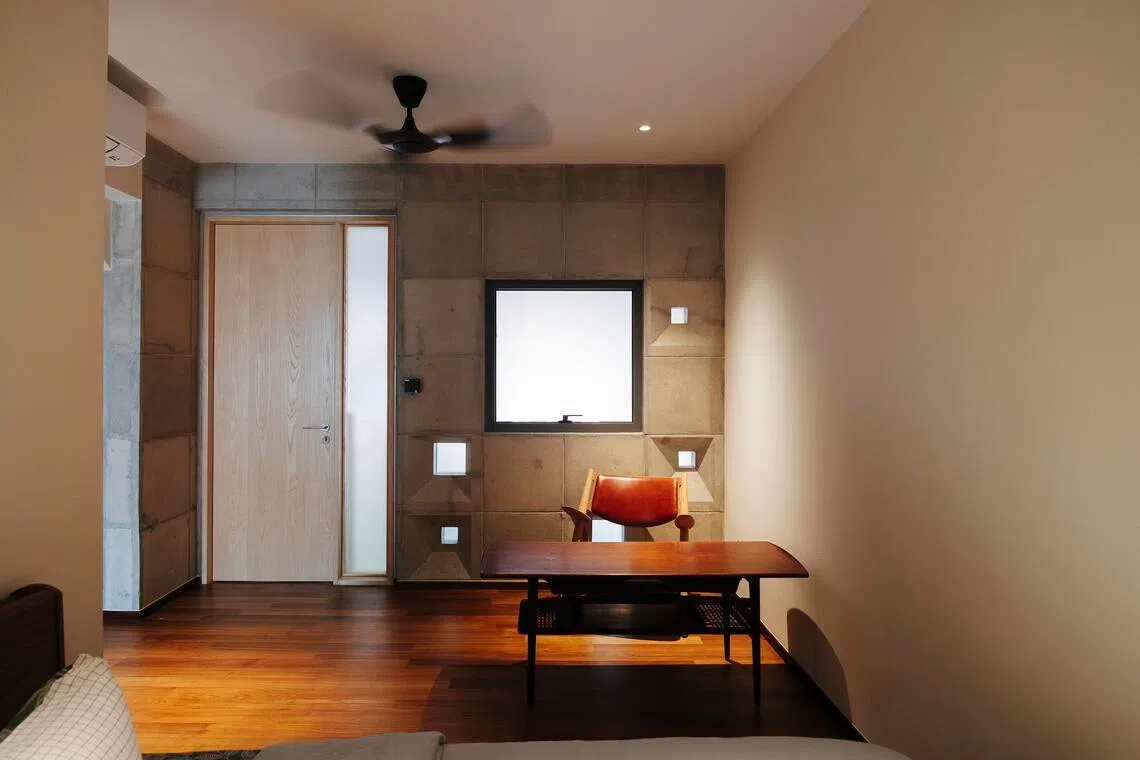
Light is handled with similar restraint. For instance, rather than flooding the interior through large windows, it filters in through small, deep apertures in the concrete walls around the house. Throughout the day, shadows shift across floors and walls, quietly marking the passage of time.
“These openings allow light to modulate the space,” Chan says. “In fact, when the owners decided to loan the space to Deck, we felt the architecture could become even more symbolically meaningful as camera obscura.”
The concrete itself is sometimes thick and tactile. It does not try to disguise the building’s age. Instead, it signals a structure that has been carefully worked on, not erased and rebuilt – a quality that lends the house both weight and warmth.
Living with photography
For Deck’s co-founders Lee and Lau, the house is a gift.
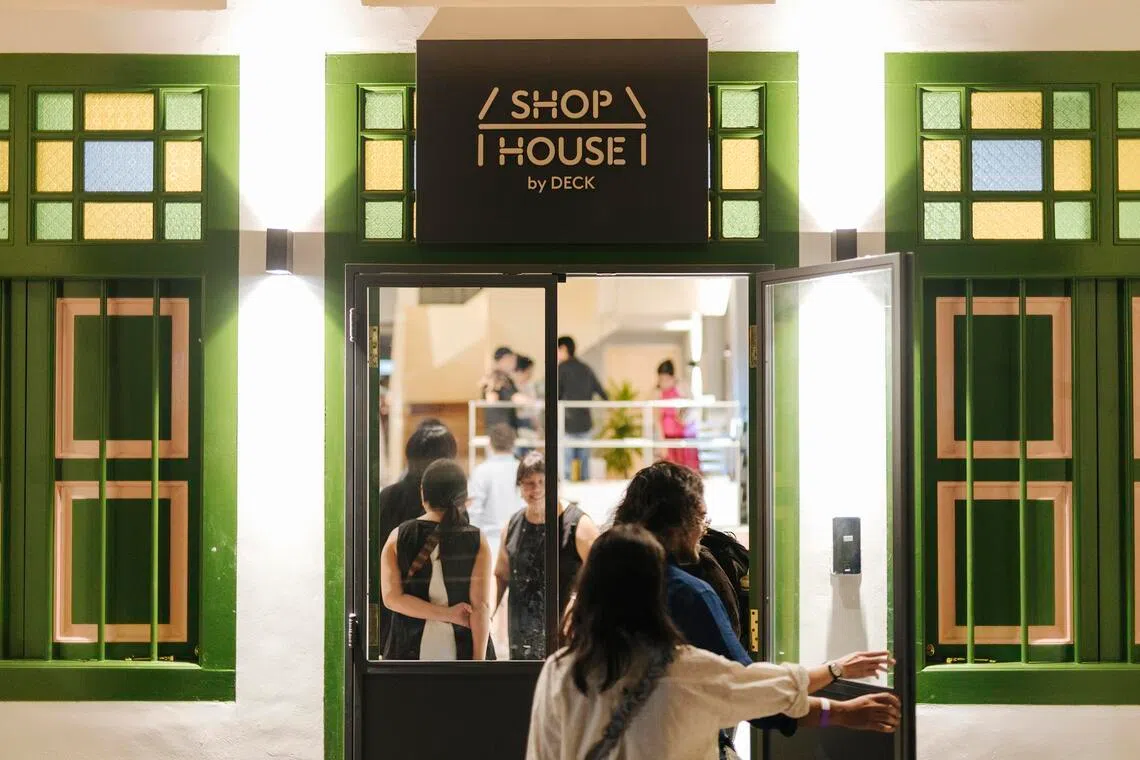
When Deck moved in, the organisation resisted the temptation to over-programme the space. Rather than impose white-cube formality, the team chose to inhabit the building much as one would a lived-in home – which they formally named Shop–House by Deck.
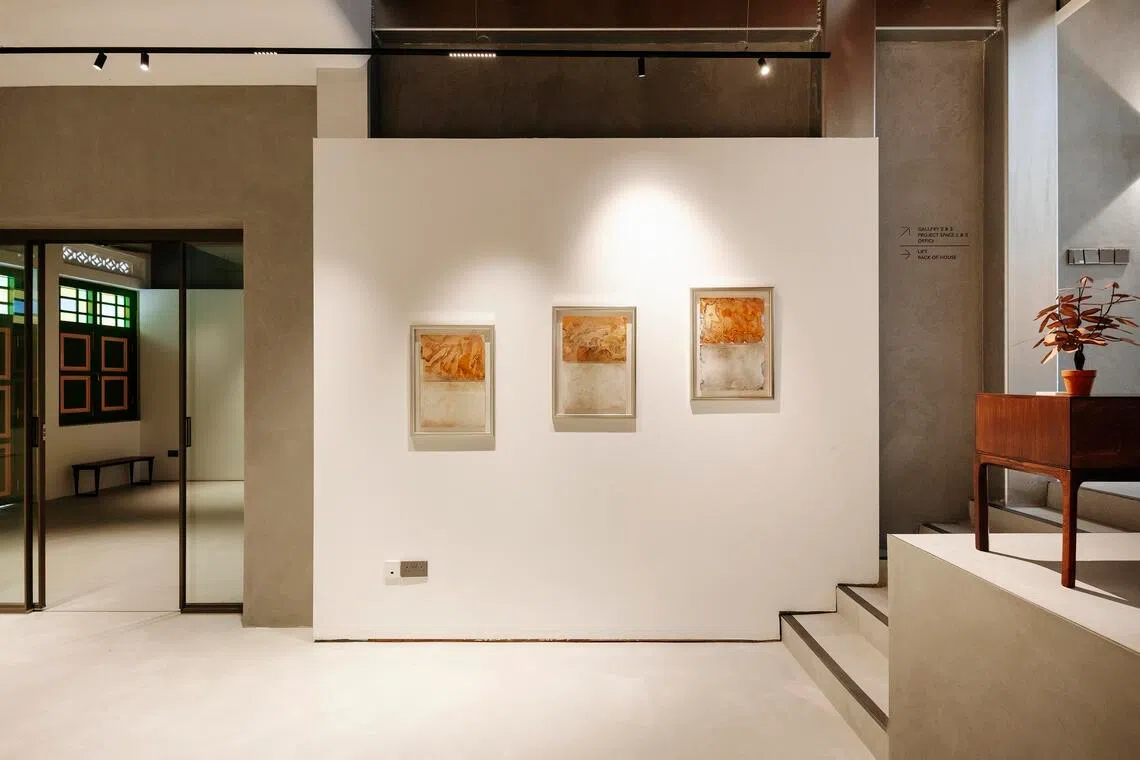
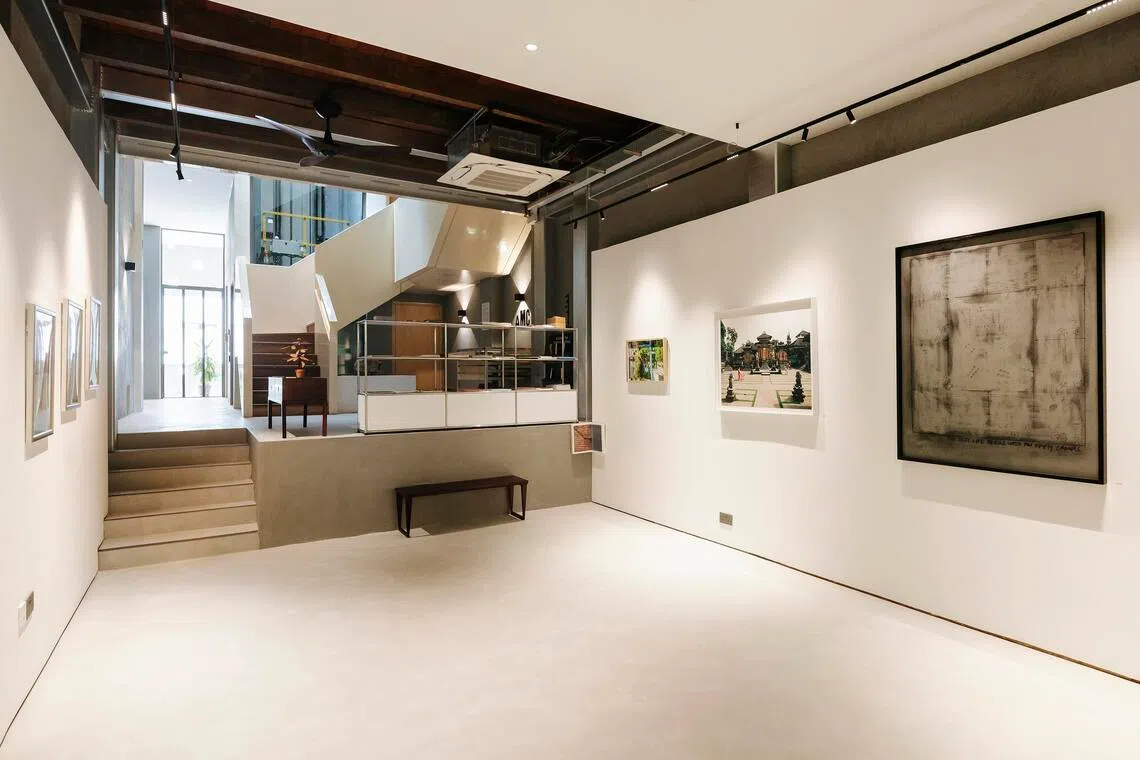
Photographs are hung at domestic height. Bookshelves hold photobooks rather than catalogues. Works appear along corridors, beside staircases and on landings – encountered casually, like family photographs, rather than presented for inspection.
The inaugural exhibition, A Home Away From Home, curated by John ZW Tung, leans deliberately into this sensibility. Featuring works by more than 20 artists including Daido Moriyama, Robert Zhao Renhui and MM Yu, the exhibition dissolves the boundary between private dwelling and public encounter.
“Living room walls become galleries... kitchens house photobook libraries,” curator Tung notes, describing a space where photography behaves less like an artefact and more like a guest – familiar, present and quietly conversational.
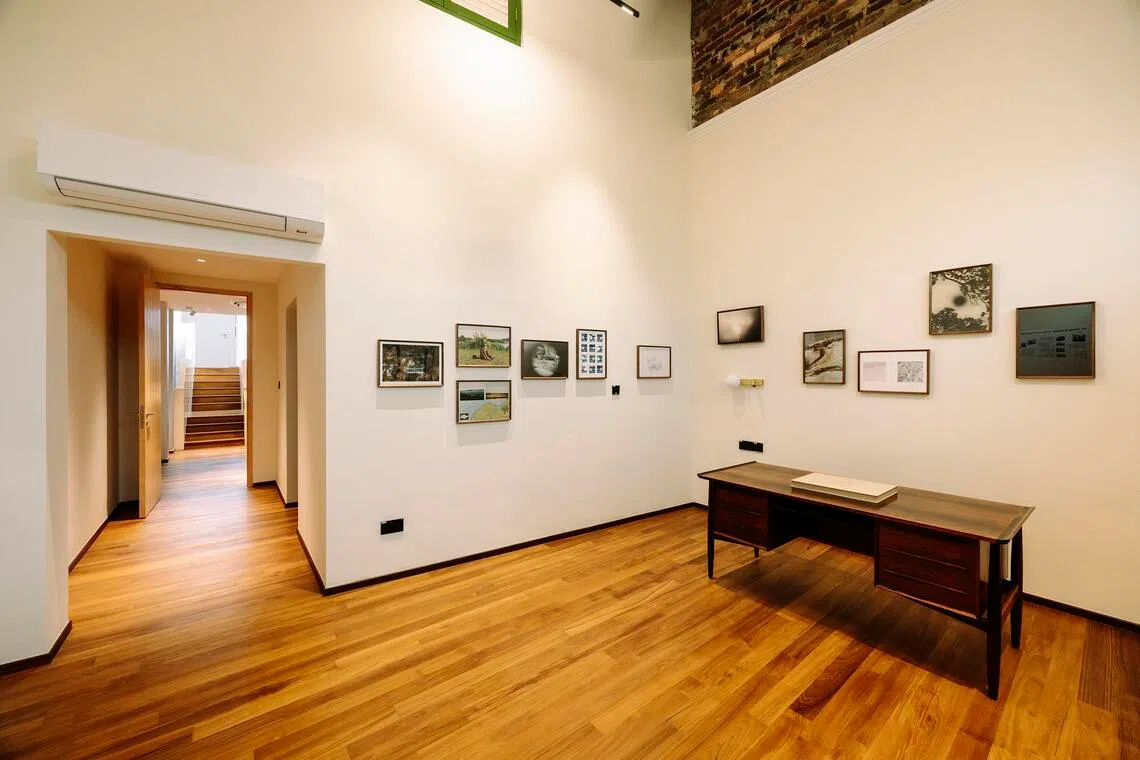
That informality extends to how Deck occupies the house day to day. Three bedrooms are reserved for visiting artists and curators. Shared spaces double as workrooms, meeting areas and places for communal meals. A photobook library anchors the house, alongside small galleries that can accommodate everything from intimate presentations to group exhibitions.
Over the next three years, Shop–House will host Deck’s artist-in-residence programme alongside research initiatives, talks, writing programmes and experimental publishing projects.
Its domestic scale becomes the point. A talk might take place where a dining table once stood. Ideas are exchanged across stair landings and corridors, shaped less by formal programming than by the everyday rhythms of shared living and work.
Looking back, Dr Chia is clear about what made the decision feel right. “If you have people like Gwen and Jay – people who are knowledgeable, committed, and doing the real work of championing Singapore artists – then you must support them,” he says. “It’s not complicated.”
In fact, Dr Loh and Dr Chia are now set to deepen their support for the arts further – this time with a free exhibition of works from their collection. Titled Human Being Human, it runs from Jan 19 to Apr 26 at The Private Museum at Upper Wilkie Road.
Meanwhile, the house in Geylang that was designed to support family life now supports another form of intimacy – one rooted in shared looking, artistic exchanges, and lifelong trust between friends.
Decoding Asia newsletter: your guide to navigating Asia in a new global order. Sign up here to get Decoding Asia newsletter. Delivered to your inbox. Free.
Copyright SPH Media. All rights reserved.