Singapore Tales Of The Macabre
Two local authors are winning international acclaim for their dark works

Helmi Yusof
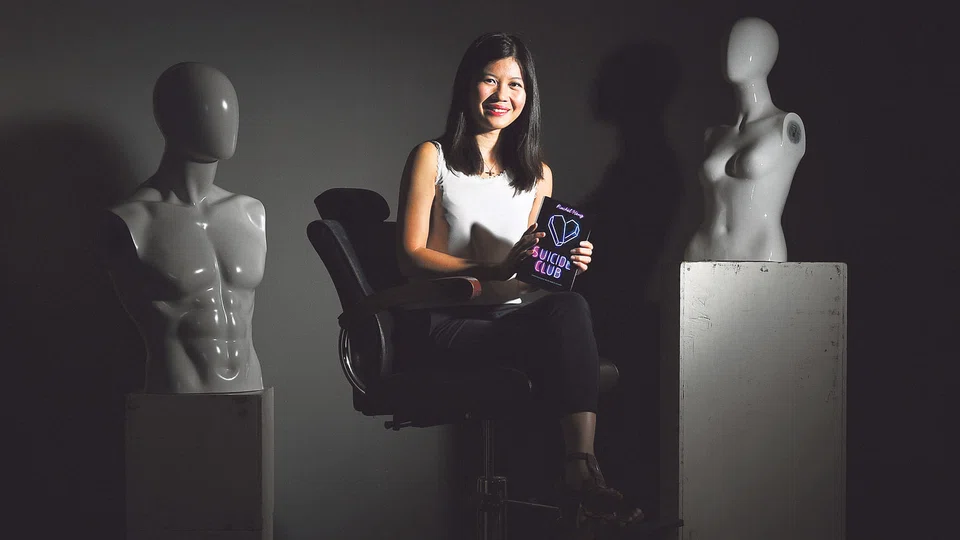
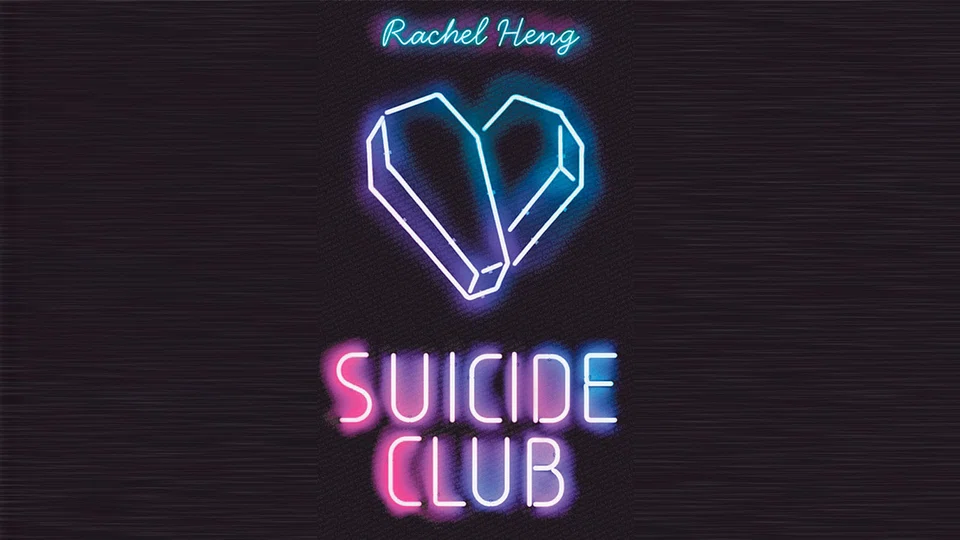
SUICIDE CLUB BY RACHEL HENG Publisher: Sceptre 372 pages, available in bookstores
IF YOU COULD LIVE FOREVER, would you? Fiction has been toying with the idea of immortality for centuries, from Dracula and Gulliver's Travels to the popular 1986 Highlander film.
Freddie Mercury famously belted the theme song for the latter, that goes: "Who wants to live forevaaaa......?" And the collective reply seems to be: "No, thanks." There are just too many clauses, like having to drink blood, avoid the sun and constantly battle other immortals.
Along comes Singapore writer Rachel Heng who's devised a perfect conceit for immortality in her new dystopian novel Suicide Club. When Heng was looking for publishers last year, Suicide Club sparked heated bidding between international publishers. Sceptre won the Commonwealth rights and Holt acquired the US rights for six-figure sums. When it showed up in bookstores last month, the novel instantly made the Kinokuniya bestseller list.
Heng's coup is to construct her futuristic world as close to ours as possible: Her characters are obsessed with exercise, meditation and eating right, believing that a combination of organ replacement, disciplined diets and avoidance of excitement can help one live up to 300 years old.
Meat is a no-no. Art and music raises cortisol levels and must be avoided. Don't run because it's bad for your joints - choose low-impact activities instead. Stay calm and sleep early to extend your years.
Much of Heng's idea of how future human beings will behave is founded in science, allowing us to believe that her world-building isn't all that far-fetched. After all, science has already been able to increase average lifespans by 0.3 years every year in the past decade. And there are more centenarians now than ever before.
Set in a soft authoritarian state of New York, Suicide Club depicts people as being segregated between the elite Lifers (those who can live up to 300 years) and the sub-100s (those who can live up only to 100 - like most human beings today).
Hundred-year-old Lea is a model specimen of a Lifer, leading what her society considers the exemplary life. She looks young and maintains all the routines necessary to stay that way. She has a high-powered job, an apartment in the city, and a handsome partner.
But things change when Lea catches sight of her estranged father, who long ago disavowed the notion of living forever. He introduces her to the Suicide Club, a group of people who simply want to enjoy life, eat and drink everything, laugh and cry when they wish to, and accept death when it comes.
To the state, these people are dangerous activists who must be arrested and put away for trying to infect the city with their radical ideas on living. They include Anja, whose own mother is brain-dead but unable to die because her artificially-enhanced heart still beats. As Lea learns more about the Suicide Club, her fate and Anja's become intertwined.
To Heng's credit, the world she has constructed rings true on many levels, allowing one to draw parallels between it and the contemporary world. But a well-conceived backdrop is no guarantee of a highly dramatic plotline and compelling characters. And Suicide Club lacks the kind of propulsive action normally expected of the dystopian genre. The lead characters Lea and Anja are appealing enough for us to care about their fates - but only just. When the last few chapters come, they edge towards the predictable.
Still, Suicide Club is easily one of the best debuts in recent local fiction. Heng's vision of the future is undoubtedly big, bold and well-researched. Her expansive world-building marks her as a name to watch. This reviewer, at least, waits eagerly for her next novel.
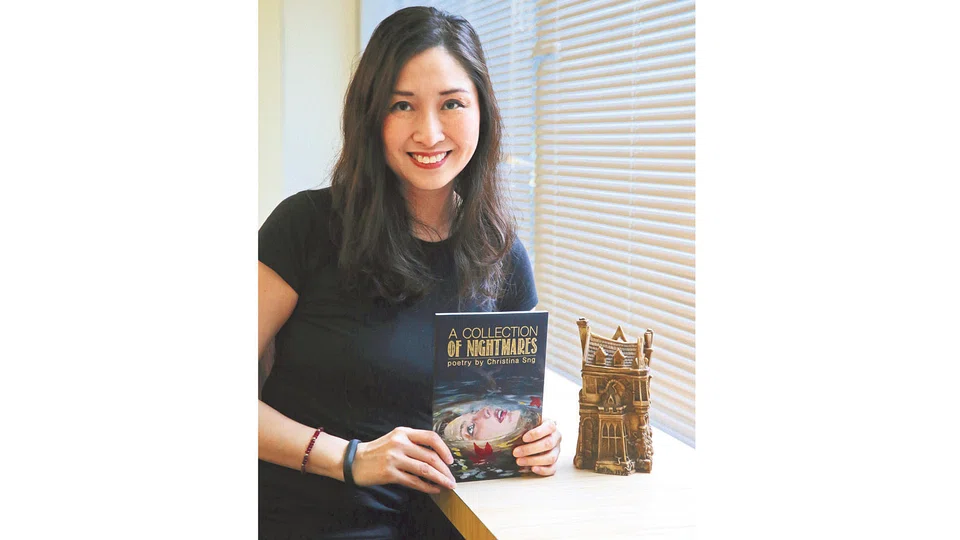
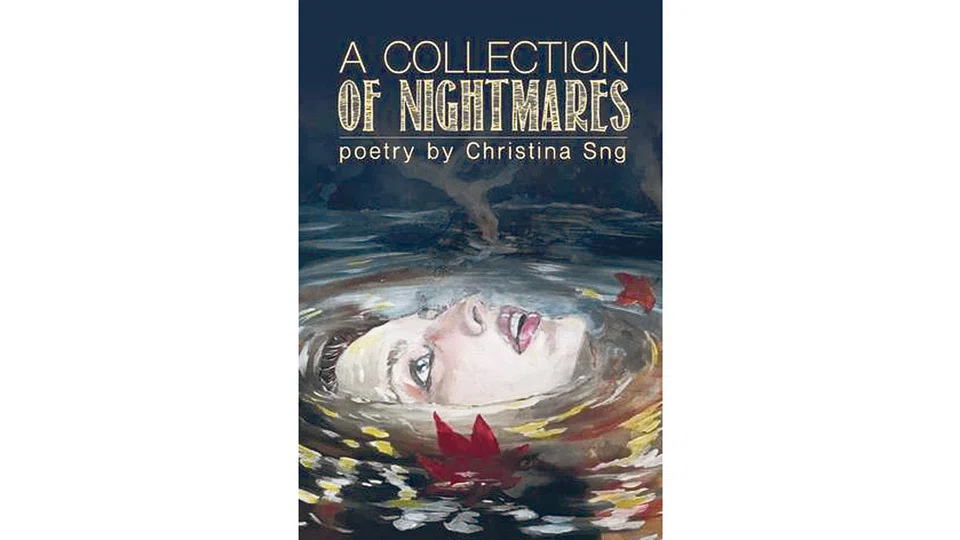
A COLLECTION OF NIGHTMARES POETRY BY CHRISTINA SNG Publisher: Raw Dog Screaming Press 88 pages, available in bookstores
Russell Lee may hold a bestselling record for his True Singapore Ghost Stories series, which is now past its 26th instalment. But Christina Sng has a decidedly non-Singaporean flavour to the horror canon with her new poetry collection.
Sng's imaginary world is populated by zombies, vampires, werewolves, succubi, aliens and other popular phantoms of Western fiction. It owes more of a debt to Edgar Allan Poe, Bram Stoker, Mary Shelley and George A Romero than any Asian writer or filmmaker. Only in rare poems such as Ghost Month does she tackle a topic pertaining to her Asian roots - and, perhaps not coincidentally, the poem is also one of her shortest and least satisfying.
Nonetheless, A Collection of Nightmares is a lurid page-turner, packing 47 poems in 88 pages, and deserving of the 2018 Bram Stoker Award of Best Poetry Collection given out by the international Horror Writers Association. There are certainly enough blood, knives, coffins, cretins and other spine-chilling images here to satisfy any horror fan.
Sng's style is fairly straightforward; she writes with a startling clarity that feels more suited for prose than poetry. But she can spin a good yarn within the space of a page, even if her ability to summon spooky worlds relies very much on our familiarity with Western horror and fantasy traditions.
Children In The Apocalypse, for instance, plays like an episode of The Walking Dead, the popular zombie TV show. Twenty Years, about a hovercraft taking people away from a dying earth to live on another planet, could be a scene in a contemporary sci-fi Hollywood film. That Evening, about a man praising the beauty of his dead lover, is pure Gothic creepiness reminiscent of Poe and Shelley.
Sng is most effective when she is simple, concise and unbound to very specific tropes, leaving spaces for our imaginations to soar - as in the instance of The Art of Weaving, reproduced here in full:
Mommy sat daily at her spinning wheel
Weaving reams of human skin
From the dust we slept in.
When she turned a hundred and three,
She taught the craft to me,
Reminding me time and time again
Never to drop a stitch
Or snag a cloth on
The sharp edges of my spiny flesh.
When I mastered
The art at age fifty-three,
Father taught me how
To breathe life into it.
Copyright SPH Media. All rights reserved.