

Asia's top film festival roots for regional talent
 Add BT as a preferred source
DeeperDive is a beta AI feature. Refer to full articles for the facts.
FROM a Singaporean widow on a K-drama voyage of self-discovery to teenagers seeking revenge on a bully, the movies vying for the key prize at the Busan International Film Festival showcase a diverse array of Asian experiences.
Ten films are in the running for the high-profile New Currents award at the festival – Asia’s largest – which will hand out two prizes of US$30,000 to first- or second-time Asian directors on Friday (Oct 14).
Host South Korea – now a cultural powerhouse, thanks to the explosive success of the Oscar-winning film Parasite and the Netflix series Squid Game – has two films in competition, including the highly talked-about Hail to Hell by Lim Oh-jeong.
The entertaining, at times genre-defying flick follows two teenage girls as they travel to Seoul to confront their bully.
Critics have hailed its fresh approach to tackling popular tropes of South Korean cinema, including suicide and cults.
Lim, 40, has been coming to Busan as an audience member to watch films for two decades, and said it was both “a huge honour and nerve-wracking” for local filmmakers like her to have their work in competition.
Navigate Asia in
a new global order
Get the insights delivered to your inbox.
Her film was inspired by the universal “moments that make us want to die because we are so alone and in so much pain”, she said.
But festival director Huh Moon-young said its goal was to nurture regional filmmakers, not just homegrown talent.
“Supporting Asian filmmakers and rooting for them is the real responsibility of the Busan Film Festival,” he said.
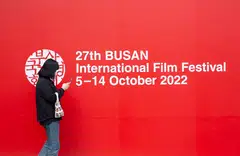
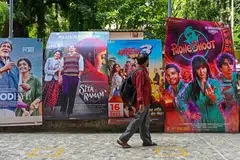
To that end, the New Currents prize selection features a diverse selection of the region’s up-and-coming talents.
An upbeat South Korean-Singaporean co-production called Ajoomma, about a Singaporean widow who visits South Korea has been a hit with festival-goers, and is Singapore’s entry for the 2023 Oscars.
Director He Shuming said it was inspired by his own mother’s obsession with Korean soap operas, and her efforts to forge a new identity for herself once her children had grown up.
“Like many Singaporean adults, I still live with my parents. I was observing her ageing, and how she’s also embarking on a chapter of her life, as much as I am,” he said.
When his mother returned from her first trip to South Korea, she changed all the home’s utensils at home to Korean ones, “so that obsession then amused me”, he said.
Women of his mother’s generation have spent their lives being mothers “and when their kids find their way out of the nests, they usually expect the next step is being a grandmother”.
The film asks: “What if that doesn’t happen? And can they forge an identity beyond being a mother?“
The title Ajoomma is a Korean term for middle-aged women or housewives, which means something equivalent to “auntie”.
Other films in the section include Vietnamese Marcus Vu Manh Cuong’s Memento Mori: Earth, a tale of a young, terminally ill mother who discovers her husband plans to sell a kidney to make ends meet.
Also in the running is Japanese director Kubota Nao’s Thousand and One Nights, about an ageing woman whose husband went missing around three decades ago.
Thai filmmaker Thapanee Loosuwan’s Blue Again tells the story of a mixed-race girl in Bangkok, and Indian director Jaishankar Aryar’s Shivamma features a struggling middle-aged woman who falls for a pyramid scheme.
There is also Aamir Bashir’s The Winter Within, set in the turmoil of Indian-administered Kashmir.
The festival will announce the winners at the closing ceremony on Friday. AFP
Decoding Asia newsletter: your guide to navigating Asia in a new global order. Sign up here to get Decoding Asia newsletter. Delivered to your inbox. Free.
Share with us your feedback on BT's products and services
TRENDING NOW
From 1MDB to ‘corporate mafia’: Is Malaysia facing a new governance test?

Higher costs, lower returns: Why are Singaporeans still betting on real estate?

South-east Asian markets account for 8.8% of global capital inflows from 2021 to 2024: report

Richard Eu on how core values, customers keep Singapore’s TCM chain Eu Yan Sang relevant

