

Up for auction: Real art, owned by a seller of forgeries
New York
FOR years, the Gaston & Sheehan auction house, family-owned and located in Pflugerville, a small city in Central Texas, has been a trusted place used by federal marshals to sell the many things that were seized in criminal cases - jewellery, some impounded vehicles and occasionally fine wine and sometimes paintings or antiques.
But Gaston & Sheehan has rarely tried to compete with large art auction houses. So it was a bit unusual when it took in nearly US$5 million from the sale last year of 236 works of art, including a few by the likes of Warhol and Motherwell.
What made the works distinctive was their lineage: All had been seized from the Long Island home of a dealer who orchestrated one of the largest counterfeit schemes in the history of the art world.
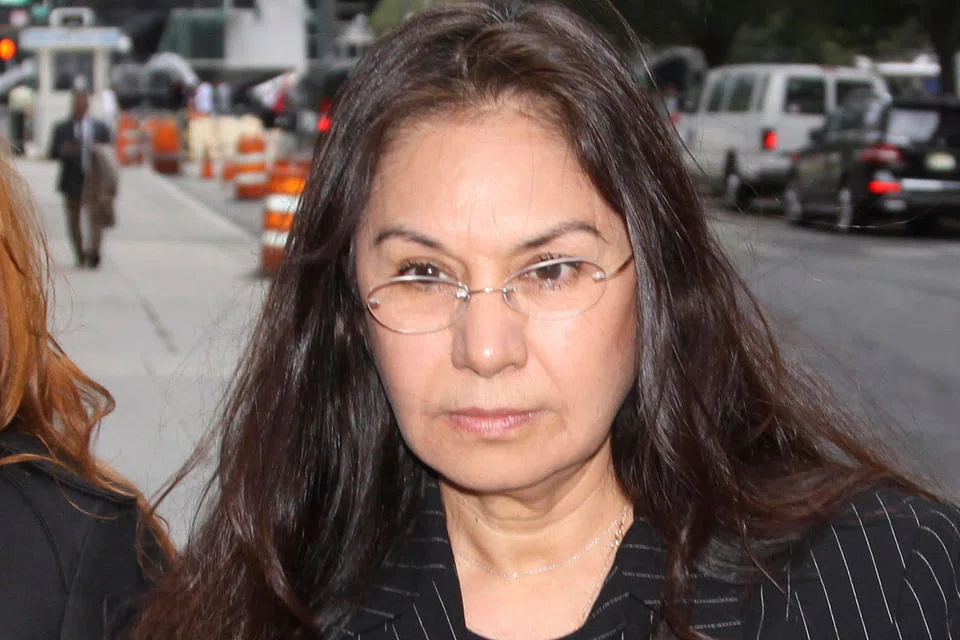
By her own admission, between 1994 and 2009, the dealer, Glafira Rosales, had sold more than 60 fakes that she put forward as the work of modernist masters such as Rothko and Pollock. In reality, they were all created by a single forger in Queens.
Sold through two dealers who said that they, too, were hoodwinked, the fake paintings brought in US$80 million, with US$33 million pocketed, the government said, by Rosales and her confederates.
Despite Rosales' penchant for fakery, though, federal authorities said that they are confident that the art that they seized from her home is all genuine, based on their own analysis, reviews of sale records and the assessment of a Houston art appraiser.
"During the appraisal, no issues arose that indicated the need for detailed authentication," said Lynzey Donahue, a spokeswoman for the US Marshals Service (USMS). "If any art work had been found to be counterfeit, the USMS would not have sold it but rather would have destroyed it."
Indeed, federal officials were confident enough in the legitimacy of the art that they did not think it necessary to advertise that the works had once belonged to Rosales. They rarely make such identifications, officials said, except in cases, like the sale several years ago of Bernard Madoff's possessions (jewellery, furniture, even his socks and slippers), where they thought notoriety would increase interest.
In the case of Rosales' private collection, Ms Donahue said that a Marshals' employee spent weeks researching documents from her original purchases provided by her lawyer. All the works had been bought at established houses, including Sotheby's and Christie's. This information was then passed to the appraiser for further verification.
The appraiser, Stephanie Reeves, said in an interview that she did not so much authenticate the paintings, drawings and other works as put a value on them. The authenticity had largely been established, and thoroughly, she said, by the federal authorities by the time that she had come on board.
"They had a sale history," she said. "There was a lot of paper work backing them up." Ms Reeves, an appraiser since 1999, said that she worked with the auction houses to clear up any gaps that she found in the sale histories.
"If I had a lot number but not the sale, or the title, but I didn't have it right, we sorted it out," she added.
As additional evidence of their typical due diligence, the USMS has described how exacting it had been before selling some fine wine last year at Gaston & Sheehan. The bottles had all belonged to Rudy Kurniawan, a well-known wine dealer convicted of fraud in the sale of purportedly rare wine that was actually old wines mixed together. The auction of the genuine vintage wines proceeded only after the service smashed hundreds of other bottles that it determined were fake.
For the Rosales trove, Gaston & Sheehan put the art on pre-sale display last March at Pfluger Hall, an events centre downtown directly behind a fire station and about two miles (3.2 km) from the auction house's office.
"At least 20 to 30 major dealers came in from different parts of the US, and a smattering of people came in from this area, from Dallas, Houston, San Antonio" - more than 50 people in all, said Jason Rzepniewski, an auctioneer at Gaston & Sheehan.
Though the auction house did not mention Rosales as the prior owner in advertisements or in descriptions of the works provided to prospective buyers, Mr Rzepniewski said that it did disclose that fact "if people asked at the preview or if people phoned in".
Bob Sheehan, Mr Rzepniewski's colleague, said that he thought that many of the prospective buyers knew where the artworks had come from, especially because one of the items on sale was a portrait of Rosales herself wearing a red hat - Red Hat Portrait of Glafira 2010. (It sold for US$680.) "The people who came down here from New York, they knew what it was," he said.
Citing privacy concerns, the USMS declined to make available any of the buyers.
Most of the art purchased at the Texas sale, which was first reported by The Art Newspaper, was not wildly expensive, and none secured the millions paid for some of Rosales' faux masterpieces. But there were a few noteworthy works, and when the bidding - which was conducted online - concluded on the first day of the sale in early March last year, 178 of Rosales' artworks had been sold for US$4.3 million. The remaining 58 works were included in three sales over the following few months and brought in another US$532,000.
The highest price paid was for an oil on canvas, Le Bijou by Richard Pousette-Dart, which had been purchased at Sotheby's in 2009, according to the lot description. It sold for US$325,100.
An abstract work by Ad Reinhardt, purchased at Phillips auction house in 2008, sold for US$300,100, and a couple of Warhols, titled Heaven and Hell Are Just One Breath Away!, from 1985, which were bought at Sotheby's in 2007, together fetched US$170,100. NYT
Share with us your feedback on BT's products and services
TRENDING NOW

Can a first-time homebuyer couple earning S$18,000 a month afford a new EC unit?

He built the Vingroup empire. Now South-east Asia’s richest man is handing some key roles to his sons

Asia needs new energy security architecture

Chagee, Mixue and Luckin won the market. Sustaining their edge is the harder part

