Audemars Piguet drops surprise pocket watch, jumping-hour timepiece and more
The Le Brassus manufacture reasserts its mastery of complications at its annual intimate gathering in the Swiss Alps

[ANDERMATT] Ahead of Audemars Piguet’s (AP) highly anticipated return to the big watch fairs, the brand offered a glimpse of what’s to come at the AP Social Club last week.
The intimate gathering offered media and collectors a rare opportunity to not only view the novelties, but also to meet the manufacturer’s key personnel, such as director of watch conception Giulio Papi and heritage and museum director Sebastian Vivas, who were present for candid conversations about anything AP.
Judging from the key pieces unveiled – an ultra-complicated pocket watch, a revived jumping-hour wristwatch and a new generation of open-worked perpetual calendars – one thing is clear: Long before the Royal Oak shot AP to fame, the watchmaker was among the most inventive specialists in complications.
Small but mighty
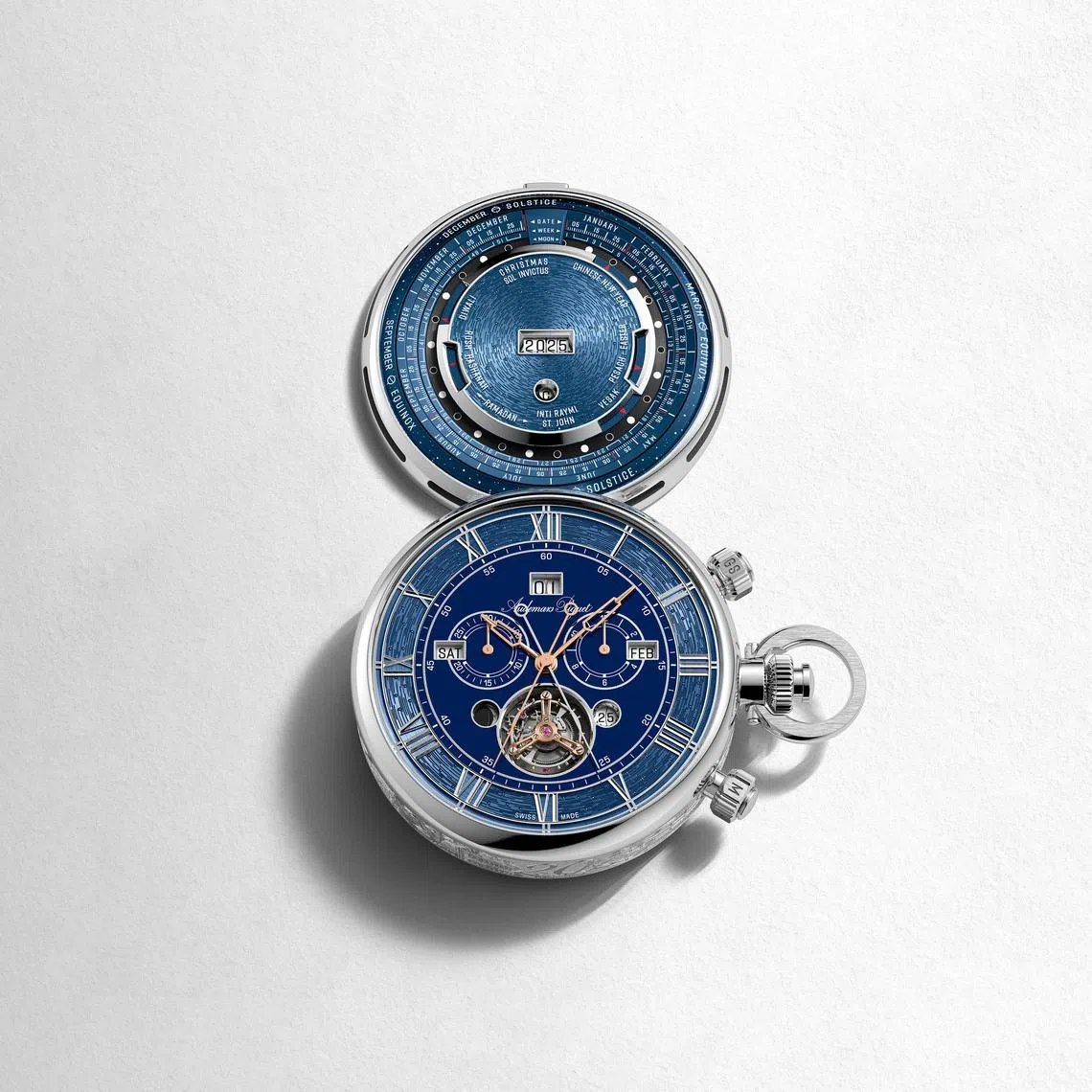
Taking centre stage at the AP Social Club was the 150 Heritage pocket watch. Papi said he was inspired by memories of his grandfather’s pocket watch.
Unlike many historical “ultra-complicated” pieces which tend to be massive, the 150 Heritage is the first ultra-complicated watch specifically engineered to fit comfortably in a pocket.
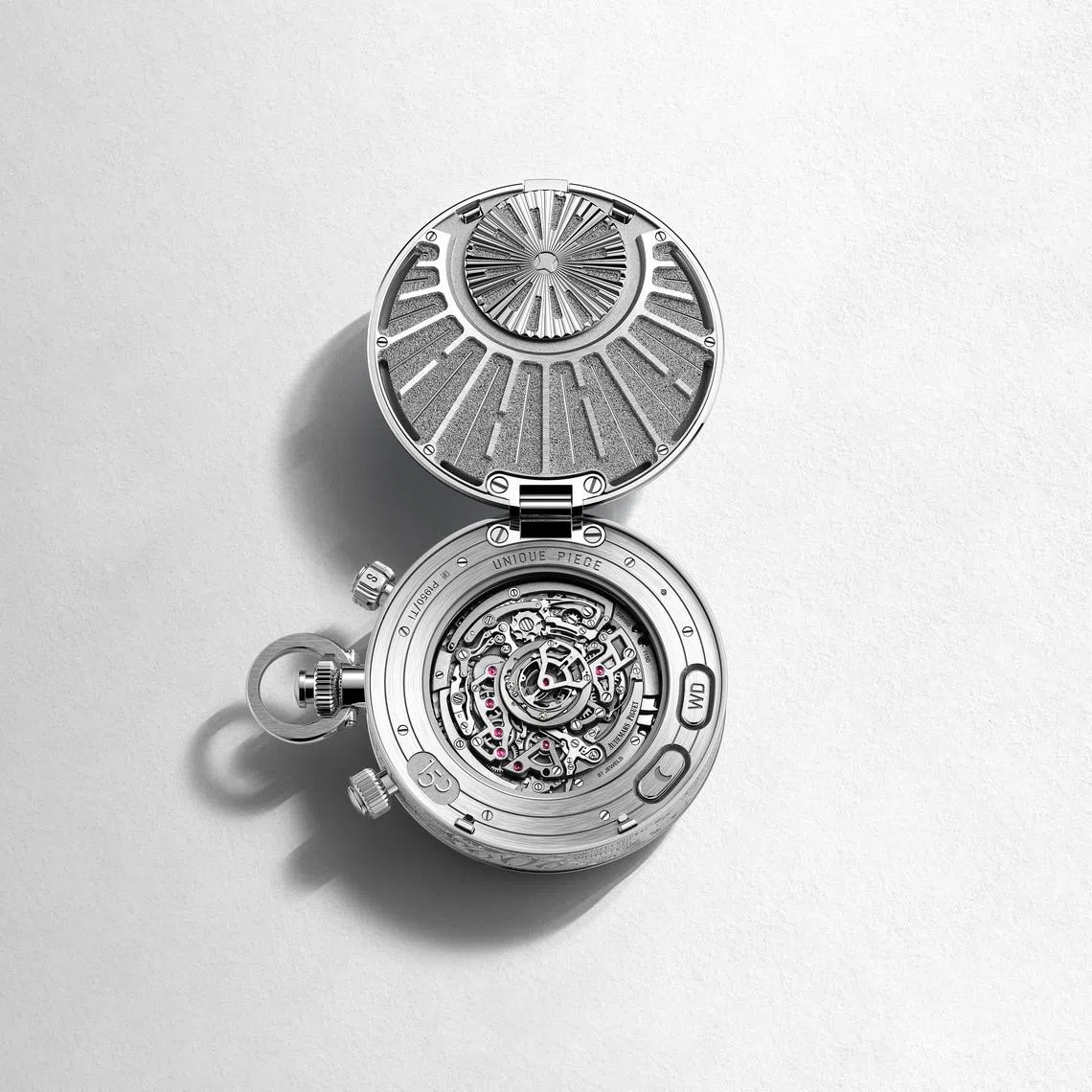
Its hand-wound Calibre 1150 comprises 1,099 components and delivers 47 functions, including 30 complications such as a grande and petite sonnerie, minute repeater, flying tourbillon, perpetual calendar and split-seconds flyback chronograph.
More unusual still is the Universal Calendar hidden in the secret caseback, which opens 180 degrees. Independent of the movement, it maps solar, lunar and lunisolar cycles, displaying cultural celebrations such as Chinese New Year, Easter, Diwali and Ramadan based on astronomical phenomena.
The 50 mm case is crafted from hand-engraved platinum, paired with a translucent blue grand feu enamel dial and a handmade platinum chain. It is a limited edition of only two pieces.
Art deco rebooted
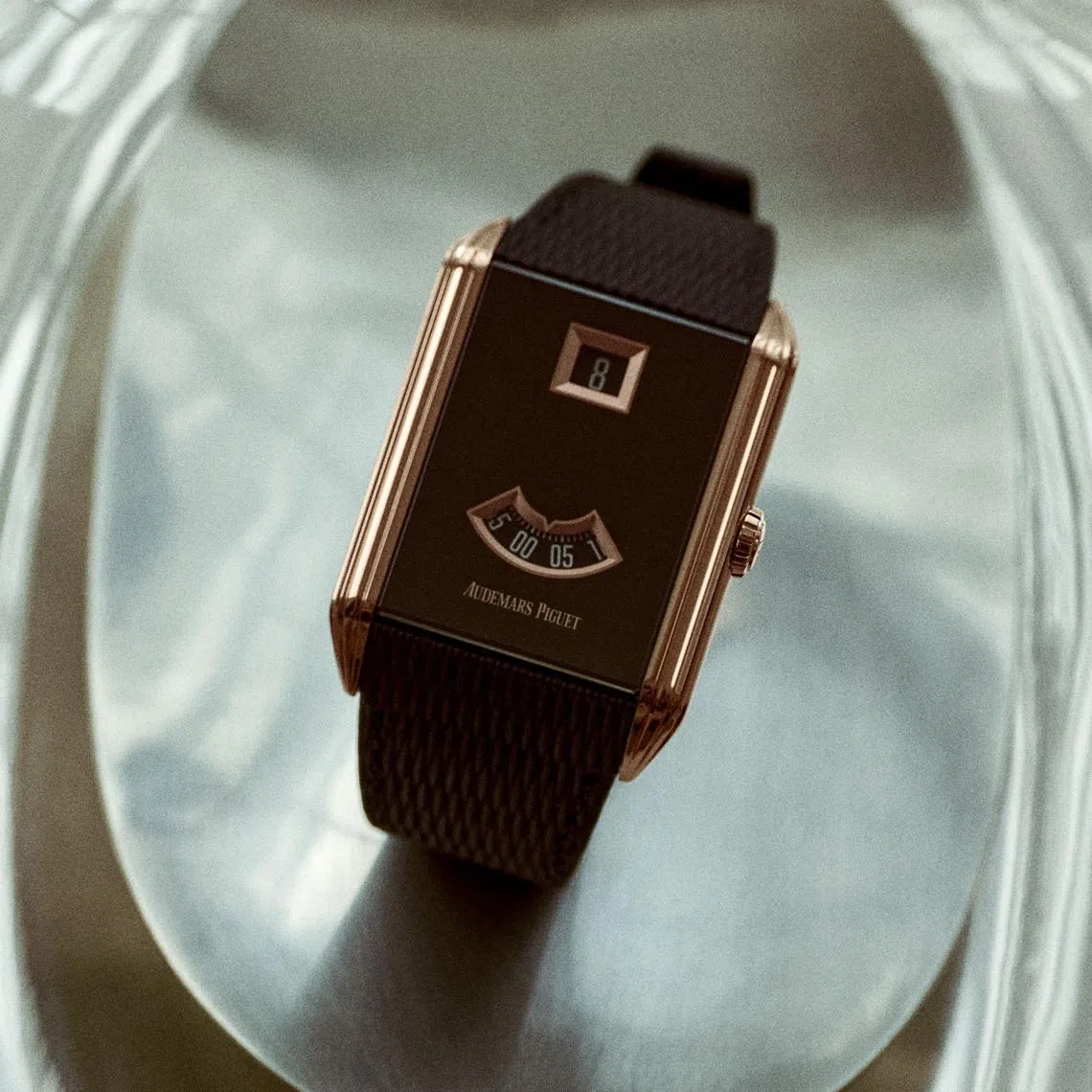
Between 1924 and 1951, AP produced 347 jumping-hour wristwatches, making it one of the pioneers of this display. This year, it introduced the Neo Frame Jumping Hour, a rectangular 18-karat pink gold timepiece that pays tribute to the 1930s Streamline Moderne style.

Inspired specifically by a rare 1929 historical model (pre-model 1271, of which only 14 examples were made), the watch also debuts the Calibre 7122. This is AP’s first in-house self-winding, jumping hour movement, featuring an instantaneous hour jump mechanism, a 52-hour power reserve, and a patented shock-absorbing system to prevent accidental jumps.
The new watch is distinguished by its “Neo Frame” construction, designed to balance vintage aesthetics with modern durability. To maintain the minimalist look of the 1929 original, the new model eliminates the metal bezel at the 12 and six o’clock positions, leaving the black PVD (physical vapour deposition) treated sapphire crystal exposed at the top and bottom.
Such a design typically would have made the watch fragile and susceptible to water damage, but AP has developed a technique of bonding the dial plate directly to the sapphire crystal, and then screwing this into the case. This innovation ensures the watch is water-resistant to 20 m, despite the lack of a full metal frame.
Openworking expertise
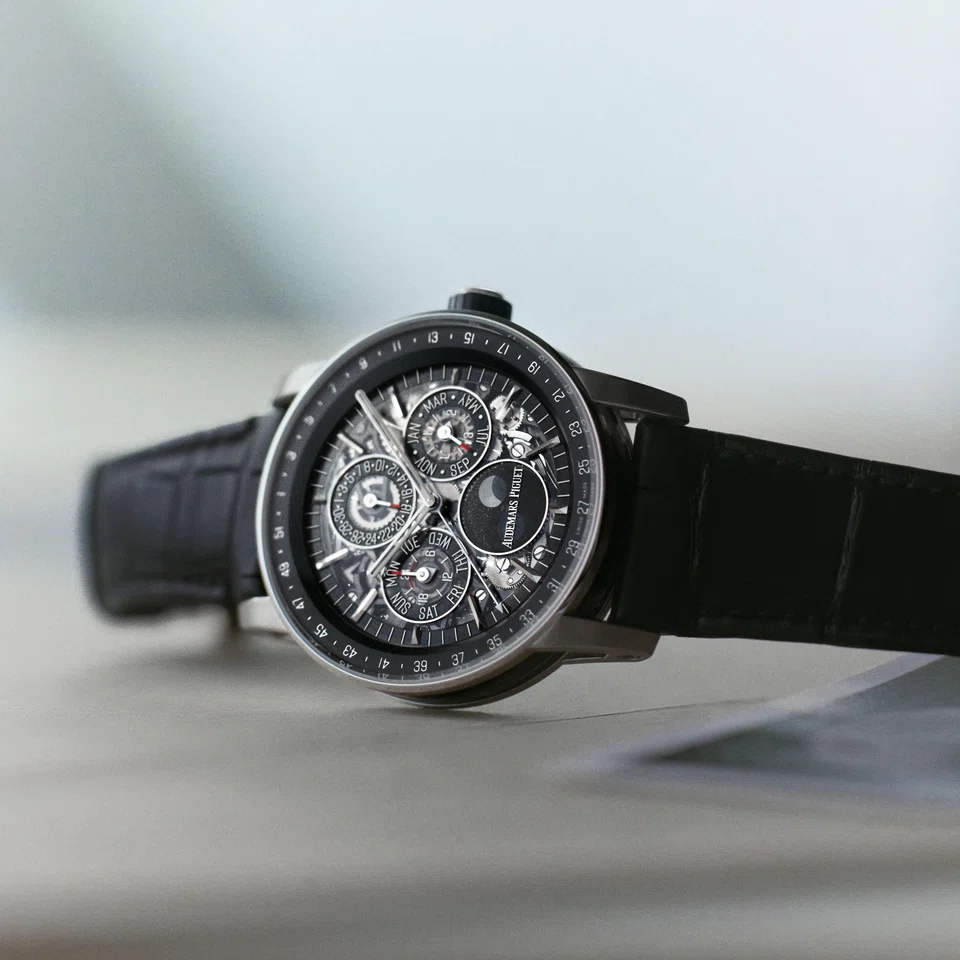
AP also launched a new generation of openworked perpetual calendars powered by the in-house self-winding Calibre 7139. This movement replaces the historic Calibre 5135, blending the traditional art of skeletonisation – removing excess material to reveal the mechanical heart – with modern ergonomics.
The new calibre builds on a lineage of recent innovations at AP. It draws from the ultra-thin architecture of the RD#2 perpetual calendar and incorporates the brand’s all-in-one crown correction system, which enables all calendar adjustments to be made via the crown, without tools.
The display has also been reorganised for better legibility, moving the date to 12 o’clock and the month to three o’clock.
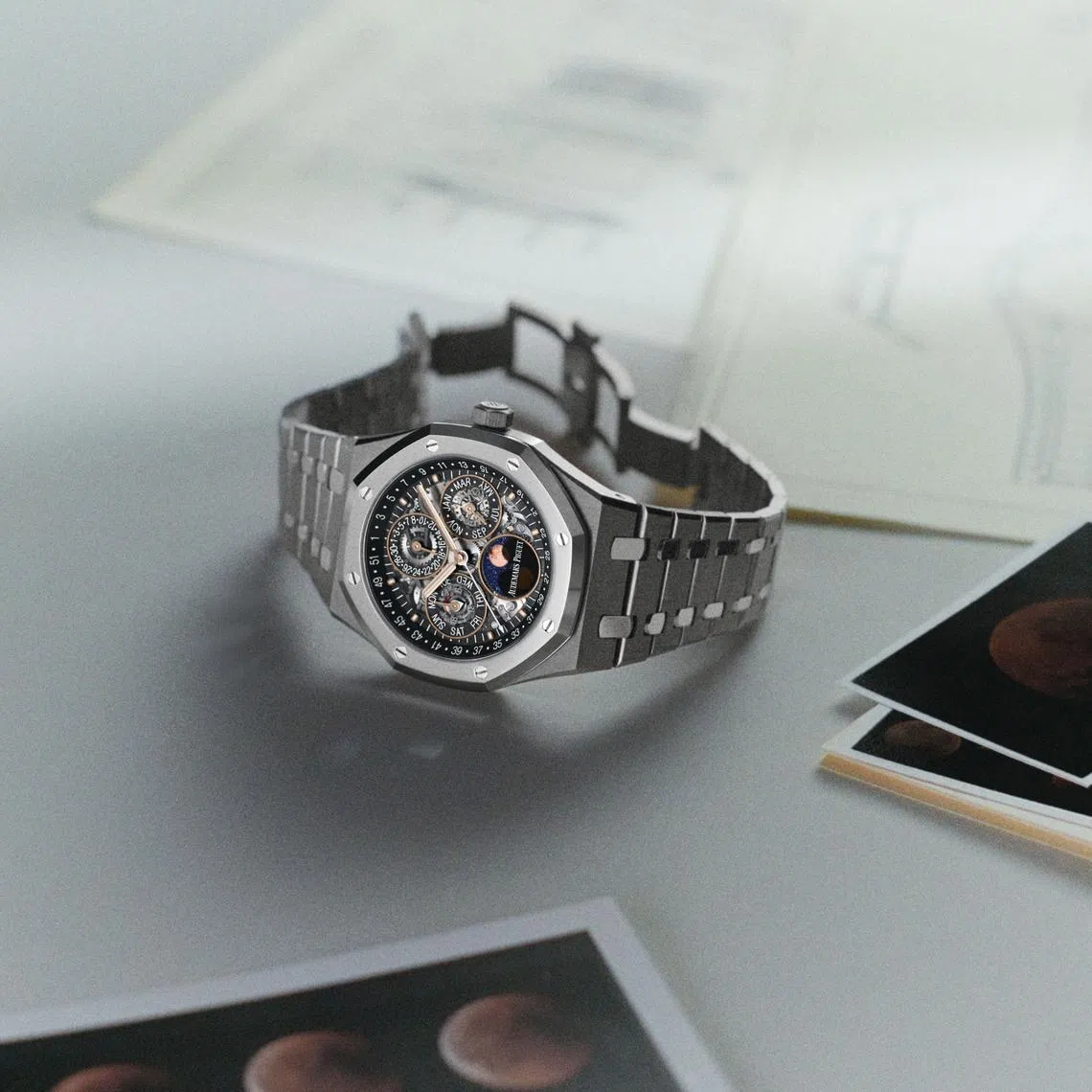
This movement debuts in two 41 mm models, including the first openworked perpetual calendar in the Code 11.59 by Audemars Piguet collection. It is also found on a Royal Oak model combining titanium with Bulk Metallic Glass (BMG) for the bezel, caseback and studs. BMG is a palladium-based alloy known for its high resistance to wear and unique reflective sheen.
The movement is openworked, with bridges hand-finished with V-angles and decorated with traditional haute horlogerie techniques such as satin brushing, circular graining and chamfering.
It should come as no surprise that AP has gone to this extent, as openworking has been an in-house speciality since the 1930s.

Rebalancing the narrative
For decades, the Royal Oak has dominated AP’s narrative. This was reaffirmed at the Super Bowl half-time show, where Grammy-winning Latin rap superstar Bad Bunny stole headlines donning a yellow-gold self-winding Royal Oak with a malachite dial – another novelty unveiled at the Social Club.
But the brand’s archives tell a different story, as this year’s other novelties prove. After a century and a half, AP is not content to simply look back; it is re-engineering its heritage for the next era, both for itself and for watch lovers.
Decoding Asia newsletter: your guide to navigating Asia in a new global order. Sign up here to get Decoding Asia newsletter. Delivered to your inbox. Free.
Copyright SPH Media. All rights reserved.