

Azraq tools discovery shows how long-extinct ancestors fed themselves
Tools bolster belief they were used by hominids to kill and butcher animals
Washington
THE watering hole would have glimmered in the scorching desert heat, drawing parched creatures from kilometres around. Wild horses and rhinoceros lapped at the pool's edge; migrating ducks paddled across its surface. Just out of sight, the hunters lay in wait.
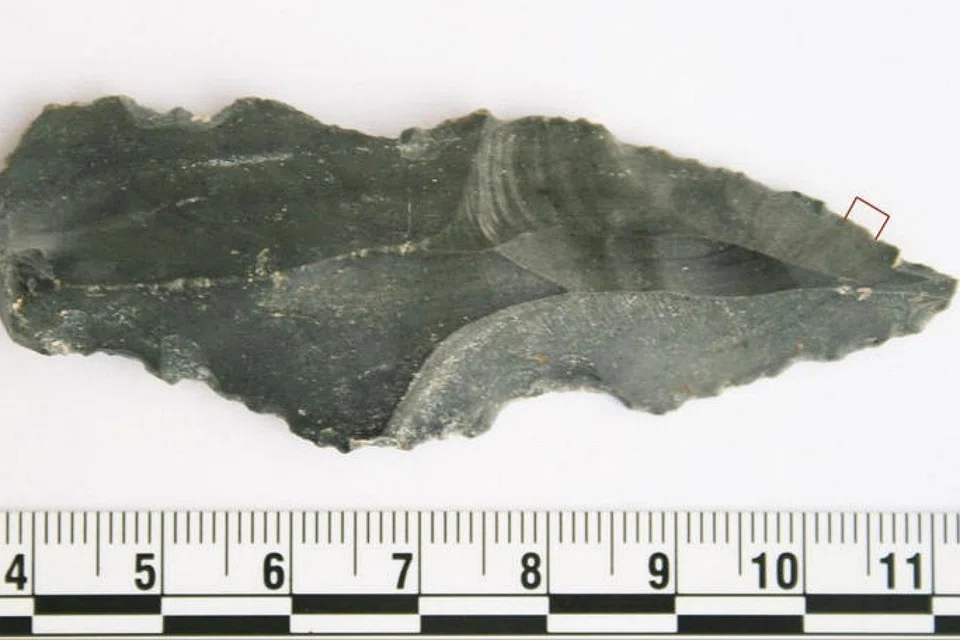
Scientists can only imagine the butchery that happened next. But they're certain that it did occur. Some 250,000 years later, they've uncovered direct evidence: a scattering of stone tools still bearing traces of the creatures they were used to kill.
"In a sense it's almost a smoking gun," said April Nowell, an archaeologist at the University of Victoria in Canada who helped uncover the artefacts. "It's the definitive evidence that these tools were used in this way."
Her analysis of the tools stained with animal residue, which were found at a shrinking oasis near Azraq, Jordan, was published in the Journal of Archaeological Science this week. The residues are many times more ancient than the next oldest ones scientists have identified, and they have the potential to change the way researchers such as Dr Nowell investigate how long-extinct human ancestors fed themselves.
"It's such a direct window onto past behaviour," she said. "It gives sort of a richer picture and a more complex picture of the lives of people 250,000 years ago."

It's not clear which hominid species used the Azraq tools. They were made about 50,000 years before we Homo sapiens evolved. At that time, the Jordanian desert was something of a "paleolithic bus station", as Dr Nowell put it. Long-legged Homo erectus and the skilled hunters Homo heidelbergensis passed through the region en route from their birthplace in Africa to the unexplored landscapes of Europe and Asia.
This makes the region a particularly interesting place to study, Dr Nowell said. Migrants were forced to figure out a new, harsh landscape, where the water supply was scant and their usual food sources were scarce. How they responded to the challenge of survival there would say a lot about these ancient humans' ability to adapt and thrive.
Luckily for paleoanthropologists, the hominid species that moved through the area left a lot of their trash behind. At the Azraq site - which has been an oasis for hundreds of thousands of years, but is starting to dry up in the face of human pressures and environmental change - Dr Nowell and her colleagues uncovered some 10,000 artefacts, ranging from tiny flakes of discarded stone to whole hand axes, scrapers and knives. Many of the larger tools were made of flint from a site several miles away, while the smaller ones came from rock found in the immediate vicinity of the site.
These finds allowed Dr Nowell to begin building a mental image of who produced those artefacts 250,000 years ago. Most likely, a group of them lived near the flint source, in a more protected area where they could be sure their young were safe. But when they needed food, they came to the watering hole. After a successful hunt, they would have sat down by the oasis to process and preserve the meat before returning to their encampment. Most of the time, that's the limit of how much information can be gleaned from a single spot.
"On a lot of archaeological sites you'll have stone tools, and you'll have bones, and in rare cases you'll have bones that have cut marks on them from the stone tools, and you can make some logical assumptions about what happened," she said.
But when she was examining the Azraq artefacts in her lab a few years ago, a colleague suggested that she send some of them out for a type of residue analysis called "immunoelectrophoresis". If there were any bits of blood or tissue left on the tools, this test could tell her what animals the ancient humans were hunting.
The procedure was expensive, and Dr Nowell's artefacts were many times older than those that it usually tested, "so I just picked out six I had a good feeling about to do a test", she said. "You know, nothing ventured nothing gained."
Each of the six artefacts were meticulously sampled for microscopic bits of tissue that would have nestled in their fractures and crevices. The samples were then spun in vials of "antiserum" that contained antibodies that fight foreign tissue from a different animal. If the tissue sample found in the stone tools came from the same species that the antibodies protect against, then the antibodies would mount an attack - signalling a match.
The samples were tested against antibodies for rhinoceros, camel, deer, duck, goat, wild cow and cat - each time, the researchers got nothing. Then one was dropped in a vial of horse antiserum. "That was a game changer for us," Dr Nowell said. It proved the immunoelectrophoresis worked, even on samples that were a quarter of a million years old. She and her colleagues chose another 44 artefacts for testing; of those, 17 came back positive, each for a different kind of animal.
"We have three for rhino, three for duck, five for horse, three for bovine or wild cattle, three for camel," she said. "The world's oldest identifiable proteins." She paused a moment, then gave a sudden, cheerful chuckle, as significance of the study sank in all over again: "We're just so excited."
Each tool tested positive for just one species, which bolsters the belief that they really were used to kill and butcher meat, and not just contaminated by random drops of blood or other tissue. But that raised another question for Dr Nowell."Why one per tool?" she wondered.
It seemed that the hominids, whoever they were, used each tool for one butchering episode, then cast it aside - almost as if they were using disposable knives. Other lines of evidence support this interpretation: the tools are barely retouched, suggesting that the users preferred to make new ones rather than resharpen old blades that had become blunt.
The diversity of the animal residue was also surprising. Though Homo sapiens is renowned for its ability to take advantage of any and all resources - it's thought that's what made us so successful - earlier hominids were usually specialists.
"The way you would exploit or take down a rhino is going to be very different from how you would obtain a duck," she said. To achieve both tasks, all the while avoiding predators and protecting their carcass, "really does take a lot of cognitive sophistication, and a lot of social sophistication". WP
Share with us your feedback on BT's products and services






