A batik renaissance
The ancient textile tradition is seeeing a revival in Indonesia

INDONESIA is experiencing a batik revival, with plenty of young designers who are reinventing the textile in different ways and marketing their creations directly to consumers on social media – skipping the traditional wholesalers. As a result, young generations of Indonesians are embracing the ancient fashion tradition and wearing it frequently on formal and casual occasions.
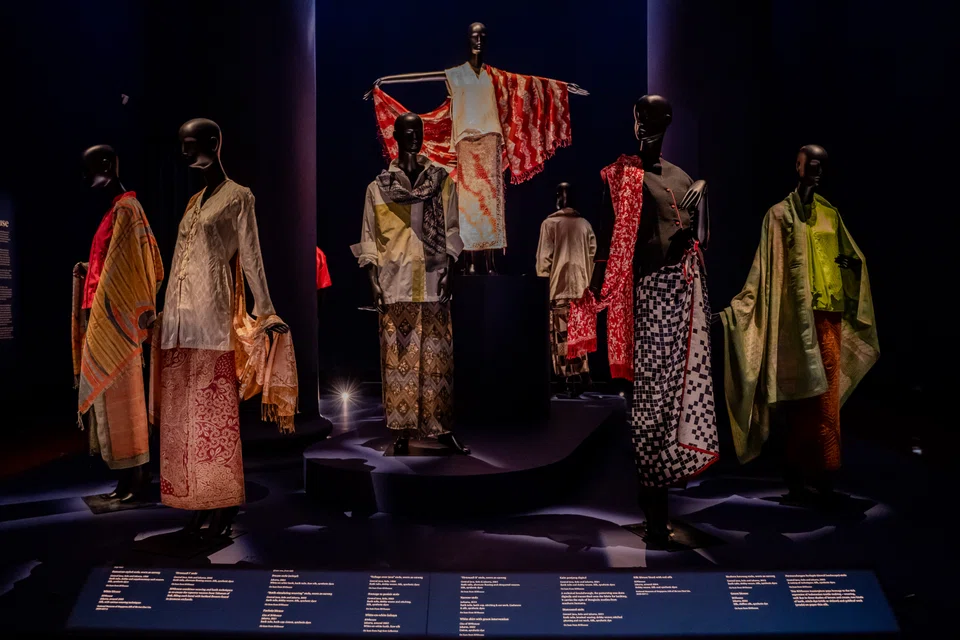
These are the observations of Lee Chor Lin, curator of the new batik show titled Batik Kita: Dressing In Port Cities at the Asian Civilisations Museum (ACM) of Singapore. The show features more than 100 batik and batik-inspired fabric and garments, tracing its evolution in the past 100 years or so. A wide range of artefacts, from a century-old ceremonial waist cloth (or dodot) to achingly hip new interpretations, are on display on the museum’s second floor from now till Oct 2.
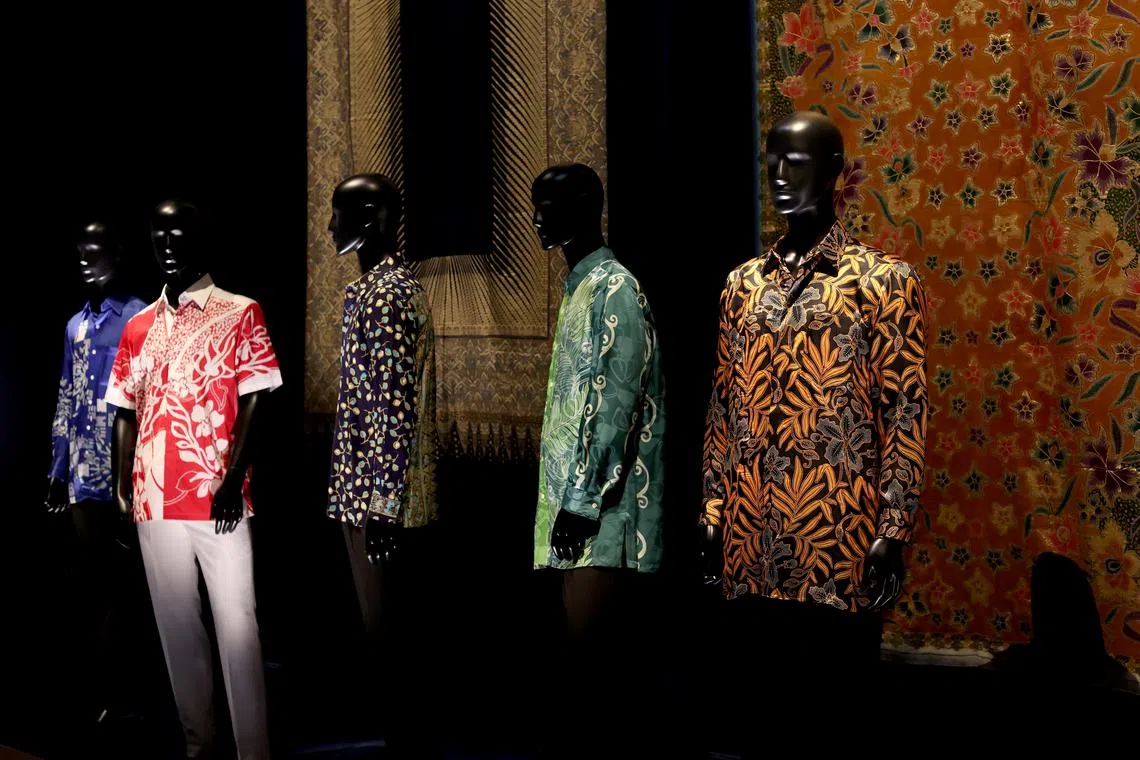
Lee says: “In 2009, batik was recognised by UNESCO as a ‘masterpiece of oral and intangible heritage of humanity’, and that helped create the revival of batik in Indonesia. The country has even marked Oct 2 as National Batik Day, when many Indonesians wear batik to honour the tradition.
“Here in Singapore, we’re really spoilt for choice in terms of what to wear, so it’s unlikely that the batik renaissance in our neighbouring country would have much of an influence on us. But that said, we do have a crop of young designers such as Oniatta Effendi (Baju by Oniatta) and Nur Aqilah Zailan (Studio Gypsied) who are reviving batik through fashion and household furnishings, and finding success among young Malay consumers.”
Lee, 58, was the former director of the National Museum of Singapore. She started her curatorial career specialising in textiles and fashion, and collected several of the rare masterpieces on display at the show. But before she became a curator, she was already exposed to a wide variety of textiles because her grandfather ran a fabric store in Arab Street and her mother made clothes for the family.
Although batik is believed to have existed even before 7th century, ACM’s show is largely focused on batik made only in the past 100 years. That’s because much of the batik created from previous centuries have not survived the onslaught of time. As it is, the museum has to be careful with the older pieces, which have become extremely fragile, says Lee.
“The dodot, for instance, could be older than 100 years. We cannot accurately date it because of the fact that fabrics typically don’t mark their dates of production in the way that, say, paintings do. But because it is so old, it’s been kept in safe storage for the past 30 years to prevent it from deteriorating.
“The last time it was shown to the public was in 1991… So if you don’t see the dodot at this exhibition, you may not be able to see it for another 30 years.”
Another reason the survey is focused on batik from the past century is that the “golden age of batik” ran only between 1880 and 1930, when the textile exploded in popularity across the region, with its geometric motifs taking on more intricate patterns and vibrant colours. The Chinese Indonesians played an important role in expanding its aesthetics when they incorporated batik into their wardrobe.
SEE ALSO
Rare pieces include a beautiful 1930s sarong with yellow bouquets and a scattering of flowers on a purple background, as well as a 1990-1991 hand-drawn piece with a parang rusak Sri Sardono (Sri Sardono’s broken dagger) motif popular with Central Javanese royalty who revered it for its magical properties.
The most Instagrammed pieces, however, may be the batik outfits designed by top designers and worn by politicians and celebrities during trips to Indonesia, such as a gold-and-blue silk shirt designed by Iwan Tirta and donned by then-Prime Minister Goh Chok Tong at the APEC meeting in Bogor in 1994.
Batik Kita: Dressing In Port Cities runs at the Asian Civilisations Museum from now till Oct 2.
Decoding Asia newsletter: your guide to navigating Asia in a new global order. Sign up here to get Decoding Asia newsletter. Delivered to your inbox. Free.
Copyright SPH Media. All rights reserved.
TRENDING NOW
Ex-Goldman trader builds mini pod shop in Singapore with offbeat hires
US says China to buy 10 million tonnes of coal in 2027 and 2028
Amberwood at Holland sells 23 of 70 units launched at average price of S$3,019 psf
He built the Vingroup empire. Now South-east Asia’s richest man is handing some key roles to his sons