

The best shows in Venice Biennale
Here’s a pick of 20 memorable shows at the world’s biggest art event, which runs from now till Nov 24

THE 60th Venice Biennale opened amid controversy, as groups of protesters appeared across the city denouncing Israel’s actions in occupied Gaza. At the Israel Pavilion, its own artists and curators refused to open the show unless there is a ceasefire and return of hostages.
Elsewhere, visitors are boycotting the pavilions of countries such as the UK and Germany, whose governments support the actions of Israel. This despite the fact that both countries have put up strong showcases by artists and curators who were not born in these countries, as a sign of shifting attitudes towards immigration and new citizens.
This year’s biennale carries the theme Foreigners Everywhere, coined by its influential curator Adriano Pedrosa who wanted to explore contemporary global crises related to migration, ethnicity, sexuality, identity and belonging. The event’s main exhibition features artists from indigenous, traditional, migrant, exiled and LGBTQ+ communities that have long been overlooked by the global arts community.
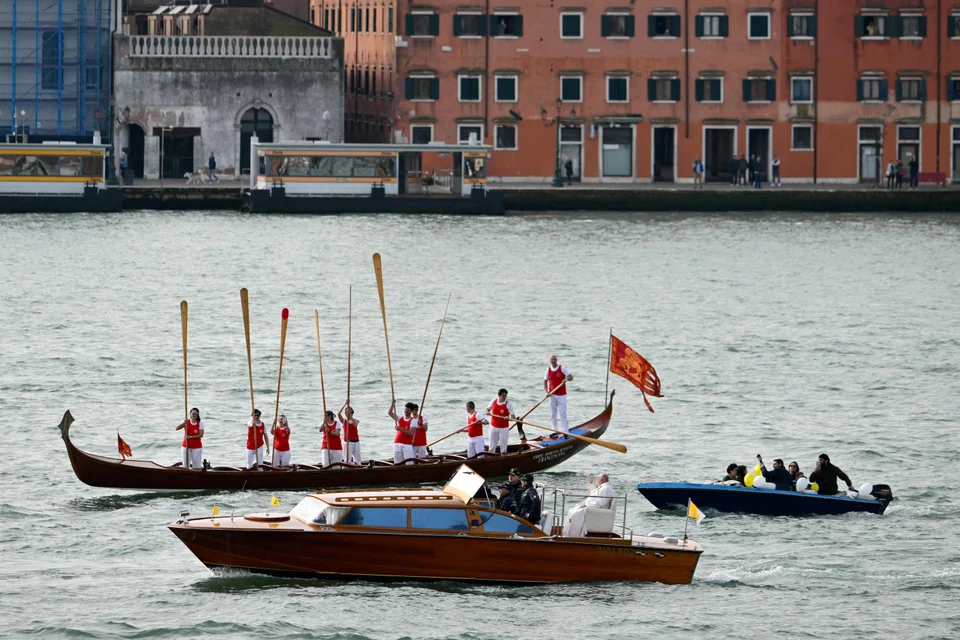
When Pope Francis visited the biennale recently – the first pontiff to do so – he endorsed the theme by affirming that “the world needs artists” to tackle xenophobia, racism and other forms of discrimination.
Several contenders in the biennale – often dubbed the “art Olympics” – have responded to the theme by bringing artists who are “foreign”, whether culture or personal identity. Others such as Bulgaria, Taiwan and Poland showcase art themed around war and violence, partly in response to ongoing geopolitical tensions.
The biennale runs for the next seven months. Here are 20 unmissable shows, from country pavilions to collateral events.
Australia Pavilion
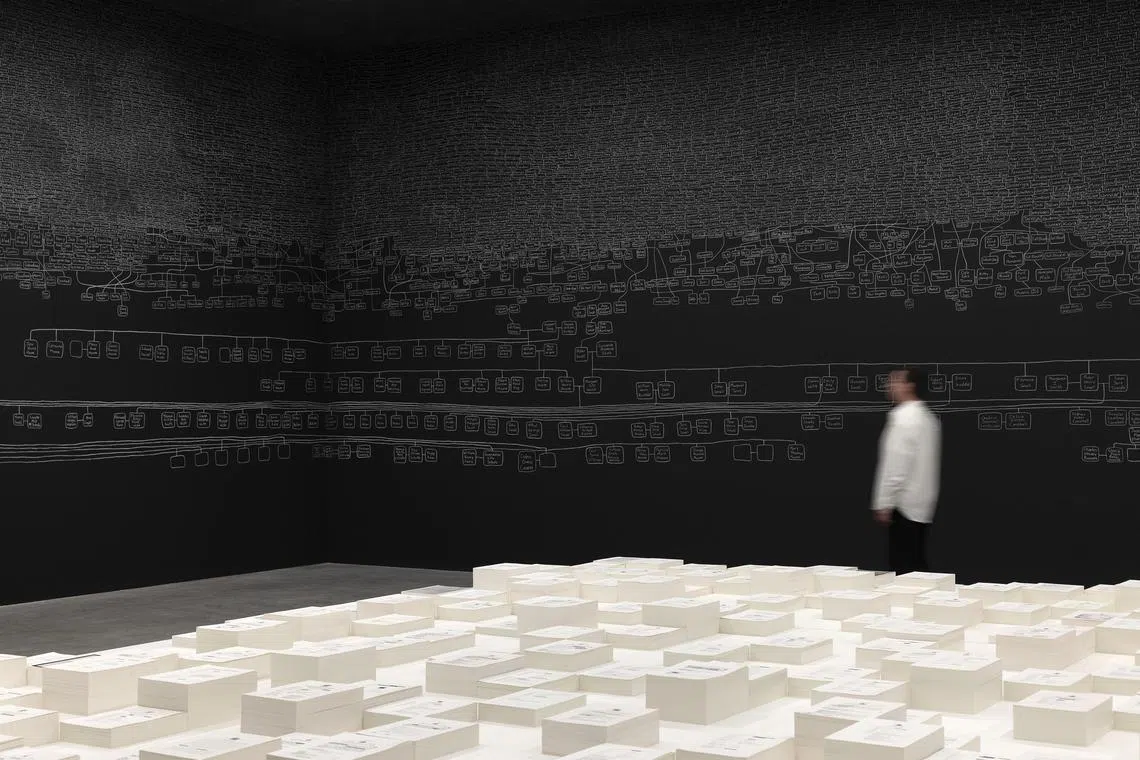
Australia won the top prize for the first time, for the gargantuan efforts of indigenous artist Archie Moore, who hand-drew his entire genealogical history dating back 65,000 years. The massive family tree traces the long history of First Nations people, who have inhabited the Australian continent for thousands of years before the arrival of European settlers. At the centre of the pavilion is a floating platform carrying some 500 stacks of state documents showing the high incarceration rates of indigenous people, as well as their high numbers of death while in police custody. The mournful archive ranks as one of the most moving.
Lithuanian Pavilion
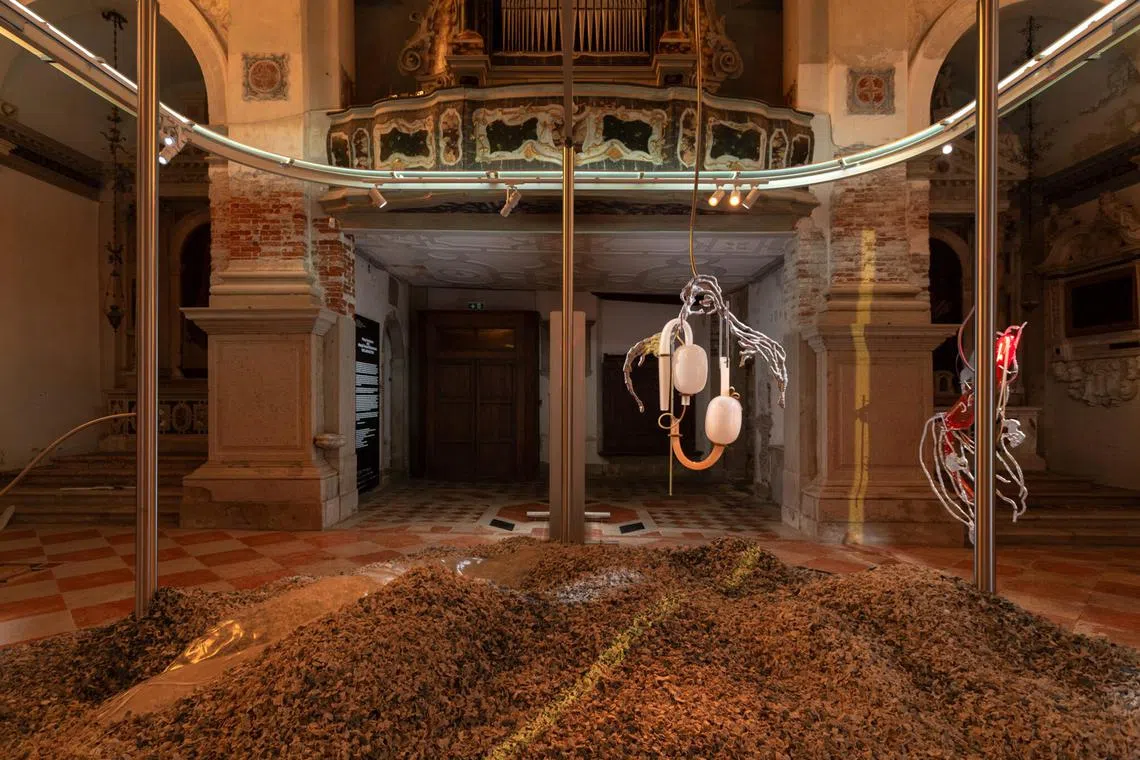
Audacious, edgy and energetic, Lithuania has been something of a star in recent years, having won the top prize two biennales ago for its unconventional opera themed on climate change, Sun And Sea. (Incidentally, the opera is showing at Singapore International Festival of Arts later this month.) For this biennale, Lithuania has once again delivered, this time with artistic duo Pakui Hardware and their series of bizarre glass and aluminium sculptures that resemble inflamed human organs. The duo is working with ideas of disease and mutation in an increasingly ailing planet.
Berlinde De Bruyckere
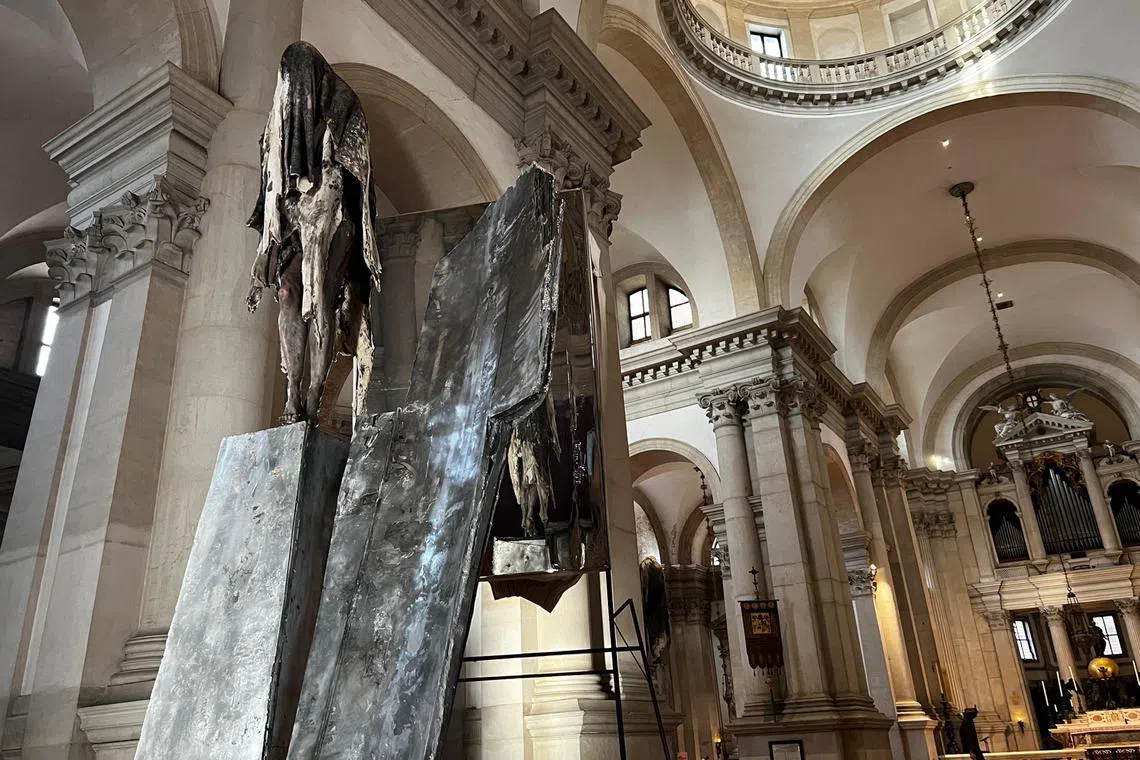
Poignant and captivating, this is one of the best collateral events at the biennale. Belgian artist Berlinde De Bruyckere has filled various spaces of the 16th-century church Abbazia di San Giorgio Maggiore with sculptures of veiled archangels, broken angel wings, torn limbs, gangrened organs and other symbols of physical fragility. The exhibition, titled City Of Refuge III, draws inspiration from various cultural and historical references, from Christian iconography to the Flemish Renaissance. Its haunting imagery serves as a poignant reminder of the ongoing atrocities across the globe.
German Pavilion
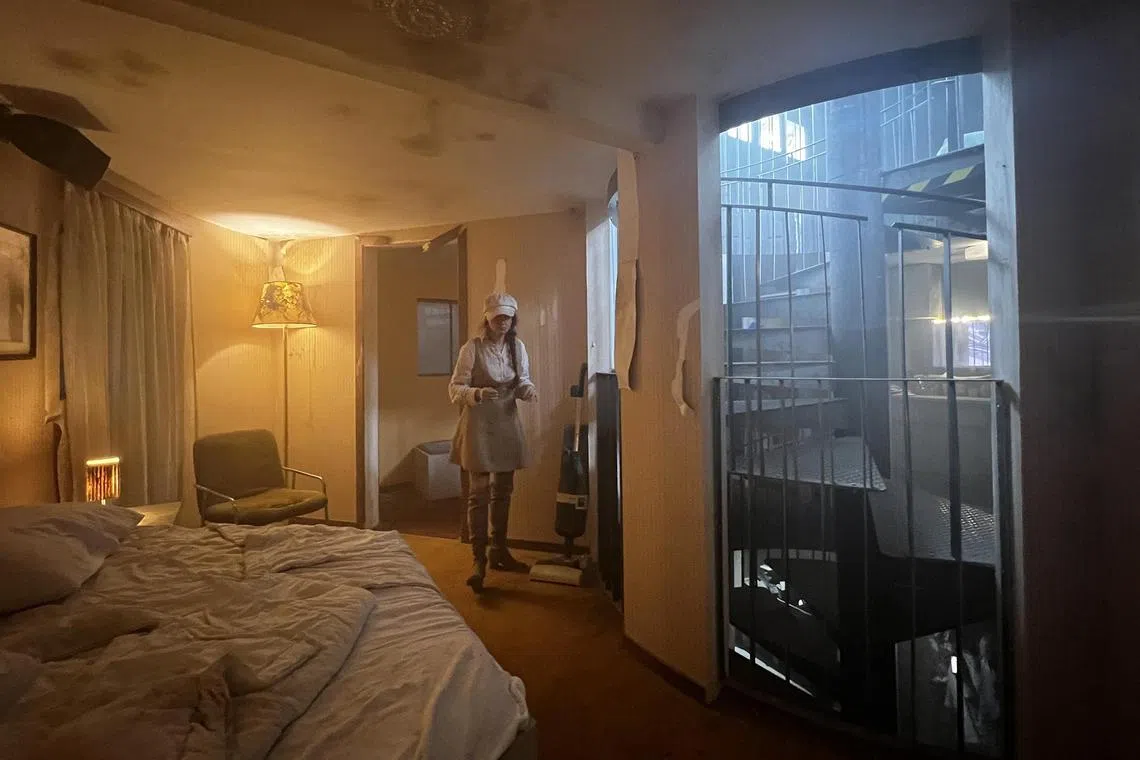
Despite some visitors boycotting the German Pavilion because of the government’s support of Israel, the pavilion itself tells a different story. Its curator Cagla Ilk and artist Ersan Mondtag both have Turkish ancestry, and are highlighting the stories of what Ilk calls a “post-migrant society”. Mondtag has created an extraordinary three-storey structure that includes a ghostly house where his late Turkish-emigre grandfather once lived, with pale-looking actors moving about like zombies, unaware of the visitors milling about and watching them. On the roof of the building, the actors carry out an Islamic death ceremony for his grandfather. Germany, always a strong contender at the biennale, has outdone itself.
Singapore Pavilion
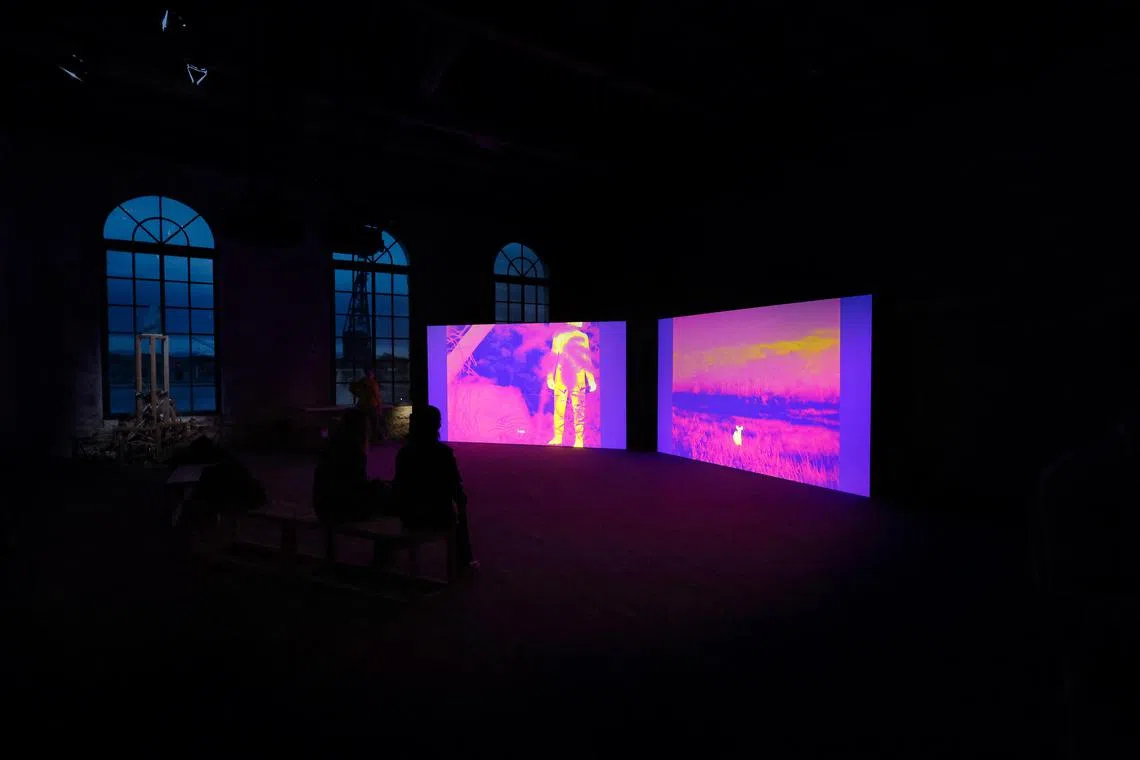
Among the Asian pavilions, Singapore’s is one of the strongest. Robert Zhao Renhui is a longtime chronicler of human-nature relationships. His show documents the various animals that roam freely in Singapore’s secondary forests – spaces that were once inhabited by humans but have since been abandoned, only to be taken over again by nature. The video images he captures are beautiful and surprising: Sambar deer grazing near HDB flats, huge flocks of parrots roosting in housing estates, and more. The works invite us to contemplate the balance between progress and preservation.
Nigerian Pavilion
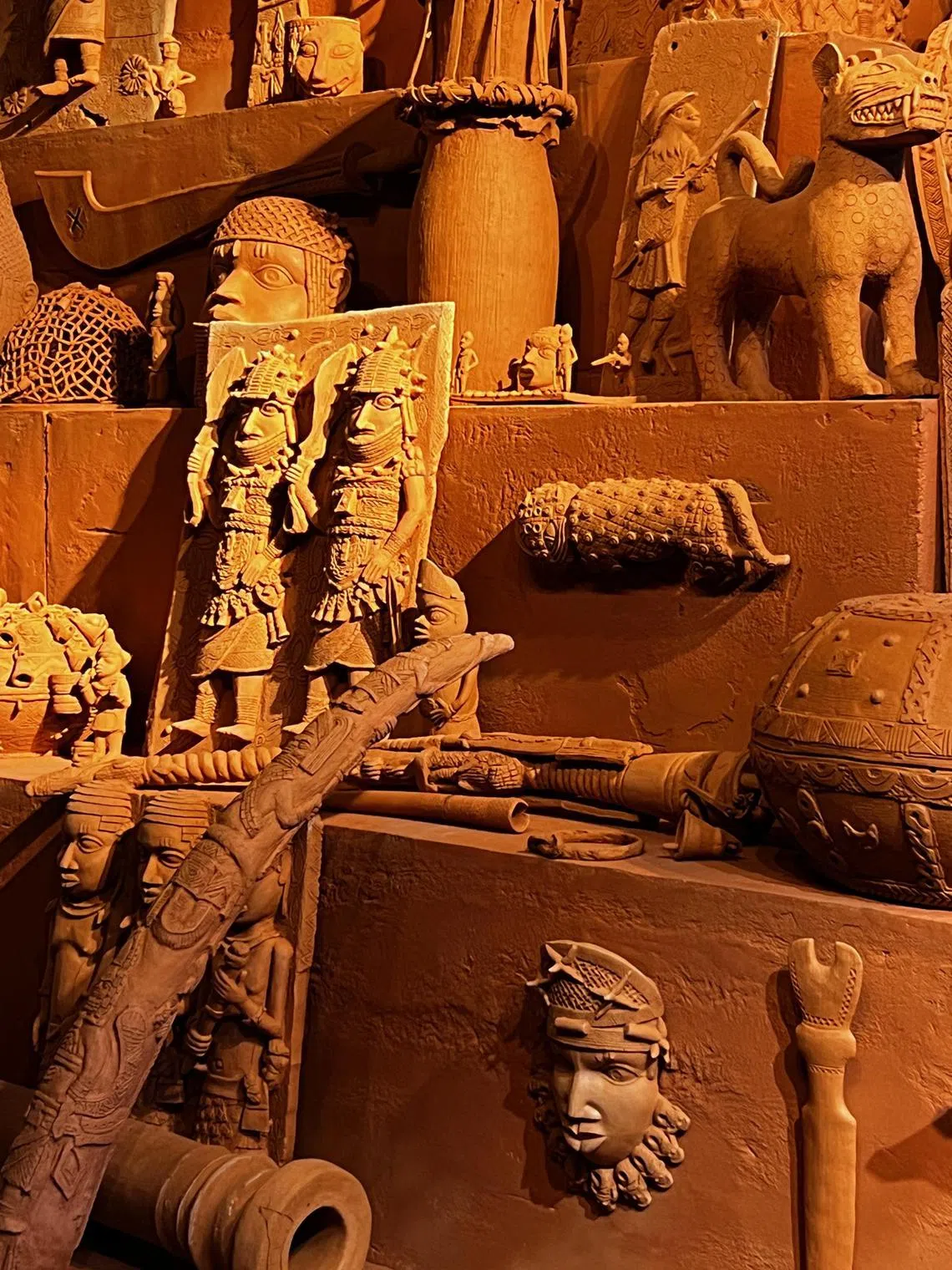
It’s only Nigeria’s second time participating in Venice, but its eight-artist showcase includes some of the most significant names to emerge from Africa in recent history. Highlight works include Yinka Shonibare’s absorbing installation of clay replicas of 150 Benin treasures plundered by a British expeditionary force in 1897; Precious Okoyomon’s sculptural installation of a radio tower emitting voices of Lagos residents sharing their most private thoughts; and gorgeous paintings by Toyin Ojih Odutola and Tunji Adeniyi-Jones inspired by African histories.
Zimbabwe Pavilion
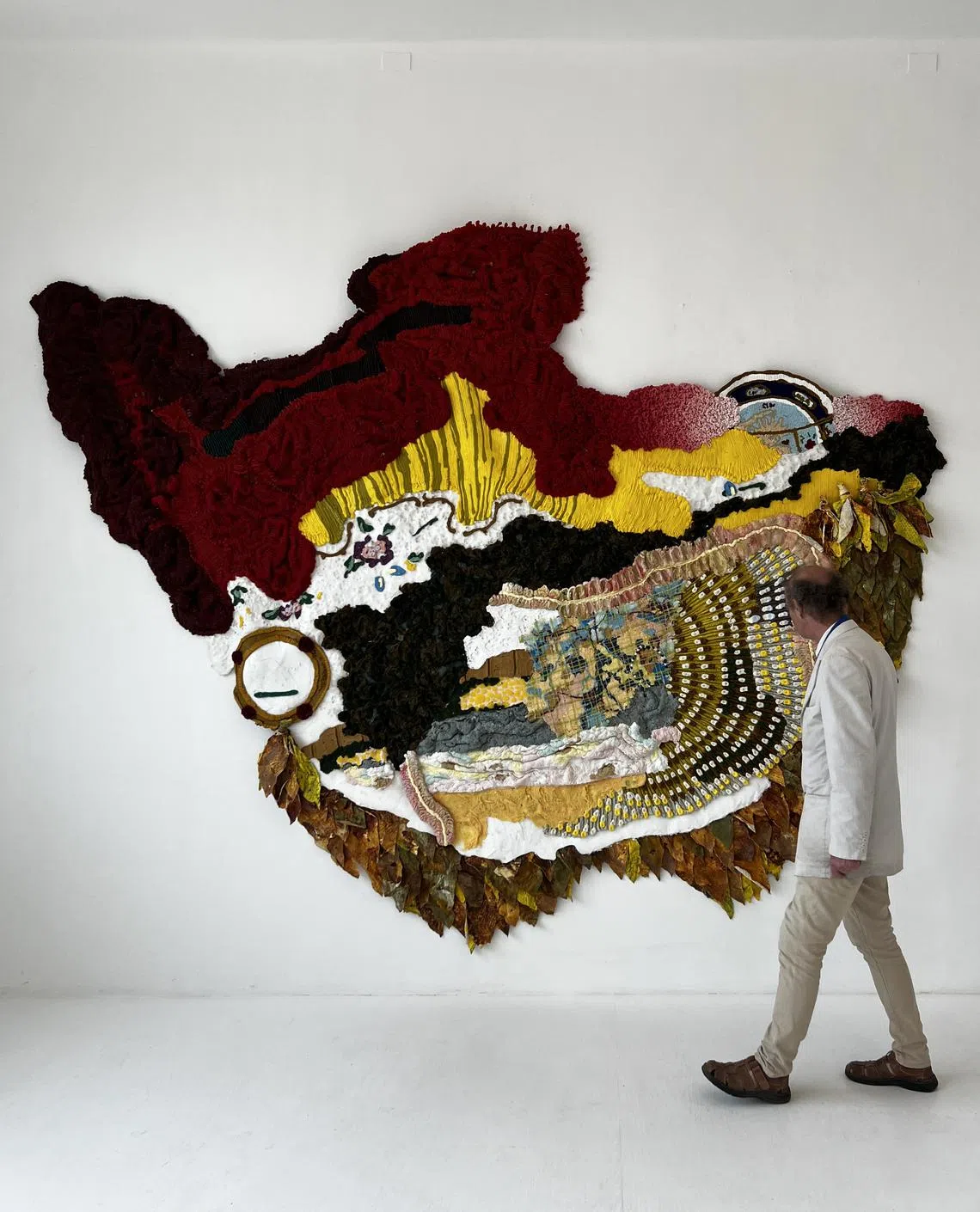
The Zimbabwe Pavilion is another showcase of beautiful African art – still an under-represented genre at the biennale. The group show features six artists, namely Gillian Rosselli, Kombo Chapfika, Moffat Takadiwa, Sekai Machache, Troy Makaza and Victor Nyakauru. All of them try to imagine a world where old ideas have unravelled and new perspectives and aesthetics have flourished. (Note: Situated on the upper floor of Santa Maria Della Pieta, Castello 3701, the exhibition space is hard to find. One has to locate the nondescript building and climb the stairs, following the direction of small posters.)
Japan Pavilion
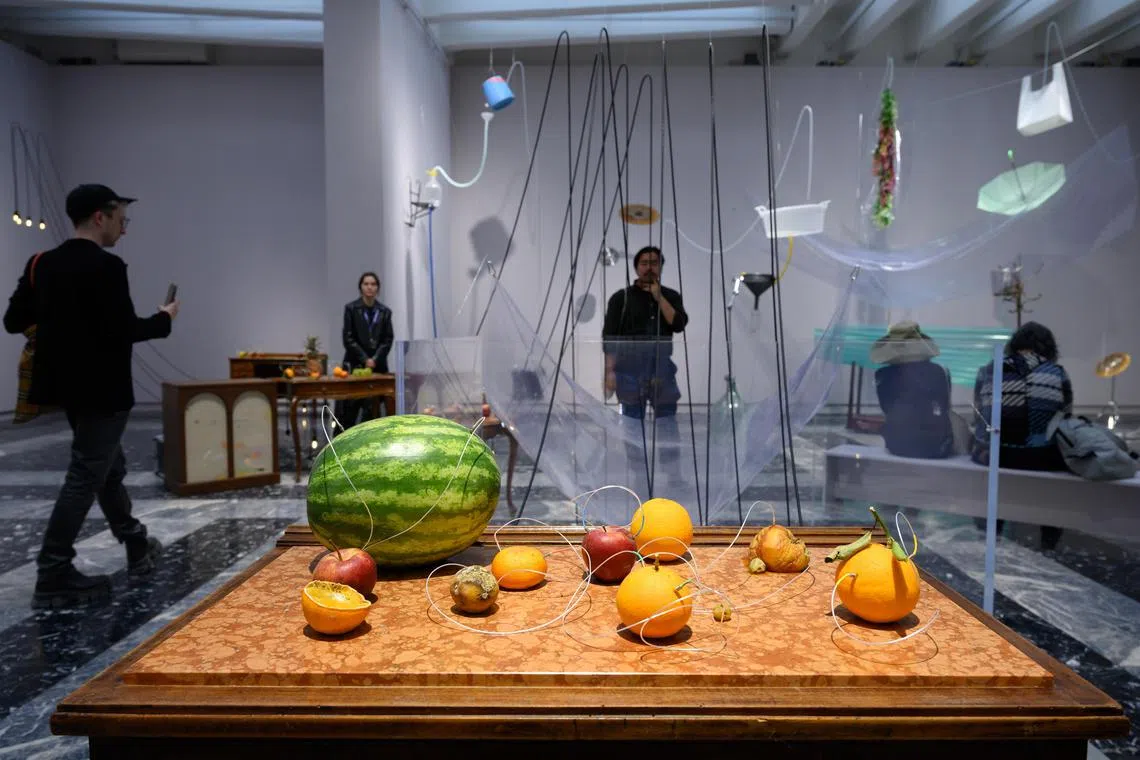
Japan’s Yuko Mohri is best known for creating installations out of everyday objects. At the Japan Pavilion, she’s attached electrodes to rotting fruits such as apples, oranges and watermelons. As they slowly decay, they emit energy that generates sound, light and/or movement of various quotidian objects such as bulbs, buckets and umbrellas. Mohri has always been fascinated by different approaches to sculpting, and her Venice show is an elegant and whimsical exploration of the hidden energies within organic matter.
Julie Mehretu
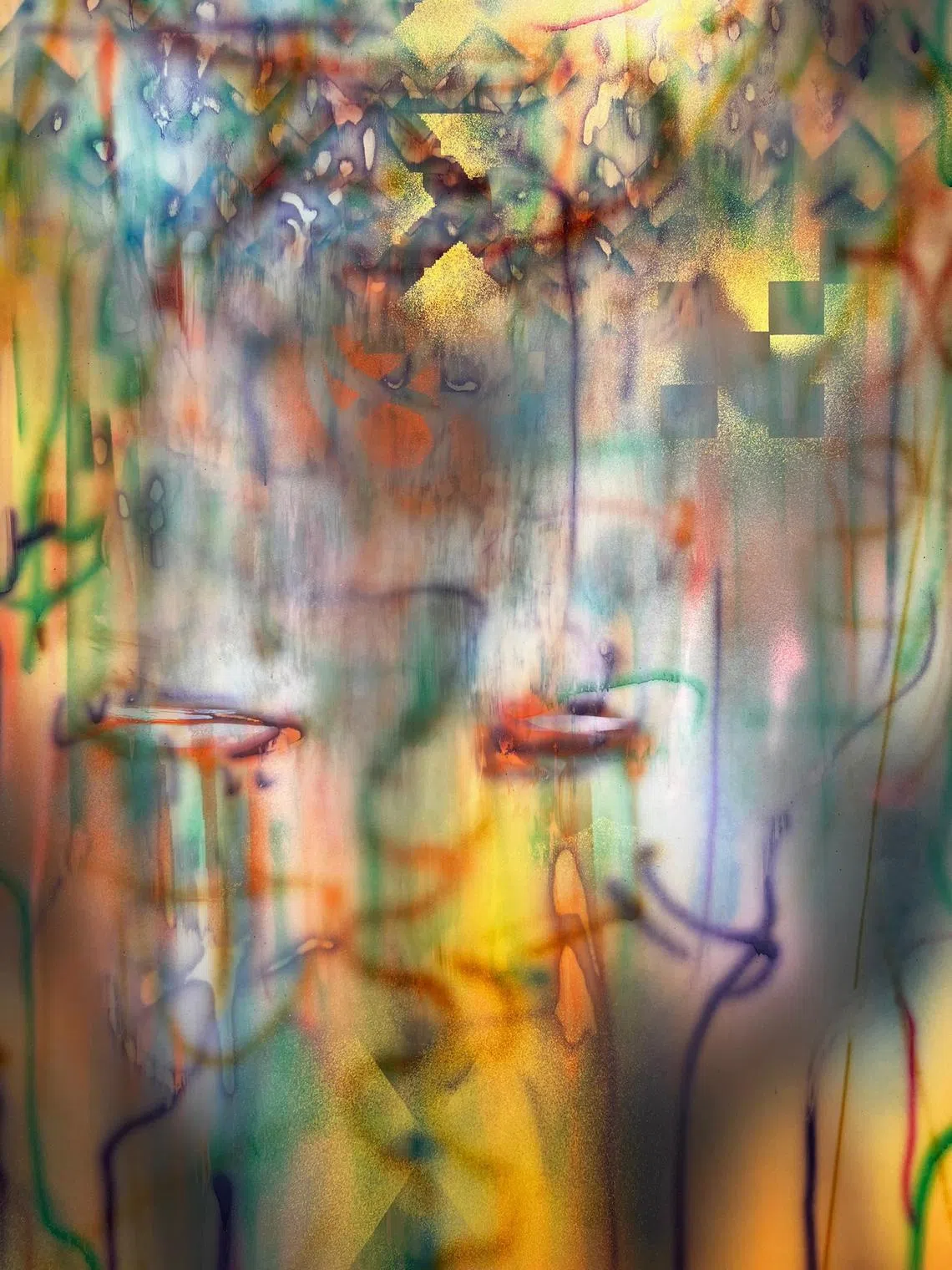
Are there any bad parts in a Julie Mehretu painting? Point your camera to any section of her large topographical abstracts and chances are you’ll snap a perfect art picture. The Ethiopian-born American artist has a spectacular collateral exhibition at the Palazzo Grassi – the largest assembly of her works in Europe to date – where she has paired her stunning multi-layered landscape paintings with works by some of her closest artist friends, including Nairy Baghramian, Huma Bhabha, David Hammons and Jessica Rankin. This is one show that bears repeated viewings.
Spain Pavilion
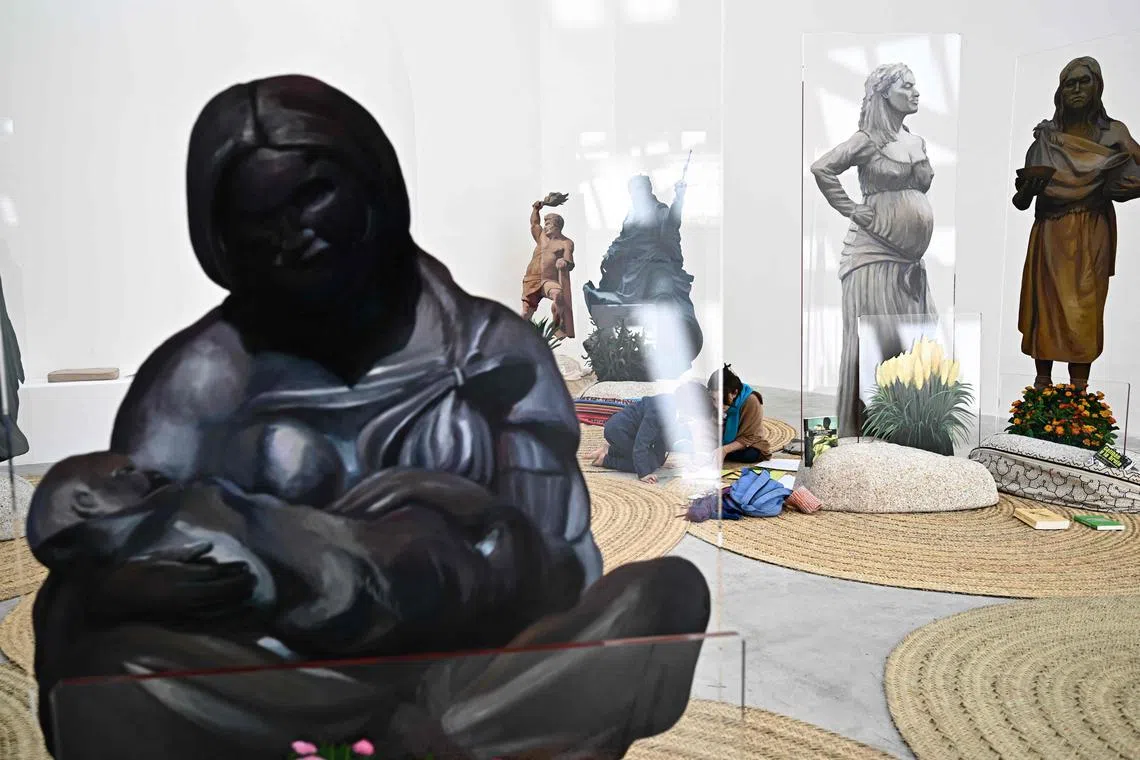
If marks were given out to projects that best adhered to the biennale’s theme and concept of Foreigners Everywhere, Spain gets a perfect 10. Artist Sandra Gamarra Heshiki celebrates the stories of migration and colonialism that are rarely discussed in Spain and the Western world. Her large body of work challenges the official narratives of colonial histories by foregrounding the experiences and contributions of migrants – which she defines as all humans, plants and animals that originate from outside of Spain. This pavilion is a favourite among visitors, with long queues often snaking outside it.
10 more great shows
Taiwan Pavilion: Yuan Goang-Ming explores our precarious world through videos that show perfectly serene rooms suddenly shattered by guns, bullets and explosions. Polish Pavilion: Ukrainian collective Open Group invites visitors to mimic sounds of wars and weapons, as taught by actual survivors of war. Korean Pavilion: Instead of physical art objects, the near-empty pavilion sprays out various scents that evoke different parts of Korea’s history and geography. Bulgarian Pavilion: A trio of artists recreate a home that is haunted by memories of political violence carried out during the Communist era in Bulgaria. Czech & Slovak Pavilion: Eva Kotatkova pays homage to a dead giraffe of the Prague Zoo by creating a large and hollow soft toy to be played with, drawn and told stories of. Ethiopia Pavilion: The African country makes its Venice Biennale debut with Tesfaye Urgessa’s vivid paintings depicting hidden tensions in domestic settings. US Pavilion: Native American artist Jeffrey Gibson uses intricate geometric patterns and meticulous beadwork to evoke American histories. Egypt Pavilion: Artist Wael Shawky has filmed a whimsical musical about Egypt’s 19th-century nationalist revolt against British rule, using playful costumes and comic characters. Pierre Huyghe: Stunning installations by the French artist suggest speculative realities that challenge the current order of the world. William Kentridge: The beloved South African artist presents video works in a quaint little shop, celebrating the limitless possibilities of art-making.
Decoding Asia newsletter: your guide to navigating Asia in a new global order. Sign up here to get Decoding Asia newsletter. Delivered to your inbox. Free.
Copyright SPH Media. All rights reserved.
TRENDING NOW

Once staunchly pro-China, Malaysian Chinese businesses are now distancing themselves from Beijing

Britain’s mansion tax shows the difficulty of targeting wealth

Three hats, one goal: How Ng Kian Swan runs sustainability at NUHS

COE review: The gap between luxury and mass-market cars isn’t the only one worth bridging

