
Blindsided abroad: Vaccinated but testing positive on a trip to Europe
The prevalence of the Delta variant means many travellers, including those who are vaccinated, are facing sickness, quarantines and delayed returns
 Add BT as a preferred source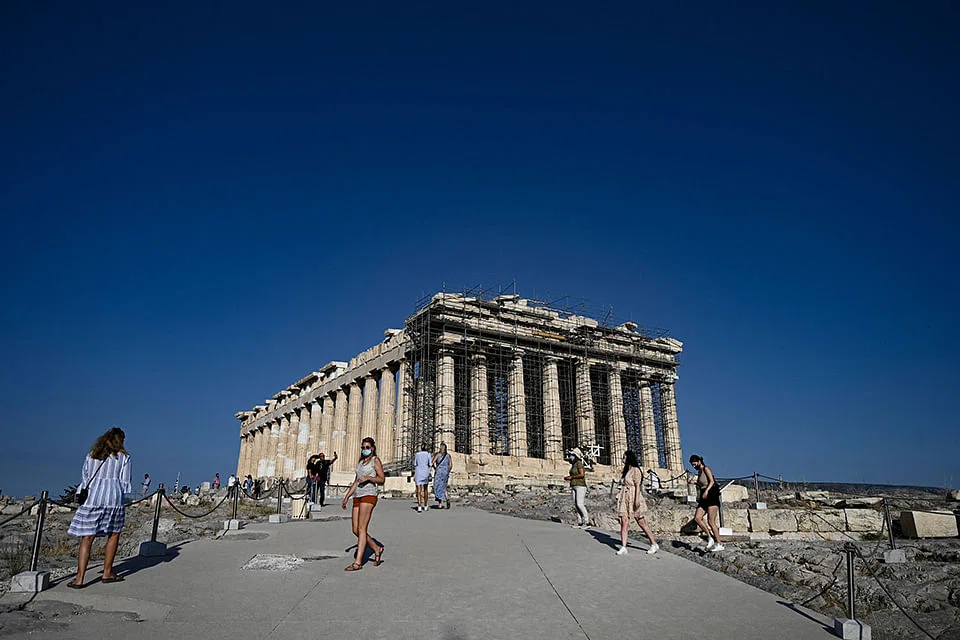
APRIL DeMuth and her partner, Warren Watson, had just finished what they described as the perfect vacation in Greece when they took a coronavirus test at the Athens airport. They had spent their days sipping coffee on their hotel balcony overlooking the Venetian windmills in Mykonos; driving buggies across red sand beaches in Santorini; watching the Parthenon turn shades of gold at sunset; and eating gyros at midnight.
But while they were waiting in line for their flight home to South Carolina on Aug 3, Mr Watson, 51 - who, along with Ms DeMuth, is fully vaccinated - received an e-mail saying he had tested positive for the coronavirus.
"We were in total shock and didn't know what to do," Mr Watson recalled. "Then 10 minutes later, we received a call from the Greek authorities telling us they were going to get a van and take us to a quarantine hotel."
When Europe reopened its borders to Americans in June after a 15-month ban, the highly contagious Delta coronavirus variant was not as prevalent as it is today, and breakthrough infections for the fully vaccinated were rare. But now, with the Delta strain making up more than 90 per cent of the cases in Europe and the United States, stories of travellers catching the virus abroad - including those who are fully vaccinated - are beginning to surface. Their plans have been upended by mandatory quarantine requirements in different countries.
"We're going a little stir-crazy..."
In Athens, Ms DeMuth and Mr Watson were required to spend a minimum of seven days in a quarantine hotel that was paid for and provided by the Greek government. They were not allowed to leave their room until the seventh day and after they both tested negative for the virus.
Navigate Asia in
a new global order
Get the insights delivered to your inbox.
"It was very well organised, and they were extremely nice to us," Ms. DeMuth said of the first days of their quarantine. "They brought us three meals a day and anything we ordered on the internet was delivered to our door."
"I mean we're going a little stir-crazy," Mr. Watson added during a recent telephone interview from the hotel. "We aren't allowed to leave our room and there is a major heat wave and fires in the area, but we can still poke our heads out the window."
The couple suspect they caught the virus in South Carolina in July before they travelled to Greece. Ms DeMuth had mild cold-like symptoms that passed quickly, and Mr Watson said he felt some drainage at the back of his throat on the way to the airport, but he assumed it was allergy symptoms, which are common for him around this time of year.
"We had our vaccinations cards, we felt healthy, we're in our 50s, it really didn't occur to us that we had Covid," Ms DeMuth said.
Greece does not require fully vaccinated visitors to provide a coronavirus test before entering the country; therefore, Mr Watson did not realise he was probably carrying the virus until the end of their trip. In hindsight, Ms DeMuth, a travel associate, said that because of the highly transmissible nature of the Delta variant, she would recommend getting a test before departure as an extra precaution, even if it is not required by the destination.
"Even if you don't have any symptoms and don't feel sick, you don't want to put other communities at risk," she said. There is also the risk that American travellers will get infected at their destination. Although most European countries are open to American travellers, the Centers for Disease Control and Prevention has added several to its list of Level 4 or very high risk destinations, including France, Iceland and Britain, because of high infection rates in those countries.
"It all escalated pretty quickly ..."
When search engine optimisation manager Skylor Bee-Latty, 28, flew from Washington, DC, to London in early June to visit her boyfriend, Alex Camp, she had to take four coronavirus tests within 10 days and quarantine for five days before she was free to travel across Britain. Even then, the vaccinated couple proceeded with caution, choosing an isolated location in Wales for their first vacation together in a year.
Days into their trip, they received a notification on a government tracing app, asking them to self-isolate for 10 days because of possible exposure to the virus. They cut their trip short and went back to Manchester, where Mr Camp lives.
"We were really surprised when we got the notification because we were already self-isolating in a cottage and only really came into contact with a few people when we went to a pub or restaurant," she said.
After 10 days of isolation at home and multiple negative virus tests, they were once again free to travel, but they decided to stay in Manchester and enjoy the Euro 2020 championship games at pubs. Three weeks later, around July 10, when the Delta variant was surging across Britain, both started to feel unwell.
"For the first few days I felt nauseous, but then I woke up one day and my head was completely stuffed up, it was difficult to open my eyes and then my boyfriend started to get a tickle in his throat, and I got aches and pains in my body," she said. "It all escalated pretty quickly and before we knew it, we tested positive and were back into isolation."
By August, Ms Bee-Latty had spent more than four weeks of her trip in quarantine and even after she recovered it took a long time to stop feeling so lethargic and foggy-headed.
"I'm still not feeling great so I'm just taking it day by day," she said. "I had plans to go and see my family in Italy, but right now I'm just watching to see how the numbers go because even though I'm travelling and I've recently recovered from Covid, I still want to be smart about it."
Many travellers who booked their summer vacations to Europe in June said they had not considered the consequences of what would happen if they fell sick while on vacation, including the financial setback of having to pay for additional accommodations, food, flight change fees and taking extra time off work.
Most European countries do not cover quarantine accommodations, which can add between seven to 21 extra days to a trip, depending on a country's quarantine mandate. Last month, Louise Little, a fully vaccinated 42-year-old personal trainer, spent US$1,800 to extend her Airbnb in Spain after she tested positive for the virus a day before she was scheduled to fly from Barcelona back home to New York.
"When I saw the result, I wanted to die," she recalled. "I had no symptoms and just to think of all the people I had come into contact with in all the places I had been during my 10 days' vacation. I truly feel awful."
When Ms Little booked travel insurance for her trip, she assumed it would cover all coronavirus expenses, but when she made a claim for the extension of her accommodations it was rejected on the basis that only medical treatment and hospitalisations were covered.
"To be honest, back then I didn't think to read the small print because I was fully vaccinated and it didn't occur to me that I would catch the virus," she said. "I think a lot of people like me who are young, healthy and vaccinated felt invincible at the beginning of summer, but that's changed now with the Delta. Travelling has become quite risky again." NYTIMES
Decoding Asia newsletter: your guide to navigating Asia in a new global order. Sign up here to get Decoding Asia newsletter. Delivered to your inbox. Free.
Share with us your feedback on BT's products and services

