

Blurring the lines between fiction and reality
Two accounts of the turmoil of lives in transit throw new light on those threading through tension and terror
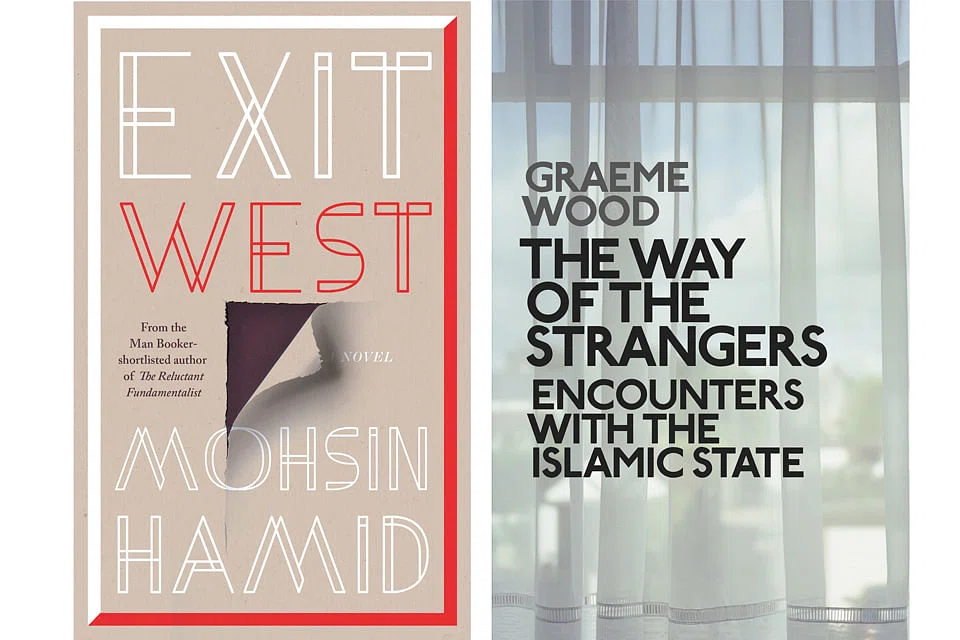
UNCERTAIN times, uncertain lives and everything that exists in between. In his latest book, Exit West, acclaimed writer Mohsin Hamid explores some of today's burning issues, but under the guise of a love story that's poignant, hopeful and honest.
The book is set in an unknown city that is bubbling with strife. Saeed and Nadia are young lovers trying to navigate their way through these trying times as political tensions in their city grow. At first, little seems to come in the way of their love, but soon enough, the situation gets tougher.
At the same time, the couple hear about mysterious doors that are portals to another life and another place, which could offer more stability, less uncertainty and the promise of a brighter tomorrow.
So Saeed and Nadia find themselves at the threshold of a similar door and begin their journey, to foreign lands that make them question their faith, alters their ideas of happiness and normalcy and ultimately proves that human resilience will always prevail despite its fragility.
It's a story about migration, refugees, unrest and a very real human crisis that is gripping because of its relevance. What makes Exit West such a great book is that it feels so right for whatever point in modern history at which it is read.
Hamid's writing is a treat. Single sentences turn into paragraphs that remain an unbroken chain of thought.
The prose borders on poetry and he is capable of packing a wealth of thought, dialogue and strong emotion in a single line.
Take this passage from the time where Nadia and Saeed decide to move on from the city of their birth:
"Saeed's father then summoned Nadia into his room and spoke to her without Saeed and said that he was entrusting her with his son's life, and she, whom he called daughter, must, like a daughter, not fail him, whom she called father, and she must see Saeed through to safety, and he hoped she would one day marry his son and be called mother by his grandchildren, but this was up to them to decide, and all he asked was that she remain by Saeed's side until Saeed was out of danger, and he asked her to promise this to him, and she said she would promise only if Saeed's father came with them, and he said again that he could not, but they must go, he said it softly, like a prayer, and she sat there with him in silence and the minutes passed, and in the end she promised, and it was an easy promise to make because she at that time had no thoughts of leaving Saeed, but it was also a difficult one because in making it she felt she was abandoning the old man, and even if he did have his sibling and his cousins, and might now go and live with them or have them come live with him, they could not protect him as Saeed and Nadia could, and so by making the promise he demanded she make she was in a sense killing him, but that is the way of things, for when we migrate, we murder from our lives those we leave behind."
WHEN it comes to migration and moving ahead in the hope of a better tomorrow, another book - The Way of the Strangers - stands out for its bold insight into the minds of those who leave their lives behind in support of the terrorist group ISIS.
This non-fiction work by journalist Graeme Wood is an in-depth look at his encounters with many who have pledged their sympathies to, or have joined the militant group.
But be warned.
The book is intense and hard-hitting, and it certainly changed my view of what this extremist organisation is capable of.
Wood draws from extensive interviews spanning the globe - the US, Australia, Japan and Europe and many other countries that the group has supporters in - in order to give us a glimpse of what compels them to take on an extremist view of the world.
The book had a sobering effect on me.
I felt similarly when I read a book by Elizabeth Kolbert titled Field Notes From A Catastrophe that talks about climate change. Both are packed with facts and deal with a hotly debated subject that is rife with misinformation.
Just like Exit West, The Way of the Strangers is about uncertain times and uncertain lives, the only difference being that the latter is about our time and our lives.
As Wood says in the conclusion of his book, all one can hope for is that someday the nightmare will end.
Share with us your feedback on BT's products and services
TRENDING NOW

Once staunchly pro-China, Malaysian Chinese businesses are now distancing themselves from Beijing

Looking beyond looming CEO succession, should UOB potentially pursue a transformative merger?

Could stablecoins be the future of money?

Grab CEO’s wife Chloe Tong on life with Anthony Tan and finding her purpose

