

Booker Prize finalist: Inspired or insipid? Stone Yard Devotional contemplates uncertainty
Charlotte Wood’s slow epistolary novel invites readers to sit with ambiguity, but in doing so, dims its own luminosity
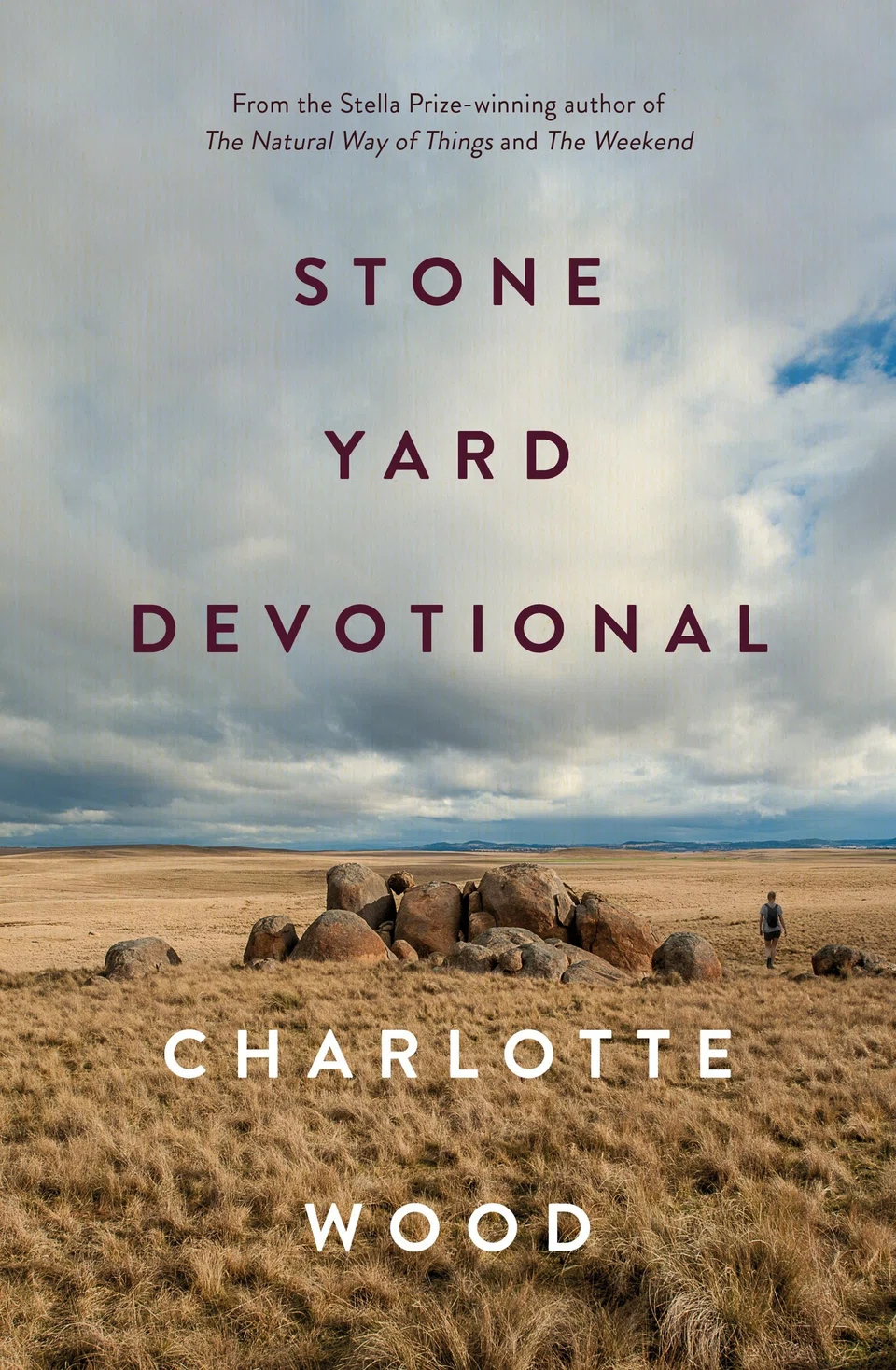
NOTHING much happens in Charlotte Wood’s Stone Yard Devotional in the sense of a plot. Instead, the action in this Booker Prize-shortlisted novel is largely cerebral, with intense introspection set within an abbey in Australia’s Monaro region.
The middle-aged protagonist is no nun. She doesn’t even believe in God. Her journey to the abbey’s retreat house starts as an escape from her city life, her failing marriage, and her work in species conservation. That visit turns into another, and another – until one day she does not leave. There, she cooks for the nuns and tends to the farm animals, losing herself in the routine of domestic demands and prayers.
The women of the abbey, much like the narrator, have chosen to separate themselves from society. The nuns pray against “evils” in a society they do not participate in – of problems that, one could argue, they have no direct knowledge of.
But at the same time, we are compelled to consider this: “Every miniscule action after waking means slurping up resources, expelling waste, destroying habitat, causing ruptures of some other kind. Whereas staying still, suspended in time like these women, does the opposite. They are doing no harm.”
We never fully learn the circumstances behind the narrator’s detachment, but she seems to be escaping from myriad failures – one of which is confronting an abiding grief for her parents, especially her mother, who died some 30 years earlier. Throughout the novel, there is an undercurrent of despair, which we are told is the “unforgivable sin”: “It’s malign, it bleeds and spreads. Once gone, I don’t know that real hope or faith – are they the same? – can ever return.”
However, three “visitants” thwart her attempts to retreat completely from her old life: a plague of mice that descends upon the abbey; the arrival of bones belonging to Sister Jenny, who had left the abbey decades ago and was later murdered; and Helen Parry, the nun who accompanies the remains and is also a figure from the narrator’s past.
Although the story is told in the form of diary entries, the narrator has no personal epiphany, no moment of profound realisation after years spent meditating on her failures and grief. As she herself puts it: “There may be a word in another language for what brought me to this place; to describe my particular kind of despair at that time. But I’ve never heard a word to express what I felt and what my body knew, which was that I had a need, an animal need, to find a place I had never been but which was still, in some undeniable way, my home.”
On the one hand, this is precisely what the novel invites us to consider: “an incomplete, unhurried emergence of understanding, sitting with questions that are sometimes never answered”.
On the other hand, it makes for a deeply unsatisfying read.
SEE ALSO


There is certainly a lot of waiting – for the plague to end, for the bones to be buried, for Helen Parry to leave. There are also attempts to broach difficult topics – such as the sexism of the Catholic Church and “the mass graves in which nuns (Irish, American, Canadian, why not also Australian?) had buried babies they called illegitimate” – but these are swiftly abandoned.
Any inkling of narrative satisfaction can likely be found only in Helen Parry, who in many ways resembles the narrator if she had not given in to her despair. For one, the nun is a climate activist considered by many to be a celebrity – someone who is not content to “disappear”. Like the narrator, she is also processing her relationship with her mother, though the theme here leans more towards the “dangerous and painful moral work” of forgiveness. The events of the novel culminate in Helen Parry finding peace with her dying mother, who had abused and neglected her as a child.
Eventually, the mice die off. Sister Jenny’s bones are buried. Helen Parry leaves, and our narrator stays. There is a sense of an ending despite the inchoate elements of the novel – or perhaps because of them, as they grant an expansive quality to a story that, at first glance, is limited in scope.
Stone Yard Devotional starts slow and remains that way because it demands contemplation. There are luminous passages that help vary the pace, but it must be said: the work this book asks of readers invites the risk of rendering it insipid.
Decoding Asia newsletter: your guide to navigating Asia in a new global order. Sign up here to get Decoding Asia newsletter. Delivered to your inbox. Free.
Copyright SPH Media. All rights reserved.
TRENDING NOW

Could stablecoins be the future of money?

Philippine power giant First Gen rebuffs foreign offers, plans up to US$2.6 billion in expansion

GIC-backed Bank Jago sees wealth management as next growth engine as Indonesian investor base grows

The middle power moment arrives in South-east Asia – but not for Asean

