Britain stops export of WWII code breaker Alan Turing's wartime papers
 Add BT as a preferred source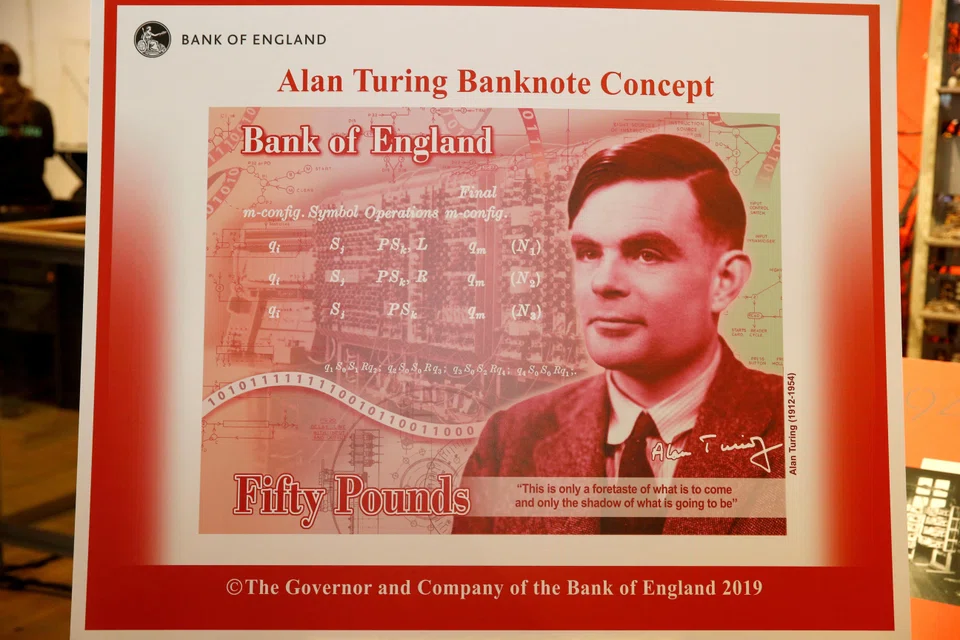
DeeperDive is a beta AI feature. Refer to full articles for the facts.
BRITAIN has stopped the export of rare wartime papers that once belonged to national hero Alan Turing, who helped the Allies win World War II by cracking Nazi Germany’s Enigma code.
An export bar has been placed on Turing’s unpublished papers relating to the “Delilah” project, which developed a portable encryption system for use in military operations, the British government’s culture department said on Friday (Aug 16).
The measure temporarily stops important cultural objects from leaving the country when they are due to be sold to a foreign buyer, and is intended to allow time for a UK institution to buy them.
The Delilah papers – two bound notebooks and six gatherings of loose sheets – are valued at £397,680 (S$676,279) and date from 1943 to 1945.
“The Delilah project papers offer unique insights into the extraordinary mind of Alan Turing,” Arts Minister Chris Bryant said.
“It is right that a UK buyer has the opportunity to purchase these papers, to give people the opportunity to continue to study and appreciate his work as an important part of our national story.”
Navigate Asia in
a new global order
Get the insights delivered to your inbox.
Considered the father of modern computing, Turing is known for cracking the Nazi’s Enigma cipher device, a breakthrough which some historians say helped shorten the war by several years and was dramatised in the 2014 movie The Imitation Game.
As Adolf Hitler’s forces bombed British cities and prepared to invade Russia, it was at Turing’s base at tranquil Bletchley Park in southern England where German air force signals were being read.
Turing pleaded guilty to gross indecency in 1952 after a sexual relationship with another man and, after being forced to have hormone injections, killed himself two years later aged 41 by eating an apple laced with cyanide.
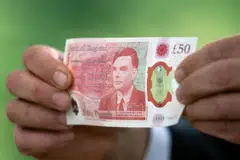
He was granted a royal pardon in 2013 and his face today appears on £50 banknotes.
A 56-page handwritten notebook that belonged to Turing sold for more than US$1 million at an auction in New York in 2015.
Britain has placed export bars on a number of items, including earlier this year on a table top once owned by Louis XIV and an Iron Age coin bearing the name of a British ruler from 40 BC. REUTERS
Decoding Asia newsletter: your guide to navigating Asia in a new global order. Sign up here to get Decoding Asia newsletter. Delivered to your inbox. Free.
Share with us your feedback on BT's products and services