

British police look to young, university graduate recruits
Burnley, England
FRANCESCA Wheatley does not seem like a police officer, at least not to those around her.
"People think I'm too nice," the police constable, 21, said, a touch sheepishly. They expect, she said, "a middle-aged man". But Constable Wheatley, slight of build and with an easy smile, is exactly the kind of officer her superiors want to recruit.
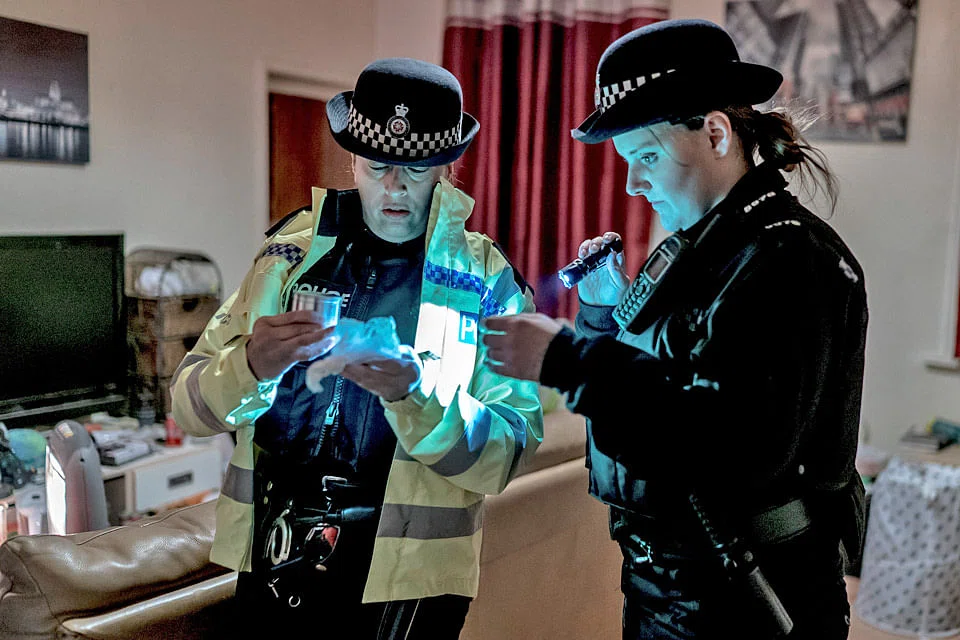
For months, she has been patrolling a neighbourhood of Burnley, a northern English town with a history of racial tensions (riots in 2001 left houses and businesses in flames). Like most of Britain's police officers, she is unarmed but clad in a flak jacket, carrying little more than a radio, a nightstick and a set of handcuffs.
Constable Wheatley, who studied social policy at the University of Birmingham, joined the police last summer, one of more than 150 officers farmed out across England as part of an initiative by the British Home Office that started in 2015.
The programme, Police Now, recruits university graduates and assigns them for two years in the country's most troubled areas, where they walk the streets and provide a public face for the police.
With police forces in the United States facing accusations of racial bias over shootings involving officers and unarmed black men, the British initiative focuses in particular on the recruitment of women and minorities, looking to diversify a corps often derided as "male, pale and stale". In Burnley, Constable Wheatley's supervisor, Inspector Catherine Platt, has seen the changes to the police's composition firsthand.
When she joined the force in 1993, Inspector Platt was required to wear a skirt and stockings and was given a police-issued handbag. (Her baton was smaller than that of male colleagues so it could fit inside.) Her only pair of trousers was for use on night shifts.
"Seven gents and myself," she said of her cohort of officers at the time. "We've still got a way to go. But we're always making progress."
The diversity initiative - trumpeted by Prime Minister Theresa May when she was home secretary - is explicitly modelled after Teach First, a British version of Teach for America. As in Teach First, participants have the choice of staying on or leaving after two years.
The programme aims to address lingering allegations of excessive violence and complaints that efforts to diversify have not gone far enough.
Around 28 per cent of police forces in England and Wales are made up of women, while about 6 per cent of officers are members of minority groups, according to figures released in March. That is up from 16 per cent women and 2 per cent minority members in 1998.
Police Now graduates, though a small proportion of overall forces, are more reflective of population statistics. So far, 176 officers have been hired since the programme started in the summer of 2015, and around 250 more are set to join this year. Of those who are already on the beat, 49 per cent are women and 18 per cent are minorities.
Deadly violence at the hands of law enforcement remains rare in comparison with other major Western countries, particularly the United States. Police Now graduates are encouraged to resolve issues without arrests or violence.
Several challenges remain, though, for police forces and for Police Now.
As Britain has sought to curb government spending in recent years, the £5.3 million (S$9.27 million) guaranteed to the Police Now programme over the next two years has been criticised by police unions.
Experts also note that policing has become more complex in recent years, as officers sort through data and evidence from an increasingly wide array of sources. It is too much for anyone to learn in two years, critics of the Police Now programme charge.
Its organisers say that it has attracted a diverse cohort of officers and that many will follow a career in policing, though there are no explicit retention targets. David Spencer, a Police Now founder and programme director, added that those who did leave would become "ambassadors" for Britain's police forces in whatever industry they joined.
Having grown up nearby, Constable Wheatley wanted to patrol Burnley. The town, population 87,000, was long centred on a number of cotton mills, but has fallen on harder times: A 2015 government report said it was among the most deprived areas in Britain.
That feeling is not lost in the town itself. As he walked through the office, one of Constable Wheatley's colleagues jokingly asked when Burnley looked its best. "When you're leaving it." On a recent patrol, she was accompanied by Police Constable Mark Bewley, her "mentor" - an experienced officer assigned to team up with her in the early weeks of her career. The pair drove through the areas they are responsible for, and Constable Wheatley sat in as the police representative in a meeting of officials discussing recent episodes at a local care home.
They later walked down a nearby street where three windows had been shattered by bricks. Around the corner, the pair walked by the house of a resident who was suspected of breaking the windows, and briefly stopped to chat with him.
"It's always good to know not just the nice people in the neighbourhood, but also the people who might commit crimes," Constable Bewley said. NYTIMES
Share with us your feedback on BT's products and services
TRENDING NOW

Simba admits exceeding spectrum limits amid failed M1 deal; full-year profits surge 277%

He built the Vingroup empire. Now South-east Asia’s richest man is handing some key roles to his sons

What’s on the agenda when Xi and Trump meet in Washington
Ex-execs of CW Group, Allied Tech charged with offences linked to lawyer’s S$76 million misappropriation

