

Aman Nai Lert Bangkok: A luxury hotel of rare calm
The high-end chain brings its legendary stillness into the heart of Bangkok

IS IT POSSIBLE TO CREATE an urban sanctuary in Bangkok – a city so dense and kinetic that even its traffic feels stitched into daily life? Especially when that sanctuary sits in the city’s commercial core, just minutes from megamalls such as CentralWorld and Siam Paragon?
For Vlad Doronin, Aman’s billionaire owner and chairman, the idea of an “urban Aman” has long been a quiet ambition – to carry the brand’s ideals of peace and privacy from its far-flung resorts into the heart of the world’s great cities.
He first realised that vision with Aman Tokyo in 2014, followed by Aman New York in 2022. His third urban outpost is Aman Nai Lert Bangkok, which opened in 2025 – with Singapore, Dubai and other cities slated to join his global portfolio now numbering 36 hotels and resorts.
But as anyone who travels regularly through South-east Asia knows, Bangkok is not simply busy. It is a constant sensory overload – a city that seems to operate at full volume around the clock. In a place so relentlessly alive, can Aman offer real serenity without becoming a sealed-off cocoon?
Aman Nai Lert Bangkok suggests that the answer lies not in shutting the city out, but in weaving its history, landscape and rhythms into an experience that still delivers space, quiet and perspective.
The building itself – designed by Jean-Michel Gathy of Denniston, Aman’s long-time collaborator – adheres to the brand’s established aesthetic: warm wood, controlled lines, moments of quiet drama, and a restraint that comes from knowing how much is enough.
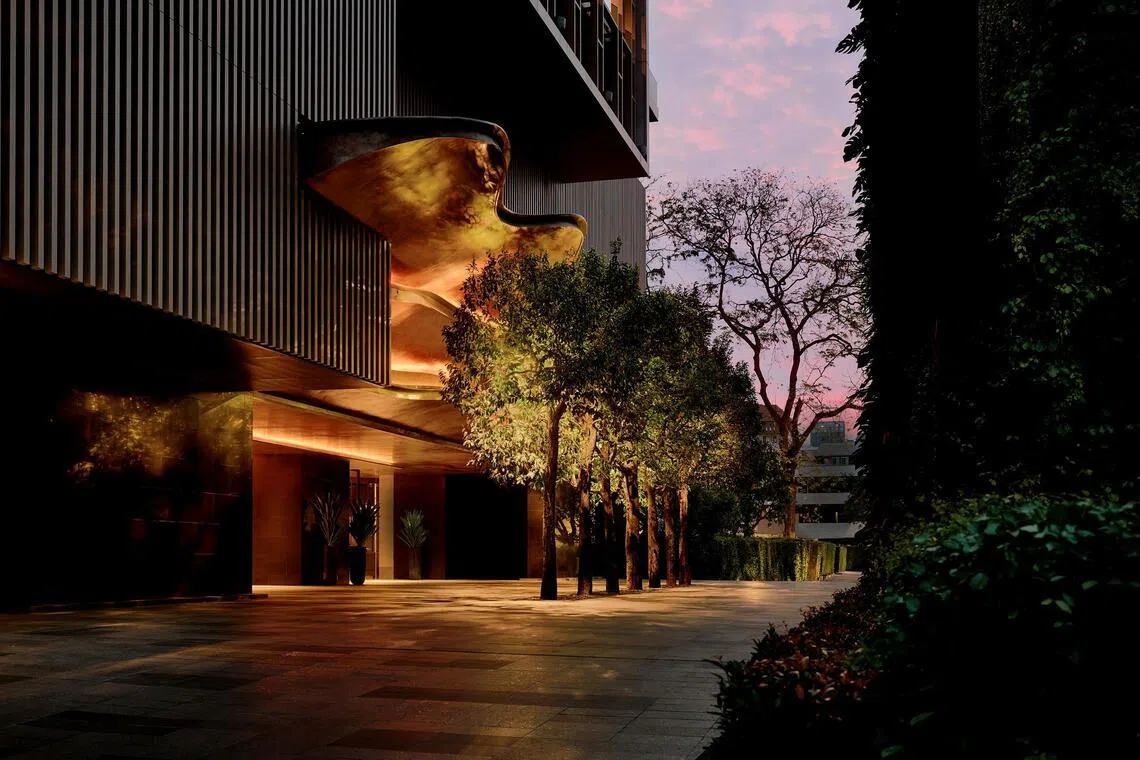
But there is another layer here – heritage. The 36-storey building rises within Nai Lert Park, a privately owned seven-acre enclave of mature trees and gardens. It was laid out in the early 20th century by the entrepreneurial giant Nai Lert, who helped shape modern Bangkok.
His great-granddaughter, Naphaporn “Lek” Bodiratnangkura – CEO of the Nai Lert Group and steward of the park – partnered Aman to ensure the hotel honours both the family’s legacy and the site’s history, which still include the Nai Lert Park Heritage Home right next to the hotel.
Designer Gathy and his team spent months studying the family’s history, and Aman’s design references that lineage without turning it into an obvious theme.





Custom pieces by Thai artisans sit alongside antiques with patina rather than polish, and details feel less “Thai contemporary” than Thai-inherited – a quieter, more assured elegance that resists easy categorisation.
A tree shapes its architecture
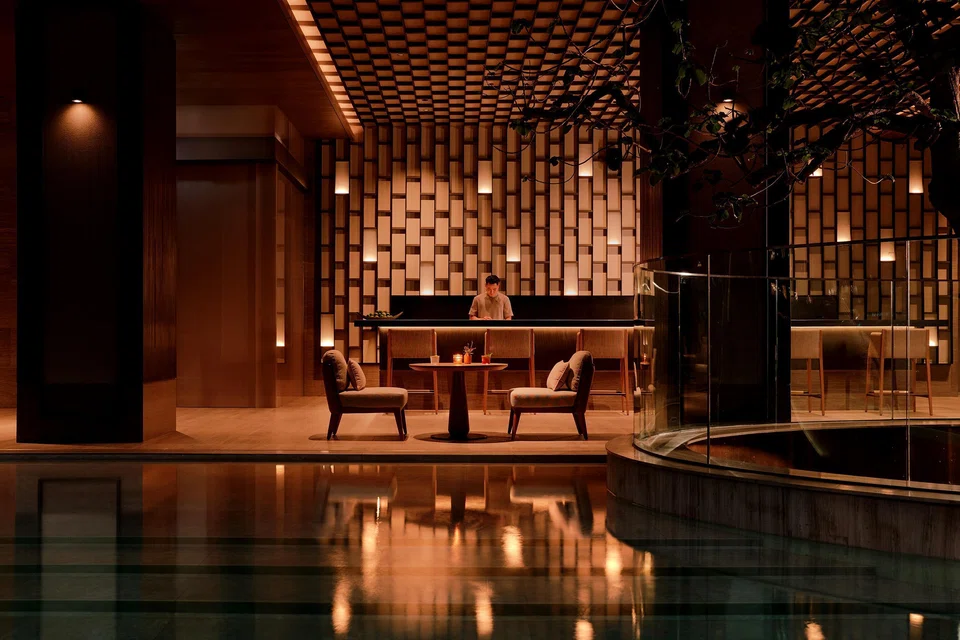
At the heart of it all is a century-old Sompong tree. Lek refused to have it cut down, saying that it would raise her grandmother from the grave – so Gathy instead organised the building around the tree, allowing this living presence to shape the hotel’s design.
Rather than being treated as landscaping, it was positioned as an anchor for the building’s architecture, its trunk even rising through an opening in the swimming pool on the ninth floor.
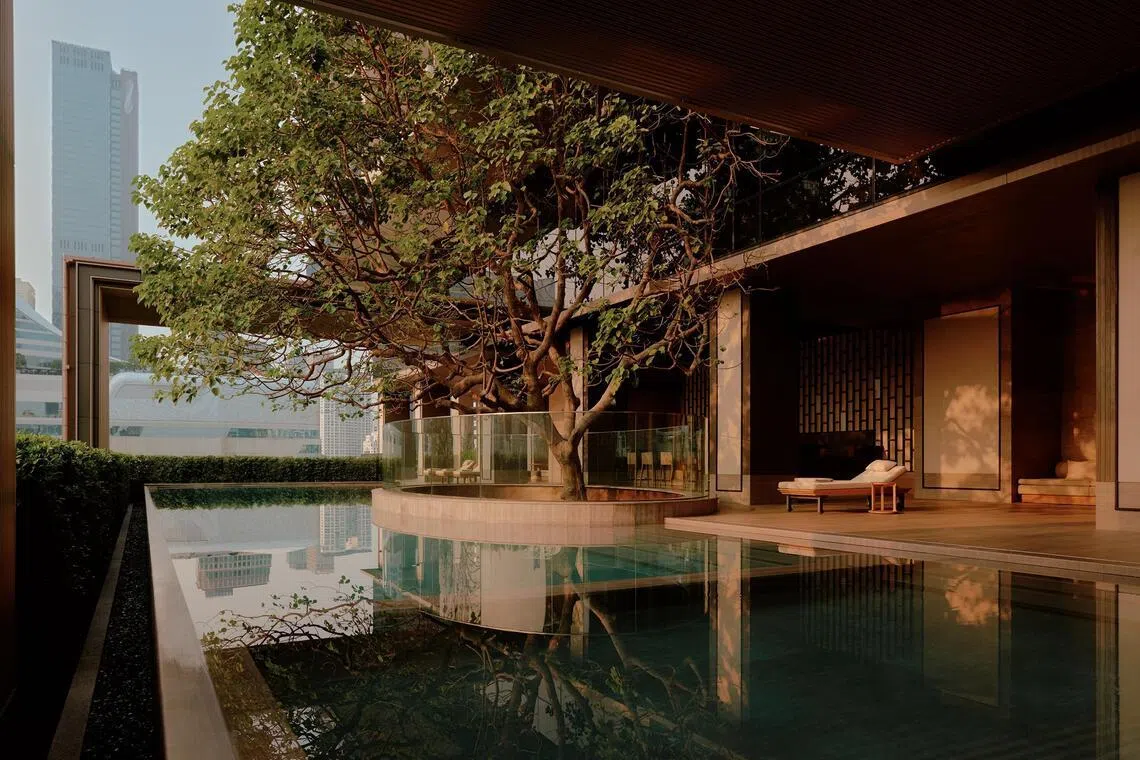
Inside the hotel, a 12-metre-tall tree sculpture adorned with gold leaves takes centre stage in the lobby atrium, while tree-inspired elements recur throughout the interiors, from branch-like light fixtures to bark-textured wood panels in the 1872 lounge.
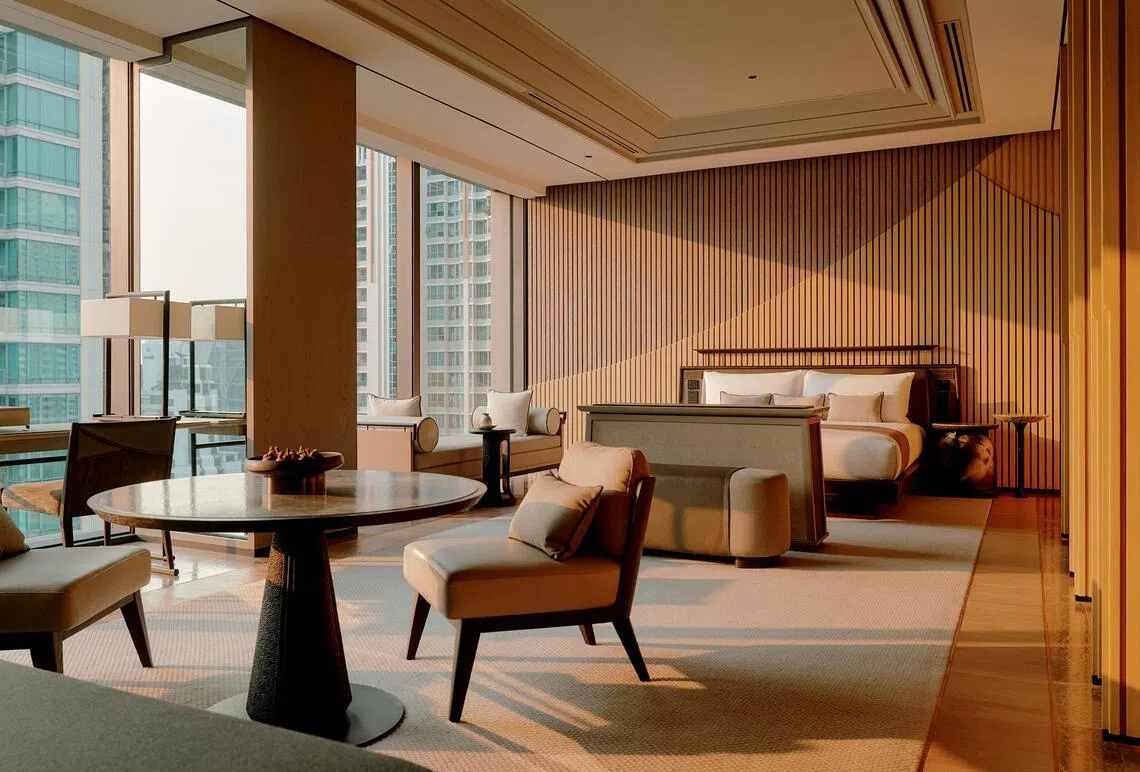
In the rooms – 52 suites in total – the sense of space is striking. Starting at 94 square metres, they are among the largest hotel suites in Bangkok, laid out more like studio apartments than conventional hotel rooms.
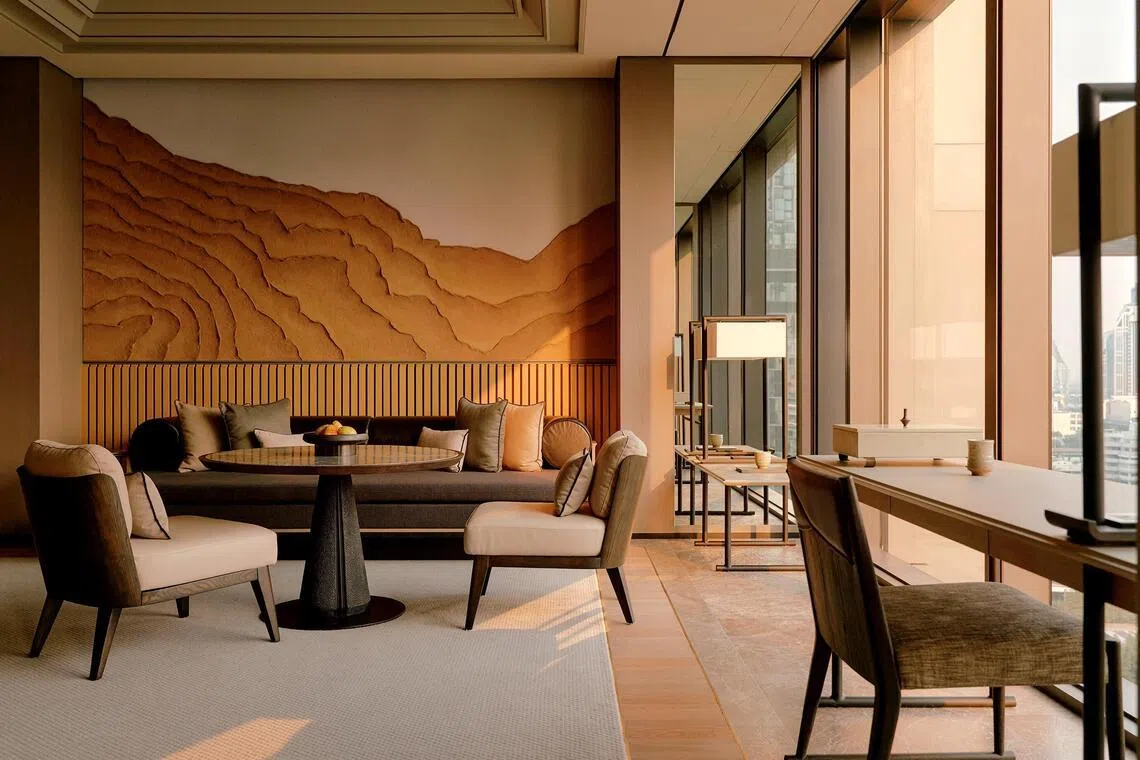
The interiors are calm and tactile, with warm timber, soft neutral tones and subtle Thai references that register instinctively, even if their origins are not immediately obvious to foreign guests. Bathrooms are generously sized, anchored by a large rain shower and a big soaking bathtub designed for long, unhurried use.
Floor-to-ceiling windows frame either the skyline or the leafy expanse of Nai Lert Park, turning the view into a constantly shifting backdrop from morning to night. Daybeds by the window invite you to do the thing Bangkok doesn’t encourage: stop.
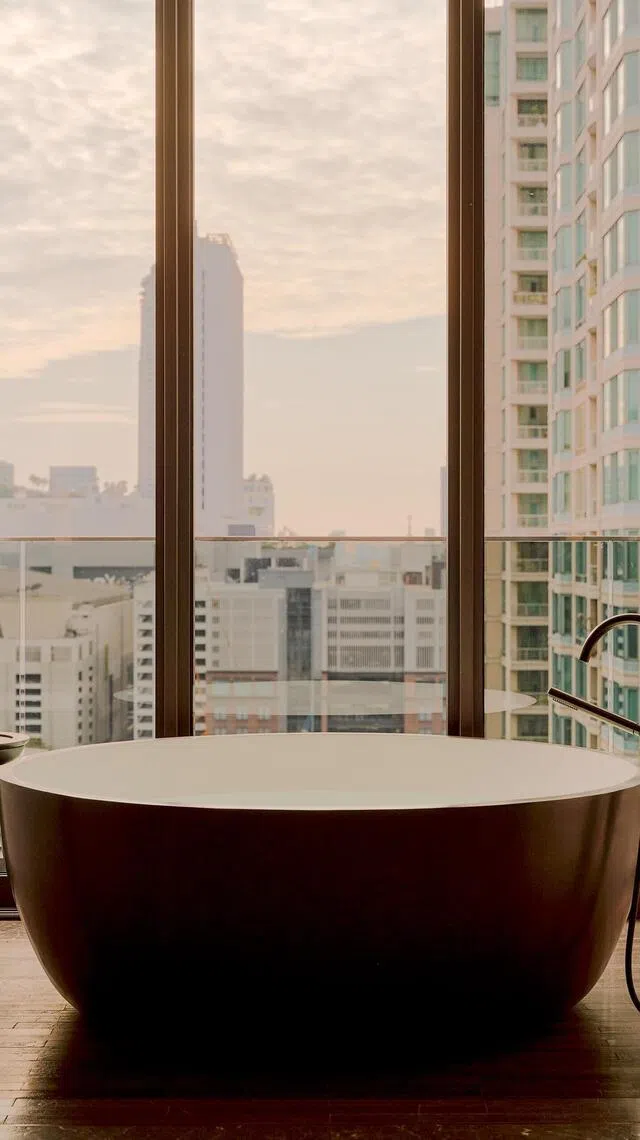
Aman’s approach is not to seal you off from Bangkok, but to create a pause within it and recalibrate your senses before you step back into it.
Rituals of attention
That same philosophy runs through the dining. On the ninth floor, the 1872 lounge and bar moves easily from Western classics to Thai dishes to afternoon tea, depending on your mood and the hour.
Arva, Aman’s Italian signature restaurant, serves polished and grounded dishes with a flexibility that feels almost domestic. When a recent guest asked for “something with truffle” that wasn’t on the menu, the kitchen simply made it happen.
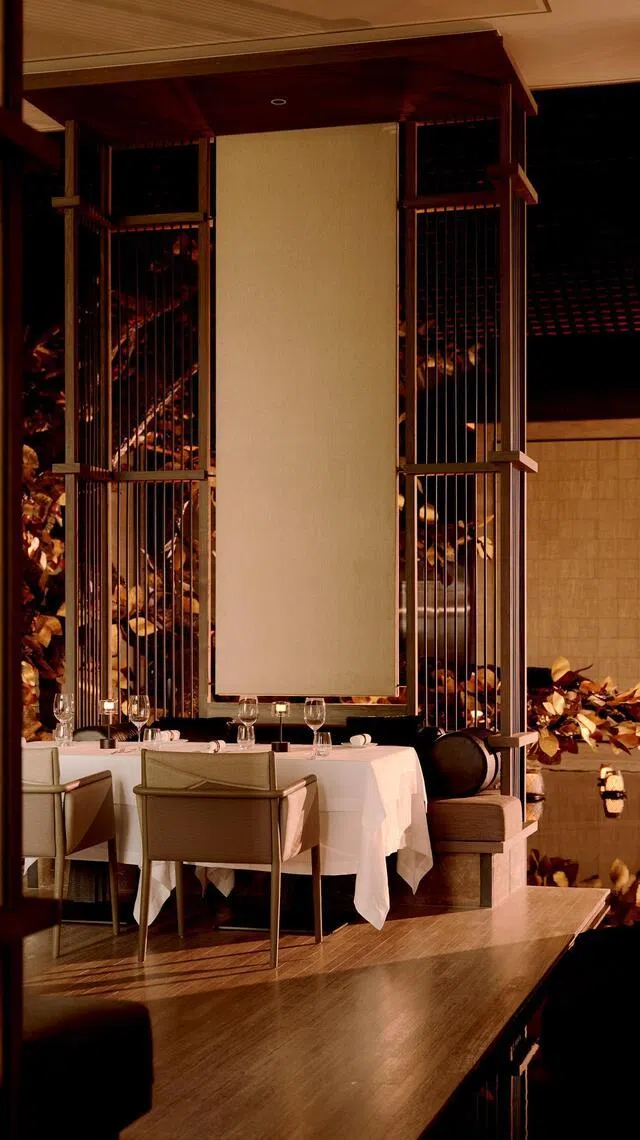
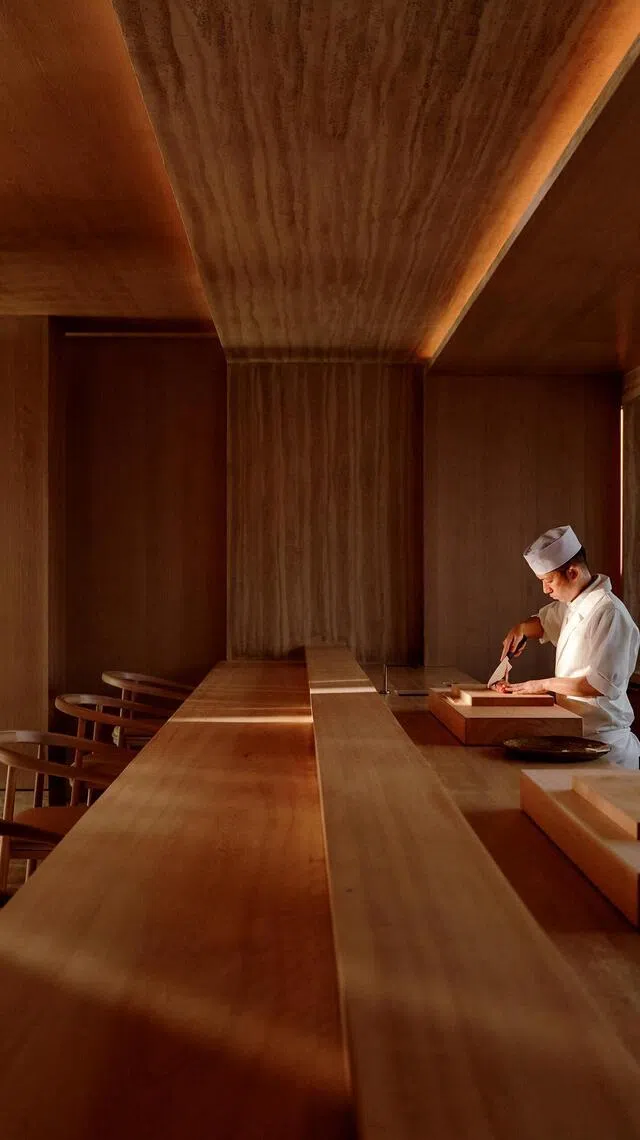
Up on the 19th floor, the tone shifts from daytime calm to evening exclusivity. The Aman Lounge hosts live jazz against a sweep of skyline views, while two Japanese concepts – Hiori, a teppanyaki counter, and Sesui, an omakase sushi experience – turn dinner into a ritual of attention, where pacing and presence matter as much as the food.
At Sesui, in particular, the experience recalls butoh: slow, deliberate, and quietly intense. Bangkok has no shortage of great restaurants – so what Aman offers instead is permission to slow down, stop and be fully present.
Then comes the wellness floor – or rather, floors. Aman Nai Lert Bangkok’s Spa & Wellness spans about 1,500 square metres across two floors. Medical Wellness by Hertitude Clinic is an eight-room medical-aesthetics and longevity clinic with an examination room, IV nutrient infusion lounge and cryotherapy chamber.
Then there is Aman Spa & Wellness, which houses steam rooms, saunas, hydrotherapy pools, hot and cold plunges, experiential showers and movement studios for yoga, meditation and Pilates, alongside the brand’s signature Thai and oil-based therapies.
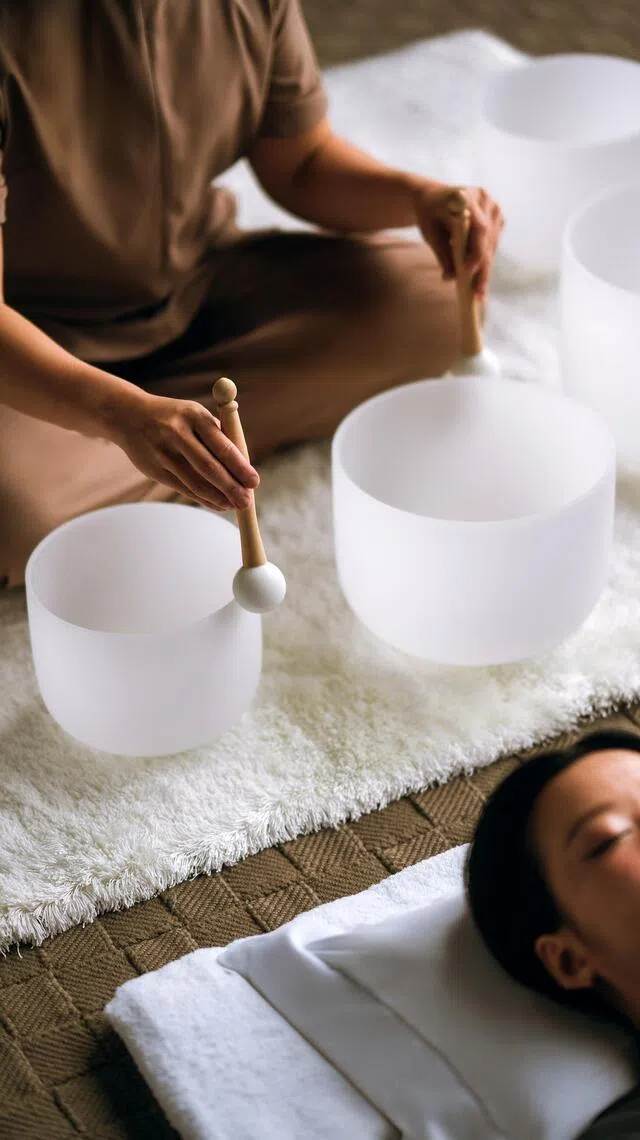
Together, they form a rare hybrid in Bangkok: part sanctuary, part medical wellness centre, and part performance and recovery hub.
Bangkok can be both exhilarating and draining. Aman’s idea of an urban sanctuary works remarkably well because it accepts the reality of the metropolis rather than trying to escape it. The hotel does not promise silence, but an elegant distance; not removal from the city, but artful relief from its intensity.
And that may be its most persuasive luxury. Not the size of the suites, the destination dining or the wellness treatments, but the simple feeling – shaped by a century-old tree and seven acres of greenery – that Bangkok remains close at hand: still energetic, still thrilling, just no longer crowding in on you.
The writer was a guest of Aman Nai Lert Bangkok. Room prices start from S$1,682. Visit aman.com.
Decoding Asia newsletter: your guide to navigating Asia in a new global order. Sign up here to get Decoding Asia newsletter. Delivered to your inbox. Free.
Copyright SPH Media. All rights reserved.
TRENDING NOW

Singapore identifies 7 firms responsible for haze fires, notices issued urging action: Grace Fu

‘How many will survive?’: Bubble fears arise as China’s humanoid robotics face reality check

GIC-backed Bank Jago sees wealth management as next growth engine as Indonesian investor base grows

Ageing in Asia: Huge potential for the consumer economy

