

Cindy Karim: Redefining a billion-dollar Indonesian family empire
The Karim family’s eldest child is shaping its next chapter through culture and hospitality

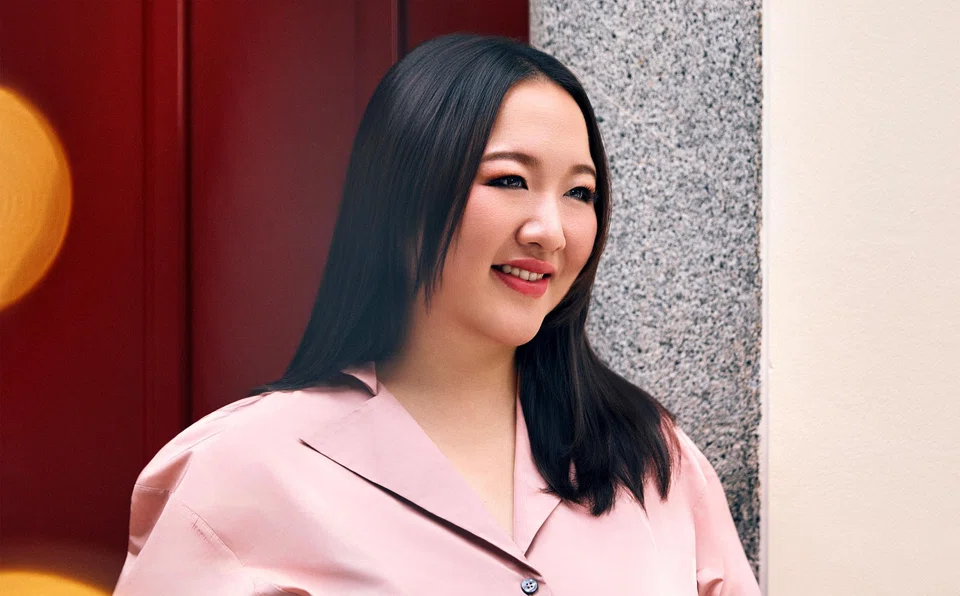
CINDY KARIM REMEMBERS THE SOAPS. At three or four, she was too small to see over the conveyor belt in her family’s Medan factory, but she wrapped the freshly moulded bars with the focus of a child desperate to be useful.
“My grandpa would do his rounds and I’d follow him to the soap line. Everything was already mechanised – but they let me pack the soaps,” she says, laughing.
It was child’s play, but also her first glimpse of how a business runs. The factory, built in 1932, grew under her grandfather Anwar Karim from a local soap maker into a regional consumer-goods player. When Indonesia industrialised in the 1970s, the family moved upstream into palm-oil refining.
It’s a shift that became the basis for Musim Mas, today a vertically integrated agribusiness with plantations, refineries and a global oleochemicals network worth over US$8 billion.
Cindy grew up with that instinct for scale and reinvention. Now 34, she is building what she calls the family’s “next-gen businesses”: live-events promoter CK Star Entertainment, and multi-brand food and beverage (F&B) and hospitality group Gaia Lifestyle.
She also serves as principal in the family’s philanthropic arm, the Karim Family Foundation (KFF). In 2022, she led the acquisition of the 19th-century House of Tan Yeok Nee in Singapore, which has been repositioned as a heritage, dining and cultural destination.
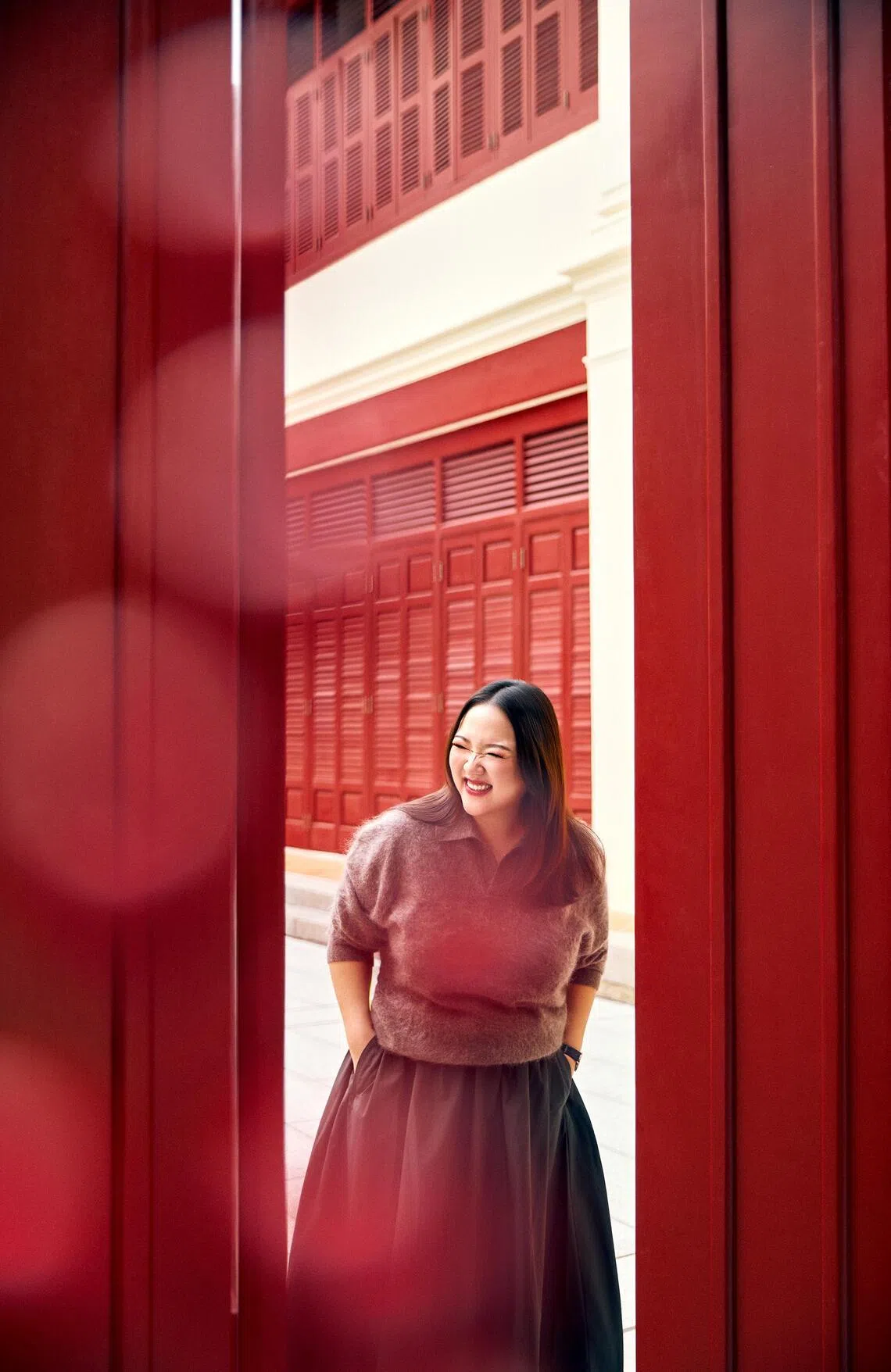
“I consider myself an entrepreneur, a steward and an advocate,” she says. “Not one before the other – all at once.”
Entering the arena early
She was still a teenager when she got her first taste of real work. Her parents, Bachtiar Karim and Dewi Sukwanto, wanted to be among the first to bring K-pop acts into Indonesia, so Cindy and her younger siblings were roped in.
“We were bringing in the boy band U-Kiss around 2008 or 2009, and we were asked to help with the planning,” she recalls. “That was my first real business responsibility – and I liked seeing how everything clicked.”

A decade on, she has turned that instinct into industry, launching concert promoter CK Star Entertainment in Singapore. Since then, it has staged dozens of concerts across South-east Asia, from K-pop tours to international acts.
The company’s edge is staying lean – no permanent venue, no in-house production arm, no unnecessary headcount. “Live entertainment is capital-intensive and unpredictable. If you don’t have cash flow, you can’t take on projects that come very fast… People think it’s about the artistes. But it’s actually about timing, costs, logistics and reliable partners.”
Indonesia, she adds, is its own battlefield. “Equipment gets stuck in customs. Skilled crew can be hard to find. People think it’s cheap to stage shows in Indonesia – but technical production can be very challenging and expensive.”
The hard maths of F&B
If concerts run on adrenaline, restaurants run on stamina. Under Gaia Lifestyle, Cindy has opened more than 10 F&B concepts in Indonesia and Singapore.
She lights up when she talks about food – “Our family loves food!” – but her assessment of the business is unsentimental. “F&B in Singapore has tight margins and high closure rates,” she says. “Manpower is the biggest killer.”
Her first major lesson came in Medan, with a food court that drew large crowds but couldn’t keep them. “I realised the food just wasn’t good enough,” she says. Within six months, she overhauled the entire operation – a bruising introduction to how long it takes to get a product right.
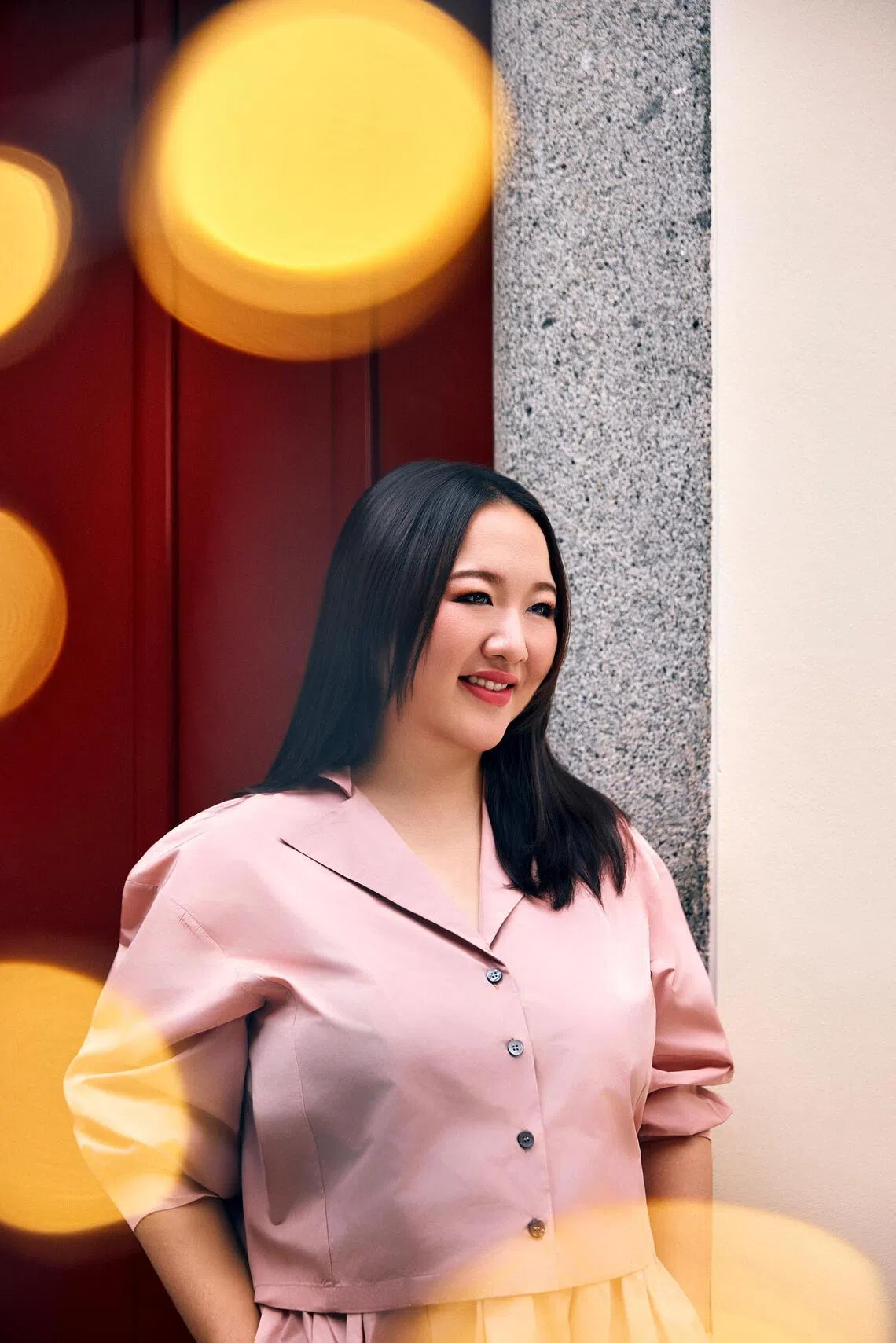
In Singapore, her ox-tongue restaurant Gyutan-Tan on Tras Street and Takashimaya did brisk business but “couldn’t reach the numbers that we projected”. She replaced one outlet with Udon Shin, which found instant popularity.
For Cindy, it’s proof that sentiment cannot outrun the spreadsheet. “We try not to be emotionally attached to brands. If I hold on too tightly, I’ll miss the next big idea.”
Rewriting the family legacy
Musim Mas is one of Indonesia’s most prominent family enterprises, and palm oil is a sector scrutinised for its environmental impact. Cindy neither denies nor gets defensive about it. “Musim Mas has long been a pioneer in sustainable palm oil,” she says. “We’ve been working on these initiatives for years.”
She and her siblings, however, are building something more diverse. Her brother Chayadi runs Invictus Developments, a real estate group behind properties such as The Standard, Singapore and Harbour Rocks Hotel in Sydney.
In 2022, the family acquired the House of Tan Yeok Nee, Singapore’s last surviving grand Teochew mansion on Penang Road. They invested in heritage-grade conservation and reopened it as a heritage and cultural space.
“When we opened on Nov 1, thousands of people came,” she recalls. “Elderly people were thanking us because they’d waited their whole lives to see what was inside… We didn’t expect that.”
For her, this project is not ornamental – it’s strategic. “Heritage has value,” she says. “Not just sentimental, but cultural and social value. When a building becomes part of people’s lives, that’s legacy.”
This philosophy carries through to the KFF. The foundation endowed the Singapore Management University – where both Cindy and her brother studied – with a S$2 million scholarship for Indonesian students, and invests in youth sports, arts and mental health.
“We want to know where every dollar goes, and what impact it creates,” she says.
Soft touch, big moves
Throughout the interview, Cindy speaks quietly – the opposite of what one expects from someone who runs concerts, restaurants and a cultural foundation all at once. But beneath the softness is pure steel.
“My team says I have quiet leadership,” she says. “I hire people who are smarter than me, who can build the business with me. I give them some direction, then I try to let them stand on their own ground.”
Her days begin early with her two young daughters needing attention, then it’s off to work for meetings, budget checks, staffing updates and site walks. In the evening, she returns to “try to spend nighttime and sleep time with my children”.
Perhaps that is why Christmas offers a rare pause. “It’s the one time of year we all slow down and really appreciate what matters,” she says. “We keep it family-focused – a nice dinner with the kids and hosting close relatives or friends. The moments that stay with me are always seeing Christmas through my children’s eyes.”
It is in these unhurried holiday moments that the shape of her ambition becomes clearest. For all the restaurants she opens and concerts she stages, Cindy is thinking in longer arcs – what survives, what grows, what is worth passing on.
Her world today may look nothing like the plantations and refineries that built the family fortune, but the instinct beneath it is familiar: invest carefully, execute precisely, and build things meant to endure.
In some ways, she’s still that little girl wrapping soaps – small, steady work to build something larger than herself.
Photography: Darren Gabriel Leow
Fashion direction: CK
Hair & make-up: Grego Oh, using Guerlain Beauty & Revlon Professional
Decoding Asia newsletter: your guide to navigating Asia in a new global order. Sign up here to get Decoding Asia newsletter. Delivered to your inbox. Free.
Copyright SPH Media. All rights reserved.
TRENDING NOW

Once staunchly pro-China, Malaysian Chinese businesses are now distancing themselves from Beijing

Looking beyond looming CEO succession, should UOB potentially pursue a transformative merger?

Could stablecoins be the future of money?

Grab CEO’s wife Chloe Tong on life with Anthony Tan and finding her purpose

