
Creating a better way
Benjamin Swan left finance to build high-tech farms. Now he envisions a world of sustainable farming systems with near-zero carbon footprint.
 Add BT as a preferred source
IN RECENT YEARS green packets of vegetables with funny names such as "Kinky Kale" and "Almighty Arugula" started appearing in supermarkets across Singapore. People tried it, loved it, and started consuming it regularly.
Though these crops are not native to Singapore, the packages say they are indeed Singapore products, grown in a Sustenir Agriculture farm in Admiralty.
Sustenir is the brainchild of Benjamin Swan, who left a job in finance in 2014 to realise his vision of a high-tech indoor farm. The patented farming system uses 95 per cent less water than the average farm, and can grow non-native crops such as kale, arugula and strawberry completely free of pesticides and environmental pollutants.
The technology has proven so effective, the business has expanded into Hong Kong and Malaysia. Swan, 41, says: "My personal dream is to see Singapore and other countries create a more resilient food system, one that relies less on importing produce and more on growing the food they need within an hour's drive from the demand.
"With the technology we built for Sustenir, we've been able to grow impossible non-native crops such as kale and strawberries in Singapore for the first time. And because they go straight from farm to store or table, they have much lower carbon footprint, and they stay fresh longer."
The proof is in the pudding: Anyone who's purchased Sustenir kale can vouch for their freshness and how much longer they stay edible compared to imported brands.
Navigate Asia in
a new global order
Get the insights delivered to your inbox.
Swan, an Australian PR, was motivated to launch Sustenir after moving to Singapore in 2008. A salad lover, he was dismayed by the smaller range and quality of greens offered in stores here.
Their prices were higher, and the shelf lives were shorter as compared to those in Australia.
While working in Citi as a regional project manager in 2012, he chanced upon an article on vertical farming. At first he thought of creating a system at home where he could grow his own greens. But further research made him realise what a great solution it would be for land-scarce cities like Singapore.
He started sketching prototypes for an indoor farm that could be installed in any building and set up a mini farm in the basement of his friend Martin Lavoo's home to test out his theories on how to make the perfect crop indoors.
MILESTONES GALORE
In 2013, Swan and Lavoo co-founded Sustenir as an urban farming company producing clean and nutritious crops grown entirely indoors, and without any genetic modification and exposure to chemicals and pesticides.
By 2015, Sustenir had launched its first kale product in restaurants and food services giant SaladStop. By 2016, they had broken into retail with Cold Storage and other stores. Further lab and market tests helped Swan and Lavoo refine the taste of their kale, making it crunchier, sweeter and more nutritious. Gradually more supermarkets such as NTUC began stocking up on Sustenir products.
Sustenir Agriculture soon garnered global attention: In 2016, it was the first indoor farm to present at the United Nations Food and Agriculture Organization. In 2017, it was the first vertical farm in the world to receive the prestigious ISO 22000 certification for its innovative food management and farming processes. In 2019, it expanded to Hong Kong, and in April 2021, to Malaysia.
"We've done some phenomenal things no one ever thought possible, like growing non-native produce inside a building with no natural light and no ventilation. We've made kale tastier and more nutritious for Singaporeans. We've put Singapore on the map with our system.
"But it just can't stop there. We need to dream bigger. Only 1 per cent of Singapore's land is used for farming. So every square foot counts. As a country, we need to become more efficient in all of our resources. We need to figure out how we can convert our existing farms to yield four or five times more than what they yield today - instead of clearing forests for more farms to feed ourselves." Swan is now dreaming up the technology that can make all this a reality.
ZEGNA LOVER
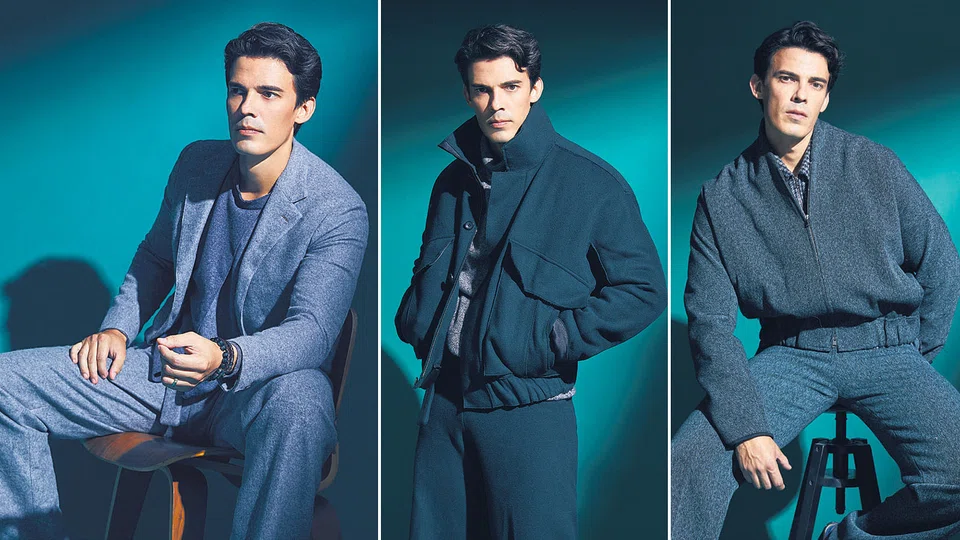
When it comes to fashion, Swan professes to be a longtime admirer of Ermenegildo Zegna, a luxury brand that has made tremendous strides in its sustainability stakes. Not only does Zegna use responsible fabrics and materials, it has also take pains to recover fibres, threads and fabrics from the production process through its #UseTheExisting campaign.
Its iconic Triple Stitch Sneaker, for instance, is available in an upcycled wool upper made from 14 MILMIL 14 fibres, threads, and fabrics recovered from all phases of the production process. The rubber sole and other technical components are partially made from recycled materials.
Swan says: "Zegna was the first luxury label that I purchased from in my twenties when I started working. I bought a rectangular belt buckle with a reversible brown-black leather strap to mark the progress I'd made in my life. Twenty years on, the belt is still going strong. I even wore that belt buckle on my wedding day, along with a Zegna tie and a pocket square. It's a brand that's been with me through major events of my life."
Swan admires the atelier for its commitment to the environment: Zegna is part of Fashion Pact, a fashion coalition committed to stop global warming, restore biodiversity and protect the oceans.
When asked what fuels his passion for change, he explains "when my first son was born, I looked into his eyes and had this daunting fear of what life might be like for him in the future. Literally when you turn on the news every week, there's a fire or flood or some other event caused by global warming.
"We all need to do our part to protect our future. I'm doing mine."
Decoding Asia newsletter: your guide to navigating Asia in a new global order. Sign up here to get Decoding Asia newsletter. Delivered to your inbox. Free.
Copyright SPH Media. All rights reserved.

