

Joan Chang: Shaping tradition, from hotels to cheongsams
How one entrepreneur imagines heritage for a new generation of Singaporeans

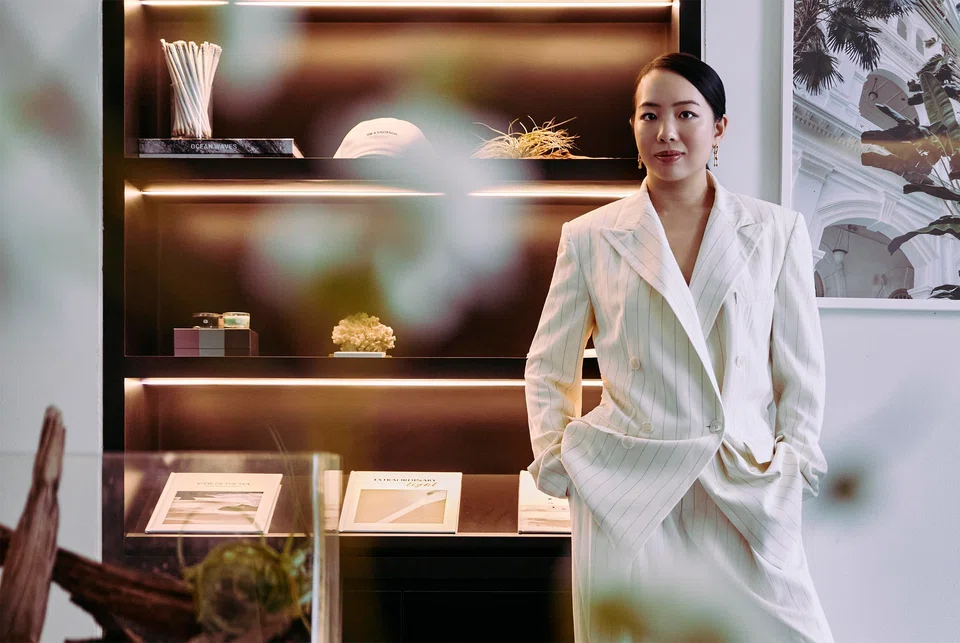
JOAN CHANG DIDN’T EXPECT MUCH when she checked into Lloyd’s Inn in 2012 – the budget hotel in River Valley that sat quietly within her family’s property portfolio. But spending a night there was enough.
“It was old and dilapidated,” she recalls.
When she read the TripAdvisor reviews, her heart sank further. “The reviews were so bad,” she says. “I just thought, oh man, we need to do something about this.”
When she got home, she simply told her father what she thought – how the hotel had slipped into irrelevance, how something could be done, or should be done.
Having graduated in marketing and finance, she was not planning on joining the family business. “I had a job offer in New York and every intention of taking it,” says Chang.
But staying, she realised, meant choosing involvement over distance, taking control of the problem instead of watching it unravel from afar. The stakes felt higher.
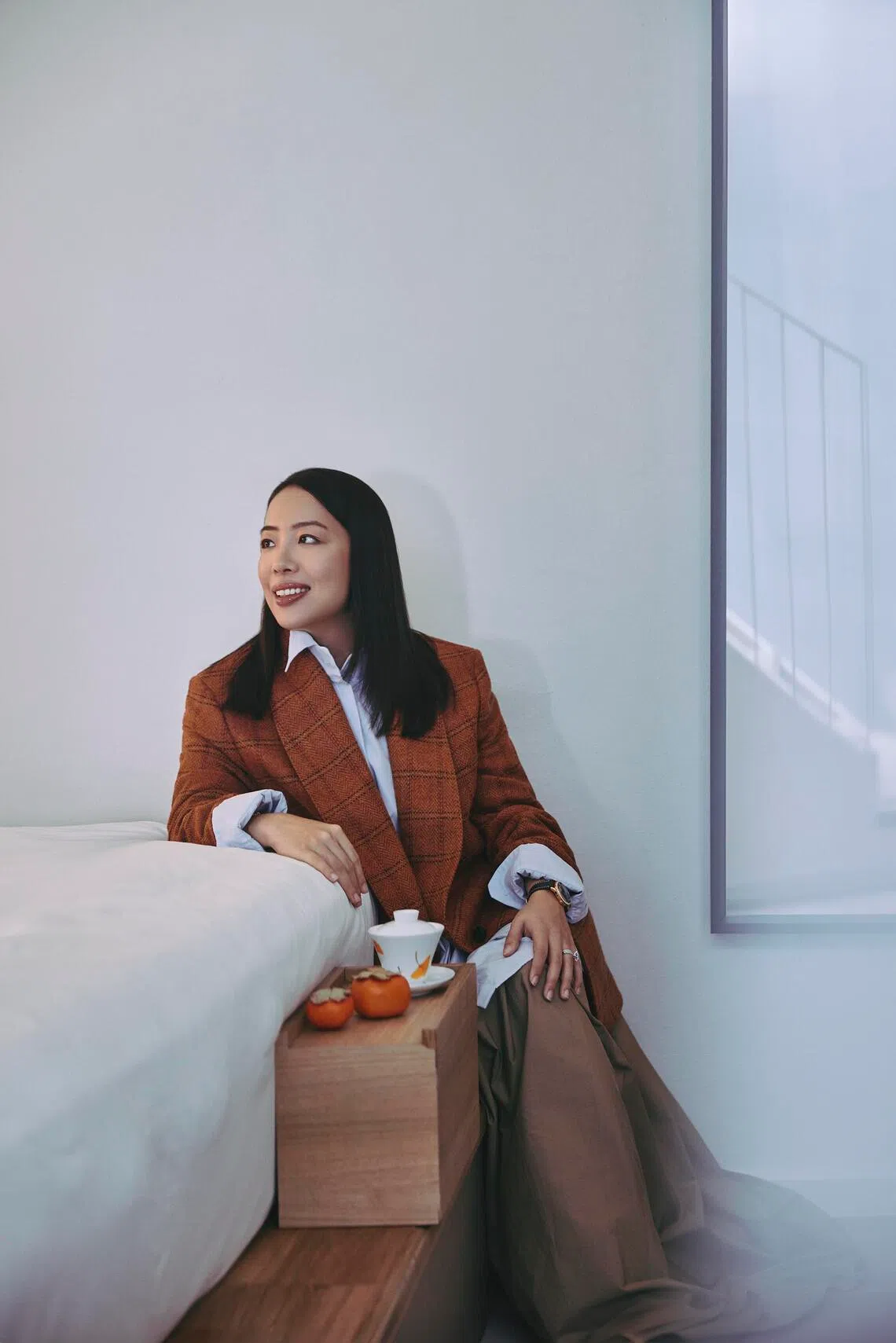
So she stayed and began working with her father, Herman Chang, who founded property developer Macly Group and had owned Lloyd’s Inn since its inception in 1990.
By 2015, she had remade the once-unremarkable budget property into a design-led boutique hotel defined by light, openness and calm – an “everyday hotel” that offered a quiet urban retreat without the trappings of five-star luxury.
Less than a decade later, Lloyd’s Inn had outgrown its River Valley address, expanding into Bali and Kuala Lumpur and becoming a tightly curated, multi-city boutique hotel group.



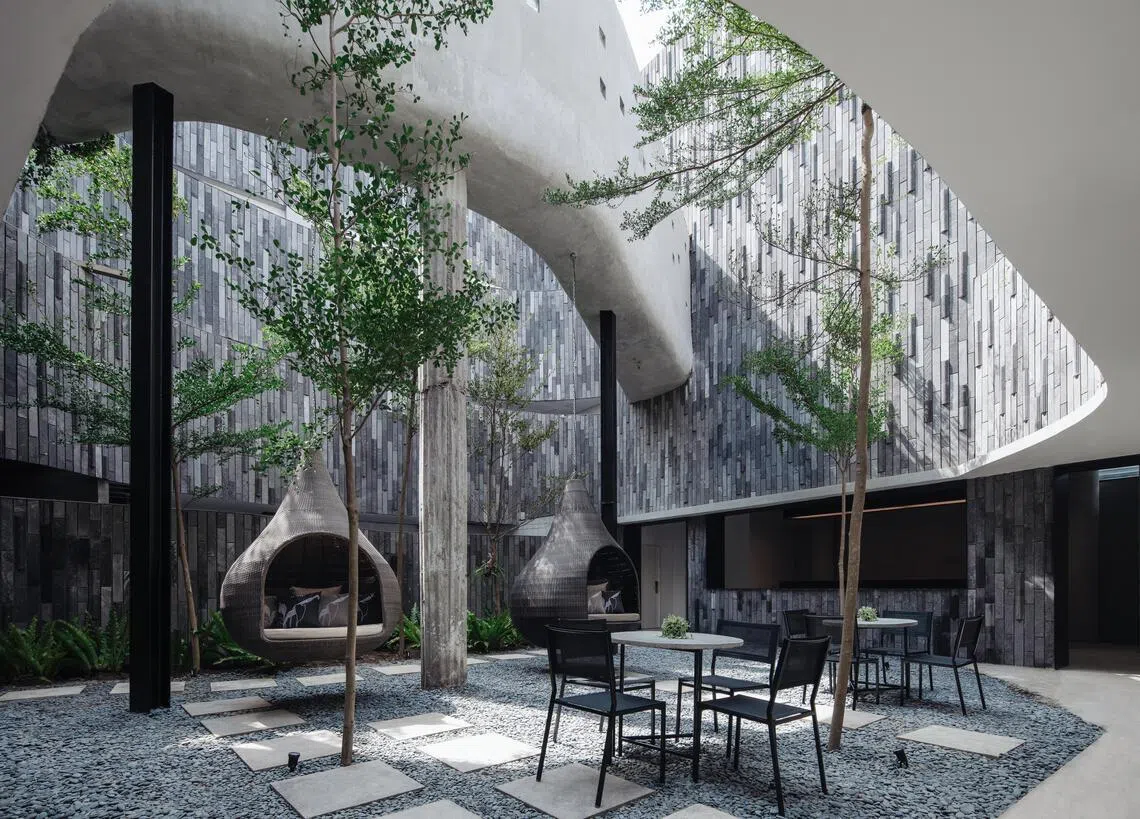
“I didn’t go in thinking I was going to build a hotel brand. I just thought it was something that could be done better – something I could take responsibility for.”
A mind that doesn’t shut down
She is, of course, understating it. A part of Chang has always been entrepreneurial – a trait she attributes to her father, whom she describes as “very pragmatic”.
The instinct reveals itself in unlikely moments. A day before this shoot and interview, she went for a haircut. As the scissors worked, her mind drifted elsewhere.
“I was thinking, how do they monetise this business? What are the margins? (Where) do they hire staff from? What’s the business model? What’s the USP?” she says.
All this, from getting a haircut.
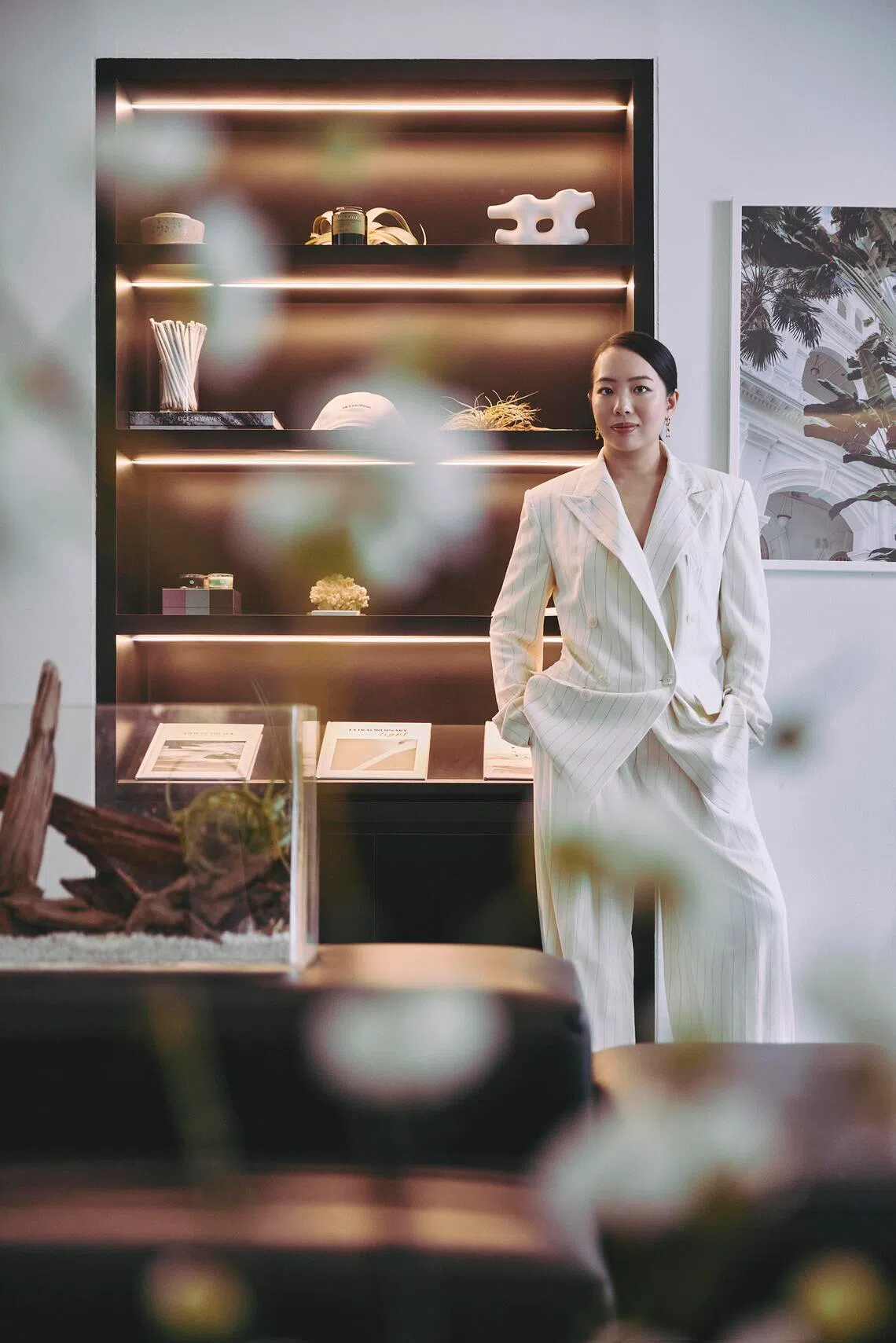
Unsurprisingly, Lloyd’s Inn is only one part of her portfolio under her own brand and company, Ove Collection.
Beyond hospitality, Ove Collection is also involved in property development, wellness, fashion and food – an assortment that can look scattered until she explains it.
“For me, the common thing across all my businesses,” she says, “is always modernising something that is traditional.”
Renewing culture for tomorrow
Take, for instance, SoupCup, her foray into F&B, which currently has a shop at Hong Leong Building. “I love fish soup,” she says, “but it needed a fresh spin.”
She reimagined the traditional staple for modern life – cleaner flavours, no preservatives or MSG, and packaged for people on the go. She wanted it served in a cup, designed to be taken away like coffee rather than eaten only at a table.
Partnering with Sharon Gonzago, a MasterChef Singapore Season 1 finalist, and entrepreneur Diana Yeo, SoupCup is less about reinvention than reframing: taking something familiar and making it feel current again.
Then there’s her fashion collaboration with influencer Andrea Chong. The label they founded together, Good Addition, is another exercise in reframing the familiar.
“We wanted to modernise the cheongsam, among other things,” Chang explains. That meant denim instead of silk, multi-weave tweed in unexpected cuts, and unapologetically neon colourways.
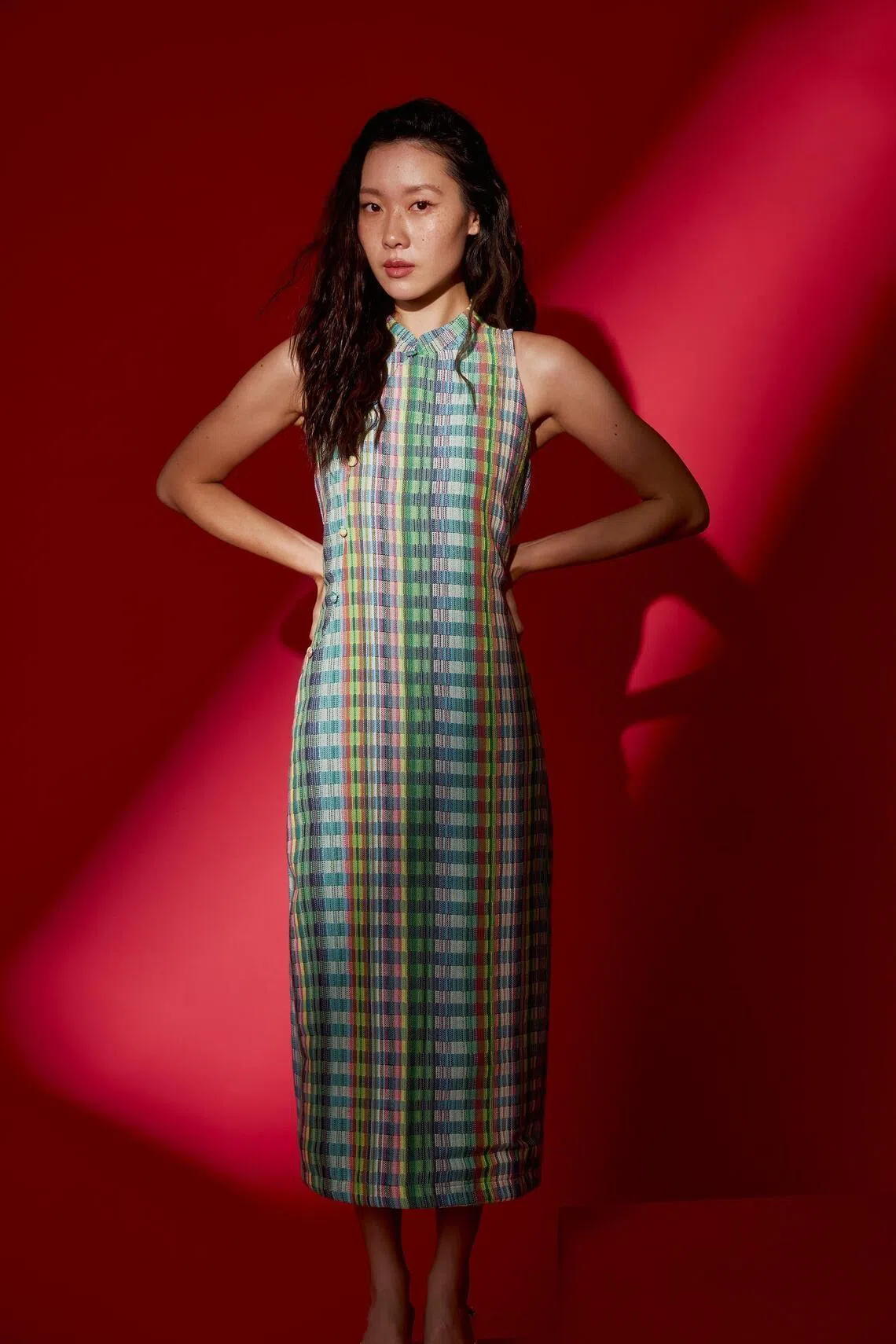
It was a conscious departure from the ornate, occasion-bound versions reserved for Chinese New Year and weddings. “It’s still recognisable,” she says, “but it feels current.” The results are cheongsams that can be worn beyond festive obligation.
“It’s really popular,” Chang says, pulling out her phone to show videos of queues snaking outside the New Bahru store. It’s proof that tradition, when handled with confidence rather than caution, can still resonate with a younger audience.
Small homes, big imagination
Arguably, Chang’s bigger victories still lie in property. Beyond Lloyd’s Inn, Ove Collection is involved in residential developments such as The Iveria and Hill House – both in the River Valley area – projects that reflect her belief that homes, like hotels, are systems shaped as much by behaviour as by design.
Singaporeans, she observes, are united by a deep-rooted desire for home ownership. “Being able to own a home itself – many people don’t consciously realise it’s already a luxury,” she says. “In the West, people rent. Here, people save up so that they can afford property.”
Real estate is not just an asset class, but also a cultural constant in Singapore – one that endures even as technology and industries shift.
She is unequivocal about location. “Accessibility and location are Number One,” she says, ticking off MRT stations, transport nodes and proximity to food centres.
But as homes grow smaller, she believes developers must rethink what they actually deliver within those constraints. “Sometimes under-providing and giving owners the ability to do what they want is best. If we over-design, buyers come and say, can you hack here, hack there?”
Her solution is flexibility rather than prescription. She talks about glass-enclosed rooms that can be opened or closed, sliding partitions, balconies that merge seamlessly with living spaces. “I want to enable owners to do what they want in the space. I don’t box up the space.”
At The Iveria, for instance, balconies open fully into the living area, with identical flooring blurring the boundary between inside and out – a small gesture that allows a compact apartment to feel more expansive.
Hill House took the idea further by weaving in a wellness narrative – lush landscaping, a calmer palette, and an emphasis on retreat rather than display. The units were taken up rapidly, but Chang says the success lay in restraint: designing just enough, and trusting buyers to finish the story themselves.
CNY for pragmatists
Married to Huttons senior executive Ngiam Juyong – a familiar face in property videos – Chang has two children, one nine months old and the other, two years. Motherhood, she says, has sharpened her sense of limits. Time, she realises, is finite.
“Chinese New Year is fun overall,” she says, before adding, “but it can be draining.”
As a career mum, she tries not to overthink the rituals. Gifted hampers become the spread. Home decorations are fashioned from whatever comes with the hampers, such as the paper talismans. Festive music is a YouTube playlist. Catering is outsourced.
“I haven’t stepped in the kitchen since my second child – I let people do it for me,” she says, amused.
It’s not cynicism so much as efficiency – a refusal to perform reverence for its own sake.
Which is, ultimately, the through-line of Chang’s career. She does not romanticise. She refines. She takes what exists – hotels, homes, traditions – and asks how they can work better, feel calmer, last longer.
It is simply how she moves through the world – noticing what no longer works, and deciding it can be done better.
Photography: Darren Gabriel Leow Fashion direction: CK Hair & make-up : Sha Shamsi, using Dior Beauty & KMS Location: Lloyd’s Inn Singapore
Decoding Asia newsletter: your guide to navigating Asia in a new global order. Sign up here to get Decoding Asia newsletter. Delivered to your inbox. Free.
Copyright SPH Media. All rights reserved.
TRENDING NOW

Singapore identifies 7 firms responsible for haze fires, notices issued urging action: Grace Fu

Could stablecoins be the future of money?

Singapore should prepare for prolonged haze until November, says Grace Fu

High Court rules against Julius Baer’s Singapore trust arm in US$50 million family trust dispute

