

Loh Lik Peng: Cooking with love
The F&B veteran may own hotels and restaurants, but there’s nothing he treasures more than a home-cooked meal with his loved ones
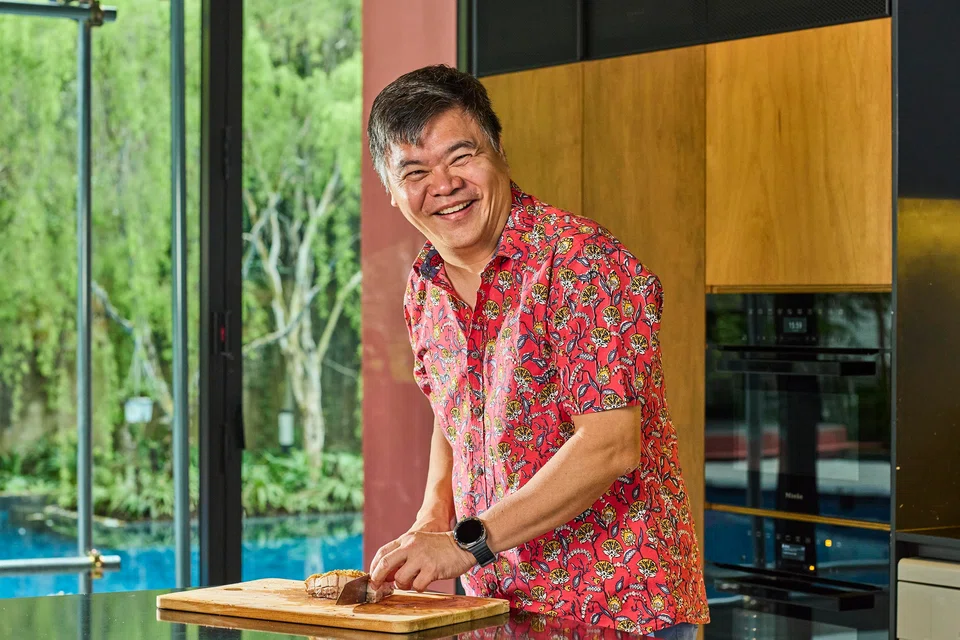
AS A HOTELIER AND RESTAURATEUR, it’s second nature for Loh Lik Peng to travel the world – whether for work or a vacation with his family.
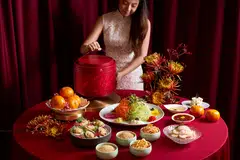
But all that comes to a grinding halt during Chinese New Year, when “no one’s allowed to travel”, says the founder of Unlisted Collection – a stable of hotels in places such as London, Shanghai, Dublin and County Cork, plus a string of Michelin-starred eateries in Singapore, including the three-starred Zen.
“Chinese New Year has always been a big thing in my family – it’s sacrosanct. No one is allowed to be missing.”
It’s a tradition that dates back to his childhood, thanks to his grandparents on both sides of the family. “Both my parents have a lot of siblings, so we had a lot of cousins,” he says. “Chinese New Year was the one time that we would see everyone.”
He recalls how his grandmother and aunt would cook enough food for some 50 to 60 family members – everything from Teochew yusheng to steamed fish and Cantonese-style siew yoke (roast pork belly).
But it didn’t end there. His family would head to Ipoh next, where his maternal grandfather was a prominent businessman.
“They would set up tents and there’d be 300 to 400 people coming throughout the day for our Chinese New Year feast – it was all very communal. Literally everyone from the village came, whereas in Singapore, it was more of a family affair.”
Growing up with food
While Chinese New Year celebrations now may not be as massive as before, they’re no less important – and tables heaving with festive specialities is a must. But regardless of the occasion, food has always been central to Loh’s life.
“My father is Teochew and my mum’s Cantonese, so growing up, we always had soup on the dinner table,” he recalls. “We had an amah in those days who was a fabulous cook, and she would always do the classic Cantonese dishes. On Sundays, we would have Teochew muay (porridge), which was my dad’s thing.”
SEE ALSO







Loh’s career choice may have been inspired at an early age because of his grandfather – an avid food lover who enjoyed dining out and trying new places as much as eating at home.
“My father was very into it, too. He grew up always appreciating food – whatever was on the table. That was because my grandparents were of that generation where you didn’t waste anything.”
Both his parents were doctors and didn’t have time to cook regularly when he was a child. He himself only picked up the skill when he left for college, armed with a few of his mother’s recipes.
He turned out to be pretty good at it, making dishes such as claypot rice and enjoying both the respite from his studies and the social aspect of inviting friends over for a home-cooked meal.
“It was the first time I ever had to switch on a fire and cook over a stove,” he reminisces. “So my love for cooking really started from there.”
Cooking for the family
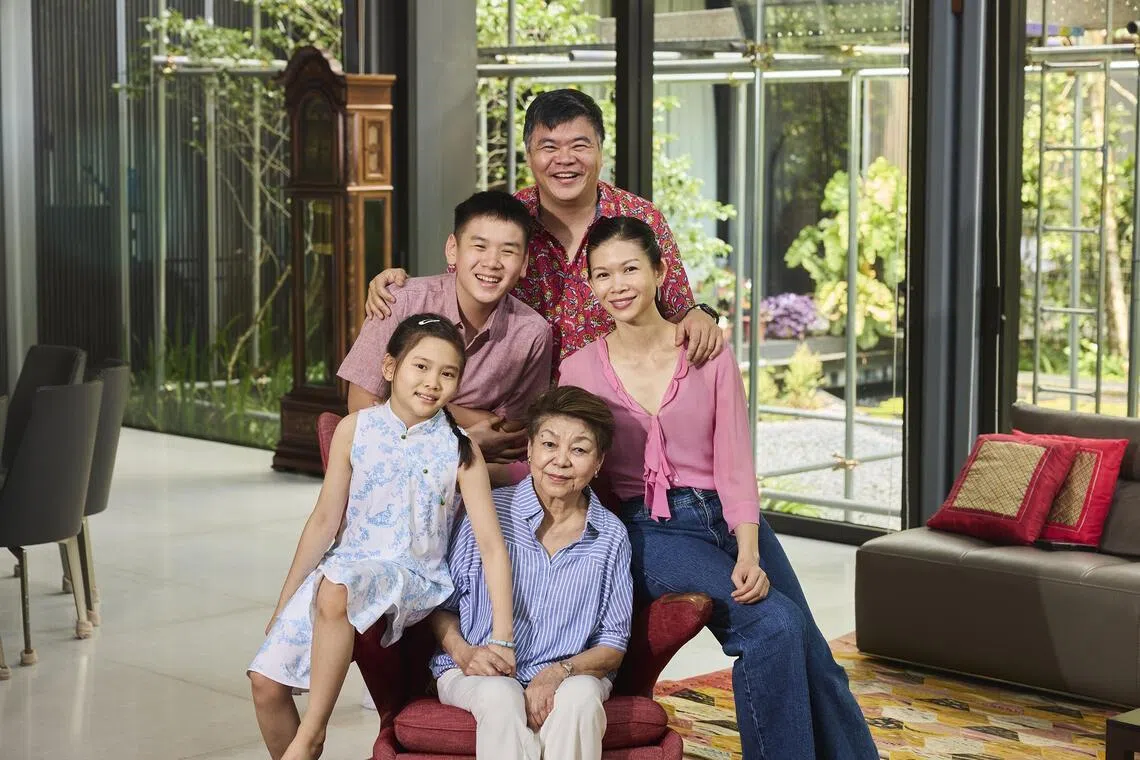
With his work schedule, he rarely has time to be in the kitchen, but it doesn’t mean that he and his family – his wife, violinist Min Lee, and their two children – can’t enjoy home-cooked meals.
“Fortunately, my mum – who’s now retired – cooks every day, and we are the beneficiaries of it. Even though we don’t live with her, she’ll always send food over, and we have dinner with my parents at their home at least twice a week so we still get to indulge in her cooking.”
One of her signature dishes is siew yoke, with an enviable crackling crust and juicy meat below. “I’m not sure how she does it. I tried to learn from her over the years, but my version is nowhere near as good. Even my chefs can’t do it as well as her.”
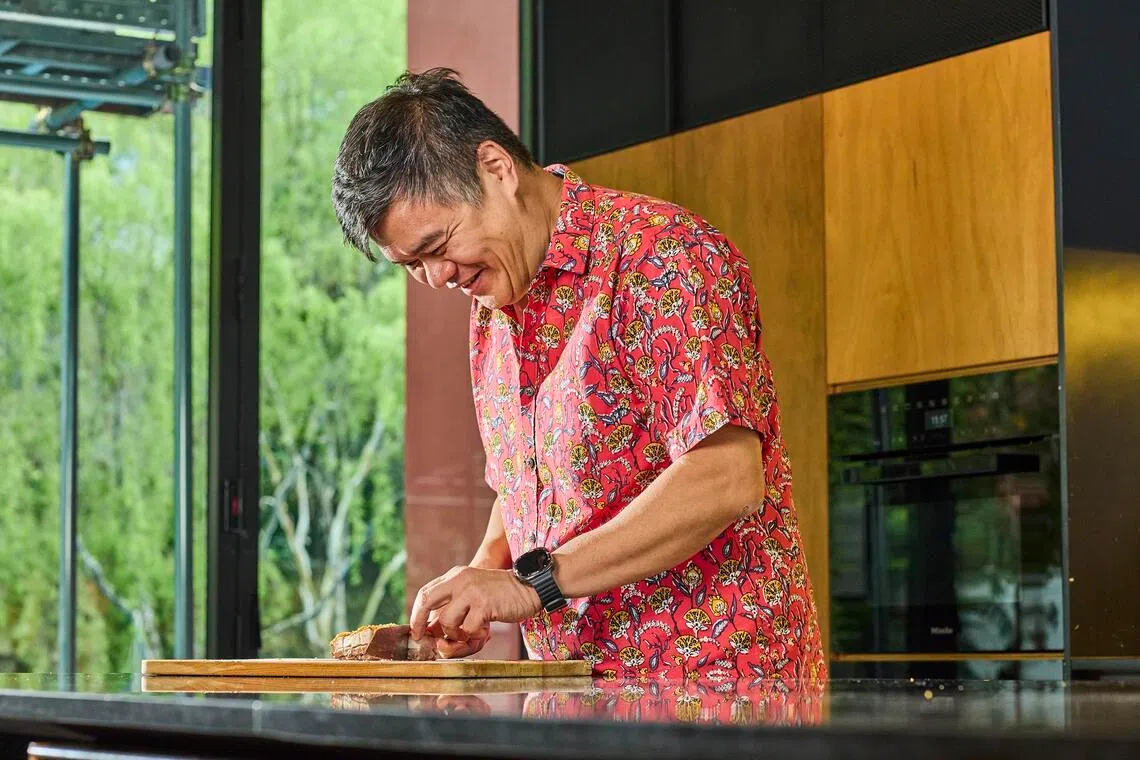
Loh has his own repertoire, though. “I like doing long, slow cooking. I’m usually buying tough cuts of meat like short ribs or beef cheeks, and cooking them slowly with red wine or something.”
One dish that has turned into a signature family meal is claypot beef rice. “I found the recipe online, (and) I’ve been replicating it ever since. I don’t do it so often now because it takes some time to prepare, but sometimes when there’s a special occasion, my son Connor (requests) it.”
He’s also the family chef when they travel – a recent example being a ski trip to Cortina d’Ampezzo in Italy, where they rented an Airbnb near the slopes. “They have all sorts of produce you can’t find in Singapore. You can find rabbits, venison and all sorts of dried meats in just an ordinary Italian supermarket.”
For a week, he cooked almost every day. “You can buy a whole basket of groceries for 50 to 60 euros (S$75 to S$90), and you can feed the whole family for two or three days.”
But it wasn’t just about the cooking – it was also about the precious quality time, away from the distractions of work, school and other activities. “There’s no one else there – you spend a couple of hours cooking and just chatting with the family.”
As a home cook, Loh is particular about the kitchen equipment he uses. “It has to work well and be easy to use,” he says. His home has been outfitted with Miele appliances because “having a good kitchen that works well is really important – otherwise it takes all the joy out of cooking, right?”
Joy of a home-cooked meal
Despite his passion for food, it wasn’t the reason why Loh went into the restaurant business.
“(As I came) from a family of doctors, everyone always assumed I was going to be a doctor,” he says with a laugh. “Growing up, that’s what I thought I would be. But my sister took the bullet for that one. She became a doctor, and I was allowed to be a lawyer.”
“The restaurants came about because I was doing hotels. And when you do hotels, you need restaurants,” he adds. “So I never intended to be a restaurateur, and I still struggle with the idea of being one. The restaurants are there, but they’re largely run by the chefs, not me. Maybe it’s more of a passion because I love food rather than (think) of it purely as a business.”
For someone who dines out extensively, he views a home-cooked meal as more special. “It’s a kind of decompression thing. You’re at home, the stress level is minimal, there’s no one serving you. When you eat out, you have to dress up, get in the car, drive out, think about what to order. At home, I can wear the dirtiest T-shirt, it can be stained, I don’t care.”
He equates dining at home with an act of love, where “you’re thinking about the family and not necessarily about the food”. It’s also why he values an invitation to eat at someone’s home more than dining in a fancy restaurant. “The food is almost irrelevant. It’s the fact that someone invited you to their home and is preparing a meal for you.”
He concedes readily that he might have been a different person if food had not been central to his universe. “I can’t imagine not having that appreciation for food. I can’t understand people who just eat to live rather than live to eat.”
For him, the dinner table is sacred – for both the food and the people sitting around it. “Whether it’s Chinese New Year, Christmas, birthdays or whenever everyone gathers – you don’t take those things ever for granted.”
This is the start of an editorial collaboration between Miele and BTLuxe. Watch the video of the interview at https://www.youtube.com/@MieleSGP. Ingredients for the cooking segment were provided courtesy of Culina.

Decoding Asia newsletter: your guide to navigating Asia in a new global order. Sign up here to get Decoding Asia newsletter. Delivered to your inbox. Free.
Copyright SPH Media. All rights reserved.
TRENDING NOW

Once staunchly pro-China, Malaysian Chinese businesses are now distancing themselves from Beijing

Britain’s mansion tax shows the difficulty of targeting wealth

Three hats, one goal: How Ng Kian Swan runs sustainability at NUHS

COE review: The gap between luxury and mass-market cars isn’t the only one worth bridging

