

Making culture great again
Low Sze Wee went from lawyer to custodian of the Chinese identity and hasn't looked back since.
 Add BT as a preferred source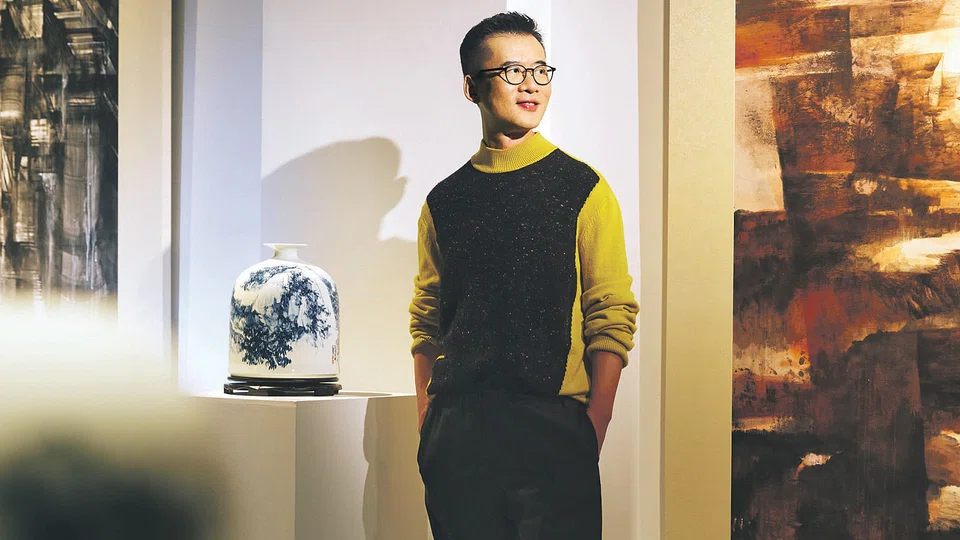
LOW SZE WEE WAS ON his way to what he imagined would be a long and illustrious career in the legal profession when, sometime in the mid-1990s, he came to the startling conclusion that he shouldn't be a lawyer anymore. There was a moment of clarity (or self-doubt) when, faced with a figurative fork in the road, he made a decision to switch from the law to the arts. It turned out to be the right call.
Low, 52, has spent more than two decades as an integral member of the Singapore arts scene, primarily in museums such as the Singapore Art Museum (SAM) and the National Gallery, where he was director (Curatorial & Collections). Since early-2018, he has been the CEO of the Singapore Chinese Cultural Centre (SCCC), a government-backed body that promotes the Singapore Chinese way of life. ''
I wasn't sure I wanted to be a lawyer,'' says Low. ''As it happened, when SAM opened in 1996, I joined the pioneer batch of locals trained to give tours on weekends. I gradually came to acknowledge that I enjoyed doing research about art and sharing my love for art.'' He adds: ''I realised that if I wanted to stay the legal course and be a lawyer, I would be a competent one but never a great one.''
In law school, Low became aware of a growing divide between himself and his classmates. ''I could see I was quite different from most of them,'' he says. ''They couldn't think of what they wanted to do with their lives, whereas I started to know the curators at SAM. They were overworked and underpaid, but all were passionate about their careers - job satisfaction is important.''
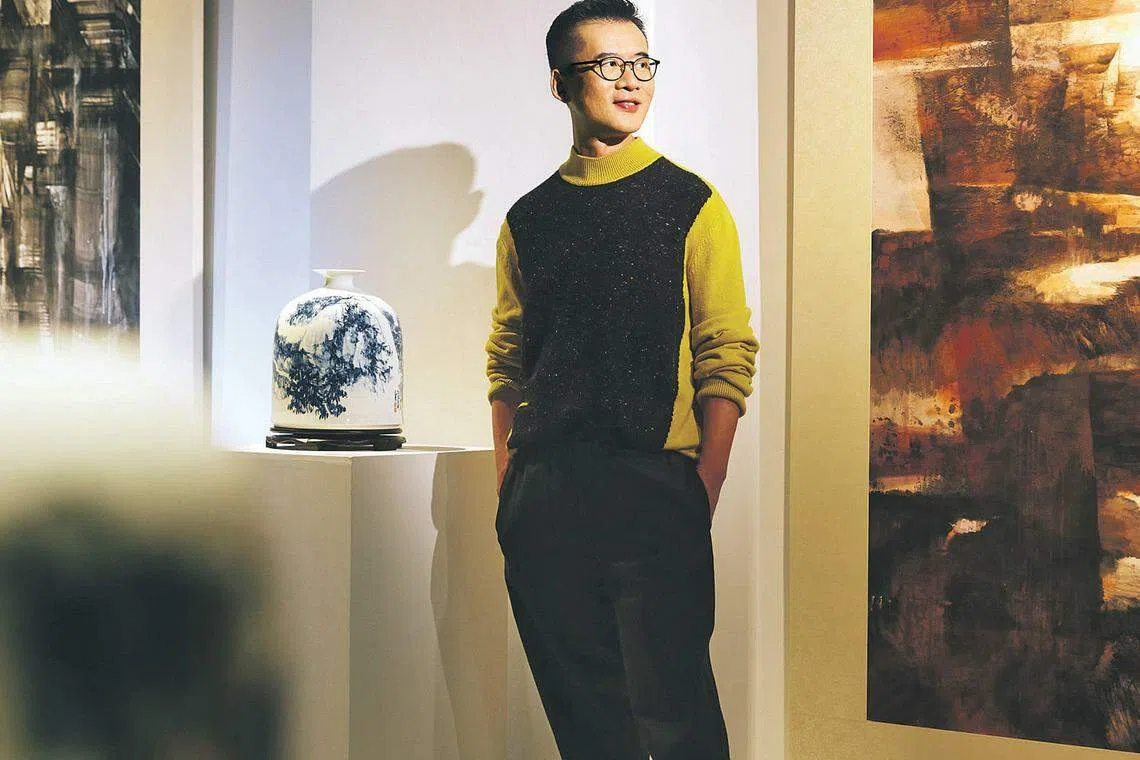
Within two years of becoming a weekend docent, he decided it was possible to have a career in the arts and enrolled for a postgraduate course at SOAS (School of Oriental and African Studies) University of London. ''It represented a big departure from law but I knew that I enjoyed doing art research and sharing my love of art with like-minded people,'' says Mr. Low.
His first job was as an administrative officer at the NUS Museum. ''I was able to see that in order for curators to function well, a museum must be properly run,'' he says. His own development as a curator began in earnest from 2001, when he joined contemporary art museum SAM. His eight-year stint there was followed by another eight years at the National Gallery. ''I was proud to be involved with great exhibitions and to have a role in shaping people's perceptions about art,'' he says.
Navigate Asia in
a new global order
Get the insights delivered to your inbox.
At SCCC, Low is charged with advancing the notion that the Singapore Chinese identity is distinct from other ethnic Chinese groups, as well as defining its place within a multicultural society. Discussing how and why these cultural differences evolved over time is not the same thing as, say, curating an exhibition by contemporary Chinese painter Wu Guanzhong - but Low has done enough deep diving into each subject to be an authority on both.
The Singapore Chinese cultural identity can be distilled into three parts, each constantly interacting with the other, says Low. These include early migrants and what they brought to Singapore; the interaction of Chinese within different dialect groups and between other ethnic groups; and the public policies implemented by the government. The result is a unique version of multiculturalism - unity in diversity, Singapore-style.
The SCCC's permanent exhibition, Singapo(ren), examines this uniqueness in some detail, while the centre's online videos focus on subjects such as Chinese festivals, traditional crafts and major dialect groups in Singapore.
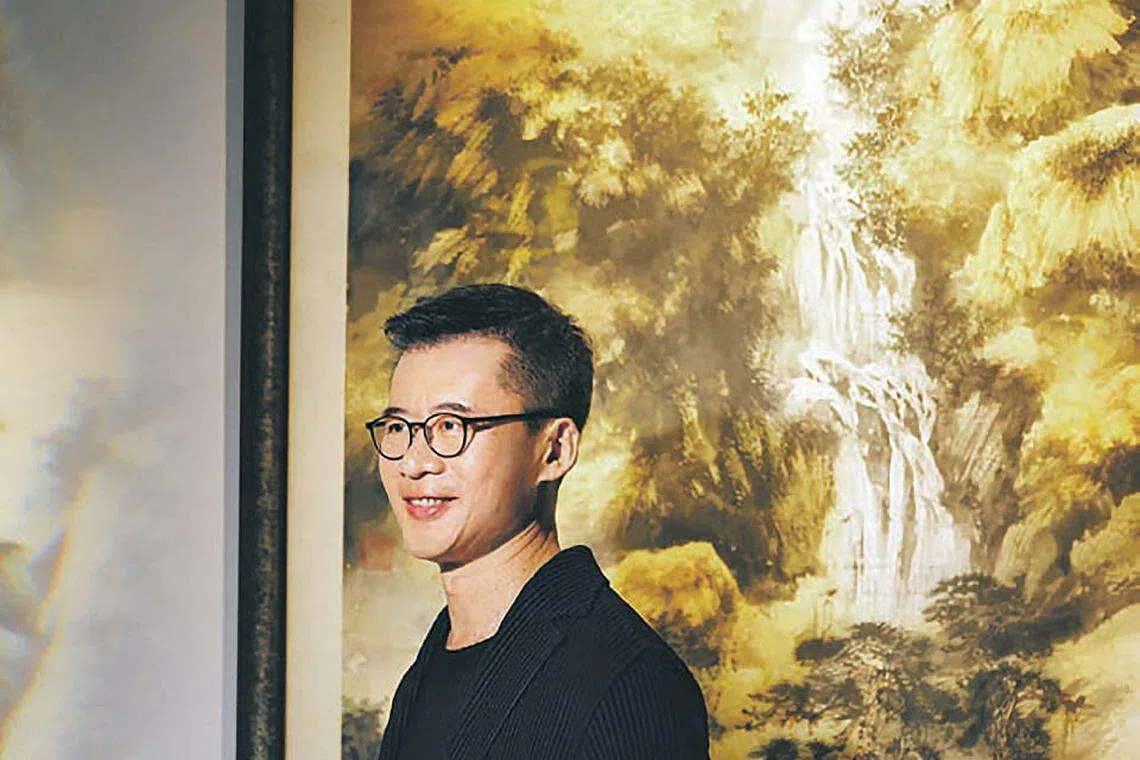
''How we celebrate Chinese New Year is different from other places,'' says Mr Low. ''Pineapple tarts are not snacks from China, they stem from Peranakan culture, so new year goodies are a result of cultural interaction, and the way we celebrate the new year - Chingay parades and so on - is also different.''
Low says his thought processes are still firmly in English. He grew up conversing in broken Hokkien with his paternal grandparents and noticed that when he signed up for Hokkien class during the 2020 circuit breaker, his fellow participants were all young adults eager to brush up and communicate better with their older relatives. ''It brought home to me that young people are interested in their background,'' he says. ''We must give them the benefit of the doubt as they are trying to figure out their own identities.''
The search for identity extends to other aspects of Singapore Chinese culture. For example, many of the works from an exhibition curated by Low, of Chinese ink paintings by contemporary artist Wang Jiafang, are owned by Singapore Chinese collectors who also happen to be non-Chinese speakers.
This is an idiosyncrasy Low first observed in the 1980s, when local collectors who couldn't speak or read Mandarin proved to be knowledgeable buyers of modern Chinese ink paintings, greatly appreciative of the innovative spirit. ''Local collectors were open to new trends in ink painting, likely due to their exposure to a more cosmopolitan lifestyle in Singapore,'' he writes in the catalogue to Wang Jiafang's show, now on at Primz Gallery. This willingness to embrace painters who break with tradition in pursuit of something new is symptomatic of a Singapore Chinese audience.
Innovation within cultures is among the topics that attract Low's attention but he's also quick to point out that his responsibilities go well beyond that. ''At SCCC, I take care of everything from season parking to the long-term health of the organisation,'' he says. ''The buck stops with me.''
Decoding Asia newsletter: your guide to navigating Asia in a new global order. Sign up here to get Decoding Asia newsletter. Delivered to your inbox. Free.
Share with us your feedback on BT's products and services
TRENDING NOW

Singapore developer in limbo after Timor-Leste scraps major township project
On the board but frozen out: The Taib family feud tearing Sarawak construction giant apart
MAS to remove mandatory financial advice for complex products for most retail investors
That ‘cheap’ Malaysia condo could cost Singapore buyers far more than they think

