

‘More than a tent, less than a palace’: The house that Andy Goh built
He has been involved in some of the region’s grandest projects, but this hospitality group founder and CEO is trading it all for a simpler – but no less luxurious – life
THERE ARE CHICKENS CACKLING IN the background when we call Andy Goh. It’s not the usual soundtrack to our interviews with C-suite executives – but, as we come to learn during our conversations with Goh, he isn’t someone to take a well-pecked path.
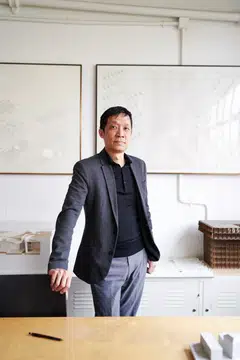
The 49-year-old is CEO of investment holding firm Jonah Journeys and the founder of R+, a hospitality brand focused on responsible luxury. For most of his career, though, Goh was CEO for emerging markets at Ong&Ong, one of Singapore’s largest architectural and urban planning firms.
An architect by training, he has been credited with introducing “super architecture” to Cambodia and Myanmar, and has overseen more than a few lofty projects in the region, including the Architecture MasterPrize-winning Bishopsgate House, and the sprawling Alma Resort in Vietnam’s Nha Trang, a waterfront property with 580 suites, 12 swimming pools that cascade into the ocean, and even its own science museum.
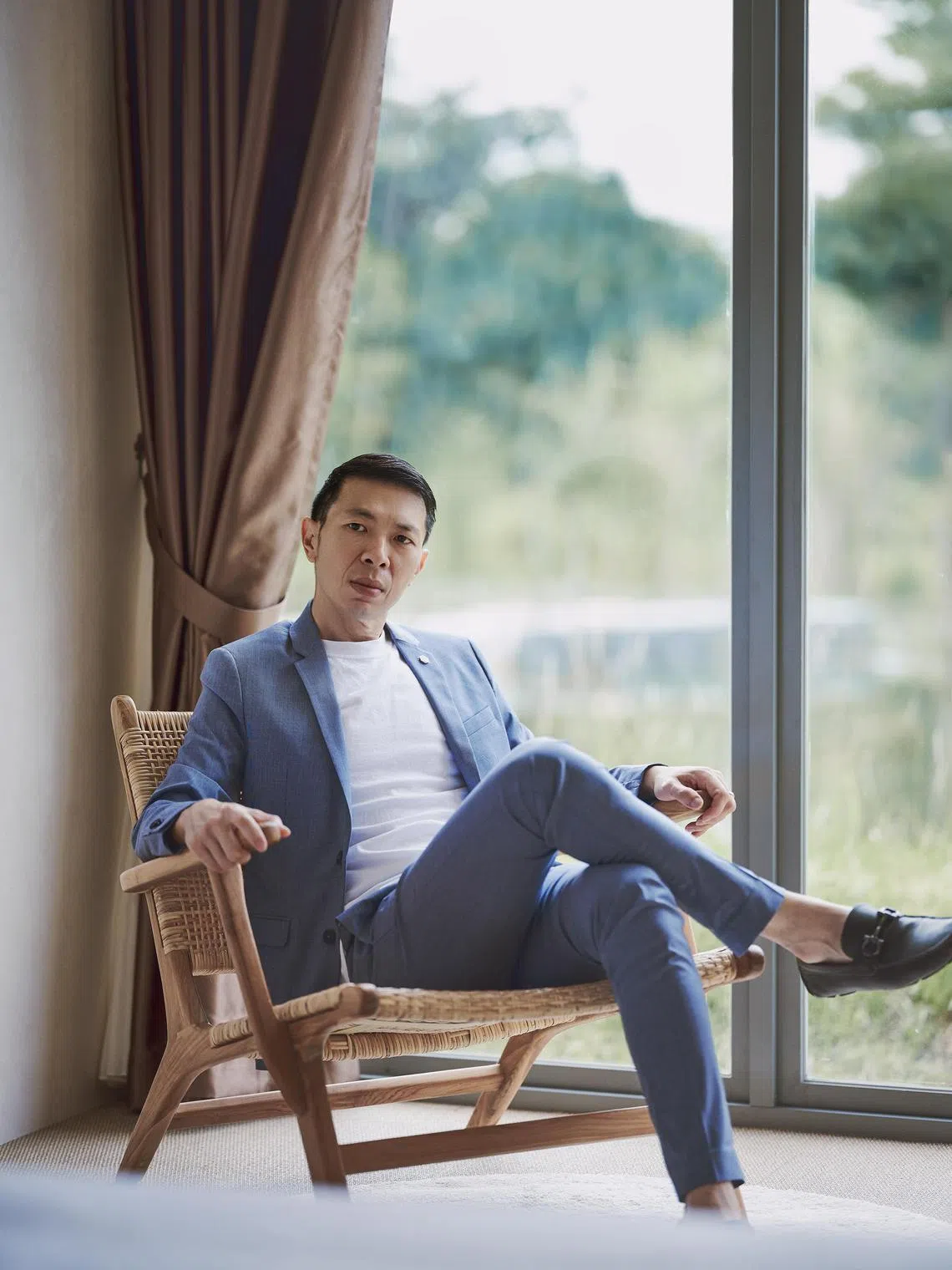
Yet, for someone who’s spent a lifetime designing extraordinary spaces, Goh’s own home is surprisingly simple. He is building what is essentially a 200-square-metre (sq m) box of lightweight, modular components in rural Kampot, Cambodia; it’s a sustainability-focused space that he describes as “more than a tent and less than a palace”.
“To me, this is the ultimate form of living,” says the philosophical executive. “A small interior, and an entirety of landscape to look upon. A living space, a bedroom and a bathroom. Isn’t that all we need? And many do with much less. I believe this is more than enough. The ability to use different spaces for different needs and be able to enjoy them through the day is key.”
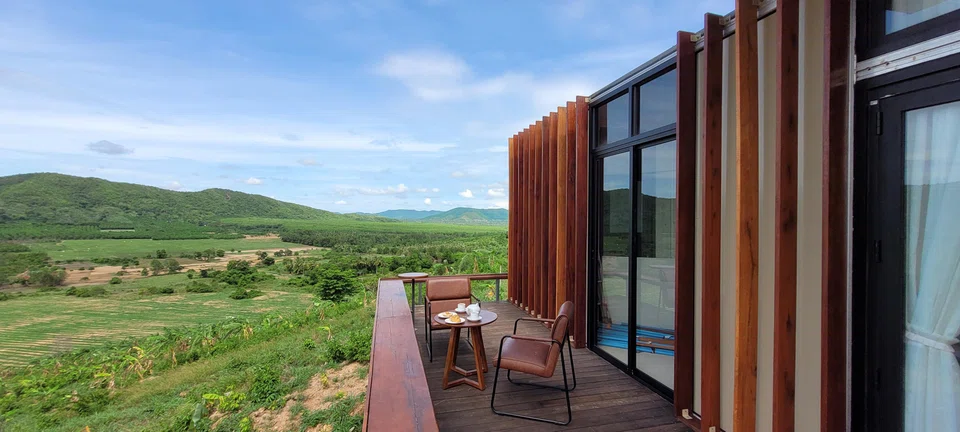
That landscape he’s chosen for himself and his wife (his son, who’s currently doing National Service, will visit) is one of mist-wreathed mountains and gently sloping valleys. Forests and farmland stretch as far as the eye can see – Kampot, after all, is where the world’s best pepper and most of Cambodia’s durians are grown.
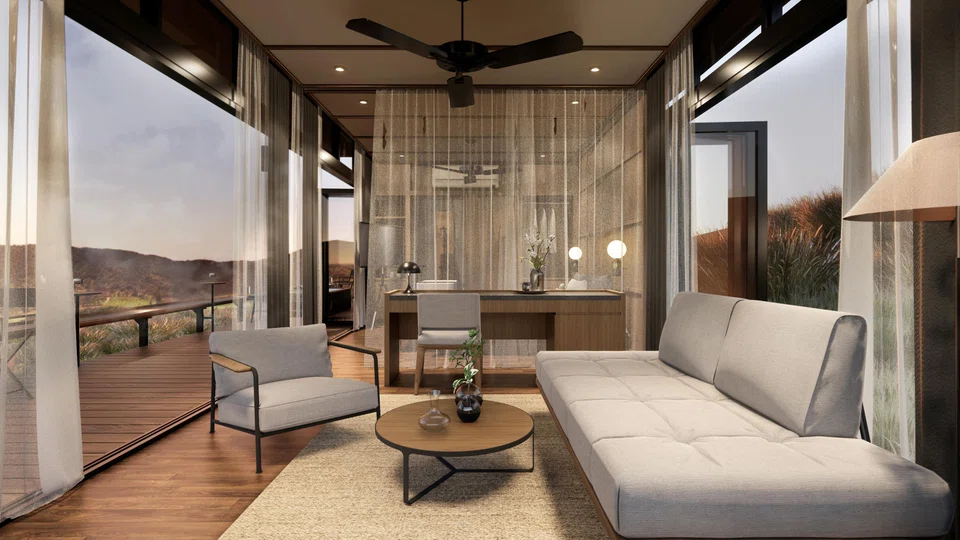
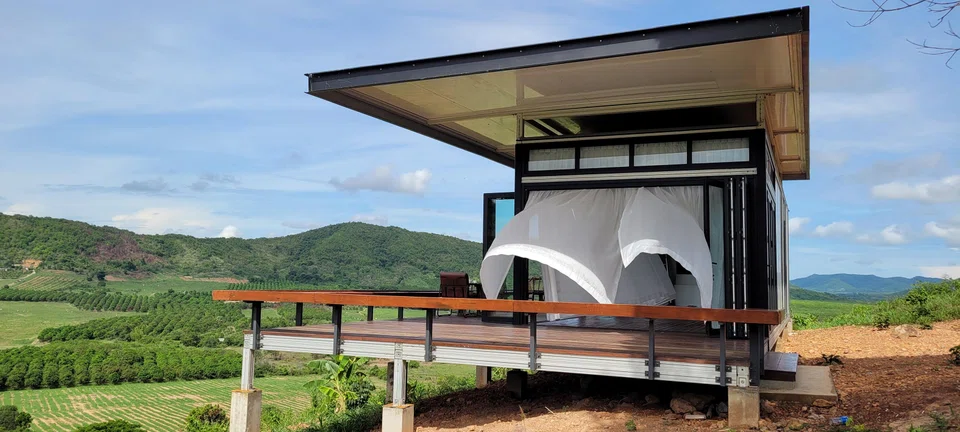
To prepare for the construction of the new house, Goh is staying solo in a one-bedroom, 42 sq m prototype next to the site, which serves as a test bed for the real thing. In truth, it’s more stunning than many other actual homes: an open-plan space with timber flooring and floor-to-ceiling glass concertina doors, surrounded by a broad deck that offers breathtaking 360-degree views.
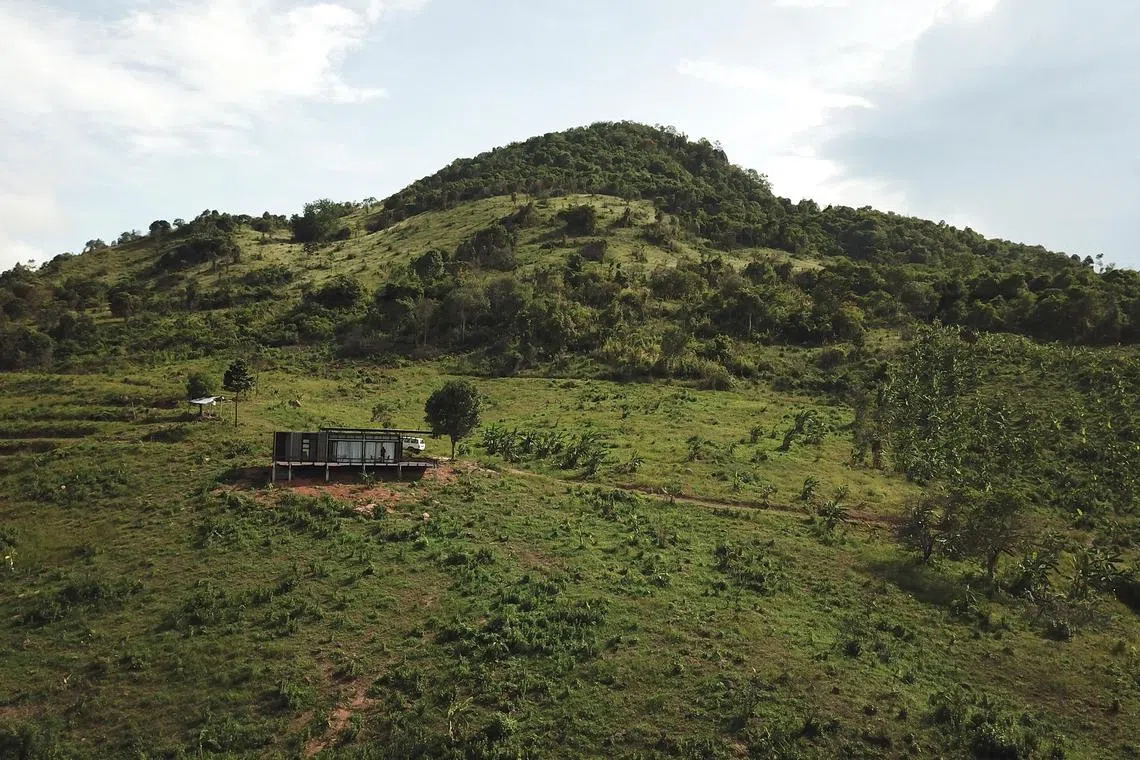
Of the prototype, Goh explains: “It was an opportunity to test a module before it was composed into a cluster of units. We are able to trial the different technologies such as solar panels, water supply and other utilities. I also felt it was worthwhile to test-stay the unit. The seasons, views and climate will change, and I can experience it all and better calibrate the actual unit that’s farther down the slope.”
The module is similar to what Goh is using for his game-changing “high-living, low-impact” R+ resorts, the first of which will launch in Cambodia’s Phnom Thom and the Philippines’ Davao come September, offering guests access to remote areas with a light footprint thanks to “quick-build technology” that makes the units scalable and viable in different environments.
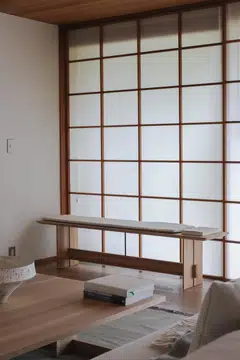
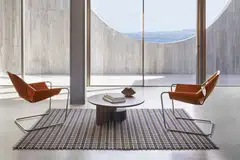
The main structural parts are aluminium, chosen for its durability, light weight, resilience to weather and potential to be reused, while the timber and glass are locally sourced. Cabinetry is clipped into the mainframe and can be swapped out as necessary.
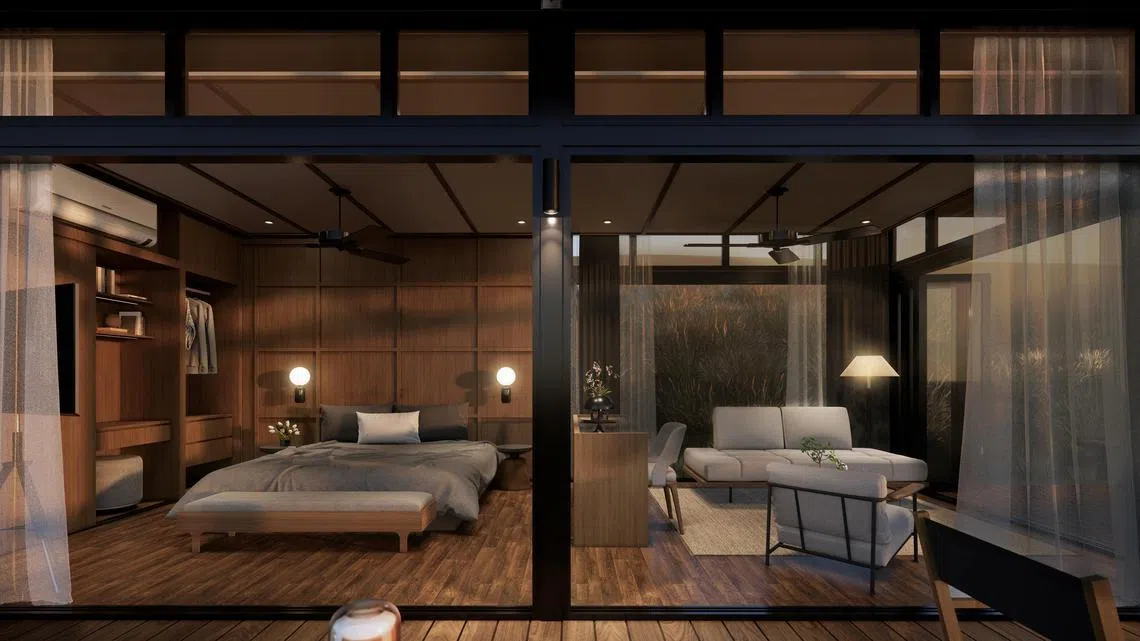
“I wanted to develop a kit of parts that would make it possible to set up almost anywhere and incur a very low footprint in terms of site coverage and carbon emissions,” Goh says.
One key criterion for the construction of his new home is that it has to be able to be “redeployed” if needed. The idea of permanence, he believes, limits not just movement, but one’s ability to appreciate more than the material world.
“Once we are able to accept that (a home doesn’t need to be enduring), our notions of materials tied to permanence will cease, and we will be free to appreciate more of the ephemeral and the visceral,” he declares.
What leads a person to live the way they do? In Goh’s case: a childhood spent in Brunei living next to a river and learning about shoreline protection from his father, a civil engineer; an international school education where “we didn’t have homework so the afternoons were more carefree and spent looking for mudskippers”; and the subsequent passing of his parents, which led to him finding the freedom to move and live where he wanted.
This is one CEO who’s immune to the pull of a Good Class Bungalow. In fact, he’s consciously downsized his home over the years – from a house in Katong, to a 110 sq m HDB flat in Punggol, and then to a condo that was about the same size as the flat but where the “effective space was only 70 sq m”. Before he moved to Kampot, he “Marie Kondo’d the whole thing”.
“I don’t have anything in my storeroom any more,” he shares. “And now what I can’t bring home, I don’t buy.”
But that’s not to say he lives without luxury. Goh is on a constant journey to explore how the atmosphere of luxury can be retained across time and space, which for him equates to a “luxurious bed with a high cotton thread count, complete with a plush duvet set in the midst of wilderness”.
He muses: “(Luxury) is contrast. In this contrast, the comforts of life are illustrated, and the ability to capture this in built form and make it a living space is simply bliss. And bliss is the concept of home.”
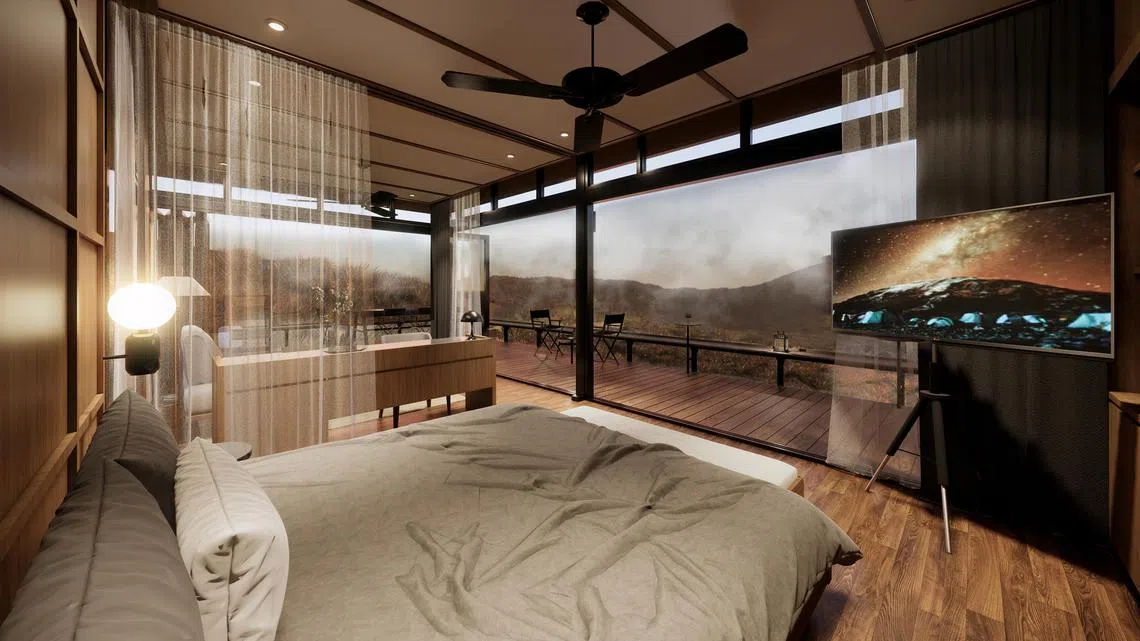
When his own home is ready later this year, the nature lover is looking forward to languid horse rides through the many trails that wind through the surrounding valleys, and tending to the farm he plans to set up on site. Until then, he’s enjoying life in the prototype, a cocoon where tranquil days are slipping by into gentle nights.
“To me,” he says, “this is the ultimate form of living – to be able to dwell where you want to.”
Decoding Asia newsletter: your guide to navigating Asia in a new global order. Sign up here to get Decoding Asia newsletter. Delivered to your inbox. Free.
Share with us your feedback on BT's products and services
TRENDING NOW
World’s largest offshore wind platform by Seatrium consortium on track to be completed by 2028

Is stamp collecting enjoying an analogue revival or are its best days over?

GovTech retrenches another 38 staff in second round of layoffs
MBS adjusted property Ebitda falls 20.6% in Q3 with fewer high-roller visits, weaker hold

