

Precious ballerinas on show
This is an exhibition that will delight both jewellery and ballet lovers
ALMOST TWO YEARS AGO, VAN Cleef & Arpels did something rather special here.
It opened an exhibition area adjacent to its new boutique in Raffles Arcade that’s accessible via a secret door. Les Jardins Secrets (French for “the secret gardens”), as it is called, has since hosted several fascinating shows focused on the maison’s patrimony. There was one featuring rare high jewellery pieces, including those loaned from a VIP’s private collection, as well as presentations focused on rubies or jewelled timepieces.
From now till Mar 10, Les Jardins Secrets is again welcoming the public to visit and peruse a remarkable collection of heritage pieces, titled Ballerinas by Van Cleef & Arpels.
Enchanting dancers
If you didn’t already know, the French luxury jeweller has had a long history of admiring and supporting dance, beginning with ballet. That devotion to the art form resulted in the maison’s first Dancer clips, created in 1941.
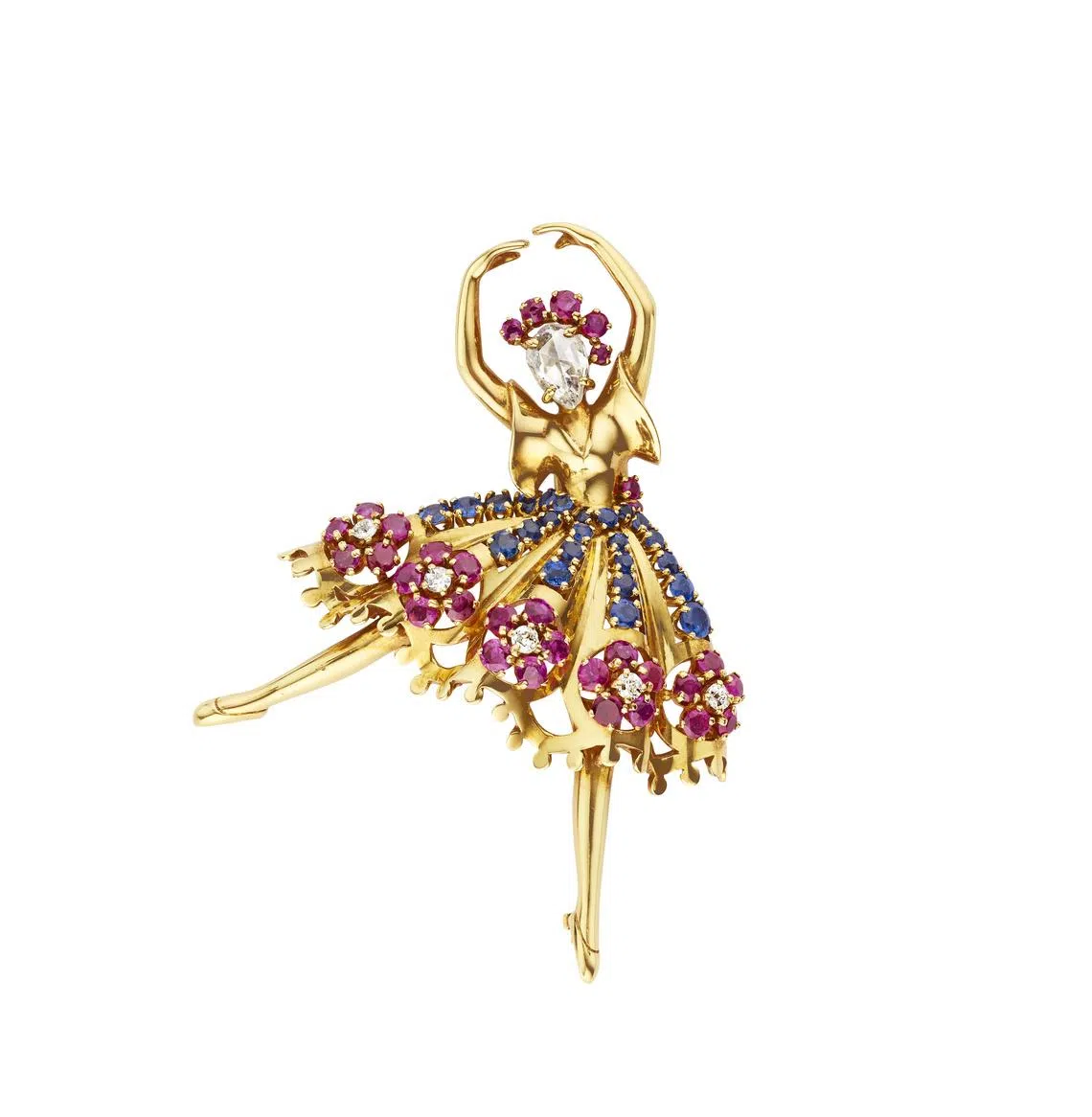
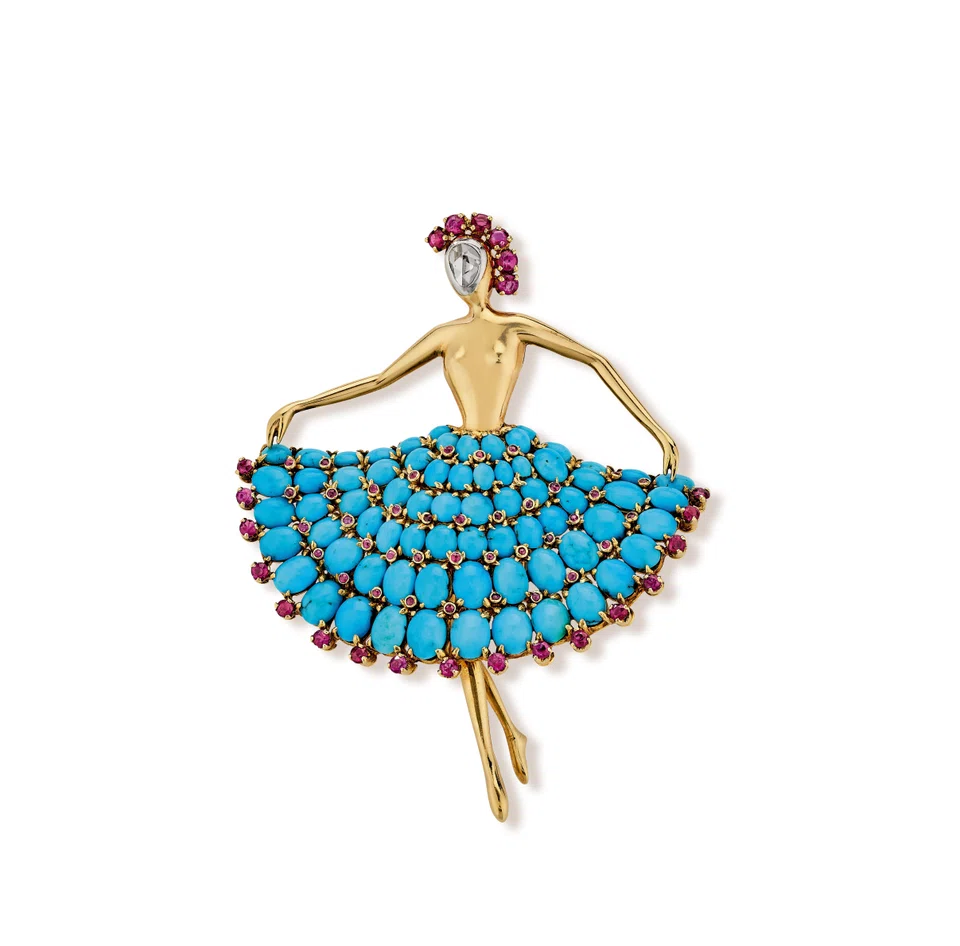
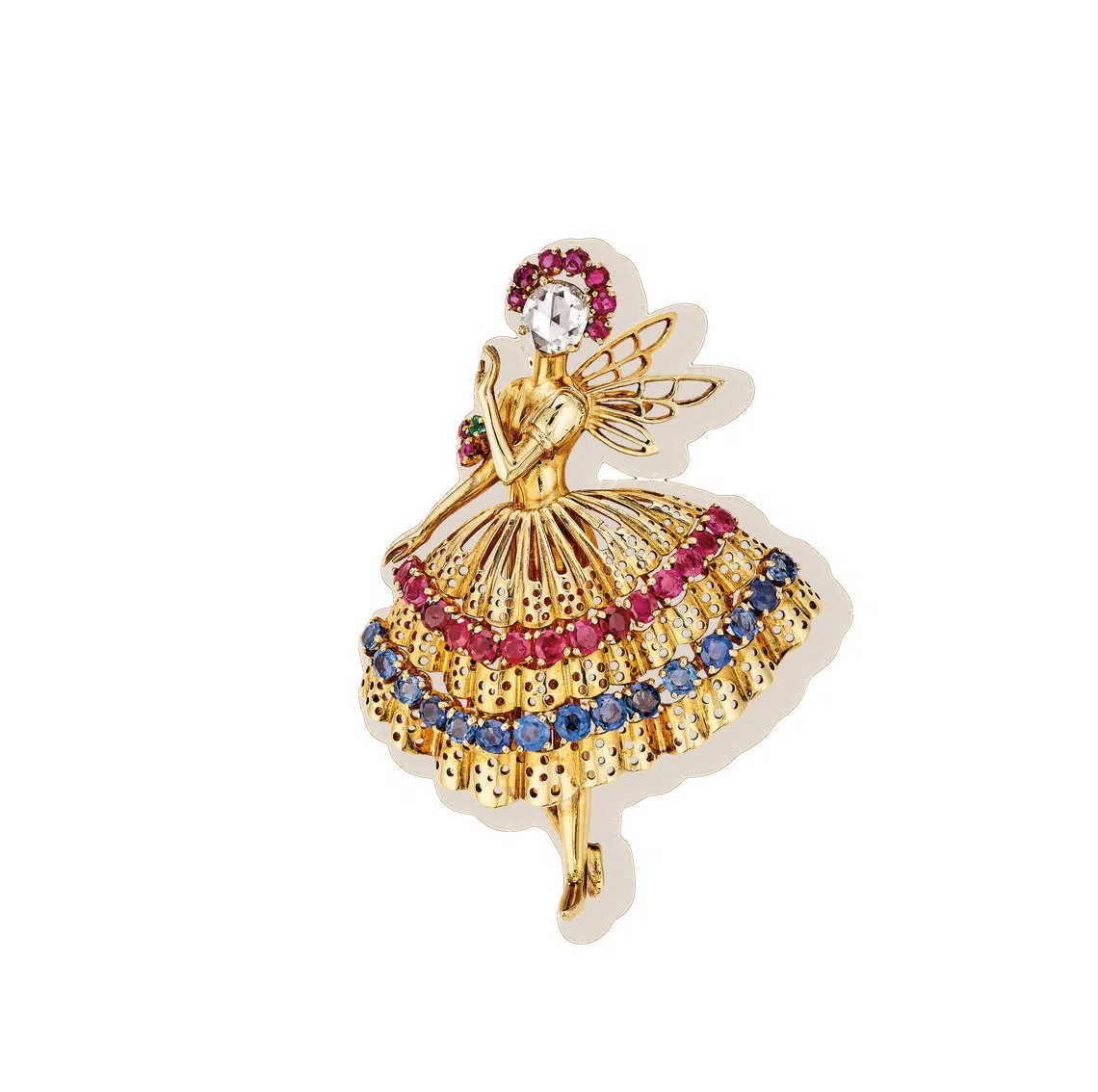
The dancers were often crafted with rose-cut diamond faces – that cut being the pre-eminent style in Europe from the 16th to the 18th centuries – and their heads crowned with gem-decorated headdresses. Feminine and elegant, each is captured in motion and depicted with pointe shoes and a bejewelled tutu that seems to swirl and flutter alongside their movements.
Over the years, the savoir faire of Van Cleef & Arpels’ artisans in carefully studying and translating these fine details into exquisite objects has made the Dancer clips distinctive collectibles, with admirers from around the world.
Quite naturally, the dancers have also adorned vanity cases, earrings and timepieces, each one ultra feminine, refined and always depicted in motion. Some of these creations are a nod to famous dancers of the world, including La Camargo (Marie Anne de Cupis de Camargo), the great 18th-century French ballerina.
Some highlights
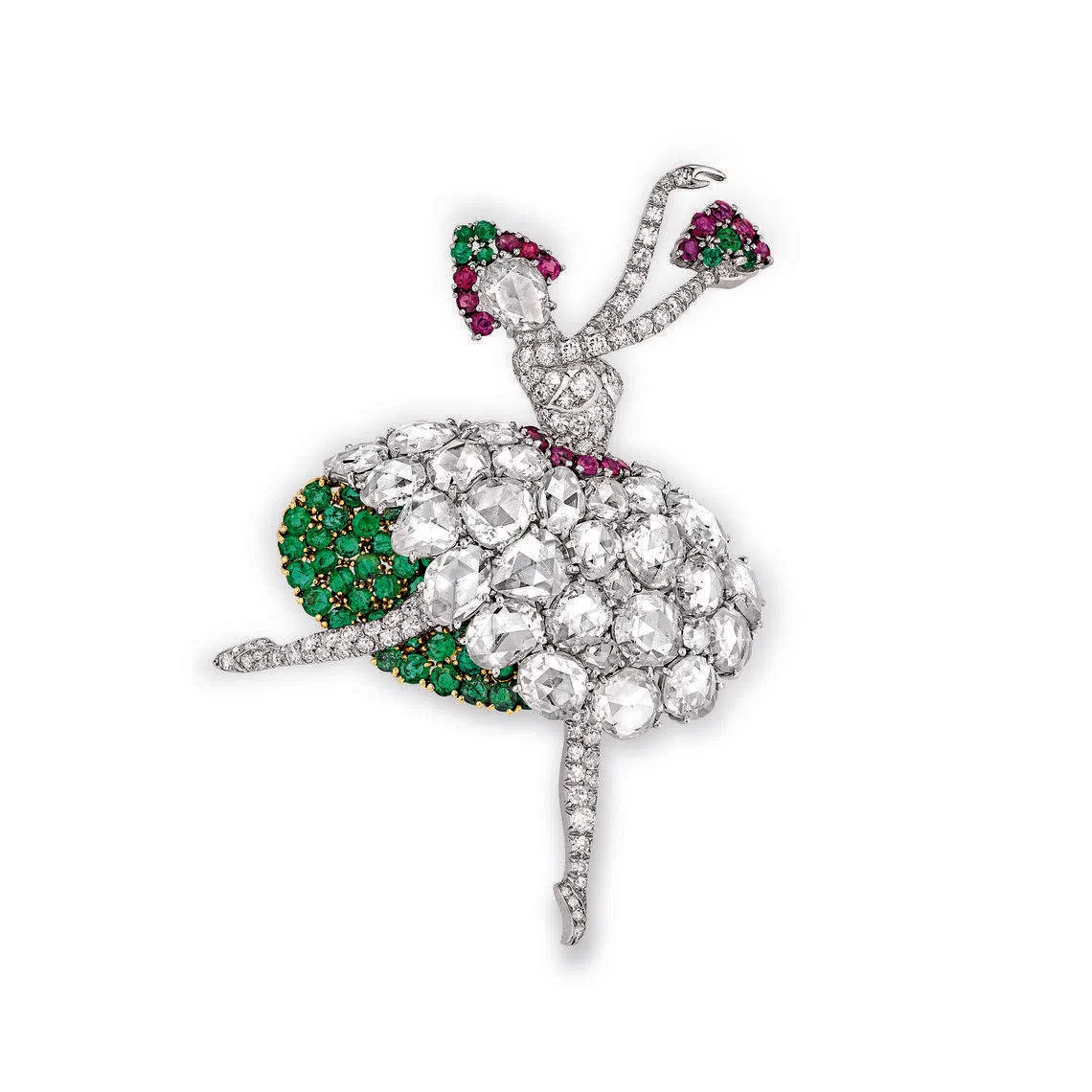
At the exhibition, you’ll see a Spanish Dancer clip from 1941, where rose-cut diamonds are used both for the dancer’s face and her tutu. Incidentally, this particular cut is now used in all of Van Cleef & Arpels’ feminine figure creations. Colour comes in the form of emeralds and rubies, which adorn the inside of the dancer’s skirt, her headdress and a fan in her hand.
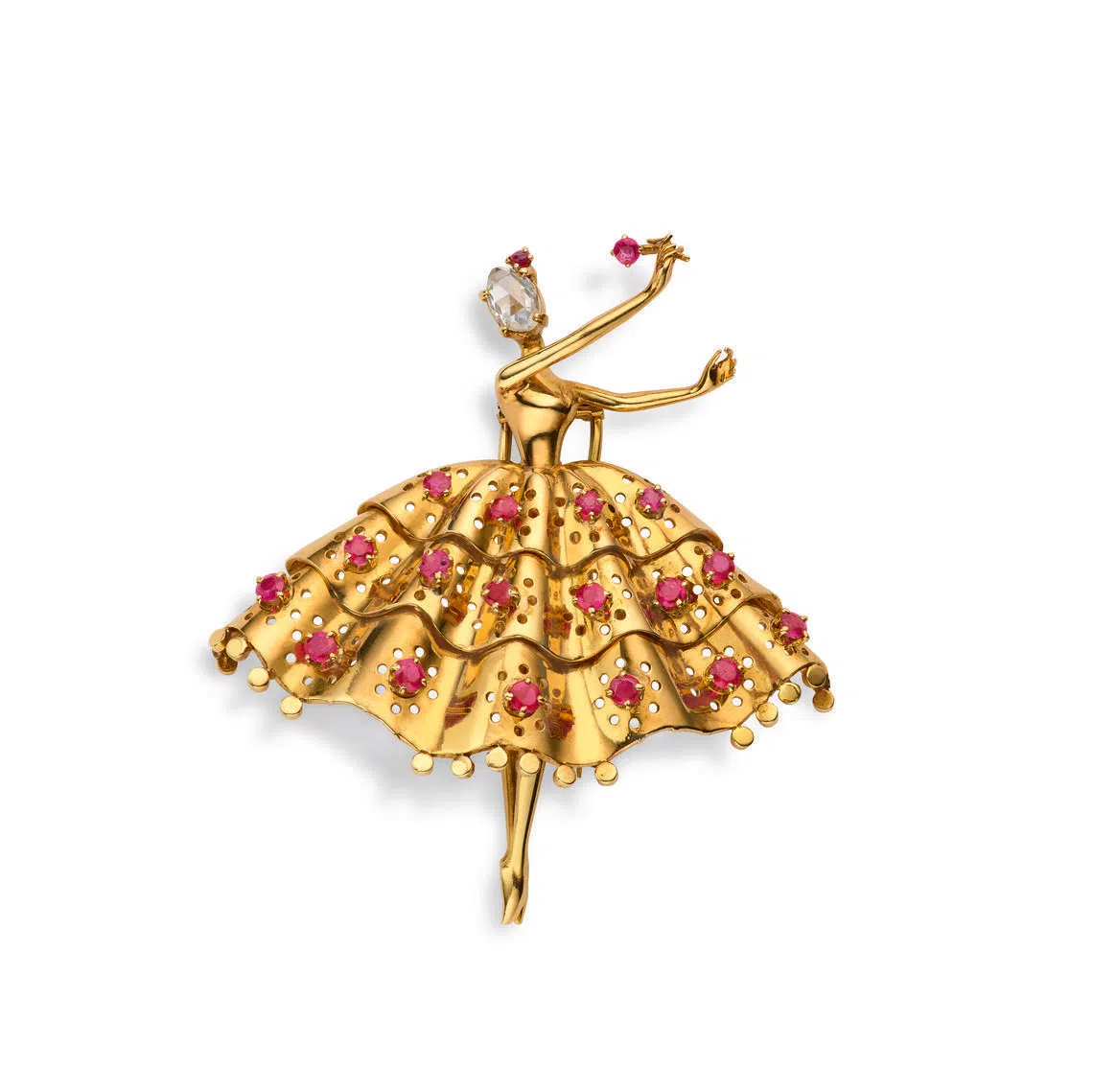
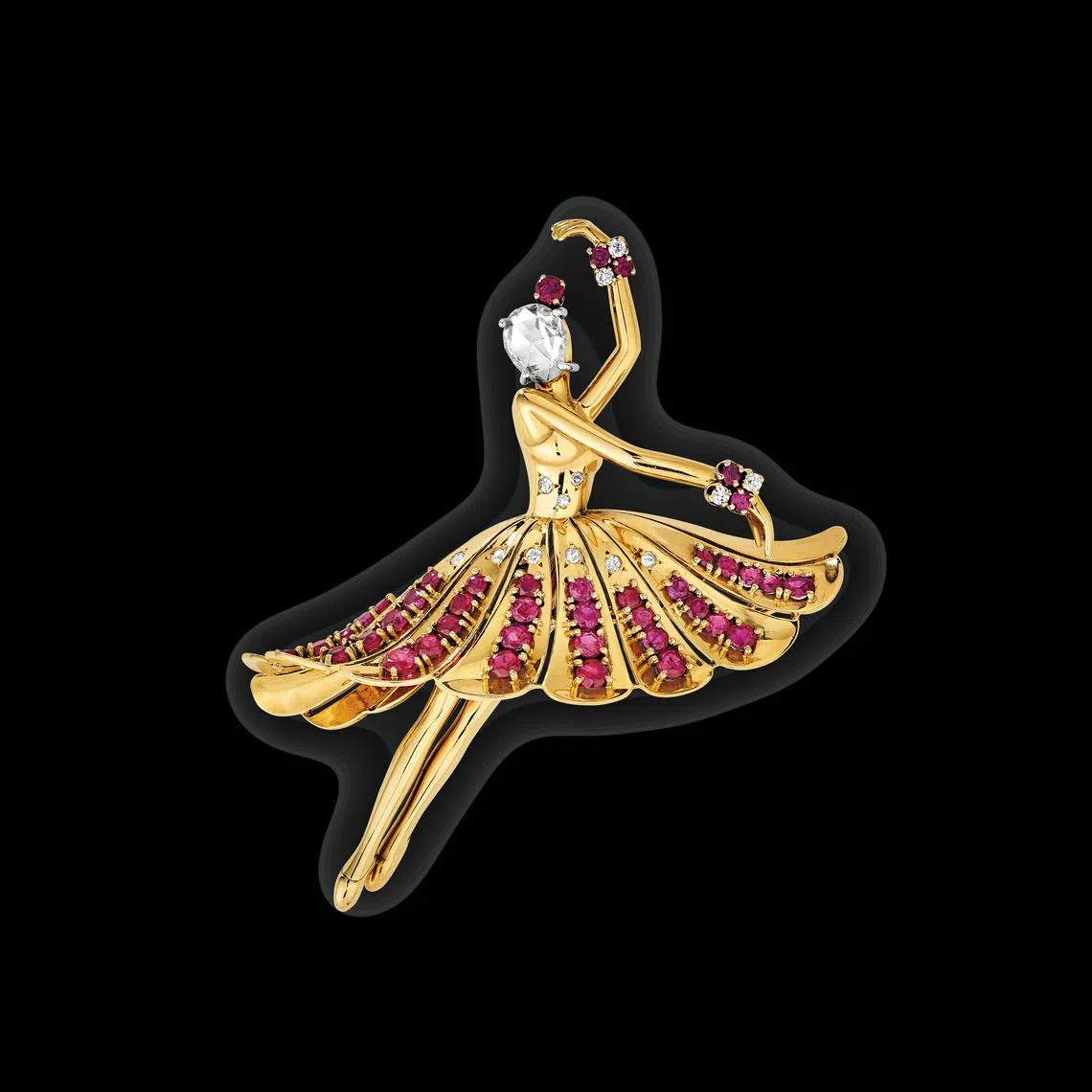
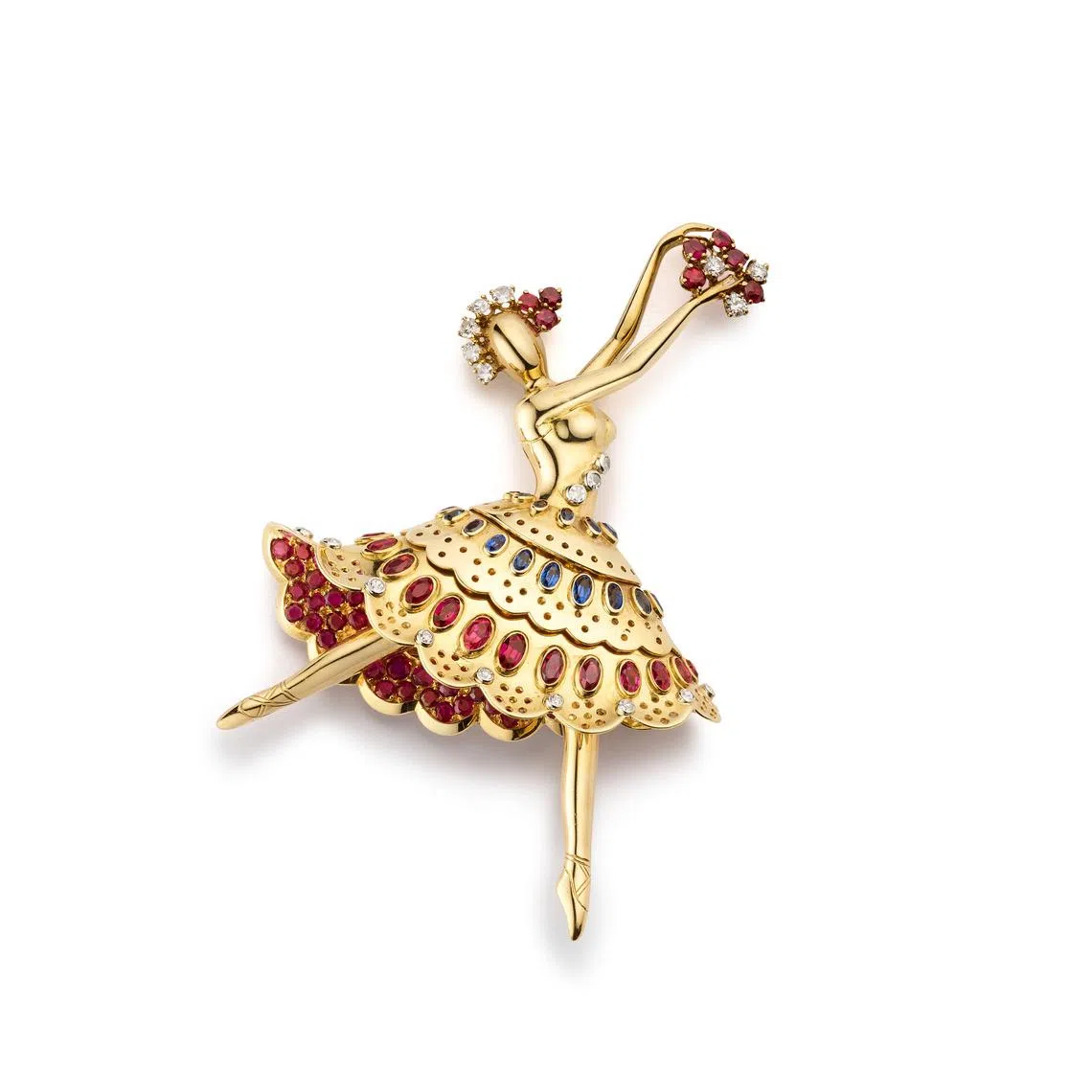
The maison explored various techniques and materials, with a trio of Dancer clips from the 1940s reflecting the goldsmithing methods of the time. Crafted in yellow gold, their tutus are fashioned to bring out the dynamism of various movements.


One from 1947 features a dancer in an en pointe position, as her ruby-studded skirt undulates softly around her. In the other two, their skirts are asymmetrical, following their leap and leg extension.
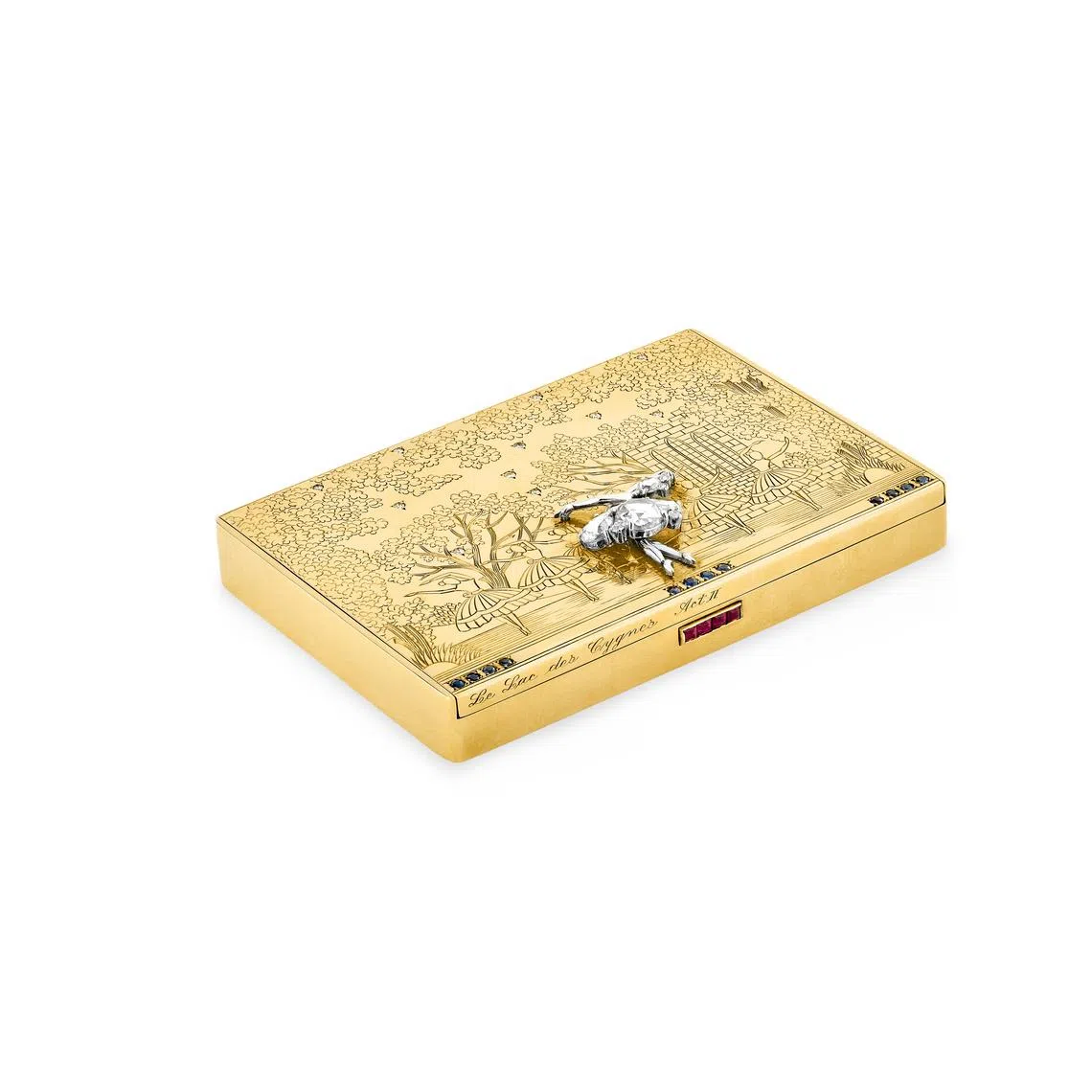
There is a beautiful 1946 powder case named Swan Lake – after the most celebrated ballet – whose rectangular form is perfectly suited for depicting a stage in front of which a dancer performs.
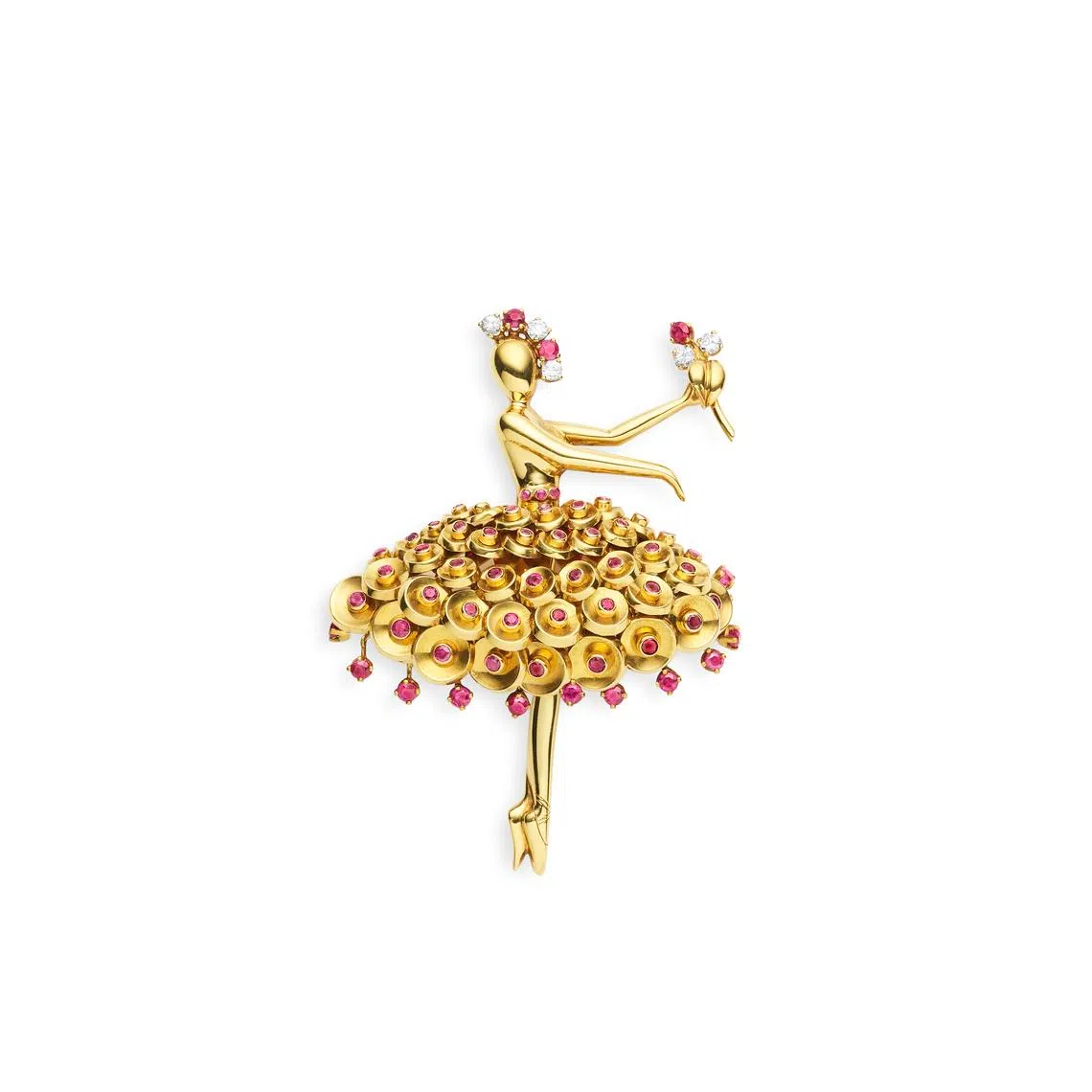
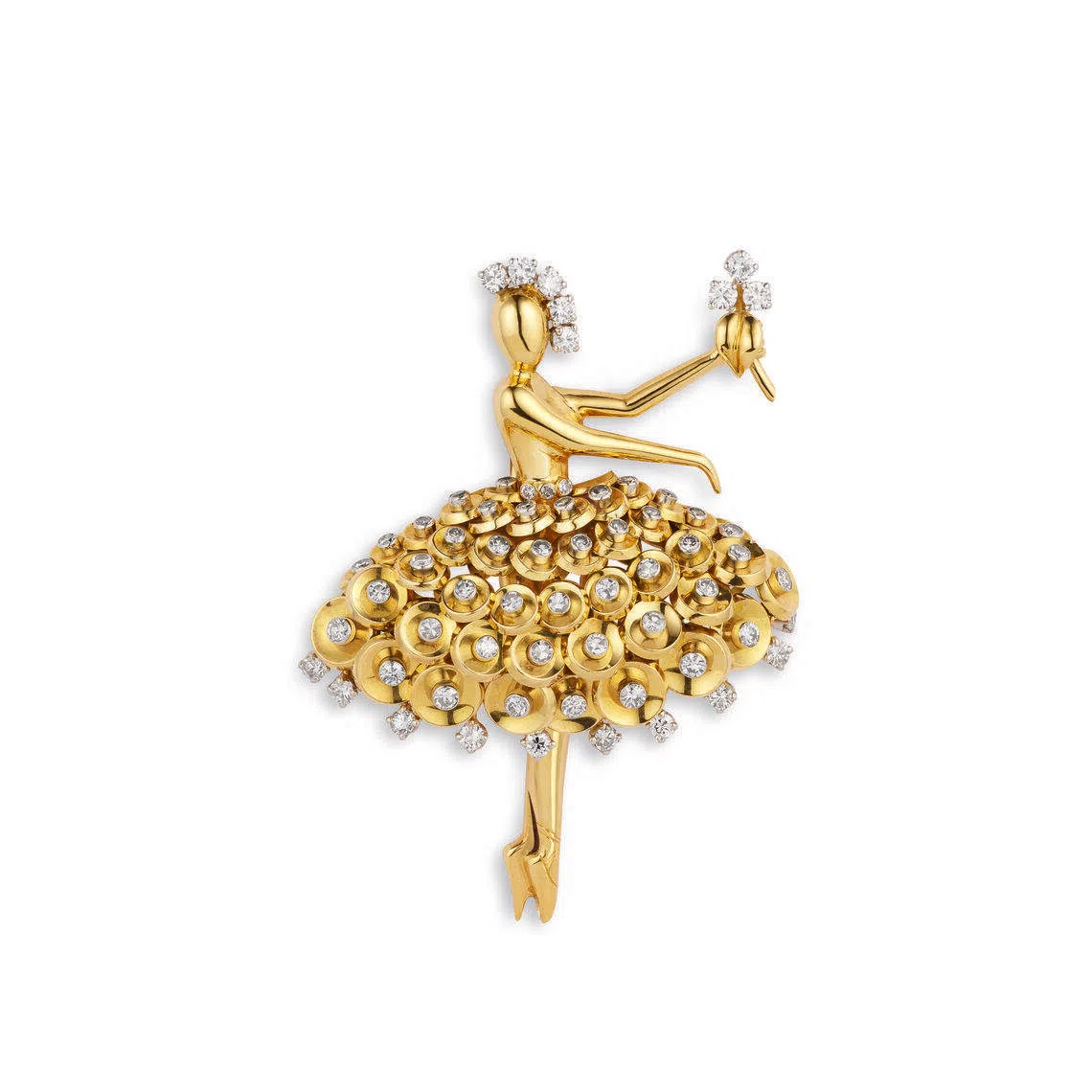
In the Sequin Dancer clips from 1953, however, the ballerinas’ tutus are composed of round and graphic sequin patterns fashionable in the 1930s. Not only do these repeated motifs add volume to the skirts, they also bring attention to the precious stones at their centres.
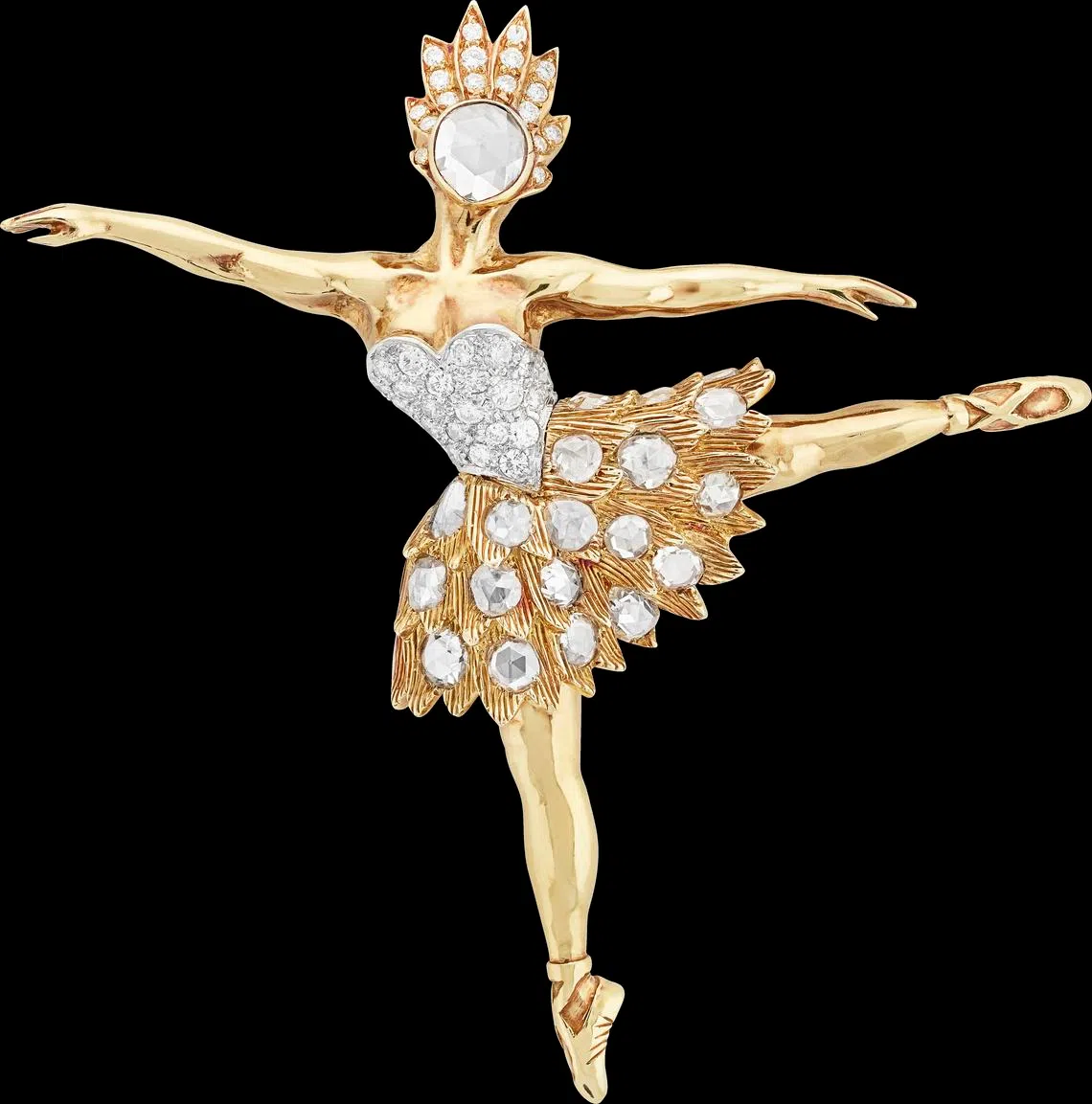
Another highlight at the exhibition is a 1967 Dancer clip inspired by Suzanne Farrell, who performed in the Jewels ballet choreographed by celebrated New York City Ballet co-founder and artistic director, George Balanchine.
In addition to presenting delicate and streamlined arms and legs, it also shows off the ballerina’s athleticism, as seen in the tension of her body, right down to the curves and folds in her shoes. Meanwhile, engraved lines on her tutu suggest lightness of the fabric, while diamonds decorate her skirt and cover her bodice.
Decoding Asia newsletter: your guide to navigating Asia in a new global order. Sign up here to get Decoding Asia newsletter. Delivered to your inbox. Free.
Copyright SPH Media. All rights reserved.
TRENDING NOW

Britain’s mansion tax shows the difficulty of targeting wealth

Once staunchly pro-China, Malaysian Chinese businesses are now distancing themselves from Beijing

The only common thing in S-E Asia is that we all eat rice: Cisco’s Asean president

Singapore data centre operator DayOne opts for US IPO at likely US$20 billion valuation

