

Robert Cheng: The aesthete
The Singapore-based designer talks about creating timeless spaces, growing up with an architect father and celebrating Chinese New Year with his family
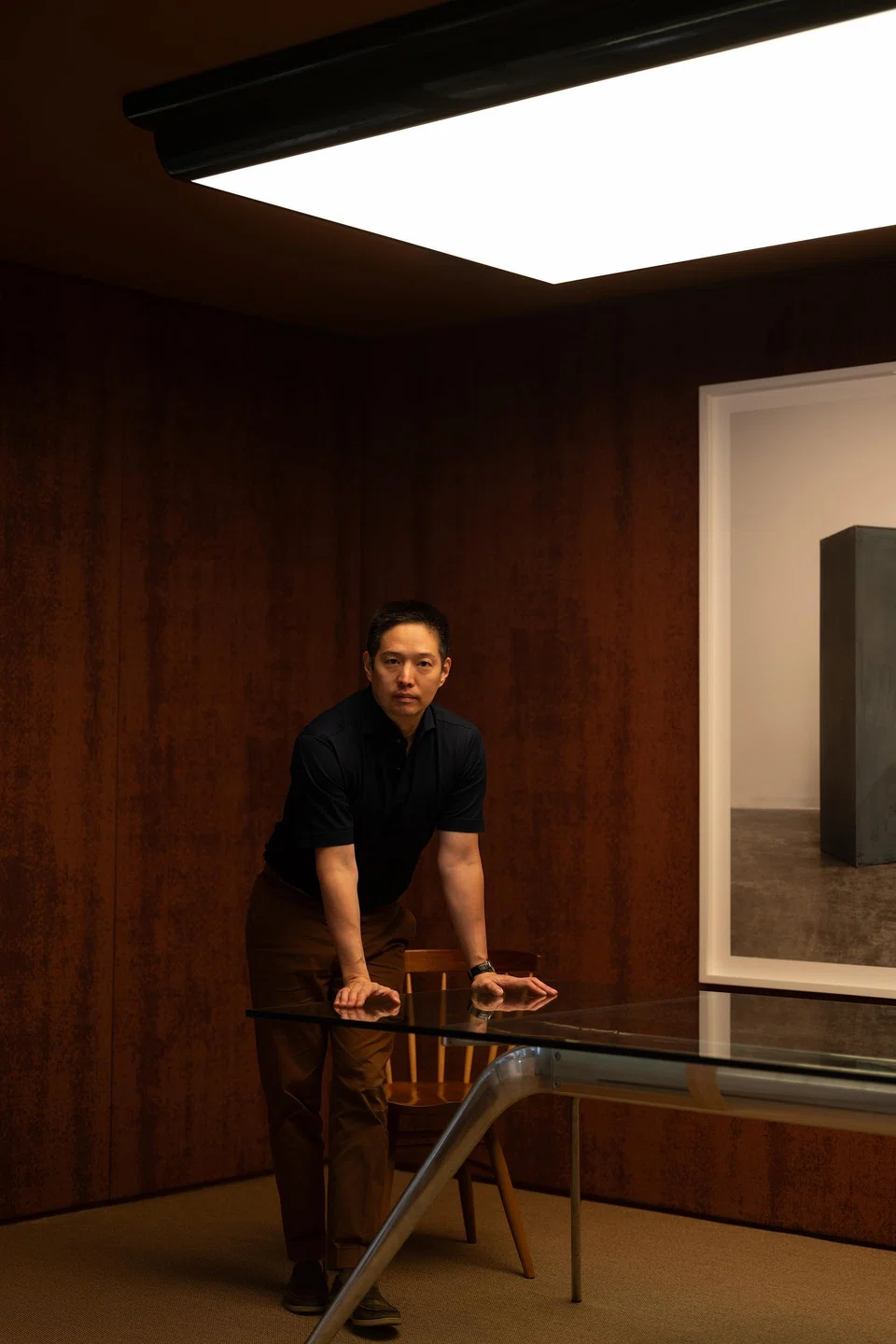
KYOTO IS A SPECIAL PLACE for Robert Cheng, and not just because he designed the interiors of Capella Kyoto in the historic city that forms the soul of Japanese tradition.
“Capella Kyoto stands out on several levels: personally, culturally and professionally,” says the founder of Brewin Design Office. “It is our first (full-scale) hospitality project, and in many ways, it was serendipitous, as I was married in Kyoto in 2018.”
He adds that his family had invited over 200 guests for the wedding, while he and his wife spent the year leading up to it “immersing ourselves in its neighbourhoods, rhythms and nuances, so we could genuinely host our guests rather than simply pass through as visitors”.
Soulful design
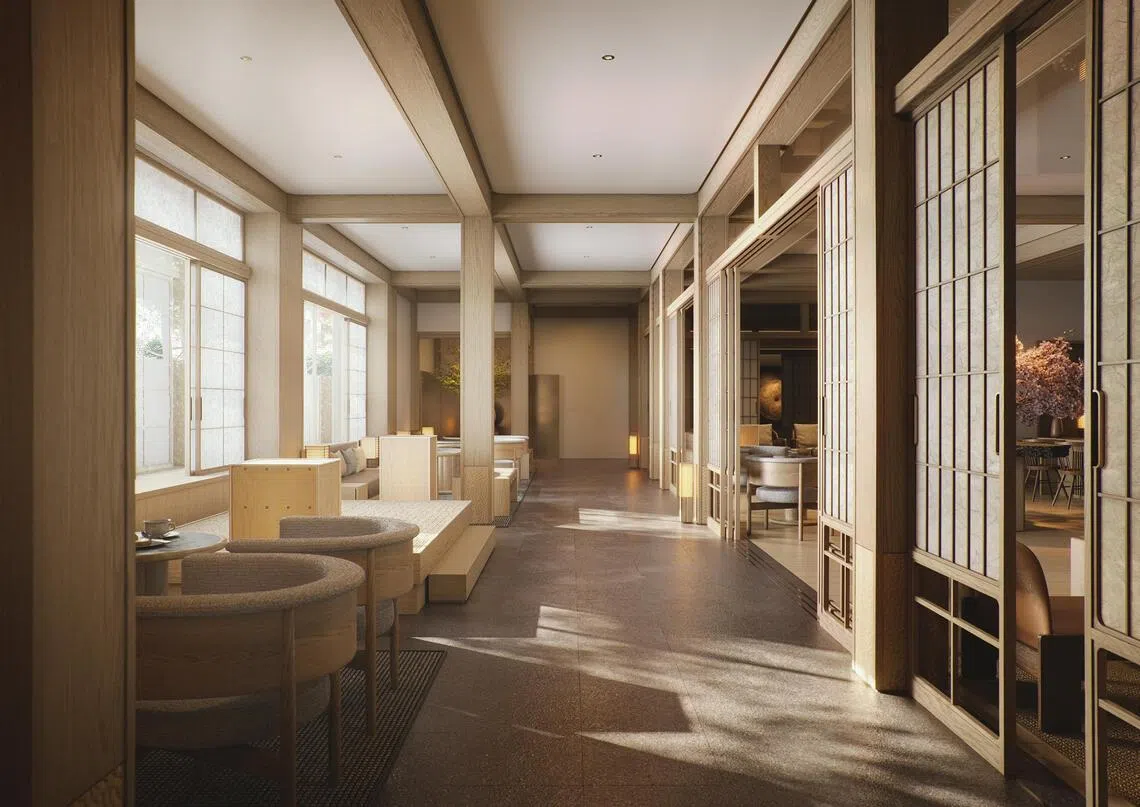
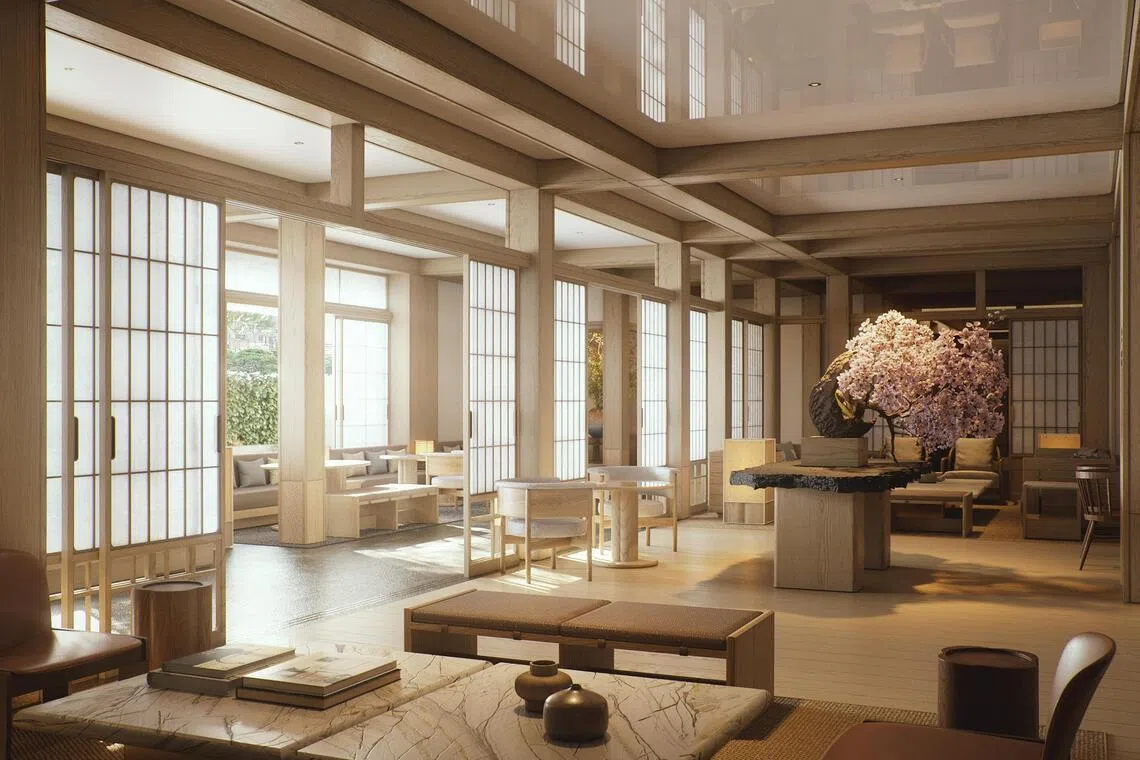
For Capella Kyoto, Cheng collaborated with celebrated architect Kengo Kuma to rework the bones of the former century-old Shinmichi Elementary School in the heritage Miyagawa-cho district to evoke traditional machiya town houses.
Despite multiple journeys to Kyoto during the five-year project, Cheng still marvels at the “layers and mysteries” of the city.
“Just when you think you’re beginning to understand it, you’re reminded that you’re still very much a stranger there. That humility shapes the way we approach design: carefully, respectfully and with an acute awareness of context.”
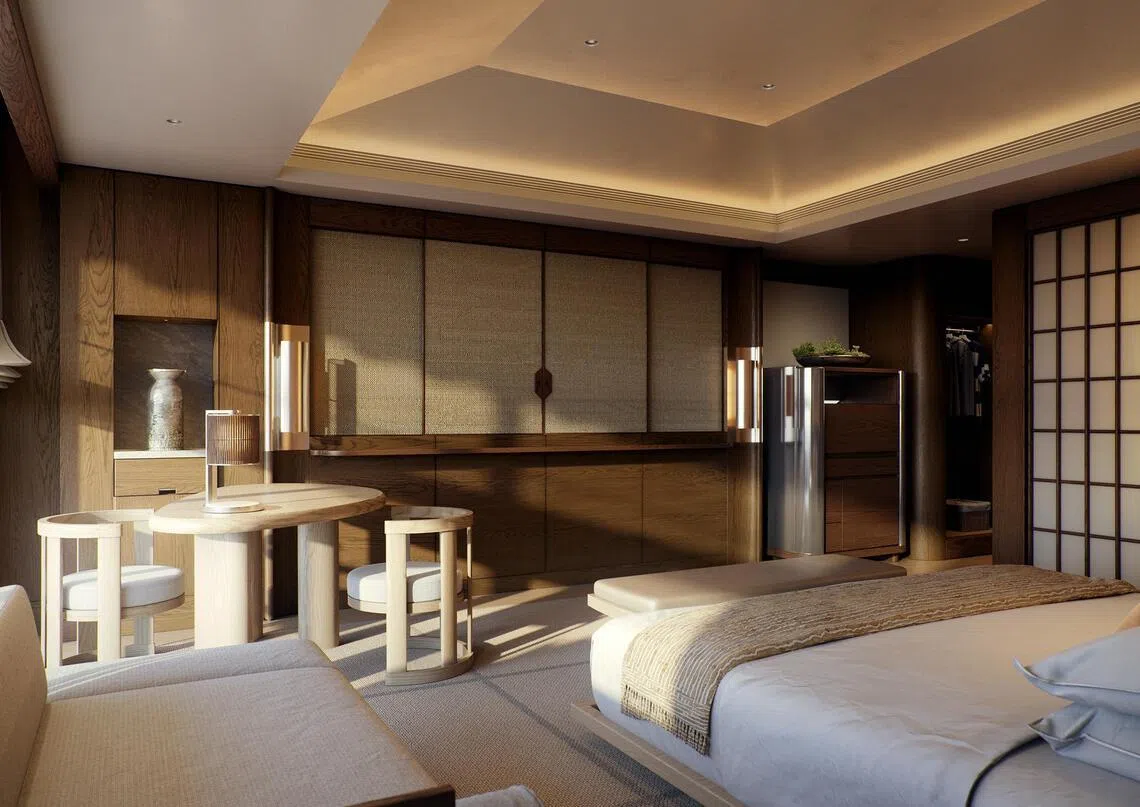
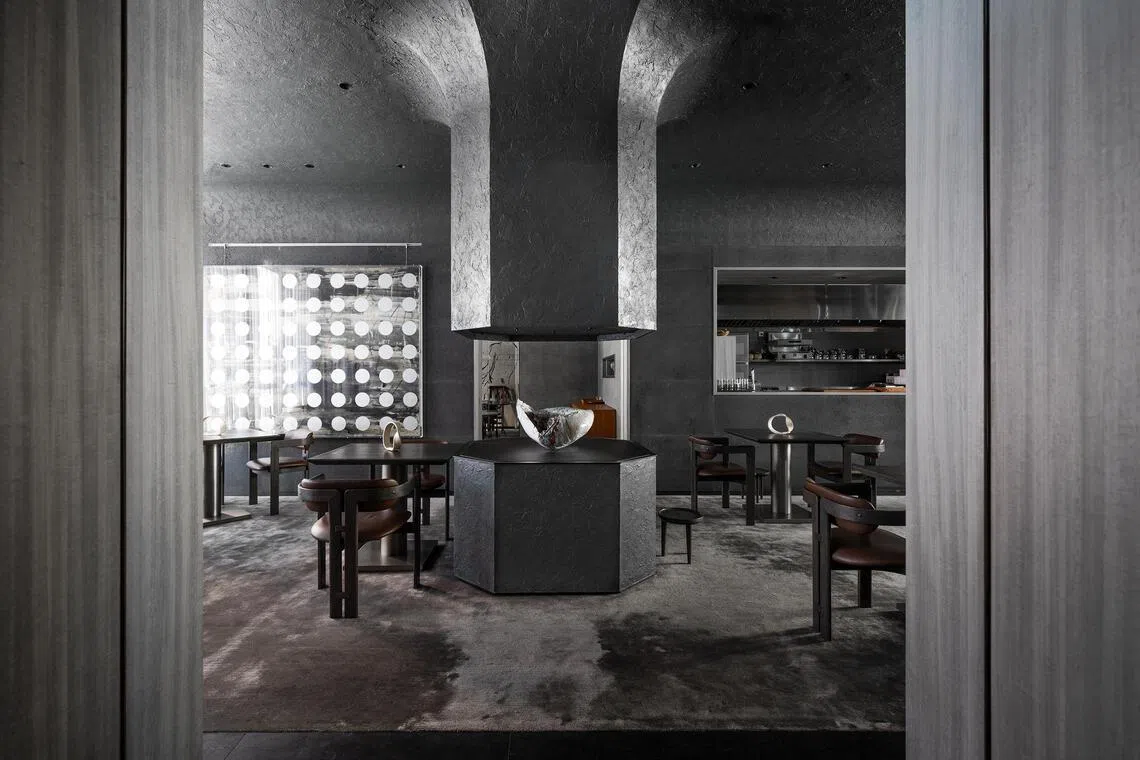
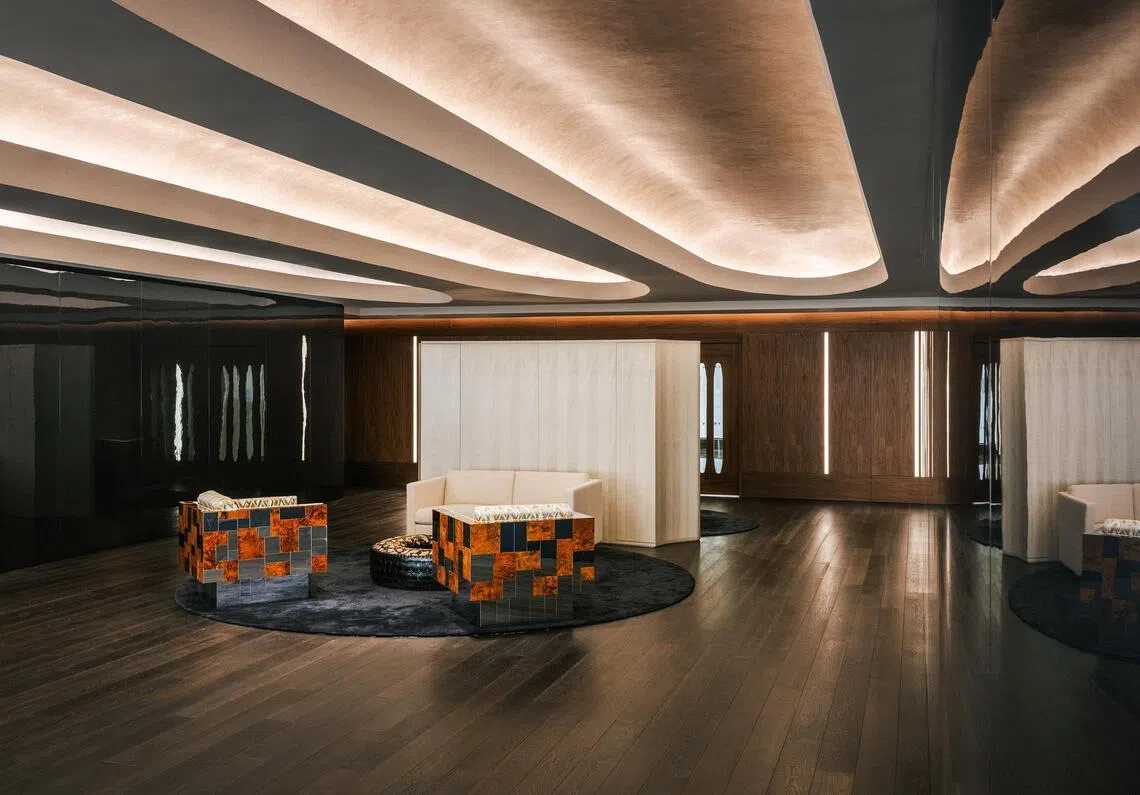
Cheng’s design sensibility of quiet luxury is evident in Capella Kyoto’s spaces, which, as he explains, are “intentionally quiet and tactile, with a calm, layered arrival using timber screens and stone flooring, while the guestrooms are defined by warm timber, woven textiles and hand-finished surfaces”.
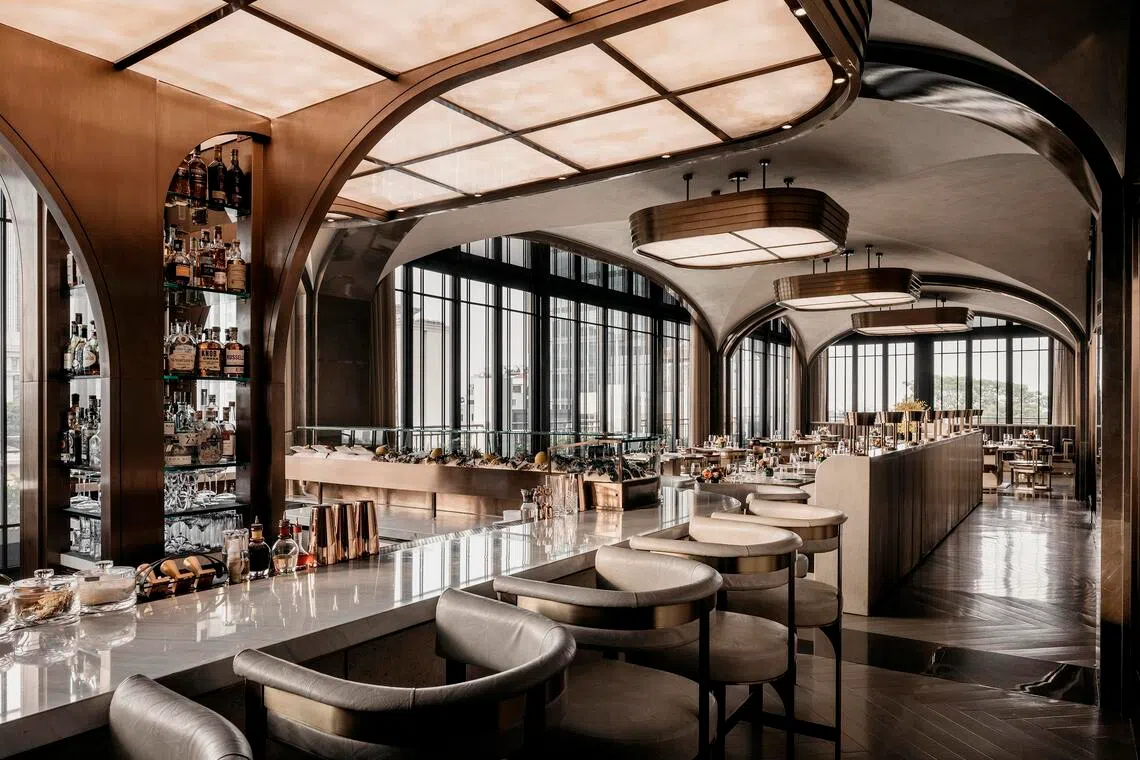
Capella Kyoto may be Cheng’s highest-profile project to date, but many have passed through his spaces – perhaps without knowing it. These include The Hudson Rooms at Capella Hanoi and the National Gallery Singapore’s Rotunda Library & Archive.
Learning from family
Cheng’s career path is perhaps not unexpected. His grandfather, Cheng Yik Hung, was the founder of Wing Tai Garments Manufactory in Hong Kong in 1955; the business later turned into a successful real estate business. His father, Edmund Cheng, is the deputy chairman of property and lifestyle company Wing Tai.

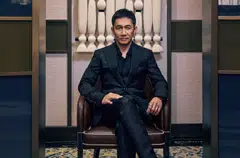
“My father was an architect with Architects61 in the mid-1980s, so architecture and design were very much part of the environment I grew up in,” Cheng shares.
“He worked long hours, and it wasn’t uncommon for colleagues to come to our home after dinner to continue working. Through him, I was also exposed to a wider architectural circle that included his mentor – the late architect Tay Lee Soon – whom my father worked with on projects like the Treasury Building.”
Cheng’s childhood home shaped early memories. “As a toddler, I was already surrounded by design. There was a quiet discipline in the way the house was kept, and a strong sense that spaces carried meaning.”
The living room was furnished with modern icons, such as the Barcelona chair and Charles Pfister sofa from Knoll. “At the time, I didn’t have the vocabulary to understand what I was living among. But in hindsight, it was unmistakably the home of an architect.”
A singular journey
It was an internship at Architects61 that sealed Cheng’s choice of career. “It reinforced something important to me: that I wanted to earn my place through work, not association. It was paramount that I develop my own point of view and credibility on my own terms.”
There was also never any pressure to follow in his father’s footsteps. “Design wasn’t something that was imposed; it was simply present. I naturally gravitated towards anything tactile, and making things feel instinctive rather than directed.”
Cheng studied architecture and urban design at Rhode Island School of Design and Harvard Graduate School of Design. After several years at Tsao & McKown in New York and Ateliers Jean Nouvel in Paris, Cheng returned to Singapore in 2012 and founded Brewin Design Office.
The name has sentimental connections. “My grandfather, father and uncles grew up in the original family home in Hong Kong on a street called Brewin Path,” Cheng explains. “For me, it gives the studio a sense of continuity and grounding, even as the work itself looks outward and forward.”
Global citizen
Starting his firm in Singapore meant a fresh start after a 20-year peripatetic life. Cheng left for high school as a young teen, so “I was never formally moulded within the Singapore system and I think that has been beneficial”, he says. “As a result, my thinking was not conditioned by the local education, professional hierarchy or stylistic tendencies.”
“I have always believed that travel and living abroad is crucial in any creative field,” he adds. “It expands not just your visual references, but also your understanding of systems, and your ability to operate across cultures. Ultimately, that breath of perspective is what allows us to design with clarity rather than convention.”
Italy, where Cheng travelled extensively due to an exchange programme in Rome, left “a lasting impression through its layered history and spatial continuity”. Living three years in Paris deepened appreciation for the city’s “discipline, (architectural) proportions and cultural depth”.
London impressed for its cosmopolitan spirit, energy and diversity, and four years in Manhattan made him fall in love with New York. “Its pace, density, and cultural openness continue to define what a truly creative, forward-looking city can be.”
Home for the festivities
While Cheng still travels widely for work, Singapore is home for now. “Having lived abroad for over two decades, home has come to mean less about a specific city and more about proximity to my parents, my siblings and my family,” he says. He appreciates how they have instilled in him the values of respect, discipline and responsibility.
The family gatherings during Chinese New Year have always been significant for Cheng, who has fond memories of such times. “Visiting my grandparents’ home was a major event. There was a clear sense of formality and preparation.”
He particularly enjoys lion and dragon dances, and “experiencing these moments again through my children has been especially meaningful”, says the father of two.
After his grandfather’s death and the “gradual loosening of certain traditions”, Cheng continues to gather with cousins, but tries to make use of the holiday period to travel with his family.
“It has become a quieter, more reflective way to mark the start of the year – less about formality and more about resetting, being together and beginning the year with intention.”
The path ahead
The future looks bright for Cheng and Brewin Design Office, as Capella Kyoto has opened doors to a broader range of work. These include the interior design of Capella Nanjing in collaboration with David Chipperfield Architects that will be completed in 2027.
“The project sits in the heart of Nanjing and involves the restoration of several dozen, century-old maisonettes that we are converting into luxury suites alongside new architectural blocks by Chipperfield,” says Cheng. He is also working on Capella Shenzhen – due to open in 2028 – with Foster + Partners.
In between, Cheng hopes to embark on a highly personal project: his own house.
On how that might be designed, his Kyoto wanderings come to the fore again. “I have always been drawn to intimacy and restraint rather than scale, and have always been inspired by the compact, carefully calibrated spaces found in places like Kyoto, where proportion, light and circulation matter more than size,” he shares.
“Translating that sensibility onto a piece of land in Singapore is something (that will be) both challenging and compelling.”
Decoding Asia newsletter: your guide to navigating Asia in a new global order. Sign up here to get Decoding Asia newsletter. Delivered to your inbox. Free.
Share with us your feedback on BT's products and services
TRENDING NOW

Once staunchly pro-China, Malaysian Chinese businesses are now distancing themselves from Beijing

Looking beyond looming CEO succession, should UOB potentially pursue a transformative merger?

Could stablecoins be the future of money?

Grab CEO’s wife Chloe Tong on life with Anthony Tan and finding her purpose

