

The staying power of the Omega Speedmaster
Trends come and go, but the iconic timepiece is coveted for its enduring style and functionality
TO BE A FUNCTIONAL PERSON in today’s world, we’re told that we need to stay on top of things. Constantly. Our phone apps refresh every few days, our computer operating systems get updated every few months, and mobile phone companies try to convince us that the upcoming model will be the best one yet.
It’s the same with luxury brands, which routinely release the kind of covetable merch that gives us the dopamine hit we crave. Limited editions. Capsule drops. Viral sensations. Each time we lay our hands on one, it feels like we’re reinventing our personal style and becoming better versions of ourselves.
But some of the world’s most enduring objects don’t need to chase reinvention. Think of the Porsche 911, a pair of Levi’s 501 jeans and the Hermes Birkin. They evolve so carefully that each new iteration still feels reassuringly familiar.
When it comes to luxury timepieces, few embody that idea better than the Omega Speedmaster. While luxury brands spend millions trying to manufacture iconic moments these days, the Speedmaster’s – or Speedy or Moonwatch to watch enthusiasts – reputation was carved long before celebrity ambassadors, social media and influencer campaigns were a thing.
It earned its reputation the old-fashioned way: By proving its mettle in real life, surviving (and thriving) under extraordinary circumstances, and gaining credibility among professionals in the field. The Speedy’s story is grounded in utility first, mythology second.
And the apples don’t fall far from the tree. Each new version of the Speedy carries the unmistakable genes of its predecessors, rendering them recognisable even from a distance.
Born to measure speed
While the Speedy is best known for being the first watch worn on the moon, the original wasn’t designed for space at all.
When Omega launched the Speedmaster in 1957, it wasn’t done in a silo. In fact, the Speedy was part of a trio of tool watches. This professional trilogy included the Seamaster and the Railmaster, with each having a neatly defined role. Incidentally, the other two watches didn’t have catchy nicknames like the Speedmaster did.
It wasn’t rocket science. The Seamaster was designed for divers. The Railmaster was built for railway workers who dealt with strong magnetic fields. And the Speedy was made for race car drivers and engineers who needed to measure, well, speed.
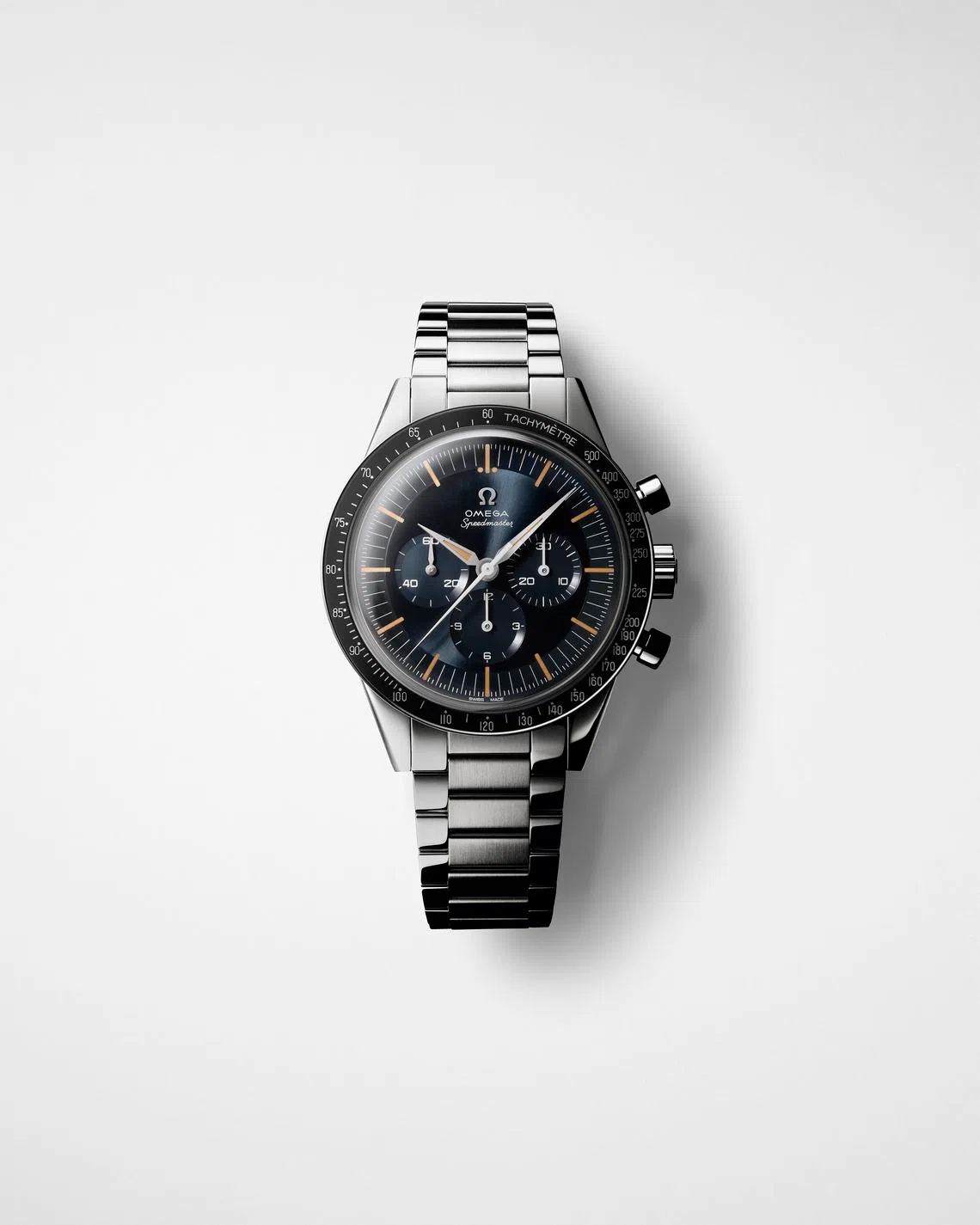
That instantly recognisable design? It wasn’t dictated by Omega’s marketing department. Its design cues were all practical decisions rather than stylistic flourishes. Legibility and durability were key issues to address.
The Speedy was the first chronograph to have its tachymeter scale on the bezel instead of on the dial, for easy reading. The matte black dial provided better contrast. Wide, arrow-shaped hands improved legibility. And Hesalite crystal was employed instead of ordinary glass so that it wouldn’t shatter on impact.
History has a funny habit of turning practical decisions into iconic designs.
These days, Speedy fans engage in passionate debates over hand shapes, dial fonts and Hesalite versus sapphire. But back then, nobody was obsessing over the watch’s design language. They just wanted a timepiece that did the job – and did it well. Although to be fair, they didn’t have forums such as TimeZone, WatchUSeek and Reddit.
But that’s the thing about good design – it doesn’t set out to become timeless. It just solves problems so simply and elegantly that years – decades, in this case – later, there’s still very little worth changing.
Earning credibility
The average person might associate the Speedy with the Moonwatch. But what the average person might not know is that well before the moon landing, it was also one of the earliest watches to be worn in space.
In October 1962, Nasa launched its Mercury-Atlas 8 mission, testing spacecraft systems to prepare for longer-duration missions. Aboard the flight was astronaut Wally Schirra, who chose to wear his own Speedmaster Reference CK2998.
The watch wasn’t a Nasa standard issue; neither did Omega collaborate with the spaceman. Schirra just trusted the watch enough to strap it onto his wrist.
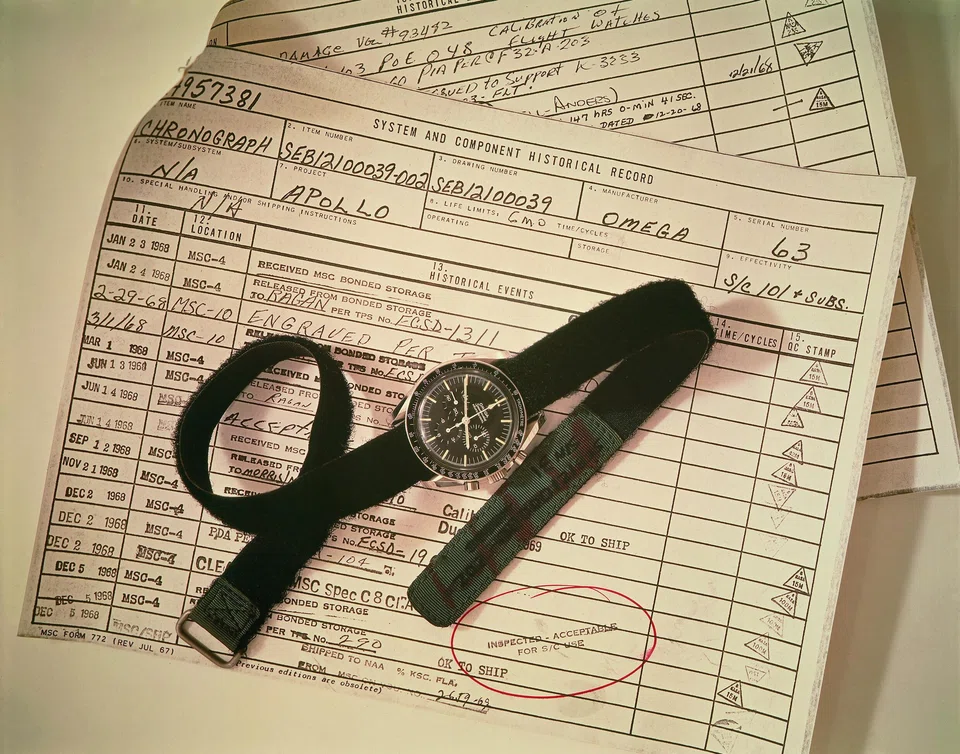
Two years later, when Nasa began evaluating commercially produced chronographs for manned spaceflights, only one watch survived the space agency’s litany of punishing qualification tests. These included being subjected to extreme heat, freezing temperatures, violent shocks, decompression, vibration, humidity and pure oxygen environments.
It appeared that Schirra was on to something all those years ago, because in 1965, the Speedmaster became Nasa’s officially flight-qualified chronograph for all manned space missions.
The Apollo 11 and Apollo 13 missions that followed in 1969 and 1970 are now the stuff of legend, thanks to movies and documentaries made on the subjects.
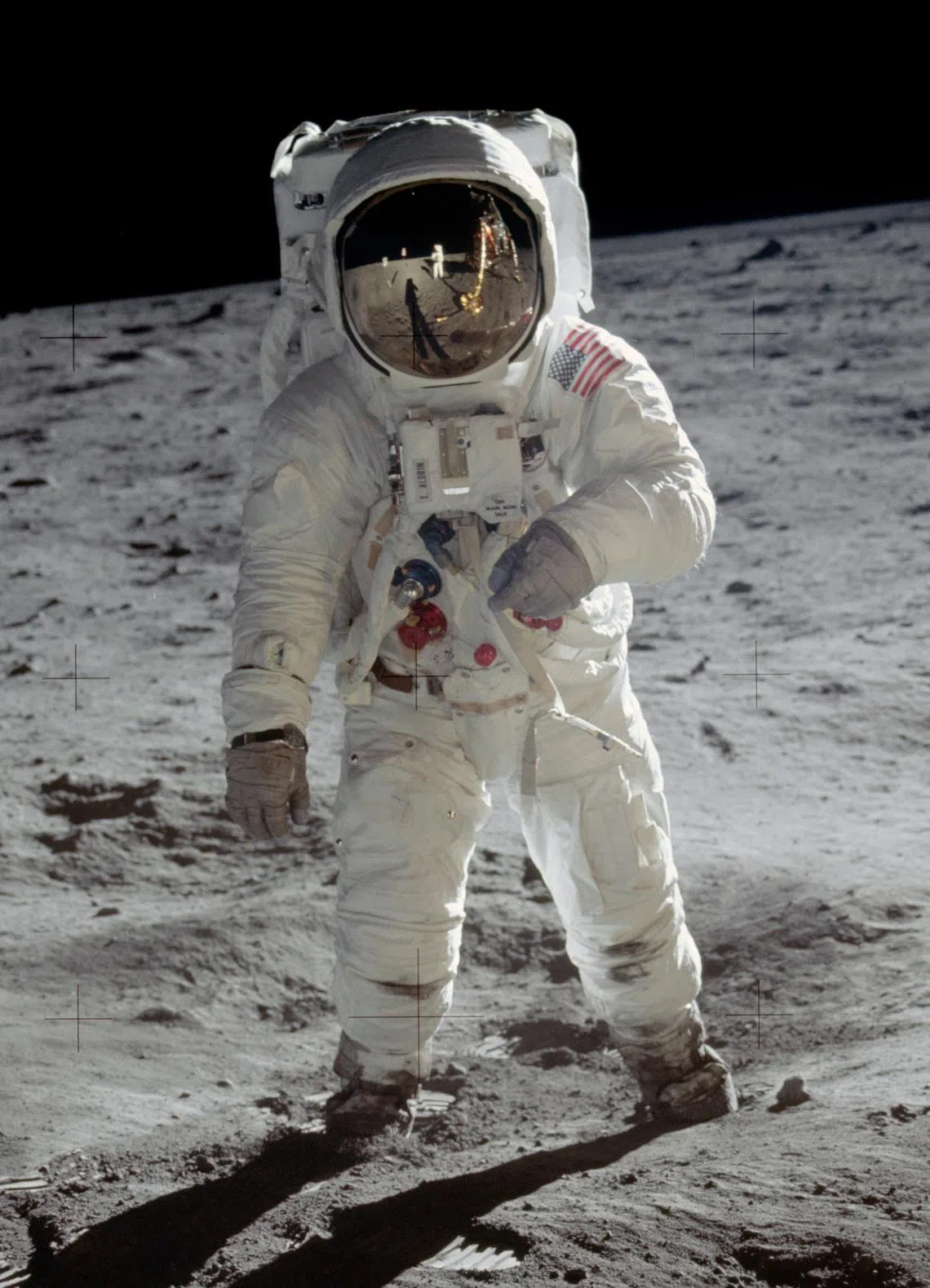
Omega couldn’t have orchestrated better publicity: Apollo 11’s Buzz Aldrin doing his moonwalk with a Speedy strapped to his wrist; Apollo 13’s crew relying on the Speedy to time the critical 14-second engine burn that corrected their re-entry trajectory, bringing them safely home.
A matter of endurance
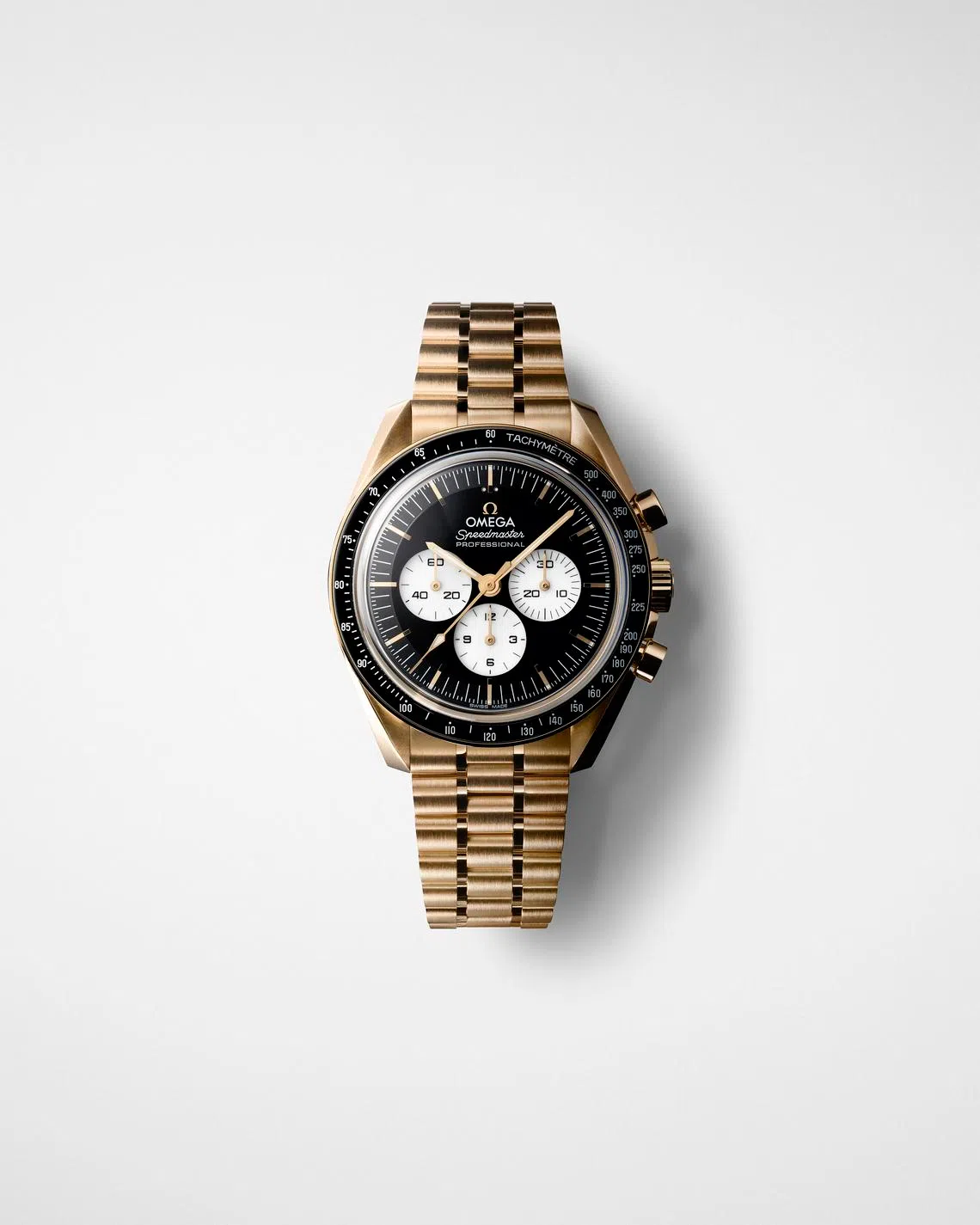
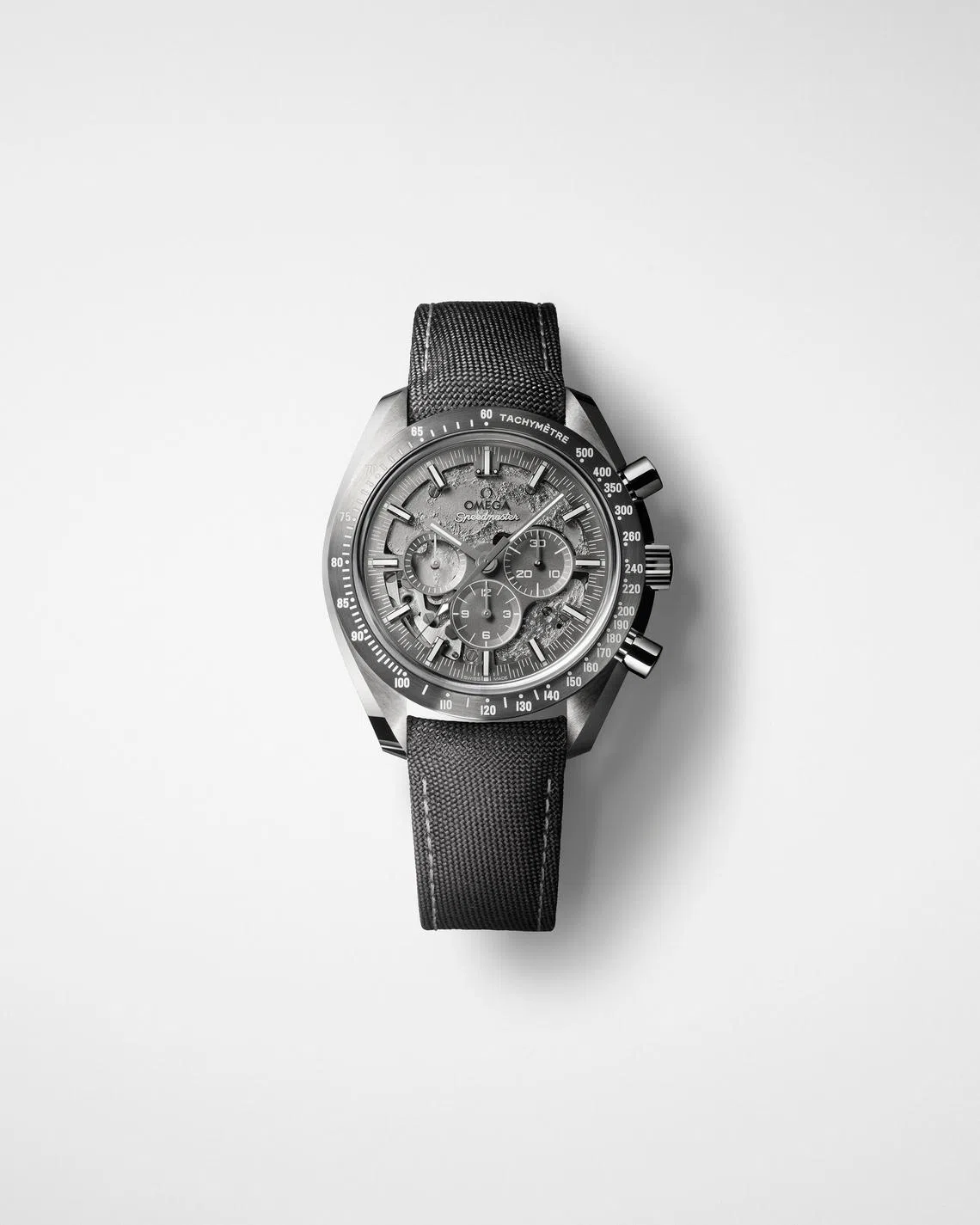
Naturally, the Speedy hasn’t rested on its laurels since those epic early days. Countless variations have emerged over the years. The current collection, updated in 2021, introduced Omega’s Master Chronometer-certified movement, which features improved precision, anti-magnetic performance and a modern architecture – all wrapped in a guise that we’ve come to recognise.
Perhaps that’s why the Moonwatch continues to resonate even with people who aren’t watch enthusiasts.
It serves as a reminder that trust is earned, and that authenticity cannot be fast-tracked. The world’s most enduring objects don’t typically start out as status symbols, but as dependable tools that solve real-world problems.
The Speedy didn’t become iconic because it was worn on the moon. It was because it had earned the trust of astronauts whose lives depended on it. In an age obsessed with the next update, that’s a story that never seems to get old.
Decoding Asia newsletter: your guide to navigating Asia in a new global order. Sign up here to get Decoding Asia newsletter. Delivered to your inbox. Free.
Share with us your feedback on BT's products and services
TRENDING NOW

Once staunchly pro-China, Malaysian Chinese businesses are now distancing themselves from Beijing

Looking beyond looming CEO succession, should UOB potentially pursue a transformative merger?

Could stablecoins be the future of money?

Grab CEO’s wife Chloe Tong on life with Anthony Tan and finding her purpose

