

The bling effect
Setting diamonds on Rolex watches is as demanding as making them.
 Add BT as a preferred source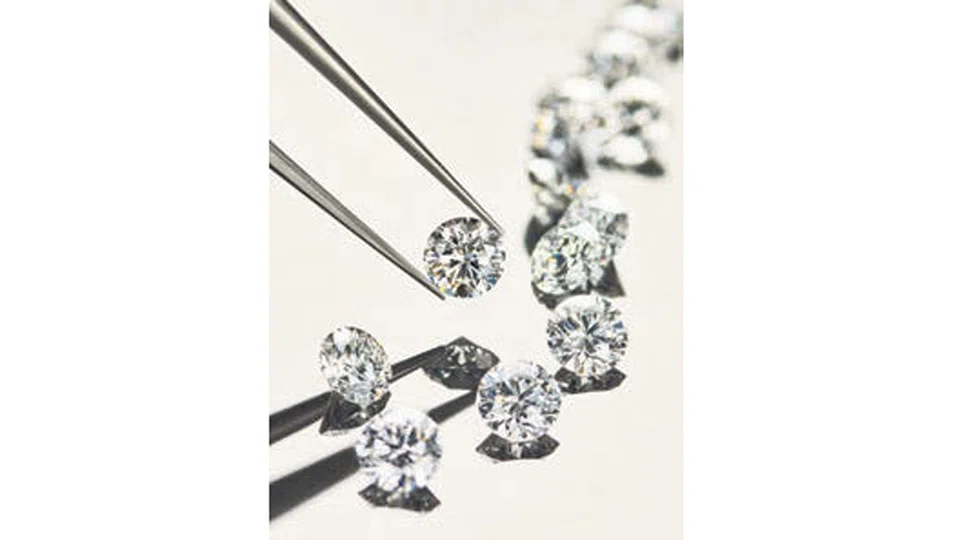
DeeperDive is a beta AI feature. Refer to full articles for the facts.
ARE THE JEWELS on the watches of Rolex's gem-set collection merely to shine for show, and do nothing to heighten the core technical features of the timepieces?
To those who say ''yes'', the brand will let you know that it takes a full team of gemologists and gem-setters skilled in the fine art of high jewellery to make it happen.
Rolex's own in-house experts are endowed with the know-how to select and affix each precious stone to best reveal its innate beauty and sparkle, to elevate the brand's iconic models, while retaining their identity.
Only natural stones which meet Rolex's very demanding quality criterion are used. On arrival at its factory, all gemstones - diamonds, rubies, sapphires and emeralds - undergo rigorous procedures to ensure they are genuine.
To do that, Rolex's gemologists enlist a range of analysis tools, some specially developed for the brand. Diamonds, for instance, are systematically tested via X-ray imaging to confirm their authenticity.
''The way in which the gemstones are cut - the symmetry and shape of the facets - determines the way in which light refiects ofi the stone,'' according to the brand. A well-cut diamond boosts the intensity and number of reflections, even creating rainbow hues.
Navigate Asia in
a new global order
Get the insights delivered to your inbox.
Rolex selects only the most translucent natural gemstones, which have the least impurities for the highest clarity. Only the stones that fall within the grades of D to G - the highest grades on the Gemological Institute of America colour scale - are chosen.
Once the precious stones have passed the gemologists' tests, the gem-setters will decide with the designers on the colours and arrangement of the stones to balance aesthetic and technical requirements.
Then, together with the case and bracelet engineers, the gem-setters study the placement of the stones in order to prepare, to the nearest micron, the gold or platinum into which the stones will be set. For each stone, they determine the exact amount of metal required to hold it in place.
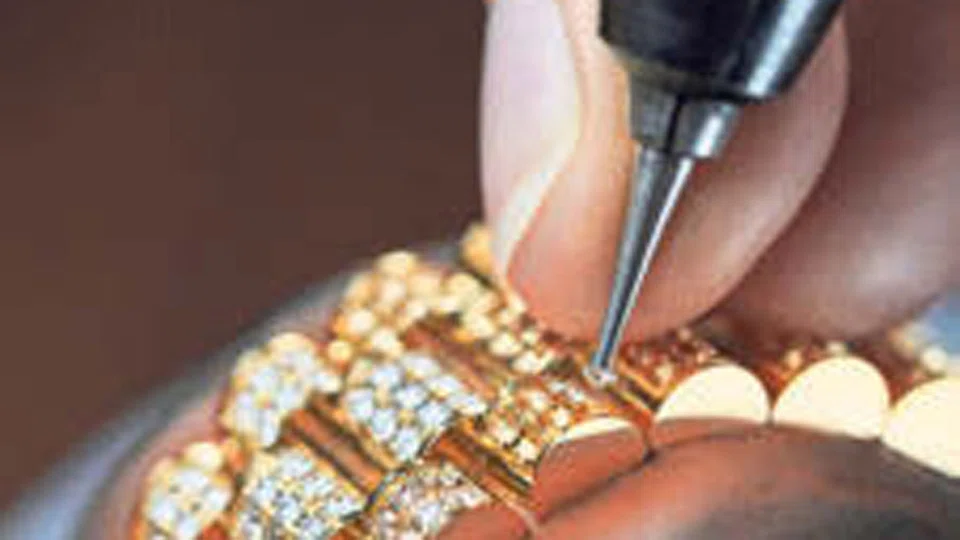
Finally, with the precision of a watchmaker, the gem-setters patiently set each stone, one by one, onto the watches. In the process, they have to find the optimal position for the stones to achieve a perfect harmony of colour refiections.
''Rolex tolerances are to within no more than two hundredths of a millimetre, which is around a quarter of the diameter of a human hair,'' the brand says. The surrounding metal is then gently pushed into place around the stones to fix them securely.
''The skill of the gem-setter is showcased in his or her ability to choose the appropriate tool, to find the right angle, and to apply the correct amount of force - a step repeated up to almost 3,000 times on certain diamond-paved dials,'' says Rolex.
Decoding Asia newsletter: your guide to navigating Asia in a new global order. Sign up here to get Decoding Asia newsletter. Delivered to your inbox. Free.
Copyright SPH Media. All rights reserved.
TRENDING NOW

Air India asks Tata, Singapore Airlines for funds after US$2.4 billion loss

‘Boring’ is the new black: The stars are aligning for a Singapore stock market revival

From 1MDB to ‘corporate mafia’: Is Malaysia facing a new governance test?

South-east Asian markets account for 8.8% of global capital inflows from 2021 to 2024: report

