

The 'burkini' stirs a swimming pool battle in small German town
Washington
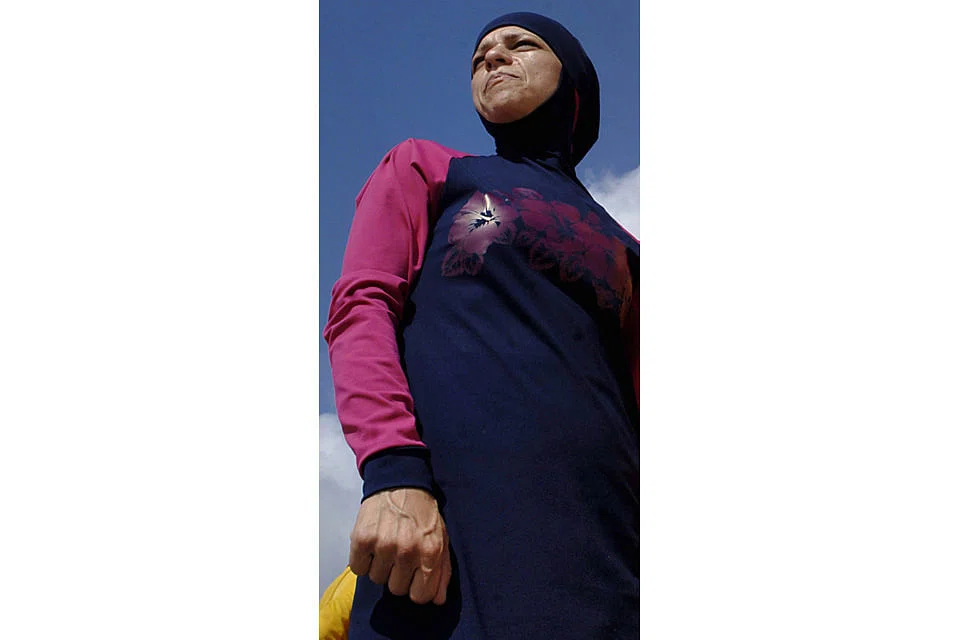
THE idea behind a 'burkini' is simple. It's a women's garment made of swimsuit material covering the entire body, except for the face, hands and feet. By covering most of a woman's skin, it allows her to swim without worrying about the requirements in some Islamic cultures to dress modestly while in public.
While the burkini may sound straightforward, it is quite controversial. German media recently reported that a public pool in Neutraubling in the German state of Bavaria had banned swimmers from wearing burkinis. According to Munich tabloid Abendzeitung, the decision was made after a young woman turned up for a water aerobics class in a burkini. Some women in the class complained, which led town officials to rule the outfit was not appropriate at the pool and should not be allowed.
Town Mayor Heinz Kiechle told the paper that swimming pools simply required conventional swimwear. For women, that would be a standard one-piece swimsuit or a bikini. A burkini would not be allowed, but nor would a wetsuit or a T-shirt. An additional reason for the rule, Mr Kiechle told Mittelbayerische Zeitung, was that there had been complaints about male asylum seekers in the area attempting to use the pool while wearing underwear.
Swimming pools have become a surprising battleground in Europe's culture wars in recent years. But these clashes aren't unique to Europe nor to certain religious faiths. A recent New York Times editorial called for a public pool in Brooklyn to stop having designated times when only women and girls may swim. The pool's policy (in place since the 1990s) was aimed at Orthodox Jews who have a somewhat similar view of female modesty.
In Europe, however, the dispute is usually framed in terms of Islam. This is not the first burkini ban in the continent. In 2009, a French woman was banned from a facility outside Paris after she wore the garment in the pool. According to the Daily Telegraph, she had been informed that the pool forbade "swimming while clothed". In Neutraubling, the mayor made a similar argument, telling Abendzeitung that there were concerns the burkini was "unhygienic". Not everyone agrees.
In 2014, after a similar debate about the burkini in public pools, the German city of Konstanz issued a ruling that the burkini was "conventional swimwear". Munich, the largest city in Bavaria, would not be pursuing a policy like Neutraubling's, a representative told Abendzeitung. Burkinis "are allowed with us and are just as acceptable as bikinis, swimsuits or swimming trunks", the spokesman told the newspaper, adding that it was the material rather than the shape of the garment that mattered.
In fact, the burkini's popularity more generally seems to be rising rather than falling, with such big-name retailers as Britain's Marks & Spencer producing their own swim garments for modesty-conscious women and some non-Muslim Western celebrities wearing the burkini. WP
Share with us your feedback on BT's products and services
TRENDING NOW

OCBC mobile, online banking services restored after Friday afternoon disruption

SGX CEO Loh Boon Chye to step down; succession planning under way

Waymo founder predicts ‘landslide’ robotaxi adoption in Singapore, driven by high car costs

Vietnam’s northern provinces, not Hanoi or Ho Chi Minh City, are powering near 10% GDP growth

